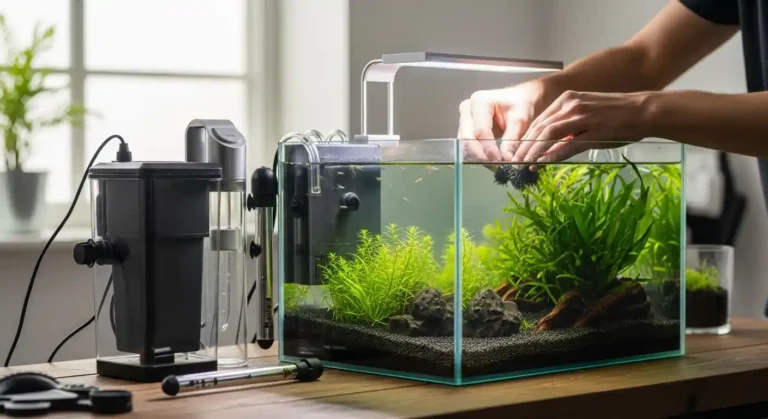

For aquarists in the United States, most new fish need about 30 to 60 minutes to acclimate before entering a home aquarium. This gives the fish time to adjust to the tank’s temperature and water chemistry. Saltwater fish, shrimp, snails, and other invertebrates may need 1 to 2 hours, especially after a long trip.
The exact time depends on the fish, shipping method, water difference, and acclimation method. A slow process is not always safer. If fish sit too long in a sealed transport bag, ammonia can become more harmful after the bag is opened.
How Long Should You Acclimate New Fish?
Use the following times as a practical starting point:
| Fish or animal | Typical acclimation time | Best method |
|---|---|---|
| Hardy freshwater fish | 20–40 minutes | Float and gradually mix water |
| Most tropical freshwater fish | 30–60 minutes | Float, then add small amounts of tank water |
| Freshwater shrimp and snails | 45–90 minutes | Slow drip acclimation |
| Marine fish | 30–60 minutes | Temperature match and gradual mixing |
| Marine shrimp, crabs, snails, and corals | 1–2 hours | Slow drip acclimation |
| Fish shipped overnight | 30–60 minutes after opening | Temperature check, then gradual mixing |
| Fish with very different water conditions | Up to 1–2 hours | Slow mixing with close monitoring |
These are working ranges, not strict rules. The goal is to reduce sudden changes in temperature, pH, salinity, and mineral content without leaving the animal in poor transport water for too long.
A healthy local fish may need only 20 to 30 minutes. A delicate marine invertebrate shipped across the country may need much longer.
Why Fish Need to Acclimate
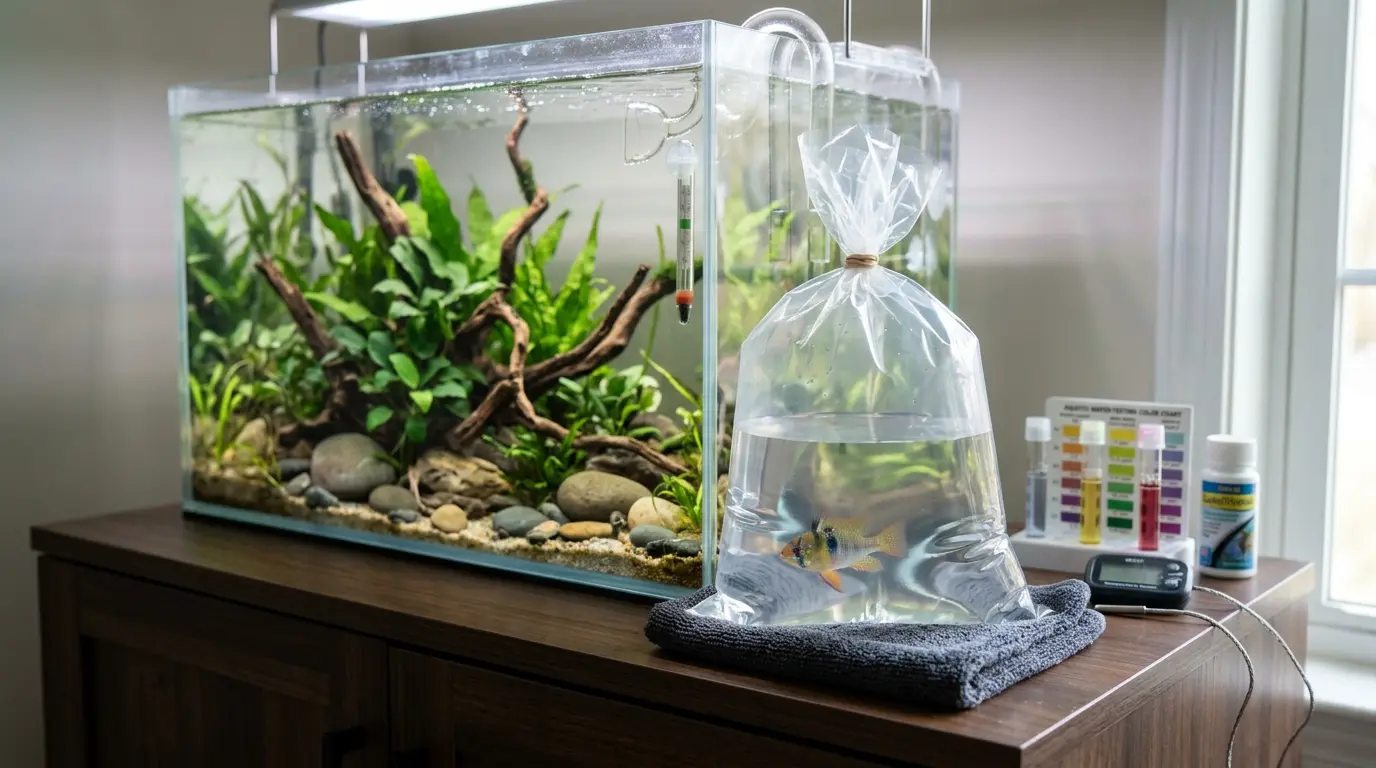
Fish acclimate because a new aquarium may have different water conditions from the store bag or shipping container. Sudden changes can stress the fish and may harm its gills, skin, nervous system, or ability to balance fluids.
The main changes include:
- Temperature: The bag may be warmer or cooler than the aquarium.
- pH: Store and home aquariums may have different acidity levels.
- Ammonia: Waste builds up in transport water.
- Salinity: Marine water may have a different salt level.
- Hardness: Calcium and magnesium levels can vary.
- Water chemistry: Buffers and dissolved minerals affect how fish regulate fluids.
Fish maintain a balance between their body fluids and the surrounding water. A sudden shift can force the fish to adjust too quickly. This is why acclimation should be gradual when the difference is large.
Why sealed transport water can become dangerous
Fish release waste during transport. In a closed bag, ammonia builds up. Some of that ammonia stays in a less harmful form while the water has a lower pH.
When you open the bag and expose the water to air, carbon dioxide escapes. The pH can rise. At a higher pH, more ammonia can change into the more toxic form.
For this reason, do not leave a bag open for hours while adding tiny drops of water. A controlled acclimation is useful, but very slow is not always better.
The Best Way to Acclimate Freshwater Fish
For most freshwater fish, use a short temperature float followed by gradual water mixing. This method is simple and works well for fish from a local aquarium store.
What you need
Prepare these items before opening the bag:
- A clean bucket or plastic container used only for aquarium work
- A fish net or specimen container
- A thermometer
- A timer
- Dechlorinated aquarium water
- Airline tubing and a control valve, if using a drip method
- A dim room or low aquarium lighting
Do not use a bucket that held soap, bleach, pesticides, or household cleaners. Even small residues can harm fish.
Step-by-step freshwater acclimation
- Turn off or dim the aquarium lights.
Low light helps reduce fear and sudden activity. - Check the aquarium temperature.
Most tropical freshwater fish need a stable temperature that matches their species. Do not rely only on the heater setting. - Float the sealed bag for 15 to 20 minutes.
Place the bag on the water surface. Keep the top above water so aquarium water cannot enter. - Open the bag and test the temperature.
If the bag water and aquarium water are close, continue. If they differ by several degrees, extend the float period or use a slower mix. - Add a small amount of aquarium water.
Add about one-quarter cup for a small bag. For a larger bag, add a few tablespoons to one cup, depending on the container size. - Wait 5 minutes.
Repeat the small additions every 5 minutes. Aim to double the water volume over about 20 to 30 minutes. - Transfer the fish without adding store water.
Use a net or specimen cup. Move the fish into the aquarium and discard the transport water. - Leave the aquarium lights low for several hours.
Avoid feeding right away unless the fish is active and settled. Many fish do better when they can hide and rest first.
For a hardy fish from a nearby store, the whole process often takes about 30 to 45 minutes. For a sensitive fish or a major water difference, use a slow drip for 45 to 90 minutes.
When to use drip acclimation for freshwater fish

Drip acclimation is useful when:
- The fish traveled for many hours.
- The bag water has a very different pH or hardness.
- The fish is sensitive or stressed.
- You are adding freshwater shrimp or snails.
- You know the store water and home water differ greatly.
To drip acclimate, place the fish and transport water in a clean container. Run airline tubing from the aquarium to the container. Tie a loose knot or use a valve to create a slow drip, such as two to four drops per second. When the water volume doubles, remove half and continue until the process reaches about 45 to 90 minutes.
Watch the container. If the fish gasps, rolls, loses balance, or shows severe distress, stop extending the process. Move it to the prepared aquarium after matching the temperature as safely as possible.
How Long to Acclimate Saltwater Fish and Invertebrates
Marine fish usually need 30 to 60 minutes of acclimation. Marine invertebrates often benefit from a slower process of about 1 to 2 hours because shrimp, crabs, snails, and similar animals can react strongly to changes in salinity and pH.
Corals may have different handling needs. Follow the seller’s instructions, keep coral tissue from drying, and avoid exposing delicate animals to air unless the species and instructions allow it.
Saltwater fish
For a marine fish:
- Turn off the aquarium lights.
- Check the tank temperature and salinity.
- Float the sealed bag for 15 to 20 minutes.
- Open the bag and place the water and fish in a clean container.
- Add small amounts of aquarium water every few minutes, or use a controlled drip.
- Check salinity during the process if you have a reliable marine hydrometer or refractometer.
- Transfer the fish with a net or container.
- Discard the transport water.
Do not pour store water into a reef tank or quarantine tank. Transport water may contain waste, medications, parasites, or copper-based treatments.
Marine invertebrates
Invertebrates are often more sensitive to salinity changes than fish. A slow drip is usually the better choice for:
- Cleaner shrimp
- Hermit crabs
- Snails
- Starfish
- Urchins
- Anemones
- Other delicate reef invertebrates
The process may take 60 to 120 minutes. However, avoid an unmonitored drip that lasts several hours. The transport water can become increasingly unsafe as ammonia rises and oxygen falls.
Test the aquarium’s salinity before the animal arrives. A large difference can make acclimation difficult. If the shipping water has a much lower salinity than the display tank, do not assume that simply extending the drip will solve every problem. Ask the seller or an aquatic veterinarian for species-specific advice.
Float Acclimation vs. Drip Acclimation
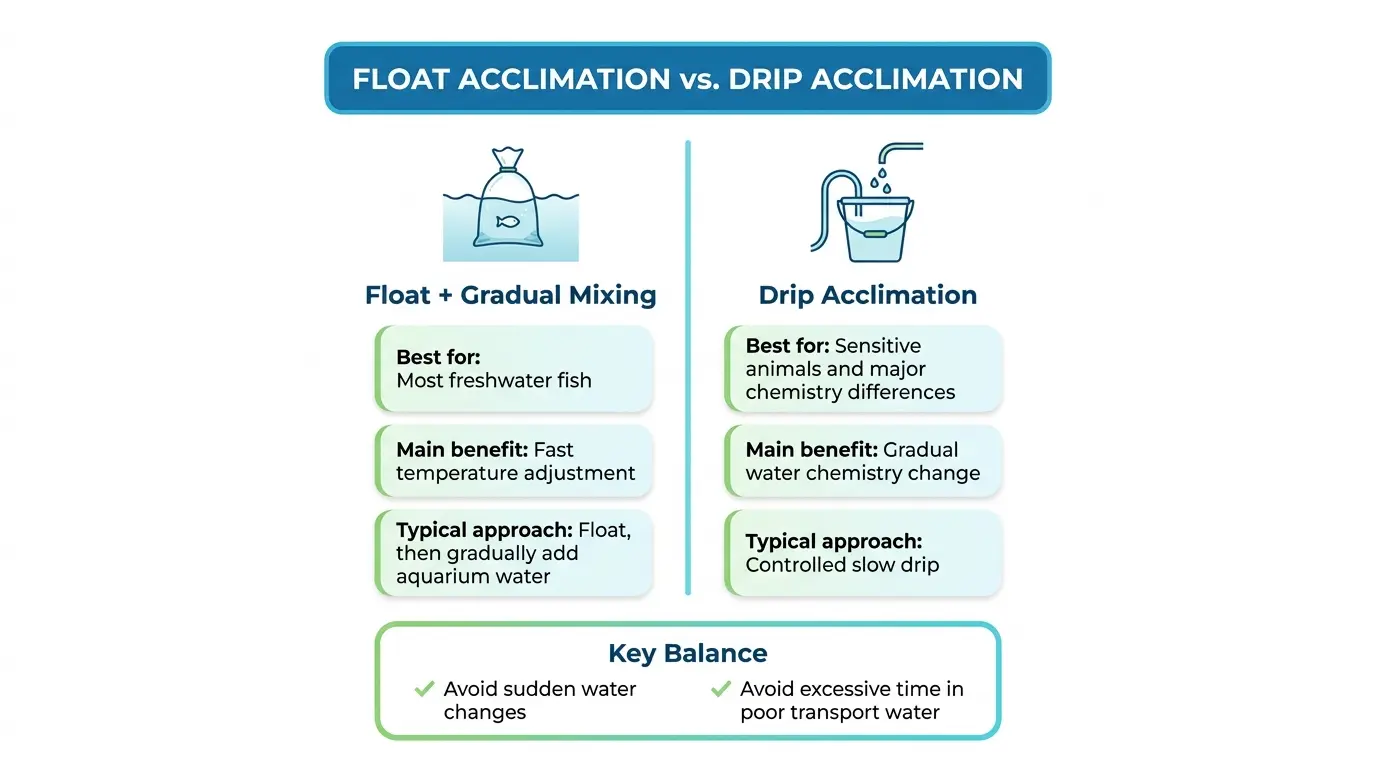
Float acclimation mainly matches temperature. Drip acclimation changes water chemistry more slowly.
| Method | Best for | Main benefit | Main risk |
|---|---|---|---|
| Float only | Short local trips and similar water | Fast temperature adjustment | Does not correct pH or salinity differences |
| Float and add water | Most freshwater fish | Simple and controlled | Can still be too fast for sensitive animals |
| Drip acclimation | Marine invertebrates and major chemistry differences | Gradual chemistry change | Takes longer and can expose waste water to rising pH |
| Direct transfer after temperature match | Some shipped fish in poor water | Limits time in toxic transport water | Not suitable when chemistry differs greatly |
A common mistake is to treat drip acclimation as the safest method in every case. It is not. The best method balances two risks:
- Shock from a sudden change in aquarium water
- Stress from remaining in dirty transport water
If the transport water smells strongly of ammonia, looks very dirty, or the fish is in severe distress, a long drip may cause more harm than a prompt transfer into stable, conditioned water.
What Water Parameters Should You Check?
Check the aquarium before buying or adding fish. Acclimation cannot fix unsafe tank conditions.
At minimum, test:
- Temperature
- Ammonia
- Nitrite
- Nitrate
- pH
- Salinity for marine aquariums
For freshwater fish, also check hardness when the species has specific mineral needs. For saltwater animals, measure salinity with a calibrated refractometer or a reliable marine hydrometer.
A new aquarium should be fully cycled before fish are added. Ammonia and nitrite should be undetectable on a dependable test. If either is present, adding fish can cause poisoning even if the acclimation process is perfect.
The aquarium should also have:
- A working filter
- Water treated with a suitable dechlorinator
- A stable heater, when needed
- Secure equipment
- Hiding places
- A lid when jumping is possible
- A quarantine setup when practical
Signs That Acclimation Is Going Well
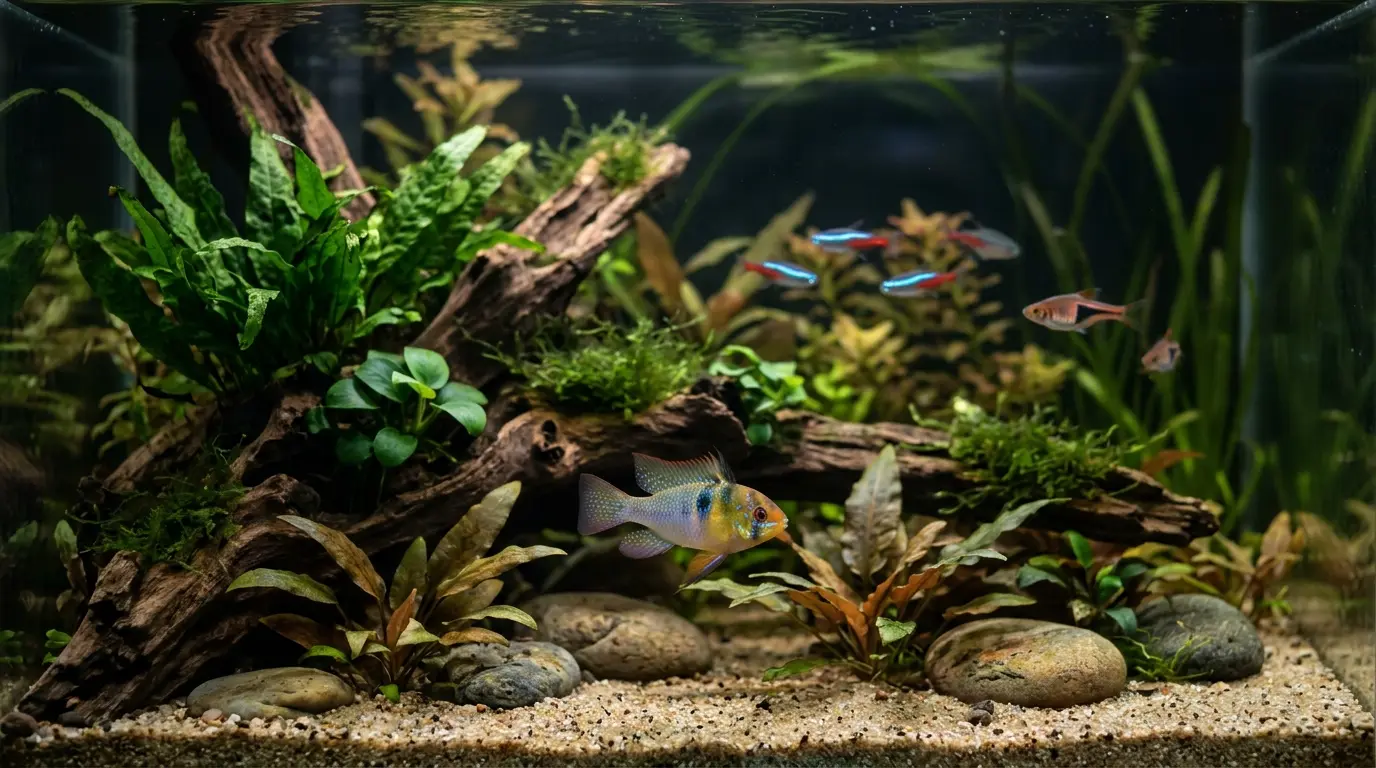
Some stress is normal during transfer. A fish may hide, breathe faster for a short time, or stay near the bottom.
Positive signs include:
- Normal upright swimming
- Steady breathing
- Interest in shelter
- Gradual exploration
- No repeated surface gasping
- No loss of balance
- No frantic crashing into objects
Keep the lights low and avoid tapping on the glass. Do not chase a hiding fish with a net. Give it time to settle.
Do not feed heavily on the first day. A small meal is reasonable once the fish is calm and swimming normally. Remove any uneaten food.
What to Do If a Fish Looks Sick During Acclimation
If a fish gasps, rolls, floats on its side, or loses balance, act promptly.
- Check the temperature.
- Check ammonia and nitrite in the aquarium.
- Look for a large salinity or pH difference.
- Stop extending the acclimation if the transport water is dirty or the fish is rapidly weakening.
- Move the fish to stable, conditioned water with matching temperature.
- Provide strong but gentle aeration.
- Place the fish in a quarantine tank when possible.
- Contact an aquatic veterinarian if the fish continues to decline.
Do not add random medications during the transfer. Some treatments can harm sensitive fish, invertebrates, beneficial filter bacteria, or plants. Diagnosis matters.
Common symptoms and likely causes
| Symptom | Possible causes | First check |
|---|---|---|
| Fast breathing | Low oxygen, ammonia, temperature stress, gill disease | Aeration, ammonia, temperature |
| Gasping at the surface | Low oxygen, ammonia, nitrite, overheating | Ammonia, nitrite, water movement |
| Lying on the bottom | Normal stress, shock, illness, poor water | Temperature and water tests |
| Loss of balance | Severe stress, toxins, disease, poor handling | Water quality and transport time |
| White spots or sores | Disease, injury, parasites | Quarantine and careful observation |
| Frantic swimming | Light shock, poor water, territorial stress | Dim lights and test water |
These signs are not a diagnosis. The same symptom can have several causes.
Common Fish Acclimation Mistakes
Pouring the bag water into the aquarium
Transport water may contain concentrated waste or unwanted organisms. Transfer the fish, not the water.
Leaving the bag open for too long
A long open-bag acclimation can allow the pH to rise while ammonia remains in the water. This can increase ammonia toxicity.
Matching temperature but ignoring salinity
Temperature matching is only one part of marine acclimation. A fish or invertebrate can still face severe osmotic stress if salinity changes too quickly.
Adding untreated tap water
Chlorine and chloramine can injure fish and damage beneficial bacteria. Use a water conditioner made for aquarium use.
Acclimating fish in the display tank
Do not pour store water into the display tank. Use a separate container, then transfer the fish.
Adding new fish to an uncycled tank
Acclimation does not make ammonia safe. The aquarium must already be biologically ready.
Keeping lights bright
Bright lights can increase stress after transport. Dim lighting gives the fish time to find shelter.
Mixing incompatible fish
A calm acclimation cannot prevent aggression. Research adult size, temperament, diet, and habitat needs before adding a new species.
Should You Quarantine New Fish?
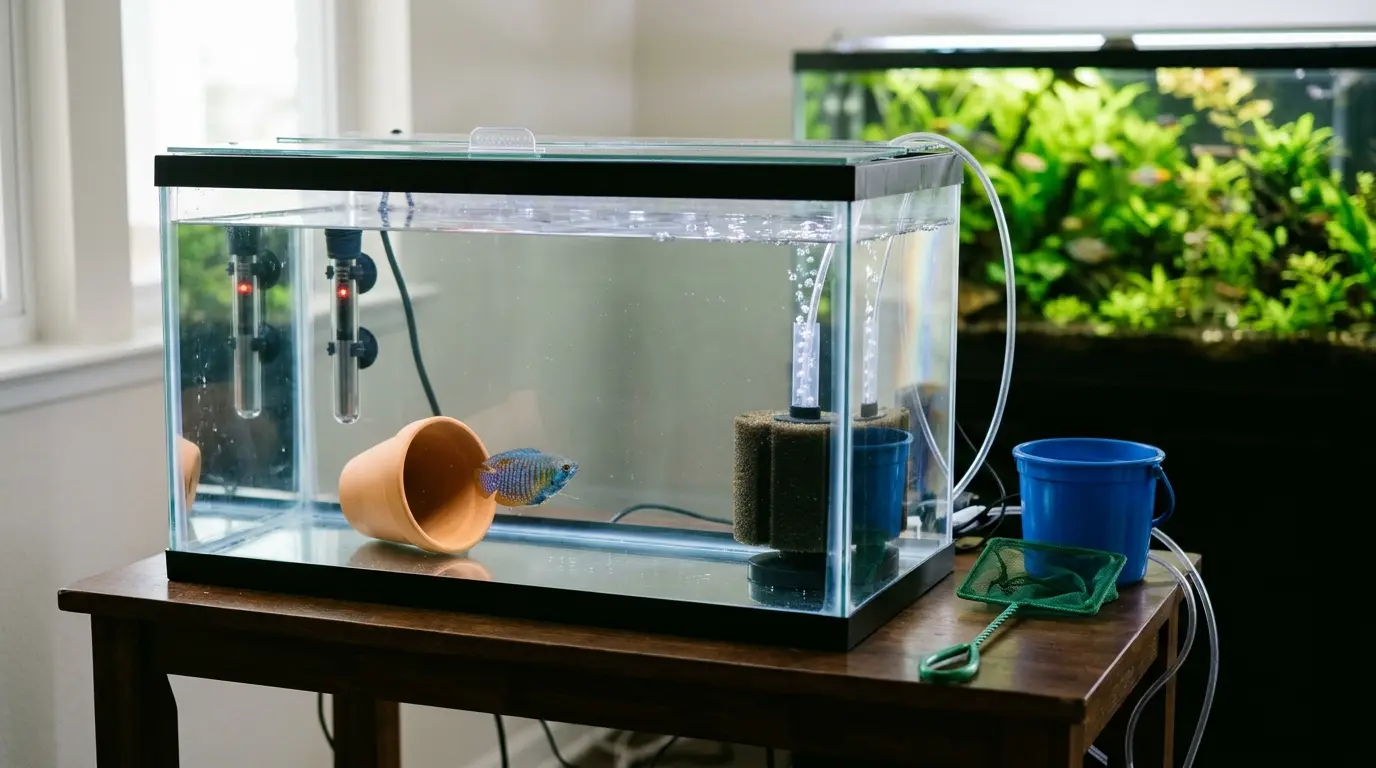
Quarantine is strongly recommended when you have the space and equipment. Acclimation helps a fish adjust to water. Quarantine helps you observe and manage disease before it reaches the display aquarium.
A basic quarantine tank needs:
- A suitable filter
- A heater when required
- A cover
- Simple hiding places
- A separate net and bucket
- Water from a safe, cycled source
- A plan for testing and observation
The quarantine period varies by species, source, and disease risk. There is no single number that works for every aquarium. Watch for poor appetite, spots, sores, torn fins, unusual breathing, and abnormal waste.
Never medicate an invertebrate with a product that contains copper. Copper can be fatal to many shrimp, snails, crabs, and other invertebrates.
Key Takeaways
- Most freshwater fish need 30 to 60 minutes to acclimate.
- Many marine invertebrates need 1 to 2 hours with a slow drip.
- Match temperature, but also consider pH, hardness, ammonia, and salinity.
- Do not add transport water to the aquarium.
- A long acclimation is not always safer if the bag water contains ammonia.
- Use a cycled, tested aquarium before adding any fish.
- Keep lights low and observe the fish after transfer.
- Quarantine new fish when practical.
FAQs
Is 30 minutes enough to acclimate fish?
For many healthy freshwater fish from a local store, 30 minutes is enough when the temperature and water chemistry are reasonably close. Sensitive fish, shipped fish, and marine invertebrates may need longer.
Can you acclimate fish for too long?
Yes. Fish can spend too long in transport water. Waste builds up, oxygen may fall, and opening the bag can increase ammonia toxicity as pH rises. Use a controlled process rather than an extremely long one.
Should I float the bag before opening it?
Yes. Floating the sealed bag for about 15 to 20 minutes helps reduce temperature shock. Keep the bag sealed during this step so aquarium water does not enter.
Do I need to drip acclimate every fish?
No. Drip acclimation is most useful for sensitive species, shipped animals, shrimp, snails, corals, and large differences in water chemistry. Many hardy freshwater fish do well with a short float and gradual water additions.
Should I feed a fish right after acclimation?
Usually, wait until the fish has settled. A small meal later the same day or the next day is often better than feeding during the stressful transfer. Remove uneaten food.
What should I do with the transport water?
Discard it. Move the fish with a clean net or container, and avoid pouring store or shipping water into the aquarium.
Conclusion
The safest answer to “how long should I acclimate fish?” is usually 30 to 60 minutes, with shorter times for hardy local fish and longer times for delicate marine animals. Match temperature first, then adjust water chemistry at a controlled pace.
Before adding the fish, confirm that the aquarium is cycled, conditioned, and stable. After the transfer, keep the lights low, avoid overfeeding, and watch the fish closely for signs of stress or illness.