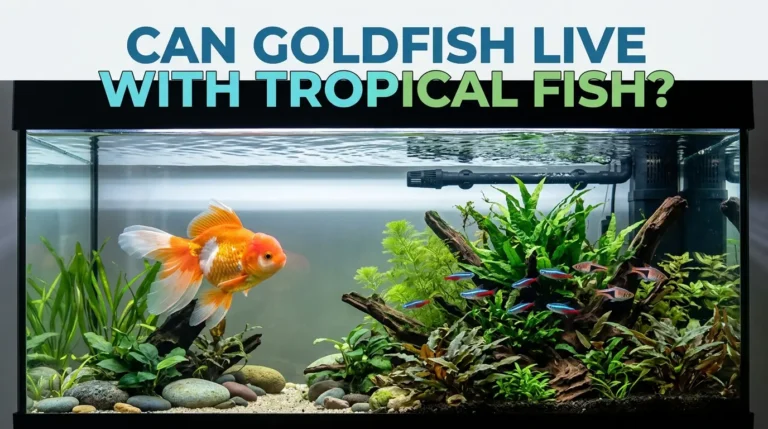

Corydoras, peaceful tetras, bristlenose plecos, gouramis, and rainbowfish pair well.
If you want the Best Angelfish Tank Mates for a Community Aquarium, you’re in the right place. I’ve kept and bred angelfish for years, and I’ve learned what works in real tanks, not just on paper. This guide explains the how and why behind great matches, with stocking plans, do’s and don’ts, and pro tips to help you build a calm, lively community that thrives.
How angelfish behave and why it matters
Angelfish are cichlids. They look gentle, but they hold territories and guard eggs. Knowing this helps you choose the Best Angelfish Tank Mates for a Community Aquarium that can live calmly beside them.
They swim midwater and move slowly. Long fins make them targets for fin-nippers. They get bolder as they mature, and breeding pairs defend a patch of glass, a leaf, or a filter intake. Small fish can be seen as food, and very fast fish can stress them.
Key traits to match
- Similar temperature: 76 to 82°F
- Soft to moderate water: 3 to 10 dGH, pH 6.5 to 7.5
- Calm to moderate flow
- Peaceful to semi-peaceful species, not chronic nippers

Personal note: My calmest setups used tall plants that broke lines of sight. Rummynose tetras stayed tight when angels were active, which spread attention and cut tension.
Tank size, layout, and water for a peaceful mix
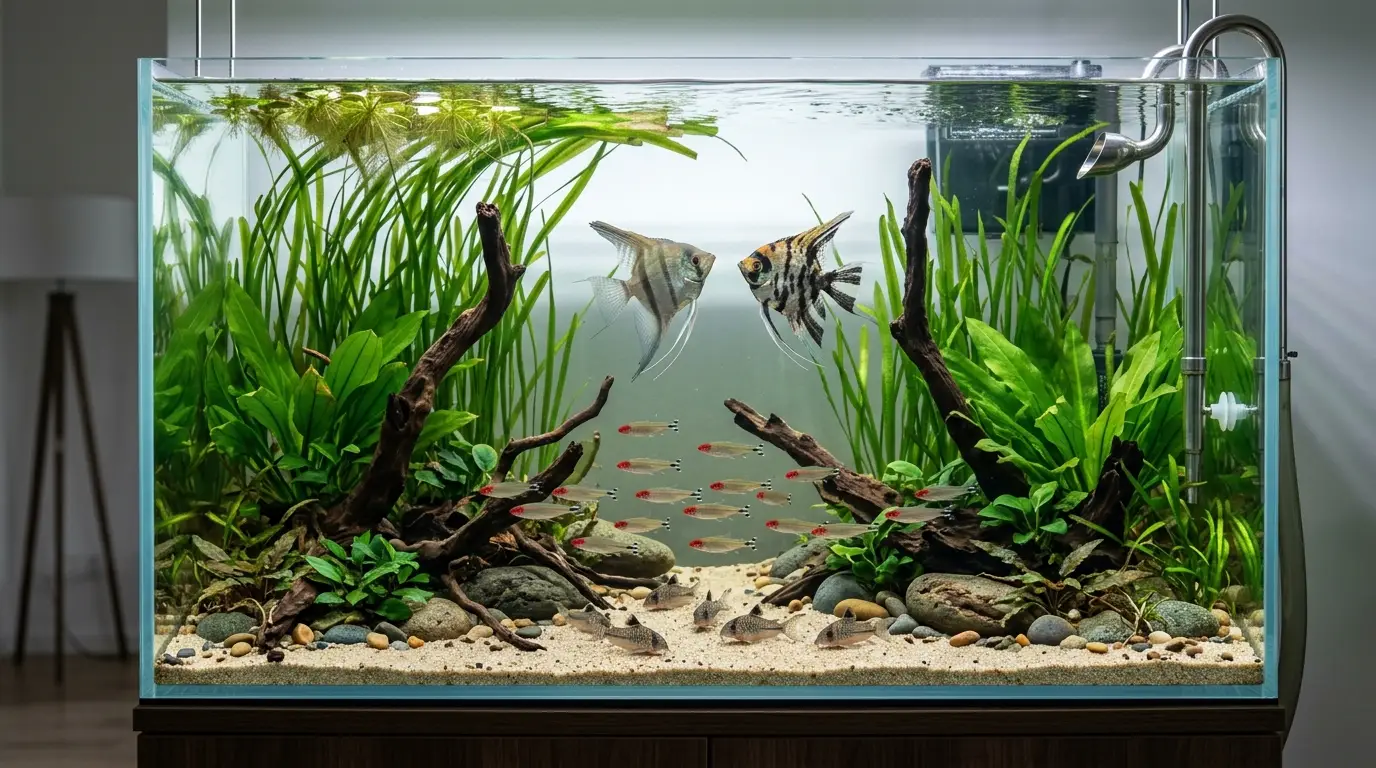
Good space and layout prevent most problems when picking the Best Angelfish Tank Mates for a Community Aquarium. Height matters because adult angels are tall.
Simple setup checklist
- Tank size: 40 gallons for a small group of juveniles or a pair of adults; 55+ gallons is better
- Height: 18 inches or more
- Plants and wood: Use tall stems, swords, and driftwood to make “rooms”
- Flow: Gentle to moderate; aim output across the back wall
- Water: Stable heat (78 to 80°F is a sweet spot) and consistent parameters
- Lighting: Moderate; bright light with shady plants keeps fish calm
Pro tip: Rearrange decor if a pair forms and gets too pushy. This resets territories without drama.
Best Angelfish Tank Mates for a Community Aquarium
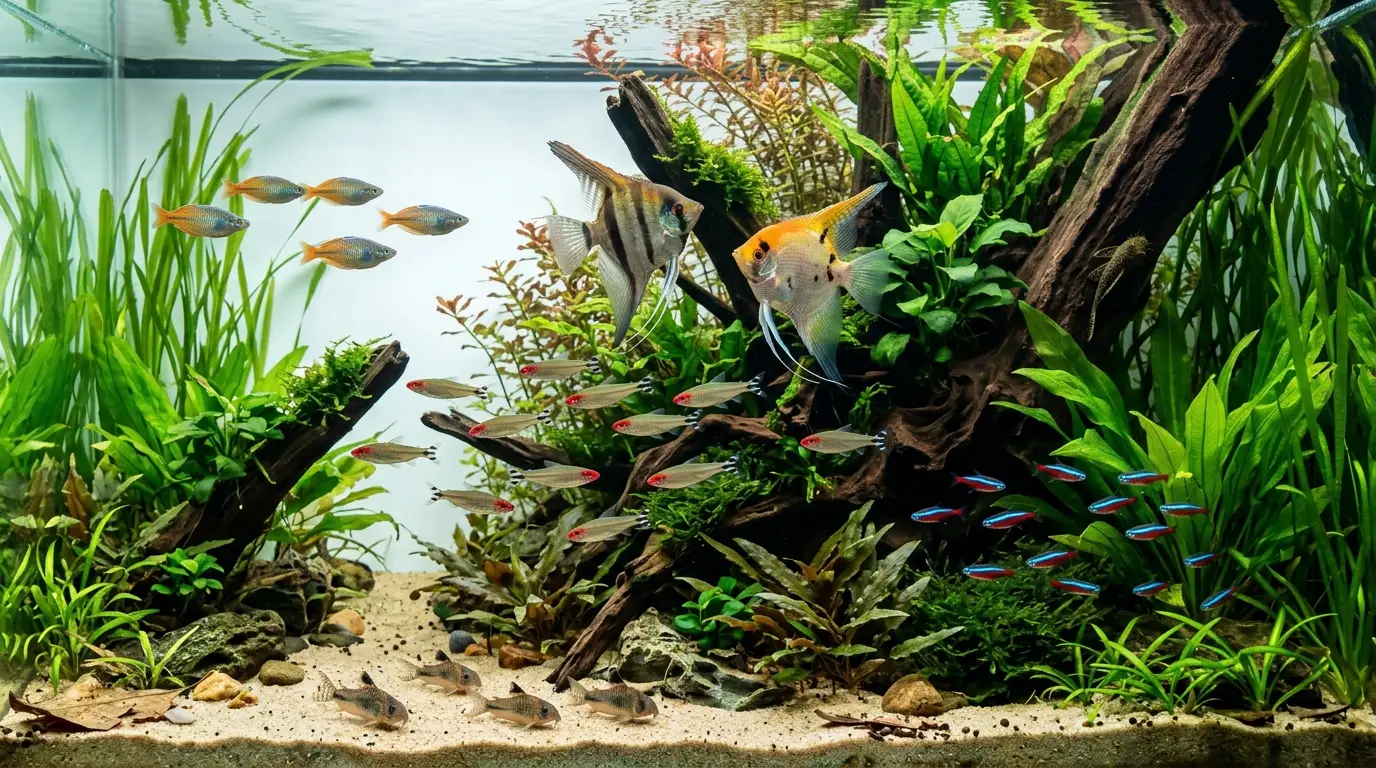
Finding the Best Angelfish Tank Mates for a Community Aquarium is about size, speed, and manners. Go for species that are too big to be a snack, not known for nipping, and happy in warm water.
Peaceful schooling fish (mid to upper water)
- Rummynose tetra: Great dither fish; tight schoolers that signal water quality with nose color.
- Cardinal tetra: Larger than neons and less likely to be eaten by adults.
- Lemon tetra and bleeding heart tetra: Calm, visible, and not chronic nippers.
- Hatchetfish (marbled or silver): Top dwellers that avoid angels; keep lids tight.
- Rainbowfish (praecox/dwarf, Boesemani in larger tanks): Colorful, active, and bold enough to coexist.
Note: Avoid known nippers like serpae tetra and black skirt strains with a nipping rep.
Bottom dwellers and cleanup crew
- Corydoras catfish: Peaceful, busy, and cute. Keep groups of 6+.
- Bristlenose pleco: Great algae eater that stays smaller than common plecos.
- Whiptail plecos: Gentle and efficient; prefer wood and soft substrate.
- Otocinclus: Best in mature tanks with biofilm; keep groups of 6+.
- Kuhli loaches: Shy burrowers; perfect for sand beds with plenty of hides.
Calm centerpiece companions
- Pearl gourami or honey gourami: Slow, peaceful, and elegant. Avoid blue/three-spot types in tight tanks.
- Keyhole cichlid: One of the gentlest cichlids; works in larger, well-scaped tanks.
- Bolivian ram or Apistogramma (selected species): Works in roomy tanks with hiding spots; watch during breeding.
Livebearers and others (with notes)
- Platies: Often fine in warm water, sturdy, and colorful.
- Swordtails: Work in bigger tanks; can be pushy. Stock more females than males.
- Larger mollies: Prefer harder water; better if your angels are in the upper pH range.
Personal experience: My 75-gallon with two adult angels, 20 rummynose, 8 lemon tetras, 10 Corydoras, and a bristlenose pleco ran smooth for years. I fed at both ends to keep the peace.
Remember, the Best Angelfish Tank Mates for a Community Aquarium balance space, speed, and temperament. When in doubt, choose a bigger school and more cover.
Fish to avoid with angelfish
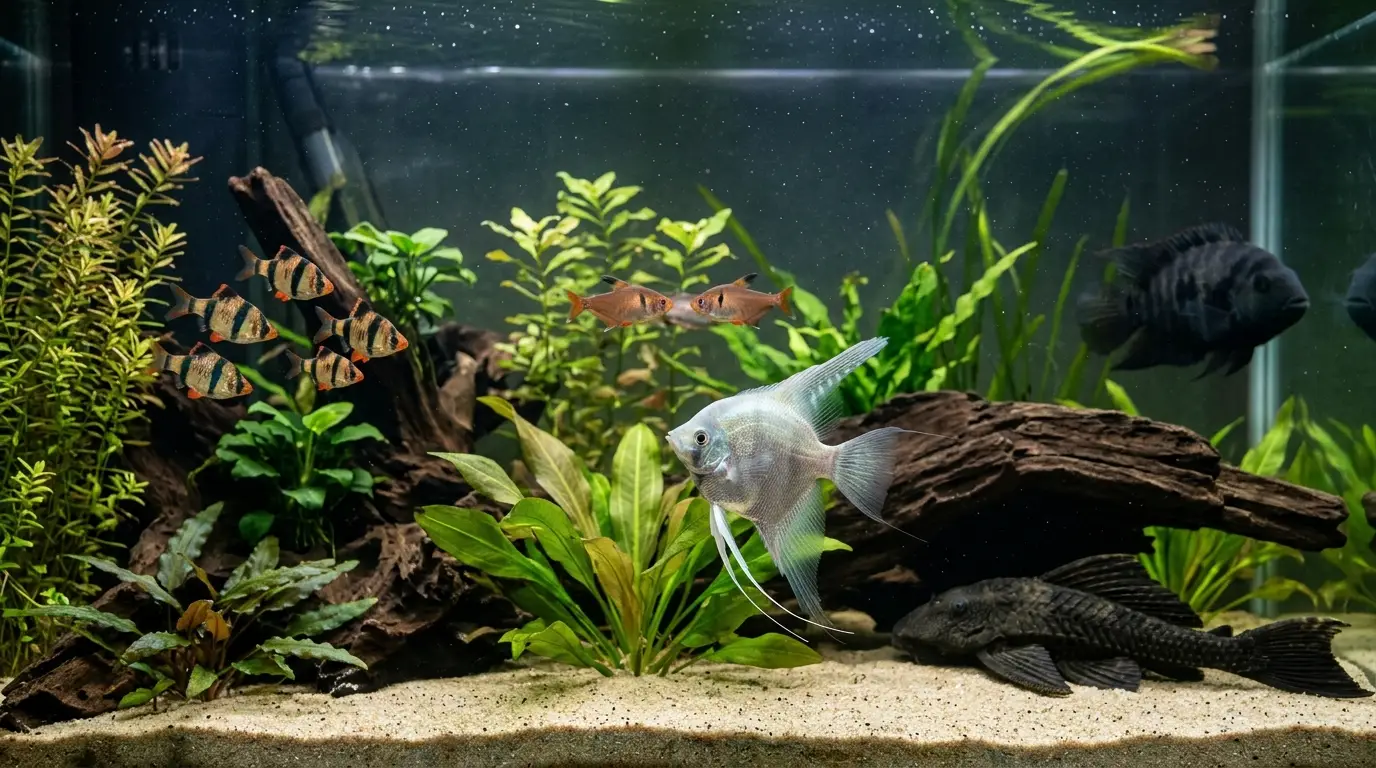
Even the Best Angelfish Tank Mates for a Community Aquarium fail if you mix in the wrong neighbors. Save yourself headaches by skipping these:
- Fin nippers: Tiger barbs, serpae tetras, some black skirt varieties
- Very small nano fish: Neon tetras with adult angels, ember tetras, chili rasboras
- Hyper-fast fish: Giant danios that buzz fins and stress angels
- Long-finned slow fish: Fancy guppies and male bettas become targets
- Big or pushy cichlids: Convicts, Jack Dempseys, oscars; even discus are tricky due to disease transfer and higher temp needs
- Large common plecos: Grow huge and can rasp angel slime coats at night
If you love a risky species, try a species-only tank or a second aquarium. That way your angels stay zen.
Smart stocking plans and ratios
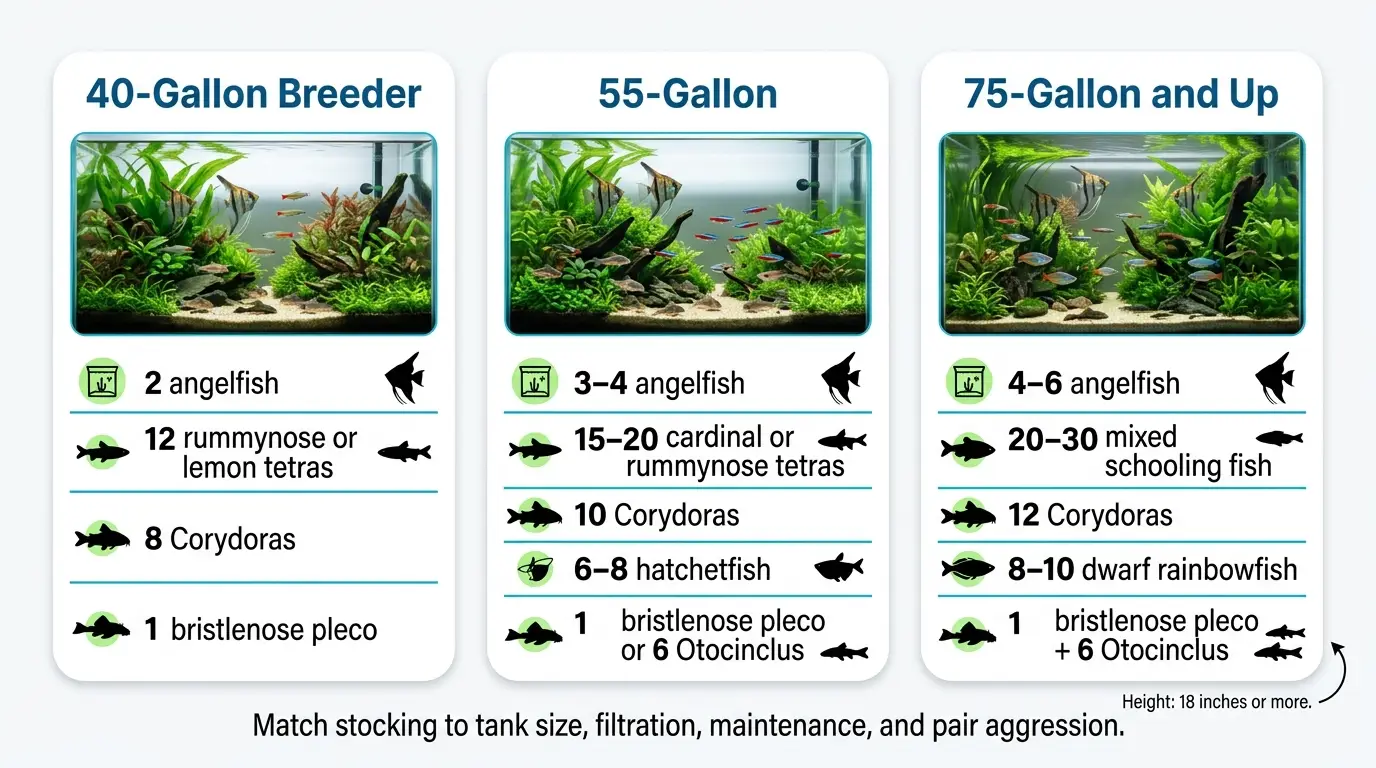
You can copy these proven mixes when planning the Best Angelfish Tank Mates for a Community Aquarium. Adjust for your tank size, filter power, and maintenance routine.
40-gallon breeder
- 2 angelfish (aim for a compatible pair)
- 12 rummynose or lemon tetras
- 8 Corydoras
- 1 bristlenose pleco
55-gallon
- 3 to 4 angelfish (start with 4 juveniles; rehome extras if a pair forms)
- 15 to 20 cardinal or rummynose tetras
- 10 Corydoras
- 6 to 8 hatchetfish
- 1 bristlenose pleco or 6 Otocinclus
75-gallon and up
- 4 to 6 angelfish (watch for pair aggression)
- 20 to 30 mixed schooling fish (rummynose, lemons, cardinals)
- 12 Corydoras
- 8 to 10 dwarf rainbowfish
- 1 bristlenose pleco, plus 6 Otocinclus
Tip: Overfilter by 1.5 to 2 times the rated flow. This lets you run bigger schools without nitrate spikes.
Feeding strategies that reduce tension
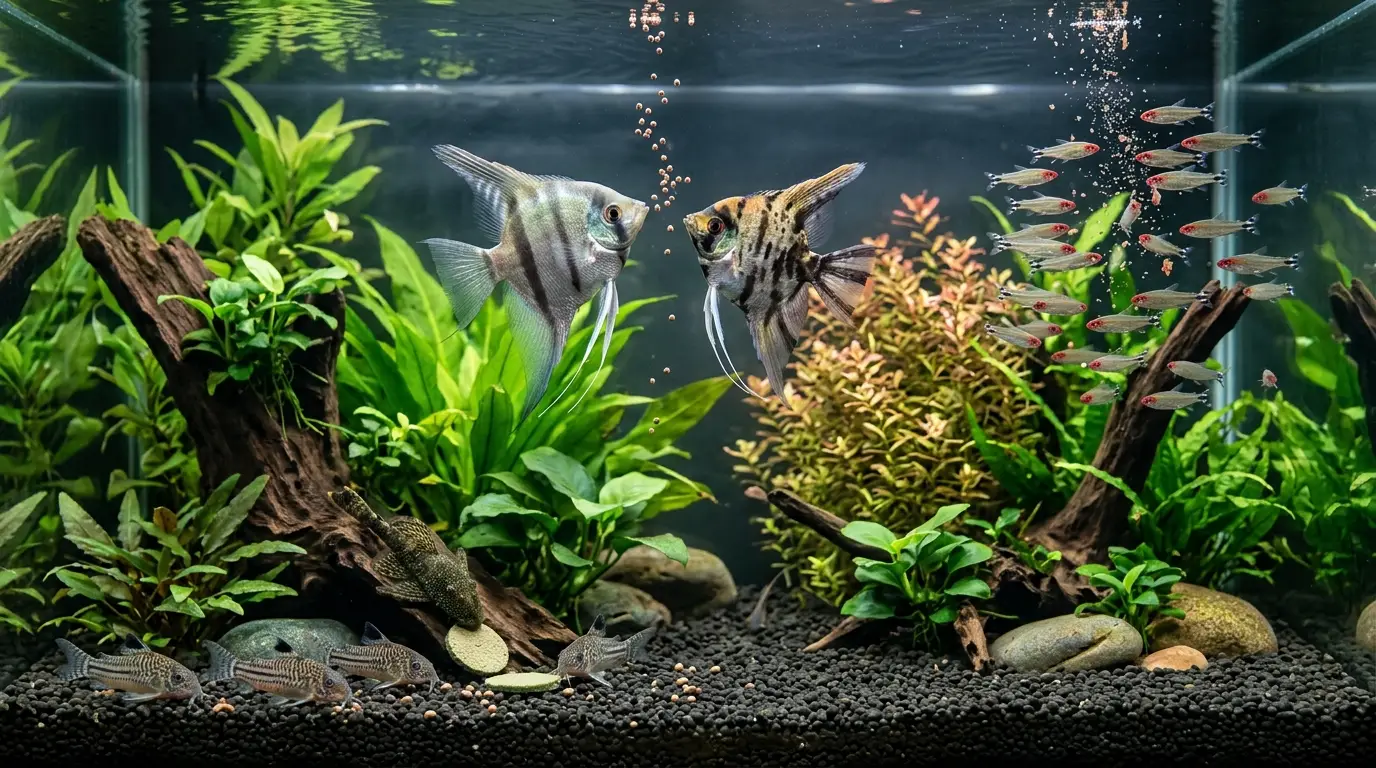
Feeding is a hidden key to the Best Angelfish Tank Mates for a Community Aquarium. Hungry fish get bold and nippy.
What works well
- Split feedings: Flake or small pellets for schools; slow-sinking granules for angels; wafers for bottom fish
- Use two feeding spots to spread fish out
- Offer frozen foods 2 to 3 times a week: brine shrimp, bloodworms, daphnia
- Add greens for plecos: blanched zucchini or algae wafers
- Keep portions small; aim for fish to clear food in under 2 minutes
Pro tip: If your angels hog the midwater, drop a pinch on one side, then quietly feed the other side for tetras.
Managing aggression and breeding events
Even with the Best Angelfish Tank Mates for a Community Aquarium, a breeding pair can flip the mood fast. You can manage this with a few steps.
Early signs and fixes
- Signs: Lip-locking, sideways displays, flared fins, guarding a leaf or pipe
- Quick fixes: Add plants, move wood to break sight lines, raise the group’s school size
- If eggs show up: Remove the spawn site, add a divider, or move the pair to a separate tank
- Night lights: A dim blue light can limit panic chases after lights out
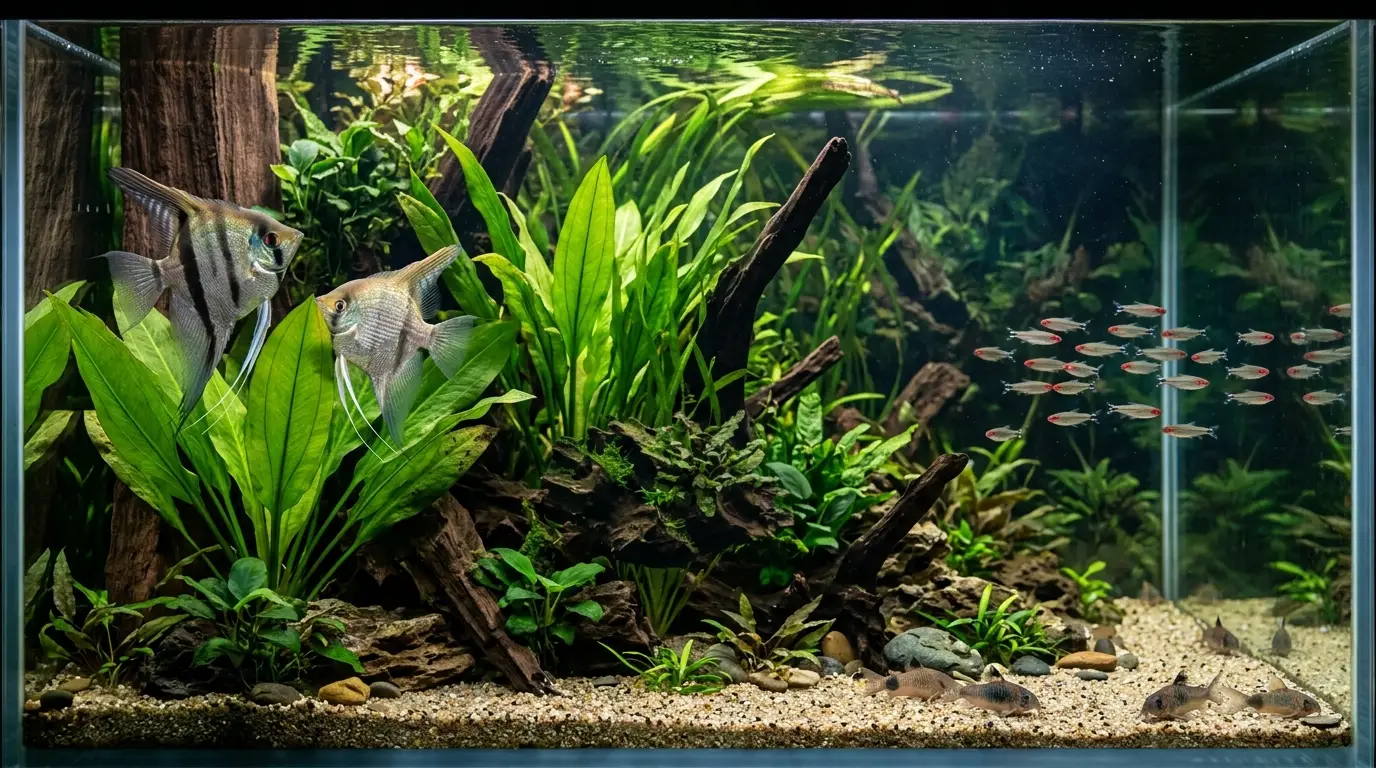
From my breeding tanks: Moving a formed pair to their own 29-gallon saved the community. Everyone settled within a day.
Quarantine, health, and sourcing
Quarantine protects your Best Angelfish Tank Mates for a Community Aquarium. It prevents ich, velvet, and internal parasites from spreading.
Simple, safe process
- Quarantine new fish for 3 to 4 weeks in a bare-bottom tank
- Observe daily for spots, clamped fins, white stringy poop, or labored breathing
- Feed well, keep water pristine, and treat only if you see symptoms
- Drip acclimate new arrivals to match temp and pH
- Buy from trusted breeders or stores with stable systems
Health watchlist: Fin rot, ich, velvet, and hole-in-the-head can be reduced by clean water, varied diet, and less stress.
Frequently Asked Questions of Best Angelfish Tank Mates for a Community Aquarium
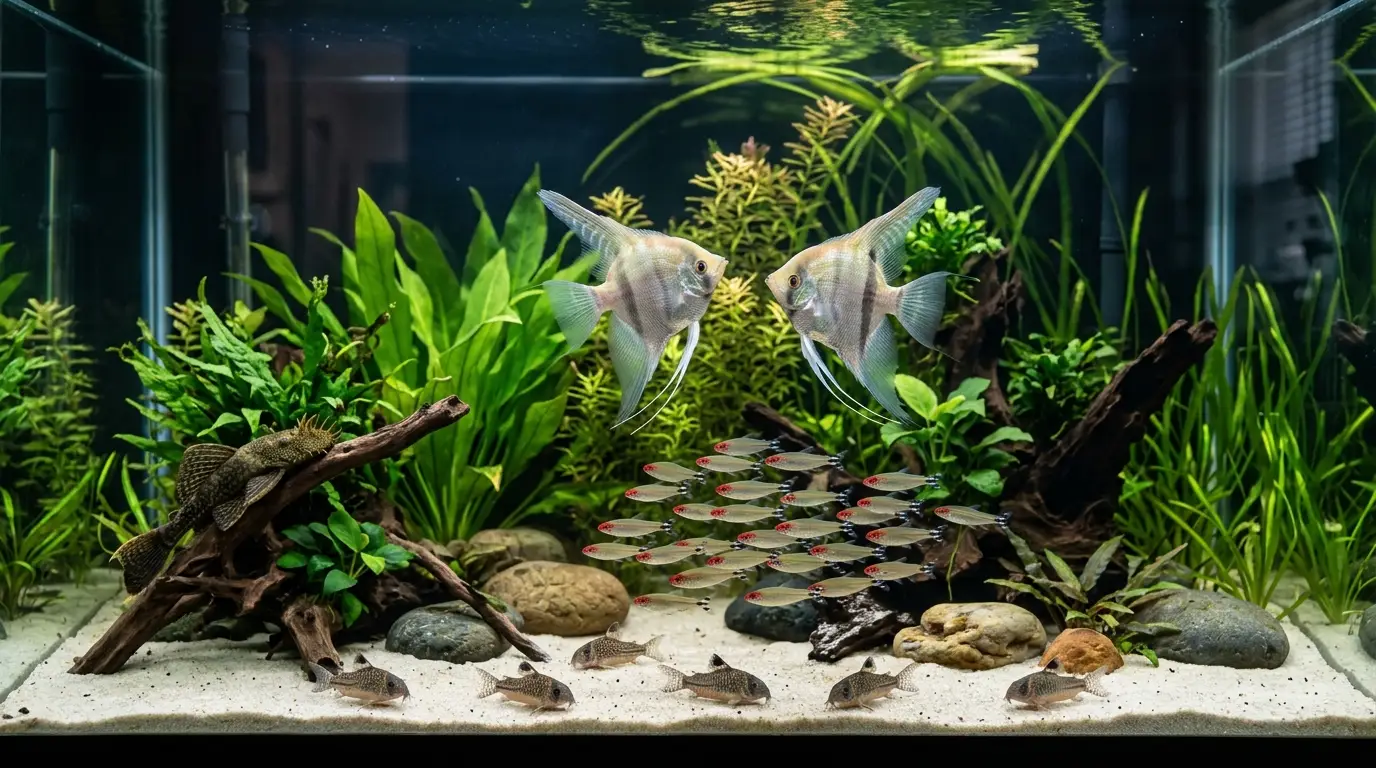
Can angelfish live with neon tetras?
It depends on size. Adult angels may eat neons. If angels grow up with large neons in a big tank, it can work, but it is never risk-free.
Are gouramis safe with angelfish?
Pearl and honey gouramis are usually fine. Avoid more aggressive types like blue/three-spot in tight tanks, and give both species space and plants.
Will plecos suck on angelfish at night?
Large common plecos sometimes rasp slime coats. Choose bristlenose or smaller, gentler species and keep them well fed.
How many angelfish should I keep together?
Pairs do best in modest tanks. In larger tanks, groups of 4 to 6 can work, but be ready to rehome extras if a pair forms and bullies the rest.
Do angelfish need warm water?
Yes. Keep them around 78 to 80°F for best color, appetite, and behavior. Match tank mates to that range.
Can I keep shrimp with angelfish?
Adult Amano shrimp can work in planted tanks. Small dwarf shrimp like cherry shrimp are often seen as snacks.
What plants help reduce aggression?
Tall stems, Amazon swords, and floating plants create sight breaks and shade. These reduce chasing and make fish feel secure.
Conclusion
You can build a calm, colorful tank when you match size, speed, and temperament. The Best Angelfish Tank Mates for a Community Aquarium are peaceful schoolers, gentle bottom dwellers, and steady centerpiece fish that share warm, stable water. With smart layout, steady feeding, and a short quarantine, your angels will glide, not guard.
Ready to plan your stocking list? Bookmark this guide, share your setup in the comments, and subscribe for more hands-on aquarium tips and step-by-step build guides.