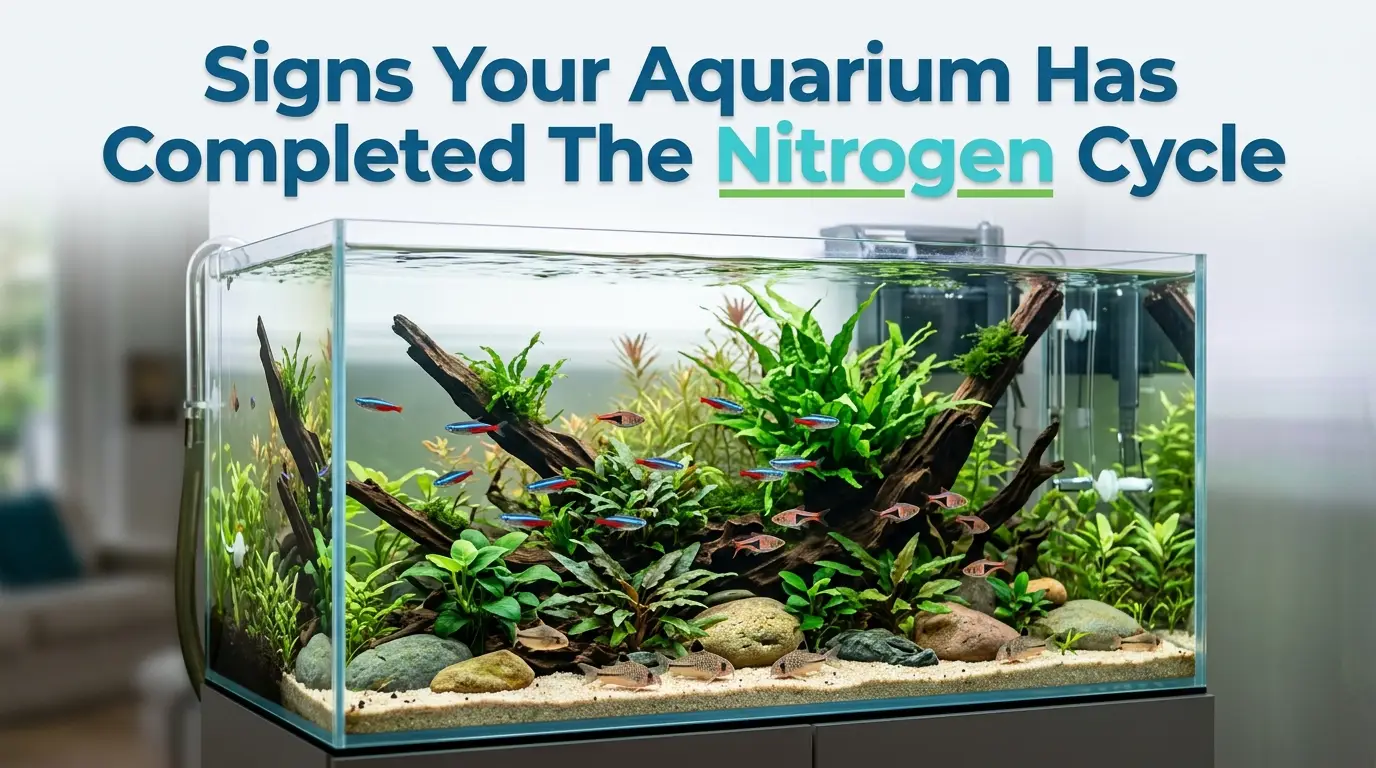
Ammonia and nitrite hit zero, nitrate rises, water clears, and fish act normal.
If you keep fish, you know the nitrogen cycle is your tank’s life support. In this guide, I break down the clear Signs Your Aquarium Has Completed the Nitrogen Cycle, how to confirm them with simple tests, and what to do next. I have cycled dozens of tanks, fixed failed cycles, and helped new keepers avoid losses. Read on for real examples, easy tools, and expert tips that make this simple and safe.
What The Nitrogen Cycle Is And Why It Matters
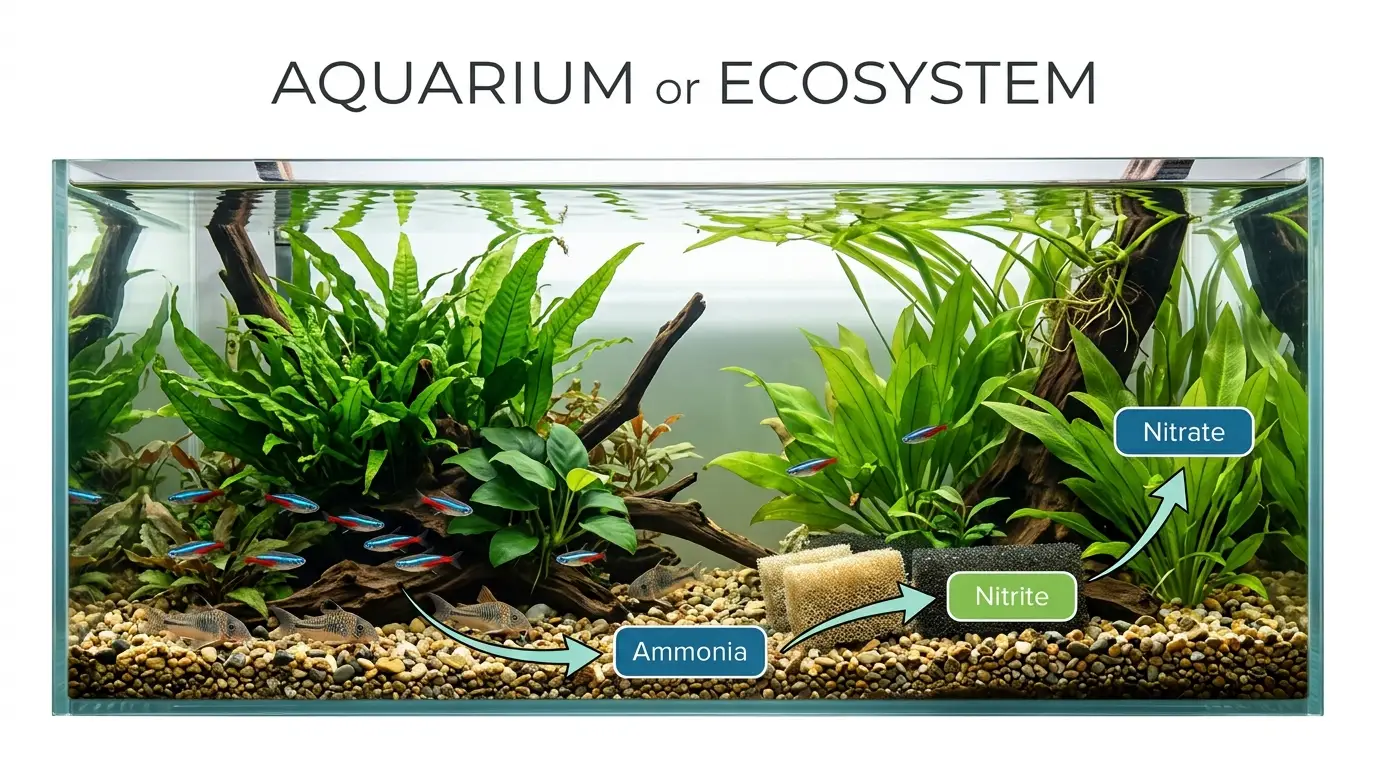
The nitrogen cycle turns toxic waste into safer forms. Beneficial bacteria convert ammonia to nitrite, then to nitrate. These microbes live on filter media, gravel, and decor.
Ammonia comes from fish waste, uneaten food, and decay. Nitrite forms next and is also toxic. Nitrate is the end product. It is less harmful and removed by water changes and plants. When the cycle is complete, the bacteria can process a steady load of waste every day.
This is the base for the Signs Your Aquarium Has Completed the Nitrogen Cycle. You will use simple tests to confirm each step. You will also watch your fish and the look of the water.
Clear Signs Your Aquarium Has Completed the Nitrogen Cycle
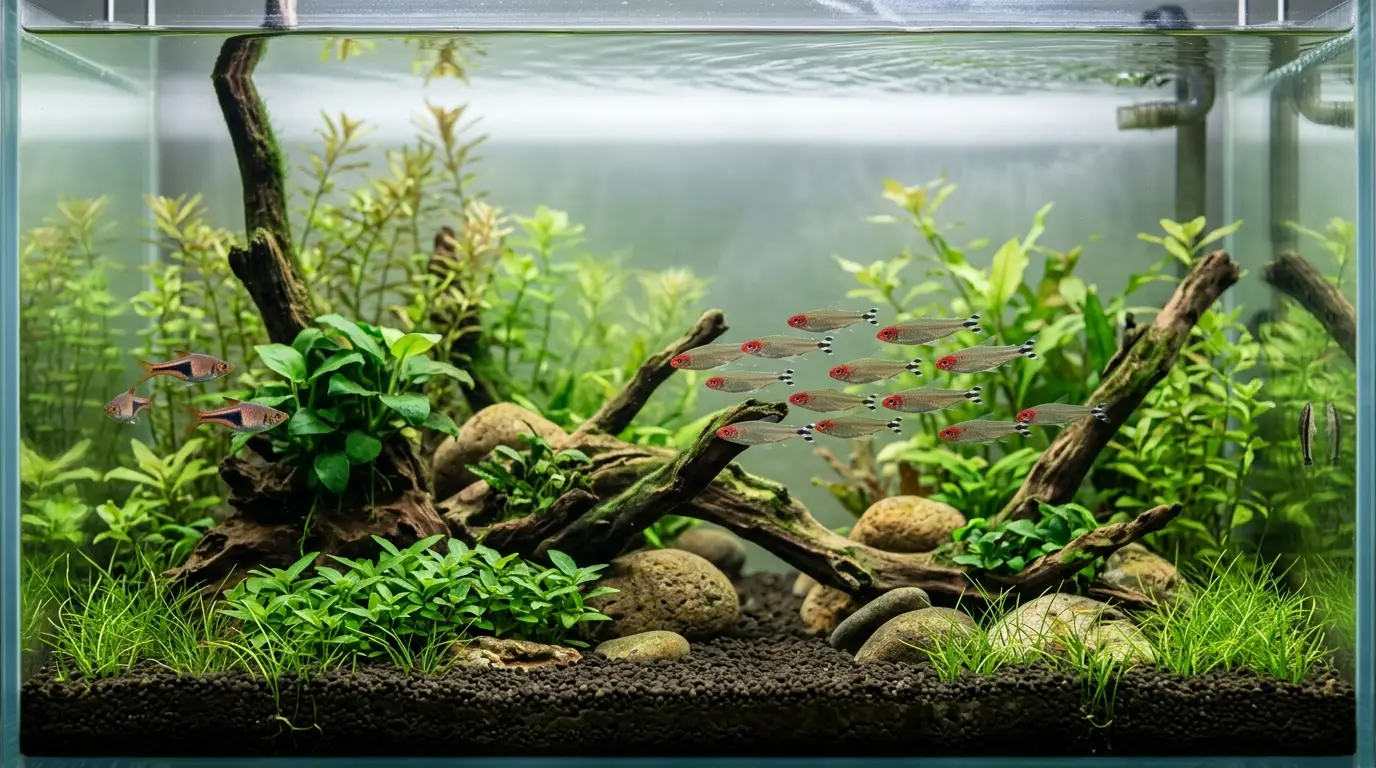
Knowing the Signs Your Aquarium Has Completed the Nitrogen Cycle saves fish lives. Look for these clear markers before you add more fish.
- Ammonia stays at 0 ppm for at least seven days while you feed or dose.
- Nitrite stays at 0 ppm for at least seven days under the same load.
- Nitrate is present and slowly rising between water changes, often 5 to 40 ppm.
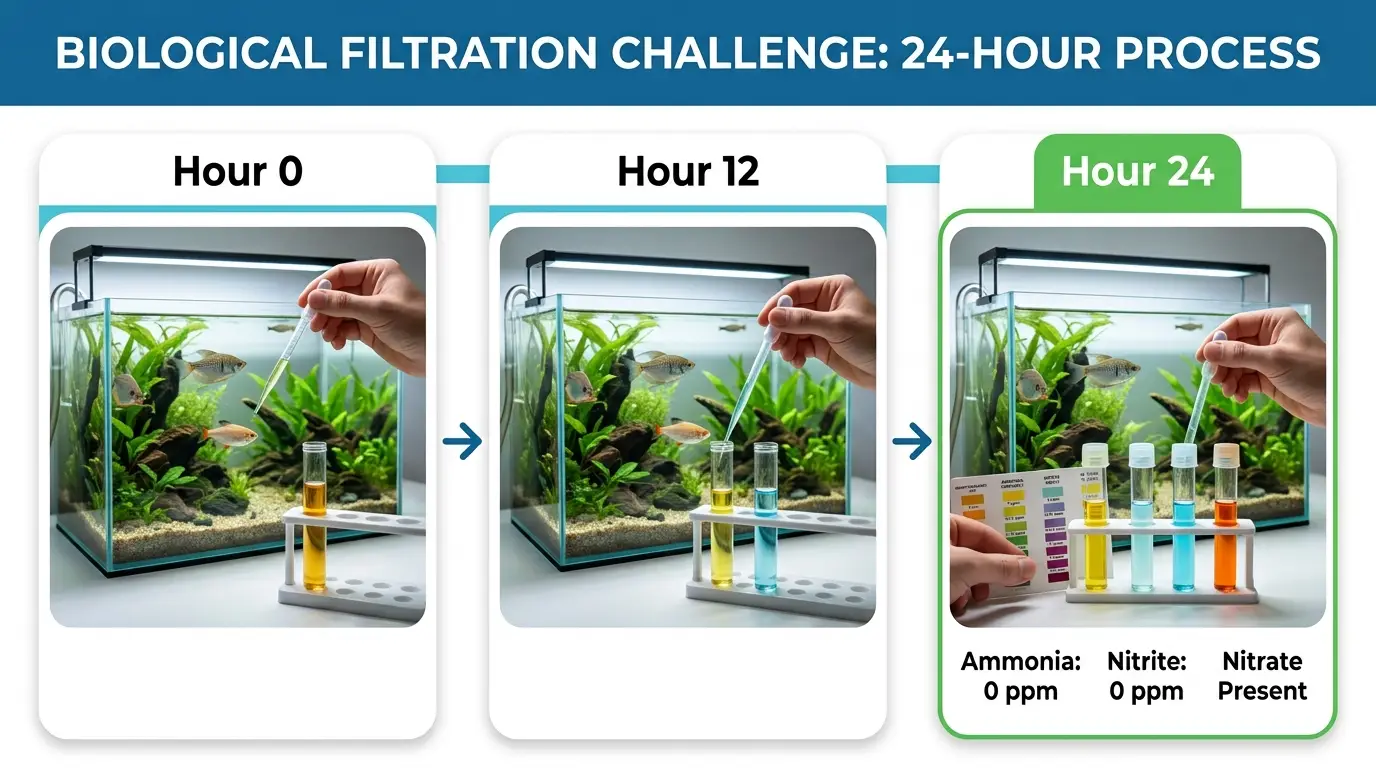
- A 24-hour challenge works. Dose the tank to about 1 to 2 ppm ammonia. After 24 hours, both ammonia and nitrite are back to 0 ppm.
- Water is clear. The early white haze or brown diatoms fade as the system settles.
- Fish breathe normal, eat well, and show steady behavior. No gasping at the surface.
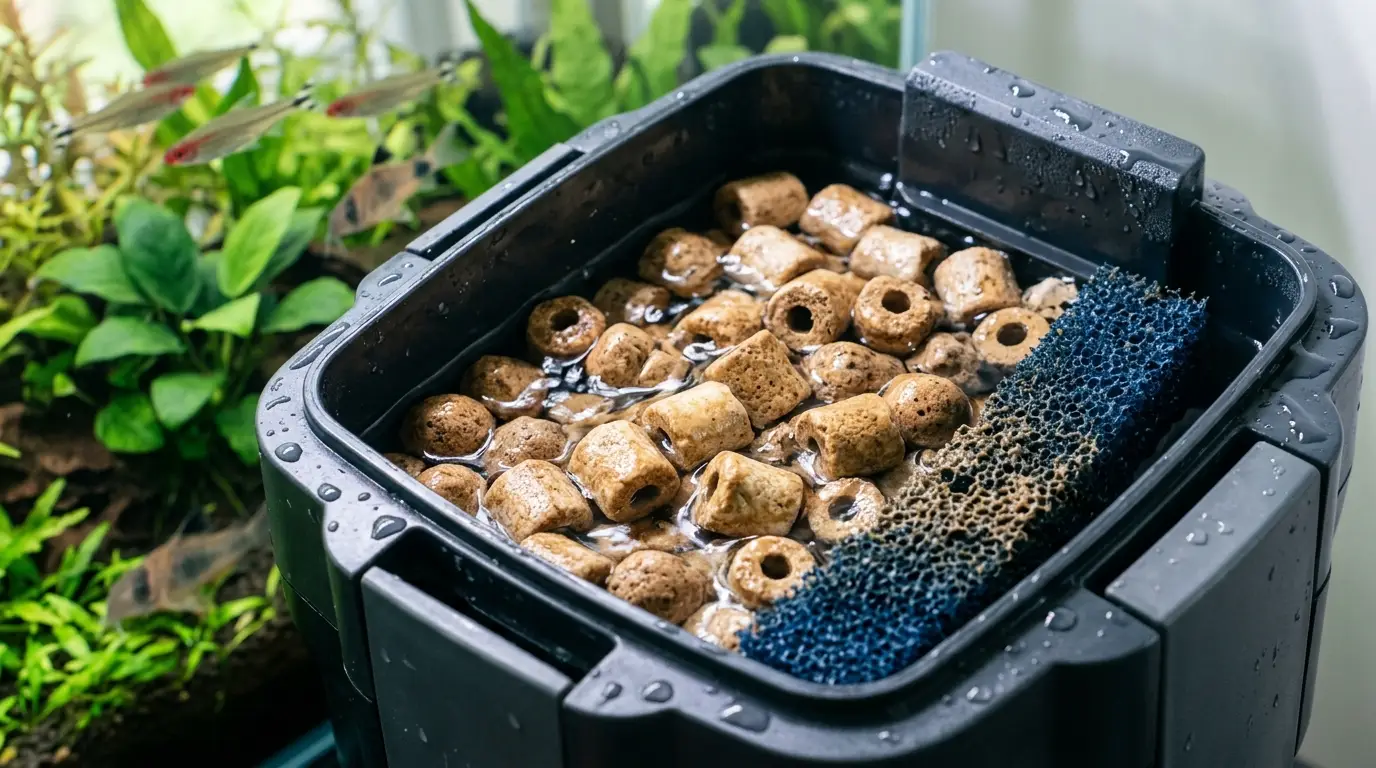
- The filter has a light tan biofilm. It does not smell rotten or look slimy.
- pH and KH are stable. No sudden drops that stall bacteria.
If you see all of these, you have strong Signs Your Aquarium Has Completed the Nitrogen Cycle. Keep testing for a week to confirm.
How To Test And Confirm Each Sign
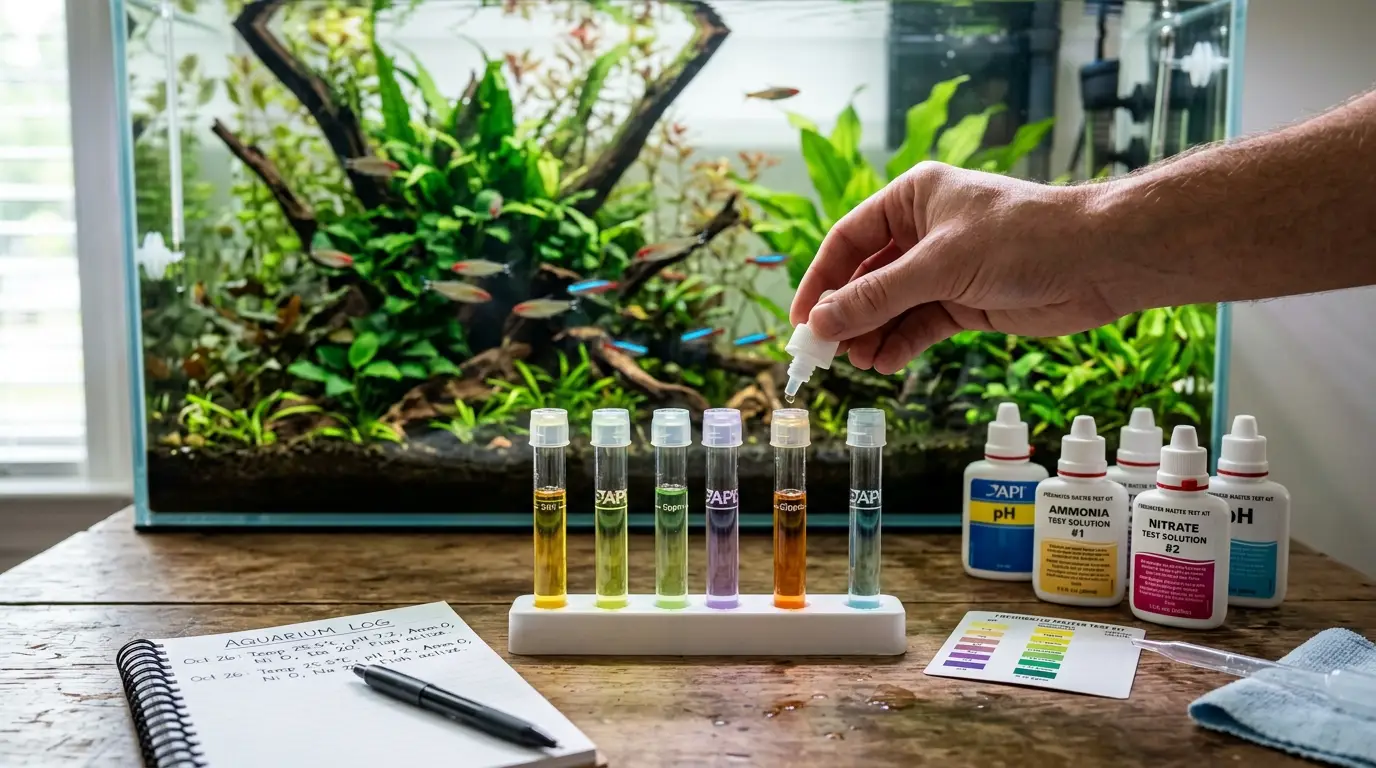
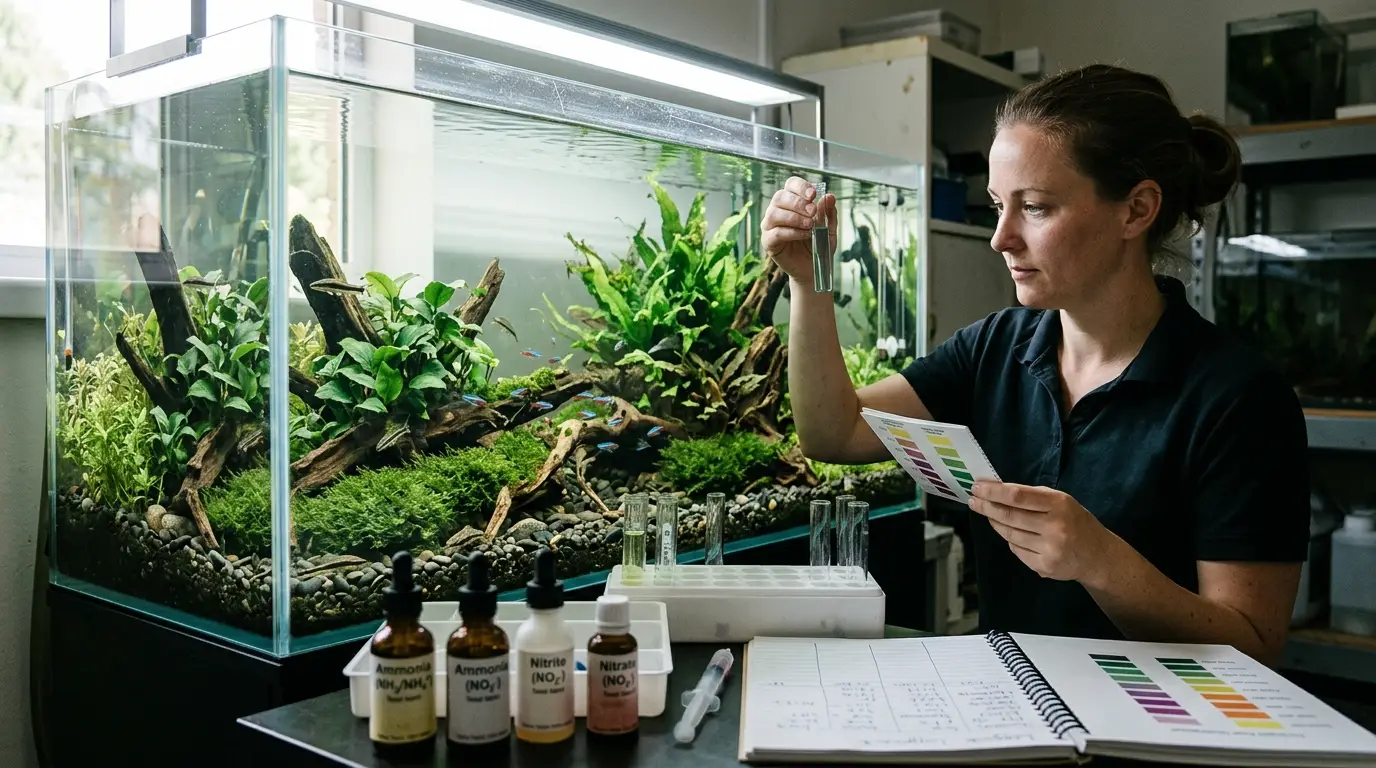
Use a reliable liquid test kit for ammonia, nitrite, and nitrate. Test strips are handy but can be less precise. Shake bottles well and follow timing closely.
Test daily during the cycle. When you think you are done, run a 24-hour challenge. Dose to about 1 to 2 ppm ammonia. Test at hour 0, 12, and 24. You pass if ammonia and nitrite are 0 ppm by hour 24, and nitrate rises.
Conditioners can confuse readings. Some products bind ammonia and fool certain kits. If you use a binder, wait 24 hours before testing or use a kit that reads free ammonia. Check test kit dates, since old kits drift.
The Signs Your Aquarium Has Completed the Nitrogen Cycle also include steady nitrate. Do a water change, log nitrate, then test again a week later. A small rise shows the biofilter is working and waste is being processed.
Timelines And What Affects Them
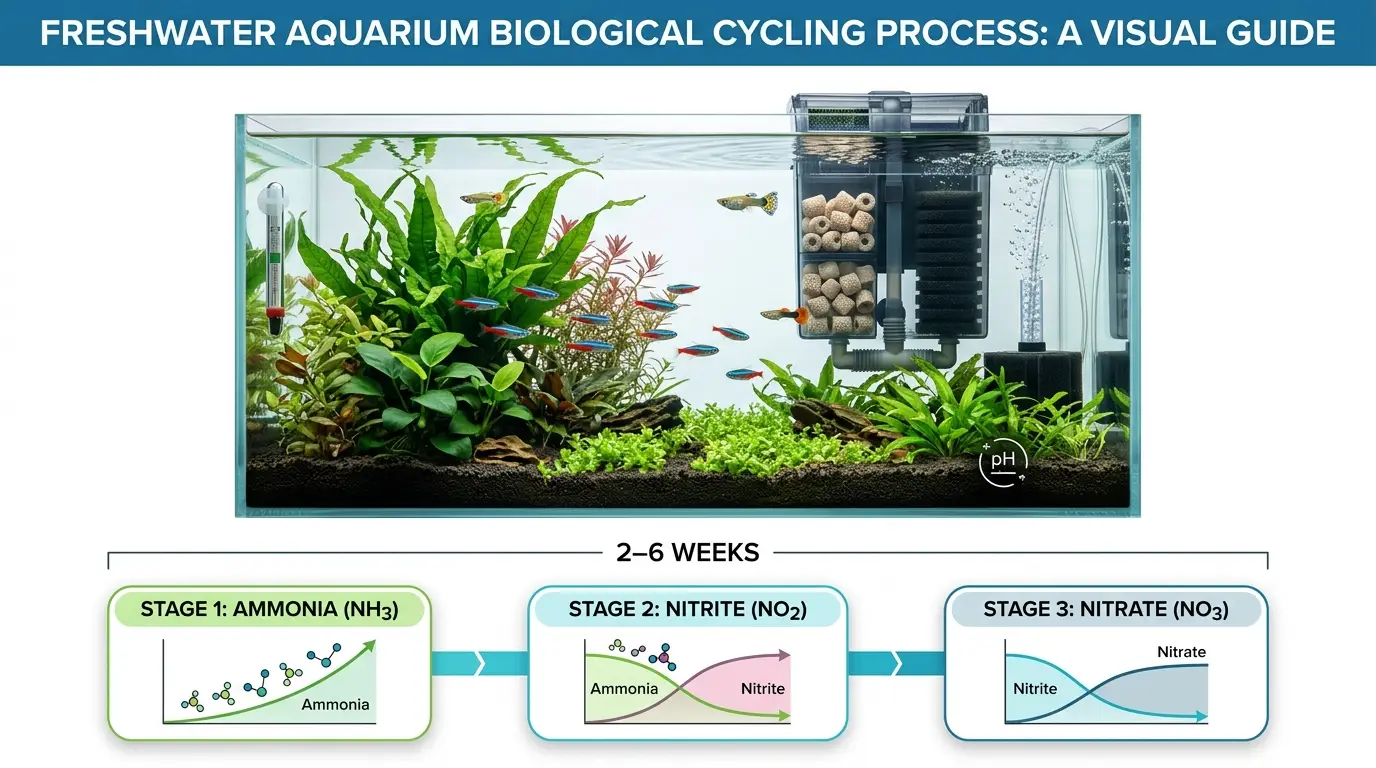
Most tanks finish in 2 to 6 weeks. Fishless cycles are often faster and safer. Fish-in cycles can take longer and need careful feeding and water changes.
Warm water helps. Aim for 77 to 82°F during cycling. Good oxygen and flow help bacteria grow. Keep filter media wet and undisturbed.
pH and KH matter. Low KH can cause a pH crash and stall the cycle. Keep some buffering with crushed coral or a steady water source. Seeding with established media or bottled bacteria can shorten the time. In planted tanks, fast growers may consume ammonia. This can hide your progress, so test often.
These factors can speed or delay the Signs Your Aquarium Has Completed the Nitrogen Cycle. Track them so you know what to expect.
Common Mistakes And False Positives
Some things can fake the Signs Your Aquarium Has Completed the Nitrogen Cycle. Watch for these traps.
- Overusing conditioners can cause odd readings. Bound ammonia may still appear on some tests.
- Large water changes can dilute nitrate and make it look like zero. Zero nitrate with no plants often means the cycle is not done.
- Expired test kits give bad data. Replace them on time.
- Scrubbing the filter media in tap water can kill bacteria. Always rinse in tank water.
- Overfeeding leads to spikes. Keep feeding light while cycling.
- Adding too many fish at once can cause a mini-cycle. Increase stock in steps.
Use a logbook and confirm with the 24-hour challenge. This makes the Signs Your Aquarium Has Completed the Nitrogen Cycle clear and true.
What To Do After The Cycle Completes
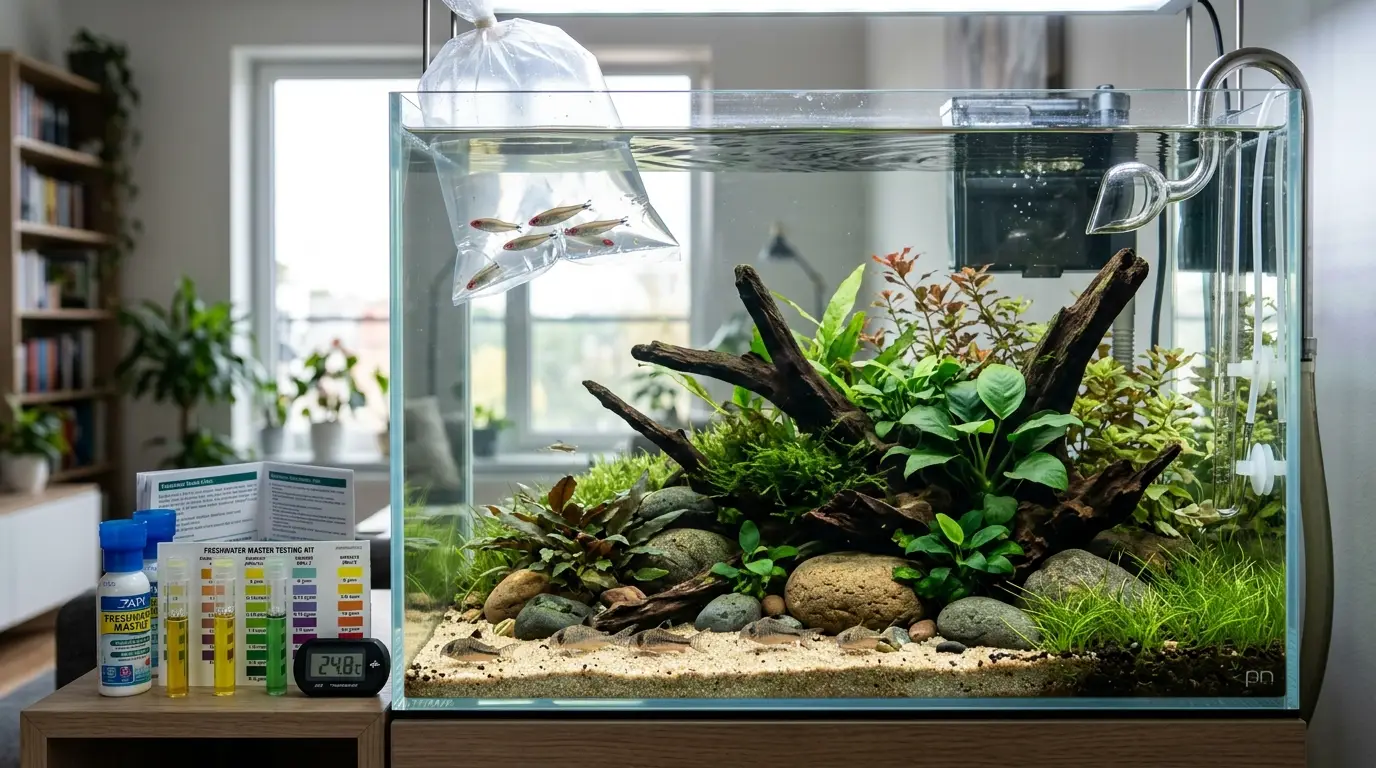
When you see the Signs Your Aquarium Has Completed the Nitrogen Cycle, move with care.
- Add fish slowly. Increase bio-load by about a quarter each week.
- Keep feeding modest. Do not flood the new biofilter with waste.
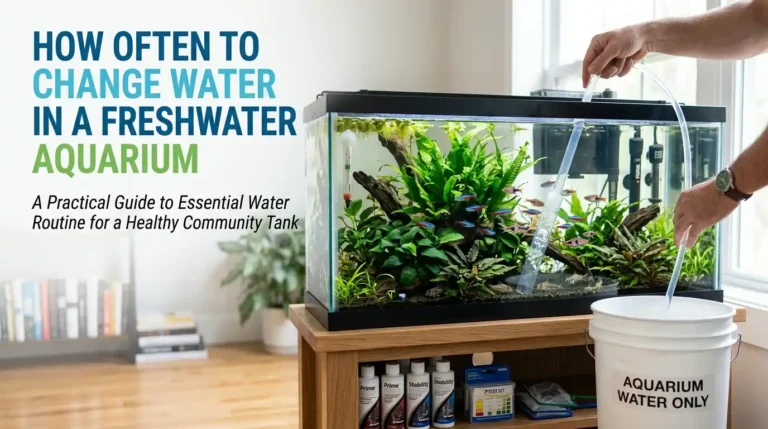
- Do weekly water changes of 25 to 50 percent to control nitrate.
- Clean the filter gently in old tank water. Never replace all media at once.
- Keep KH and pH stable. Test them monthly or when fish act odd.
- Keep a simple log. Record tests, water changes, and stock changes.
This protects your new biofilter and keeps the cycle stable. It also prevents mini-cycles after changes.
Real-World Examples And Case Notes
In my 20-gallon fishless cycle, I used seeded media and bottled bacteria. Ammonia and nitrite hit zero by day 10. Nitrate rose from 5 to 20 ppm in one week. The 24-hour challenge passed twice. Those were textbook Signs Your Aquarium Has Completed the Nitrogen Cycle.
A client’s 55-gallon fish-in cycle stalled at nitrite for two weeks. The KH was near zero and pH crashed to 6.0. We raised KH, added air, and kept daily water changes. Within five days, nitrite fell to zero and nitrate rose. The fix made the Signs Your Aquarium Has Completed the Nitrogen Cycle appear fast.
I once “cleaned” a filter under the tap. The tank mini-cycled and fish panted. We re-seeded the media, cut feeding, and dosed extra air. It took a week to recover. Lesson learned.
Related Concepts: Mini-Cycles, Old Tank Syndrome, And Biofilter Maturity
A mini-cycle can happen after heavy cleaning, a big stock increase, or a filter swap. You may see a short ammonia or nitrite spike. Testing and water changes fix it.
Old tank syndrome is different. Nitrate creeps very high while KH drops. pH can crash and harm fish. The fix is slow, repeated water changes and restored buffering.
A tank can be cycled but not mature. A mature tank has stable bacteria, microfauna, and algae balance. It can handle small shocks with ease. The Signs Your Aquarium Has Completed the Nitrogen Cycle are the first step. True maturity comes in the next 3 to 6 months.
Frequently Asked Questions of Signs Your Aquarium Has Completed the Nitrogen Cycle
How long does the nitrogen cycle take?
Most tanks finish in 2 to 6 weeks. Seeding media, warm water, and good flow can shorten it.
Is clear water proof that my tank is cycled?
No. Clear water can occur with no cycle. Only tests for ammonia, nitrite, and nitrate confirm the Signs Your Aquarium Has Completed the Nitrogen Cycle.
Do bottled bacteria really work?
They can help when fresh and used as directed. They boost the right microbes so you see signs faster.
Why do I have zero nitrate but my tank seems fine?
If you have many plants, they may consume nitrate. If you have no plants, zero nitrate often means the cycle is not done.
Can I add all my fish at once after cycling?
No. Add fish in steps so bacteria can grow with the load. This prevents a mini-cycle.
What is the 24-hour ammonia challenge?
You dose to about 1 to 2 ppm ammonia and retest in 24 hours. If ammonia and nitrite hit zero, you have strong Signs Your Aquarium Has Completed the Nitrogen Cycle.
Why did my cycle stall at nitrite?
Low pH or KH, low oxygen, or cold water can slow nitrite oxidizers. Fix these and the cycle will move again.
Conclusion
You now know the Signs Your Aquarium Has Completed the Nitrogen Cycle and how to prove them. Aim for zero ammonia, zero nitrite, and a steady rise in nitrate. Confirm with a 24-hour challenge, then add fish slowly and keep testing.
Treat your biofilter like gold. Feed lightly, change water each week, and never over-clean the filter. Do this, and your tank will stay safe, stable, and clear.
Ready to dive deeper? Subscribe for more step-by-step guides, or drop a comment with your setup and test results. I am happy to help you read your numbers and plan your next move.