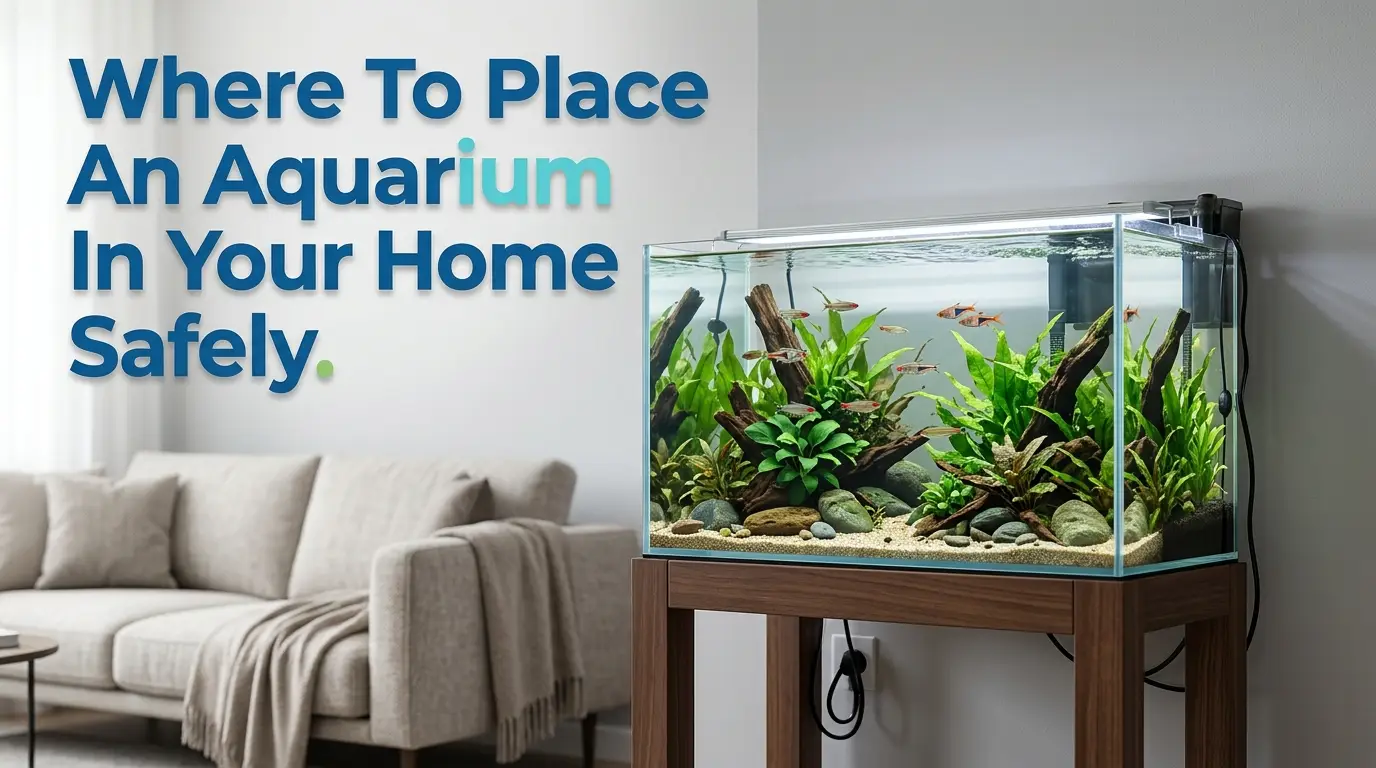
Place your aquarium on a sturdy stand, away from sun, drafts, and traffic.
If you want to know Where to Place an Aquarium in Your Home Safely, you are in the right place. I’ve set up dozens of tanks in homes and offices. Small and large. Freshwater and reef. This guide breaks down every step to protect your floor, your fish, and your gear. Stick with me to learn smart spots, big mistakes to avoid, and how to plan with ease.
Safety first: weight, floors, and the right stand
Water is heavy. One gallon weighs about 8.34 pounds. A 55-gallon tank with glass, rocks, and gear can pass 600 pounds. A 120-gallon system can top half a ton. That weight sits full-time on your floor.
Here is how to place it right:
- Use a stand rated for your tank size and weight.
- Place the stand on a flat, level surface. Use a foam mat if the maker allows it.
- Set the tank near a load-bearing wall. If you can, run the stand across floor joists, not along them.
- Avoid bouncy spots and old, soft subfloors. Check for sag or squeaks.
- On carpet, use a wide, stable stand base. On hardwood, use a pad to prevent dents.
I learned this the hard way. Years ago, a cheap stand bowed under my 75-gallon tank. I moved it near a wall and used a better stand. No more creaks. If you ask Where to Place an Aquarium in Your Home Safely, start with structure first.
Light, heat, and humidity control
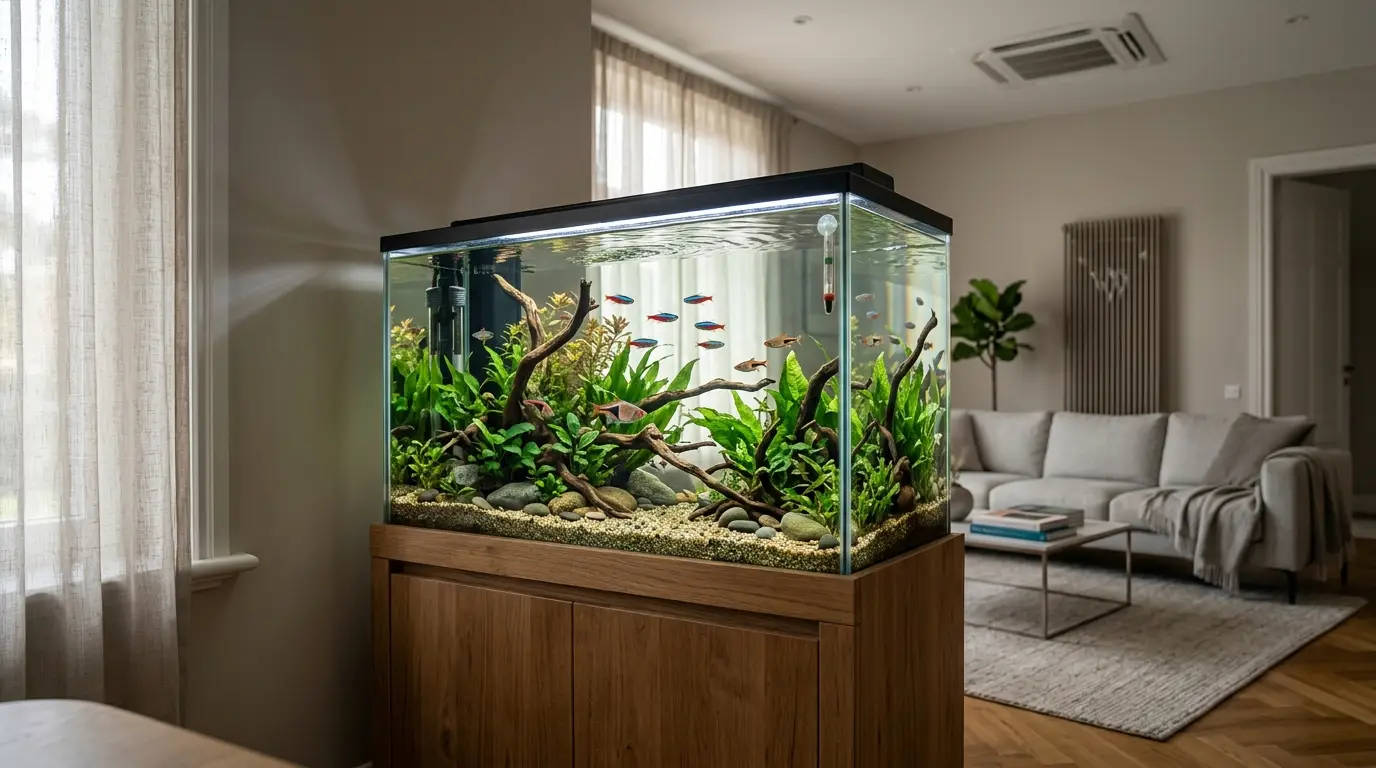
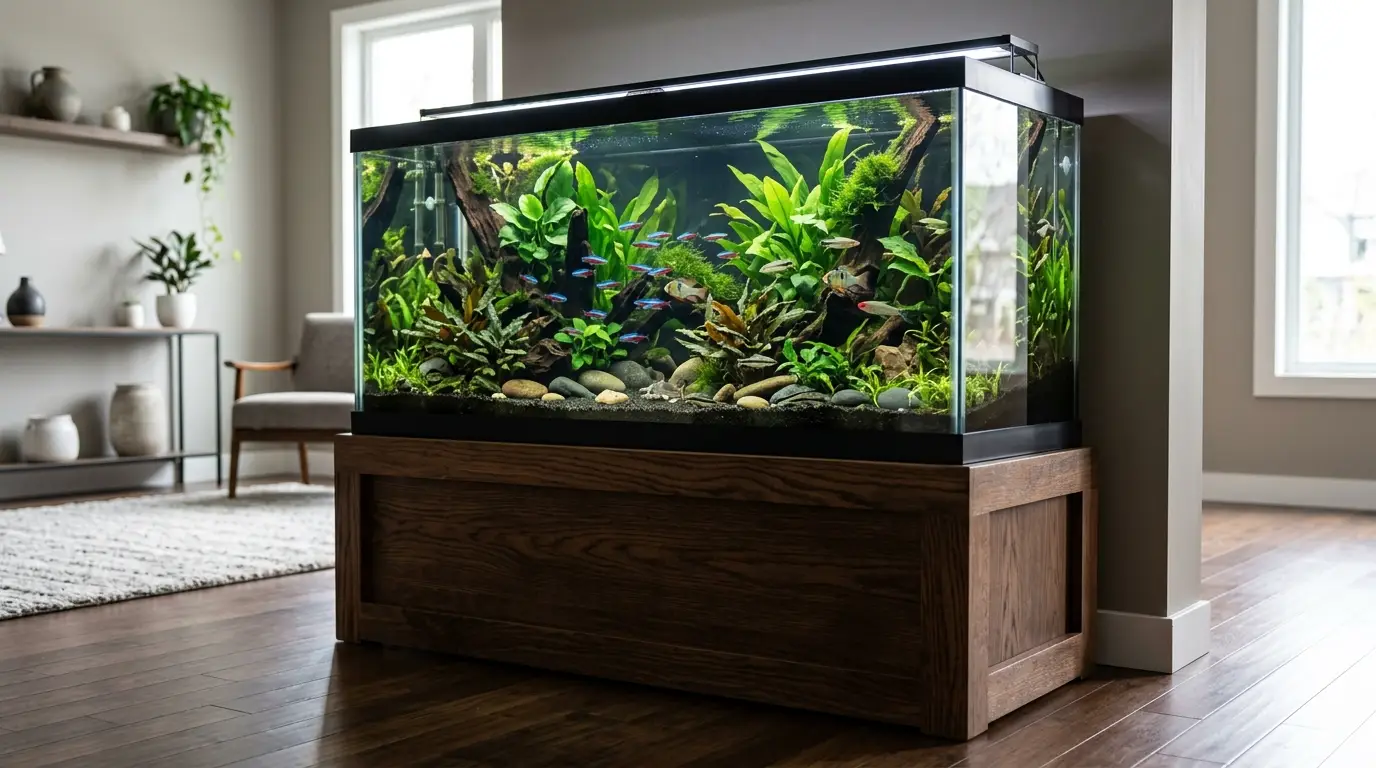
Direct sun heats water fast. It also feeds algae. Keep the tank out of strong sunbeams. A bright room is fine. Direct rays for hours are not.
Watch for heat and cold. Keep the tank away from vents, radiators, fireplaces, and drafty doors. Aim for a stable room temp. Use a lid to slow evaporation. That helps your heater and your AC. It also protects paint, wood, and drywall from damp air.
Power, water access, and spill safety
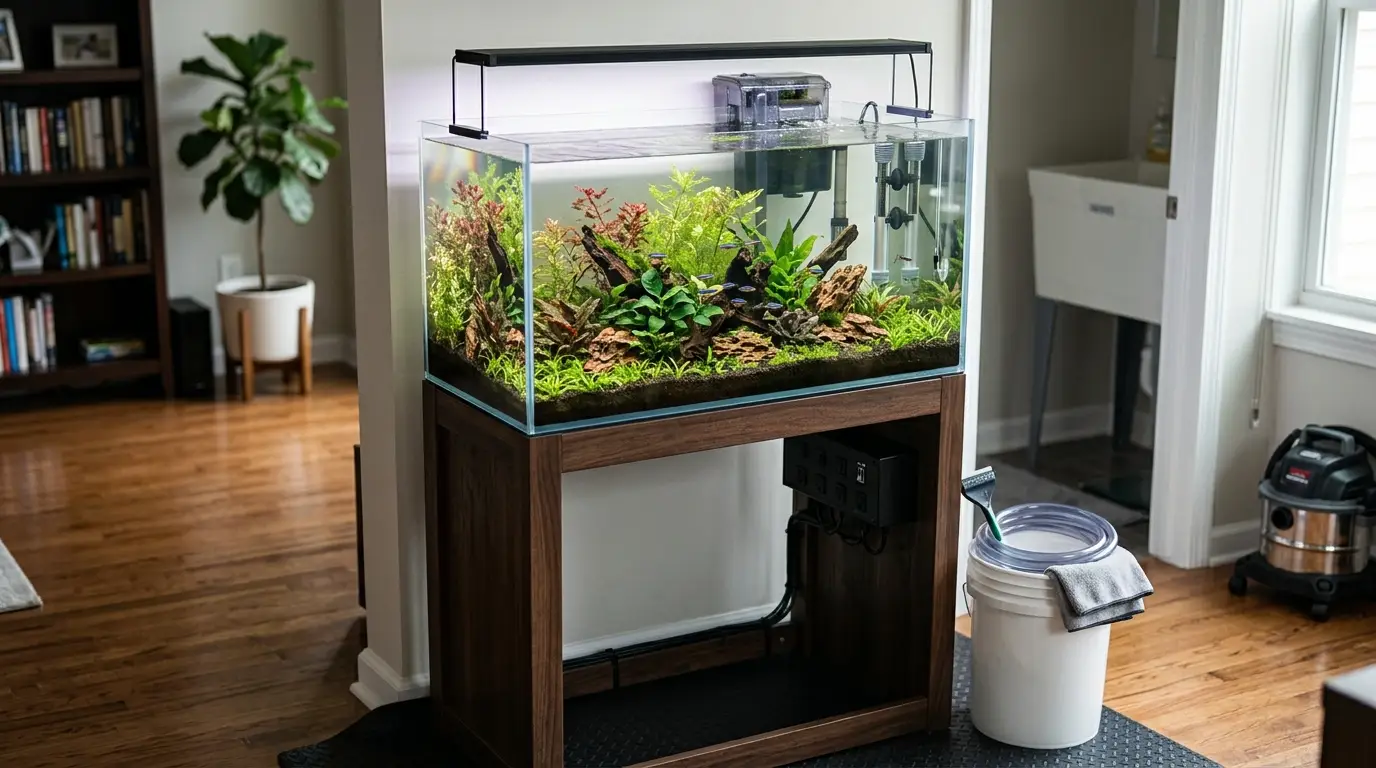
You will need safe power. Plug gear into a GFCI outlet if you can. Use drip loops on every cord. Keep the power strip above the floor. Do not overload one outlet. A surge protector helps protect lights and pumps.
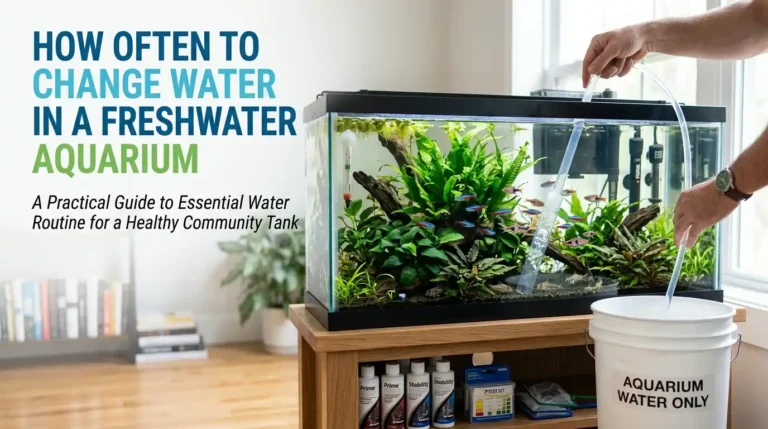
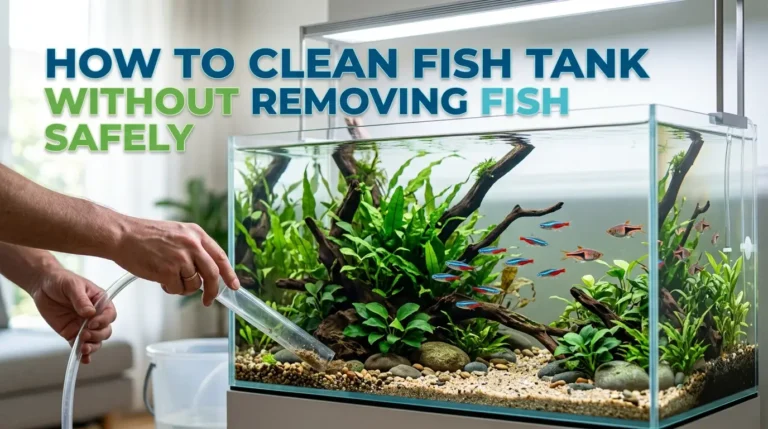
Make water changes easy. Place the tank near a sink or a drain path. A door to a patio works well too. Store buckets and a hose nearby. Put a waterproof mat under the stand. Keep towels and a wet-dry vac handy. Do not place the tank over costly rugs or electronics.
If you are still asking Where to Place an Aquarium in Your Home Safely, think “short hoses, short cords, safe spills.”
Traffic, noise, pets, and kids
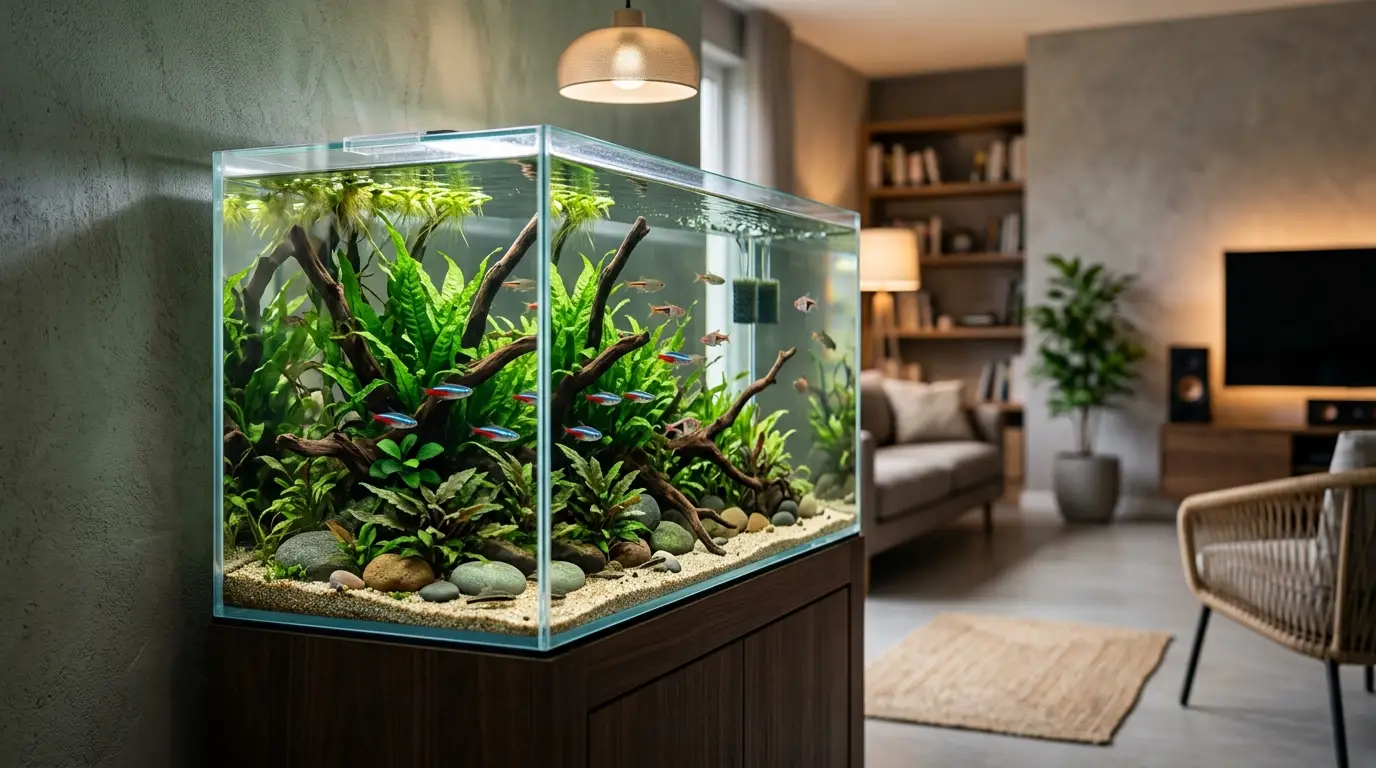
A calm spot is best. Avoid door slams, hall rush, and busy walkways. Keep it away from speakers, subwoofers, and washing machines. Low vibration stresses fish and can rattle gear.
Mind pets and kids. Use a tight lid with clips. Choose a spot where hands and paws cannot tap the glass all day. Place the viewing height so you can enjoy the tank while seated. That feels natural and keeps it safer.
I once moved a nano reef away from a TV subwoofer. The fish hid less, and the water cleared up. Small changes help a lot when you choose Where to Place an Aquarium in Your Home Safely.
Room-by-room guide
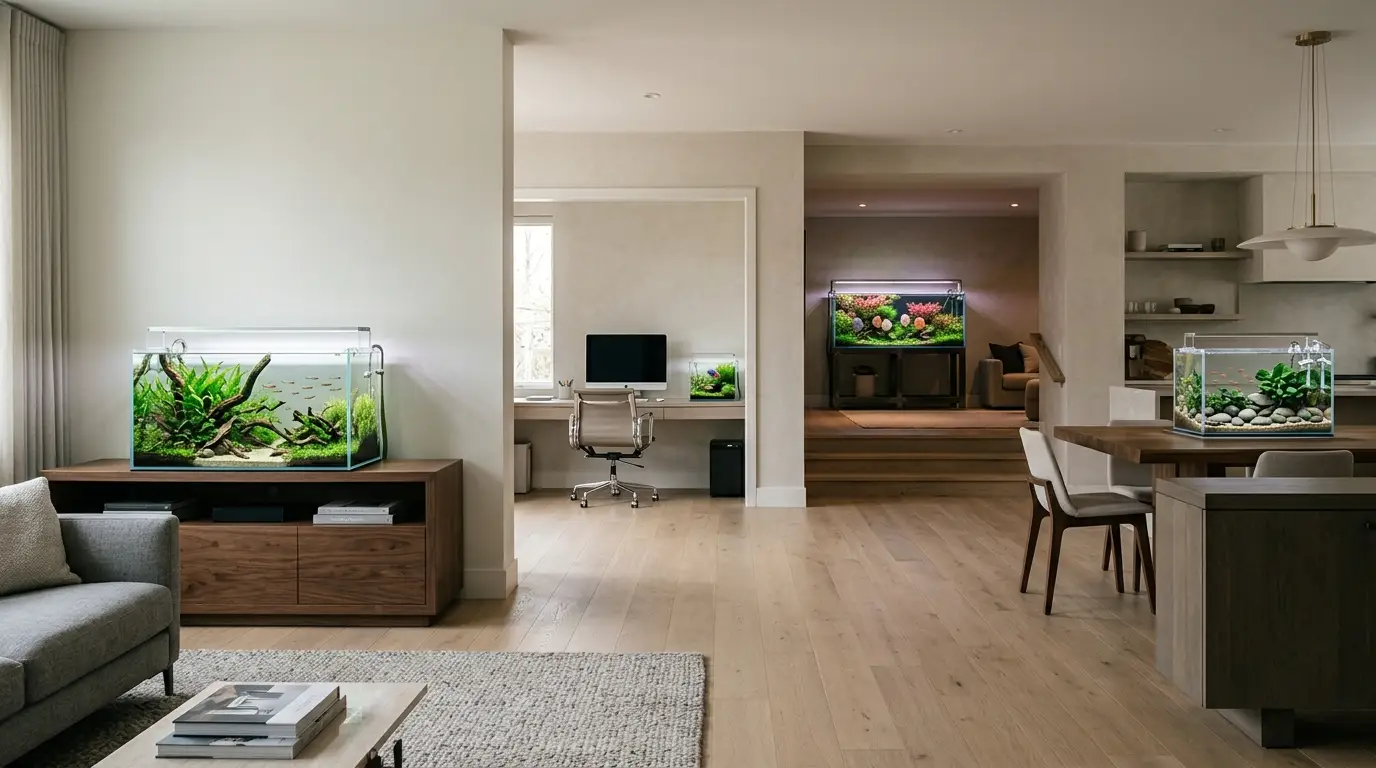
Living room
- Often ideal. Good viewing. Easy access.
- Keep it off the main traffic line. Avoid sun-facing windows and big speakers.
- Place near a wall with power and a clear hose path.
Dining room
- Great for calm viewing during meals.
- Watch out for heat from kitchens and sliding doors.
- Use a mat to guard floors from spills.
Home office
- Nice white noise. Good light control.
- Keep cords tidy and away from chair wheels.
- Avoid placing above computer towers.
Bedroom
- Works for small tanks. Larger tanks can hum at night.
- Place far from windows and heaters. Use a quiet filter.
Kitchen
- Easy water access, but lots of heat and grease.
- If you must, keep distance from stove, oven, and sun.
- Cover the tank and run a fan or small dehumidifier if needed.
Entryway or hallway
- Often too busy. Risk of bumps and drafts.
- If used, pick a wide nook with a sturdy wall.
Basement
- Stable temps and floors. Great for large tanks.
- Add dehumidification and good lighting for viewing.
In each room, ask again: Where to Place an Aquarium in Your Home Safely? Pick a calm, stable, and sturdy spot with safe power and water access.
Common myths and mistakes
Myths to skip
- Tanks need window light. False. You control light with LEDs. Sun adds heat and algae risk.
- Any stand will do. False. Use a stand rated for your tank size and footprint.
- Put it anywhere on concrete. Not always. You still need level, access, and safe power.
- Feng shui alone decides the spot. Follow safety first. Then style and flow.
Mistakes to avoid
- Placing near vents or radiators.
- Using long, coiled extension cords.
- Blocking filter access or sump doors.
- Setting it on a sloped floor without leveling.
- Ignoring the floor load under very large tanks.
These points tie back to the same idea. If you wonder Where to Place an Aquarium in Your Home Safely, avoid heat, avoid sun, avoid sway, and plan for spills.
Step-by-step placement checklist
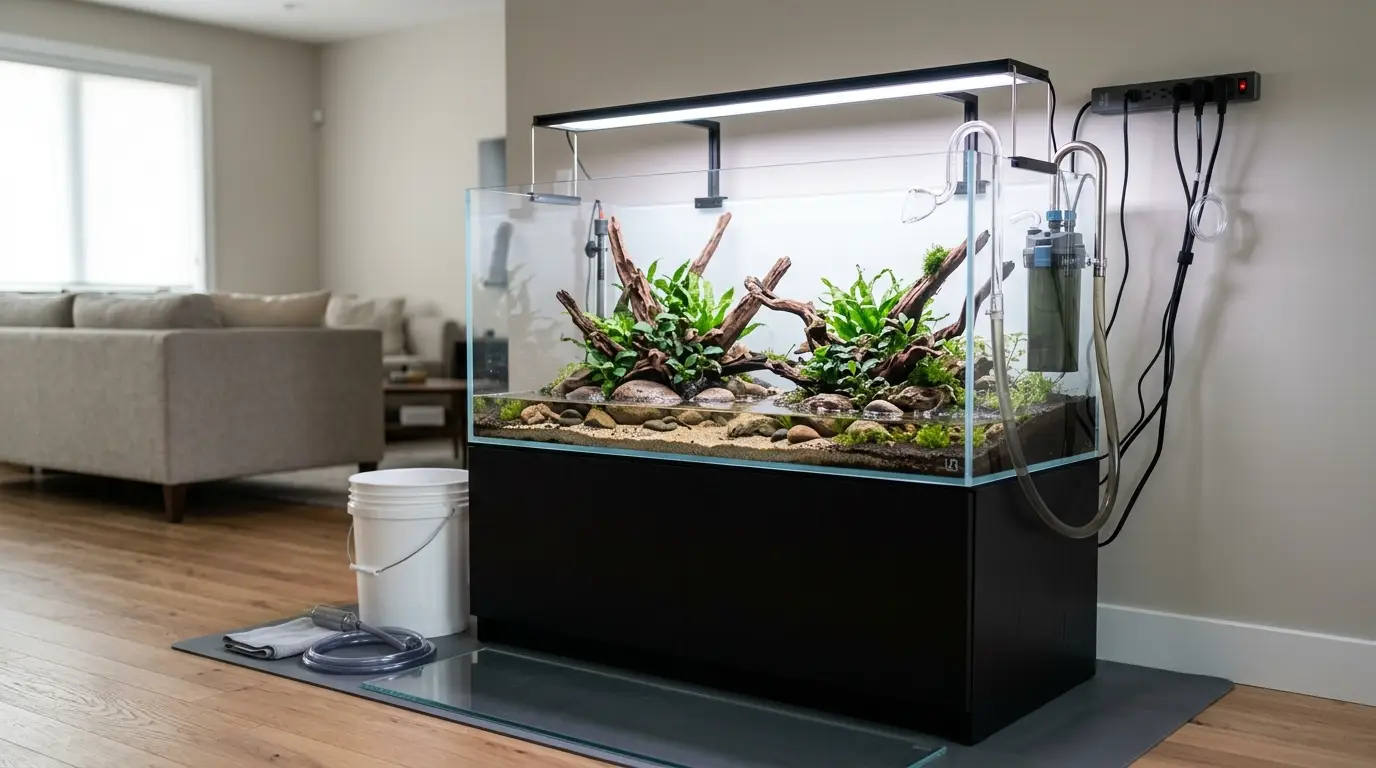
Use this quick plan before you fill your tank:
- Map three possible spots. Check for sun, vents, and traffic.
- Confirm floor support. Aim near a load-bearing wall.
- Measure space for the stand, gear, and maintenance access.
- Check outlets for GFCI and plan drip loops.
- Plan water change routes. Test hose reach to sink or drain.
- Place a mat. Level the stand. Add a foam pad if allowed.
- Set the empty tank. Check level front to back and side to side.
- Dry run cables, filters, and lights. Confirm door clearance.
- Fill and leak-test. Watch for noise and vibration.
- Final tweak. Enjoy the view.
Follow this list each time you decide Where to Place an Aquarium in Your Home Safely.
Long-term care and safety upgrades
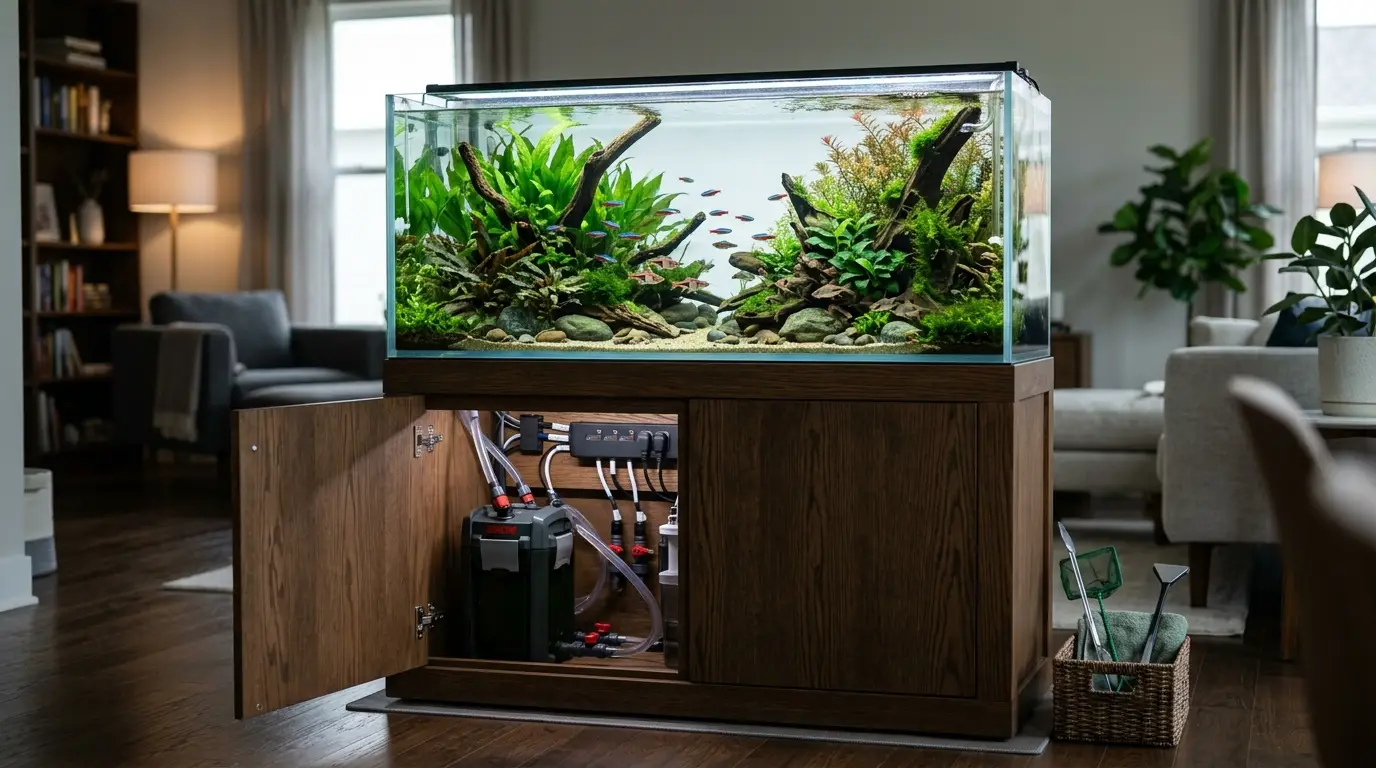
Think beyond day one. Keep filter lids, doors, and valves easy to reach. Label cords. Mount power strips high and dry. Add battery backup or an air pump for outages. In quake zones, use anti-tip straps and foam under the tank as allowed.
Watch for slow drips, salt creep, and moisture on walls or baseboards. Run a small dehumidifier if needed. Log your maintenance. Good habits protect your fish, your home, and your budget.
These habits lock in the gains you make when you pick Where to Place an Aquarium in Your Home Safely.
Frequently Asked Questions of Where to Place an Aquarium in Your Home Safely
Is it safe to put an aquarium on the second floor?
Yes, for most modest tanks. Place it near a load-bearing wall and across joists. Use a rated stand and keep the footprint wide.
How far from a window should my tank be?
A few feet is often enough to avoid direct sun. If light still hits the glass, use curtains or move it a bit more.
Can I put a tank on carpet?
Yes, with a sturdy, wide-base stand. Add a mat to spread weight and protect the floor from spills.
Do I need a GFCI outlet for my aquarium?
It is strongly recommended for safety. Use drip loops and keep power gear elevated and dry.
What is the best room for a large aquarium?
A living room or basement often works best. They offer stable temps, better floors, and easy viewing.
Will a subwoofer or loud TV harm fish?
Strong bass can stress fish and rattle equipment. Keep the tank a few feet away and reduce vibration.
Is kitchen placement a bad idea?
It can work but needs care. Keep away from heat, grease, and sun, and manage humidity.
Conclusion
Safe placement protects your floors, your fish, and your peace of mind. Choose a sturdy spot with stable light and temperature, easy power and water access, and room to work. Use a rated stand, level it, and plan for spills and noise.
Set your plan, pick the best location, and enjoy a healthy, calm display for years. If this helped you decide Where to Place an Aquarium in Your Home Safely, share it with a friend, subscribe for more tips, or leave a question and I’ll help you fine-tune your setup.