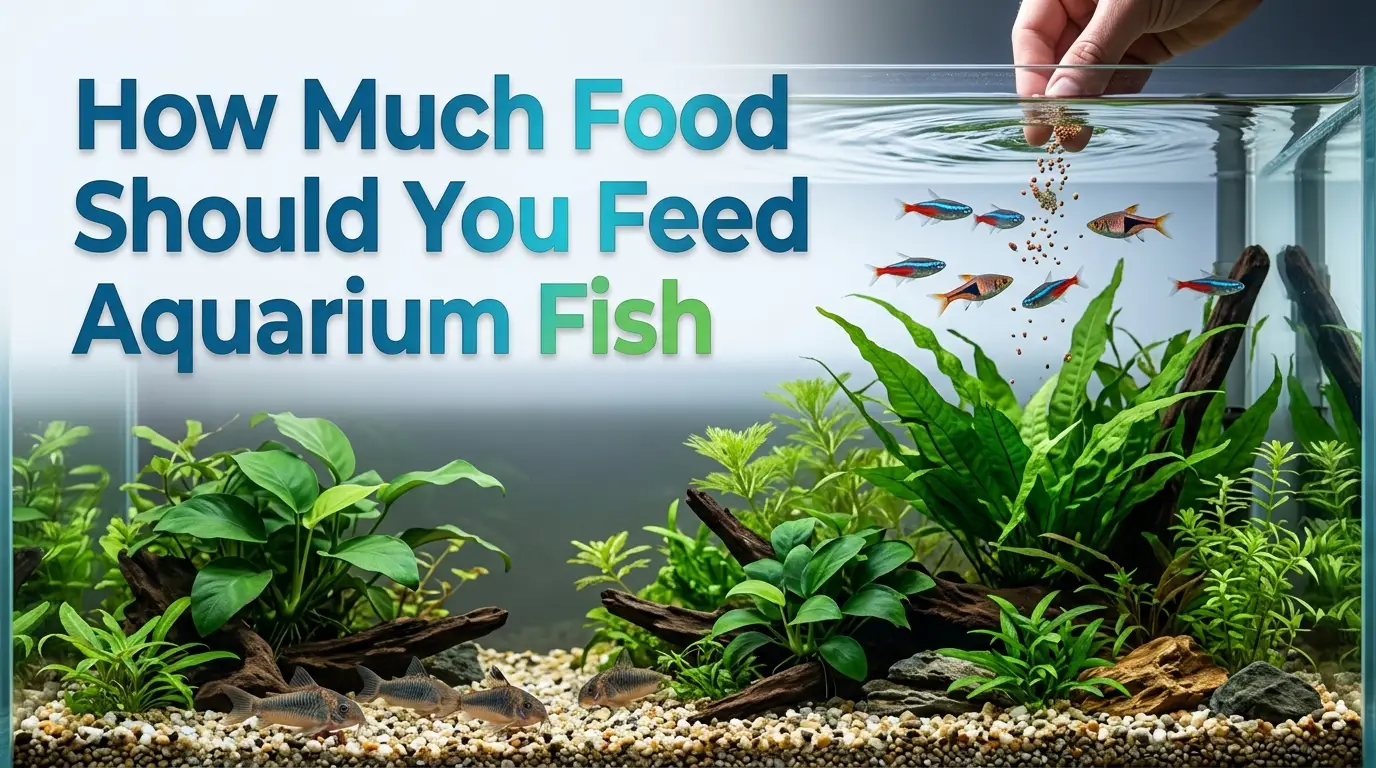
Feed fish what they can eat in 30–120 seconds, once or twice daily.
That simple rule works for most tanks, but the real skill is knowing when to feed less, when to skip a day, and how to match food to species. In this guide, I break down How Much Food Should You Feed Aquarium Fish with clear steps, real examples, and proven tips from years of keeping community tanks, planted aquariums, and species-only setups. Stay with me, and you will feed with confidence, keep water clear, and help your fish live longer.
How Much Food Should You Feed Aquarium Fish: The Short Answer That Works
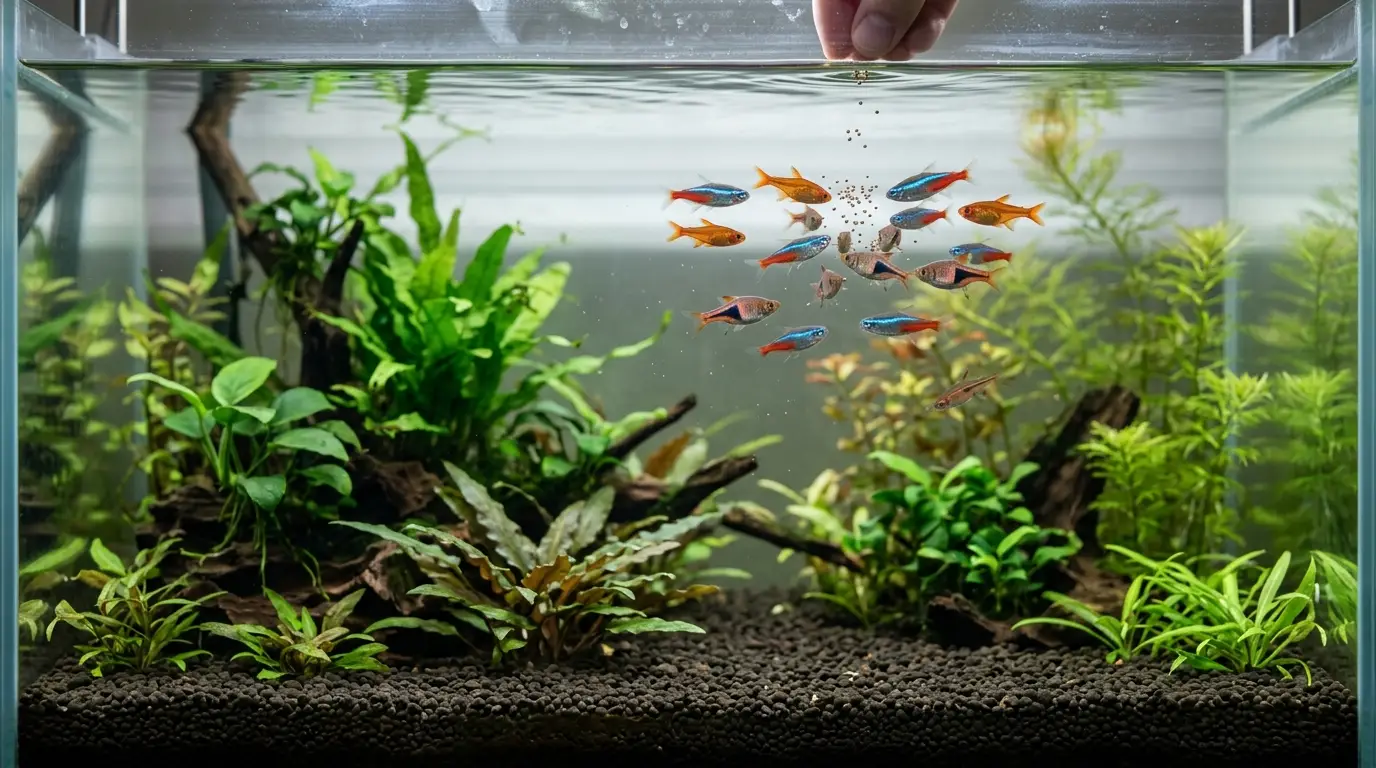
For most community fish, offer a small pinch they can finish in 30–120 seconds. Do this once or twice daily. If any food reaches the bottom uneaten, you are likely overfeeding.
This timing-based method works across flakes, micro pellets, or thawed frozen foods. It trains you to watch your fish, not the label. Feeding by behavior beats feeding by habit, and it keeps your filter from doing overtime.
Why Overfeeding Harms Fish and Your Tank
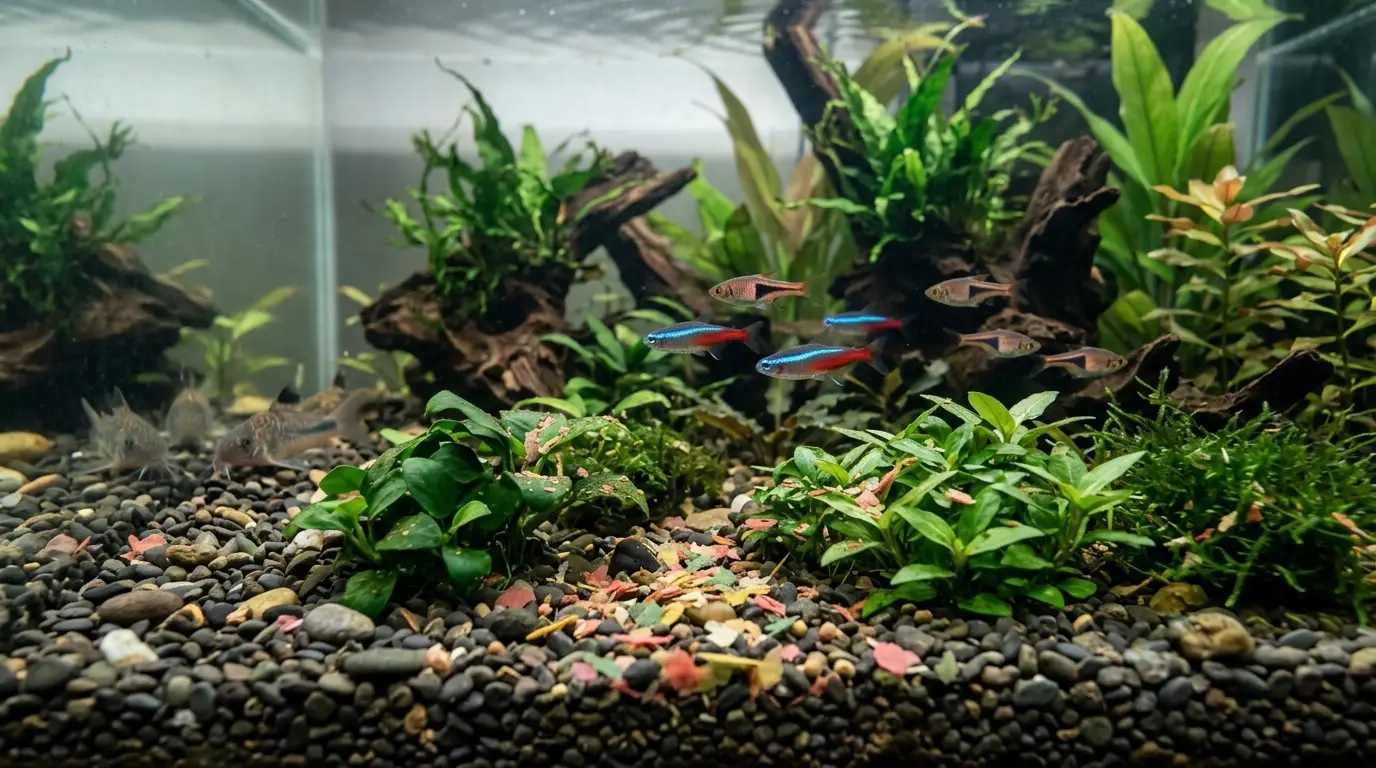
Extra food breaks down into ammonia, then nitrite, then nitrate. That stress hurts gills and lowers immunity. Algae blooms and cloudy water follow.
Fatty liver disease, bloat, and constipation also rise with heavy feeding. Your clean-up crew will not fix it. Filters help, but they cannot remove poor feeding habits.
What Changes the Right Amount
How Much Food Should You Feed Aquarium Fish changes with size, species, and setup. A betta has a tiny stomach and slow burn. A school of danios burns energy fast. A pleco may need extra veggies overnight.
Tank factors matter too. Warmer water speeds metabolism. Strong current and active schooling raise demand. Cold water fish and shy species often need less and have slower feeding windows.
Feeding Schedules by Fish Type
Use these as starting points and adjust by the 30–120 second rule.
- Betta fish: 2 to 4 micro pellets once or twice daily. Skip one day a week to prevent bloat.
- Tetras, rasboras, danios: Small pinch of fine flakes or micro pellets twice daily. Offer live or frozen once weekly for variety.
- Goldfish: Several small feedings per day with sinking pellets or gel food. Keep portions tight to limit waste.
- Bottom feeders and plecos: Sinking wafers after lights out. Add blanched zucchini or spinach for large plecos.
- Cichlids: Species vary. For dwarf cichlids, micro pellets and frozen foods in short sessions. For mbuna, use veggie-heavy pellets to protect digestion.
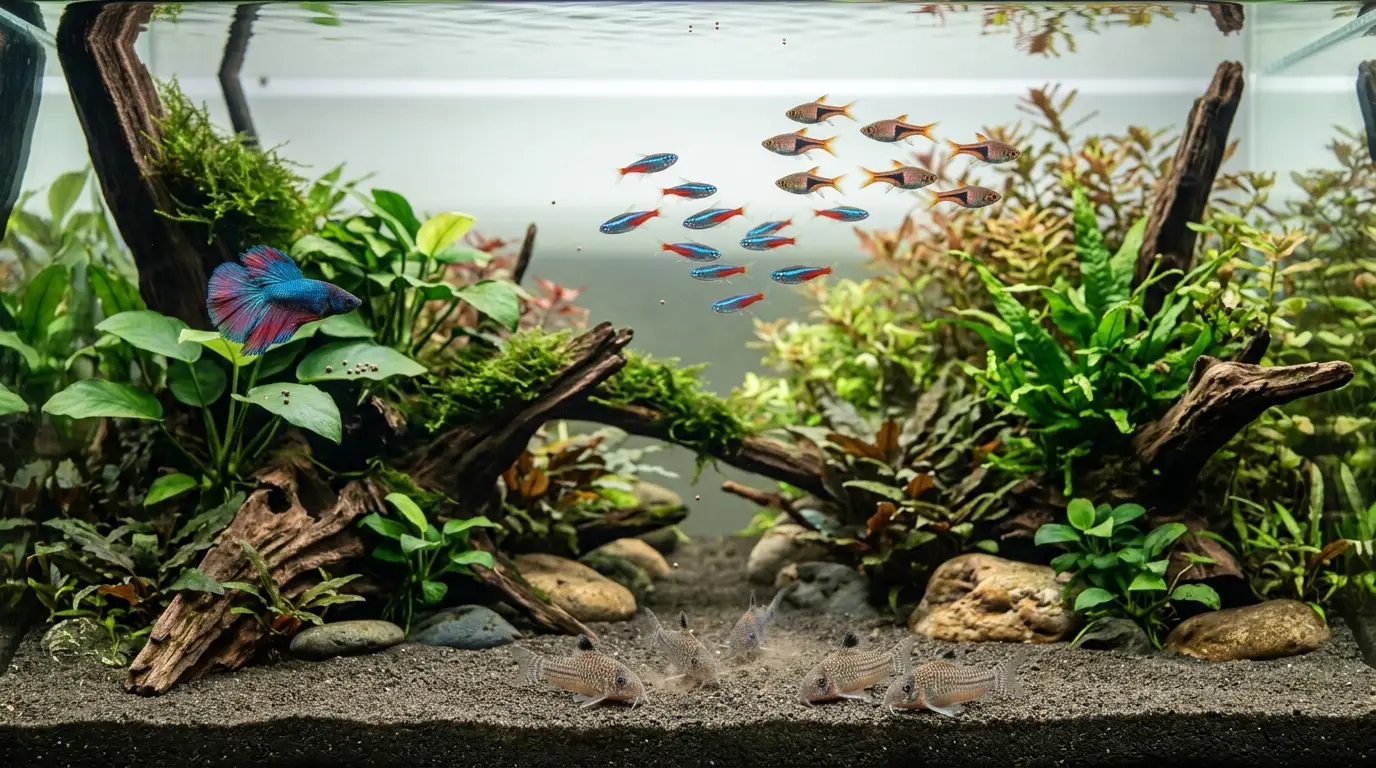
How Much Food Should You Feed Aquarium Fish also depends on community balance. If mid-water fish grab everything, target feed bottom dwellers later with tongs or at night.
Portioning and Adjusting: A Simple Method
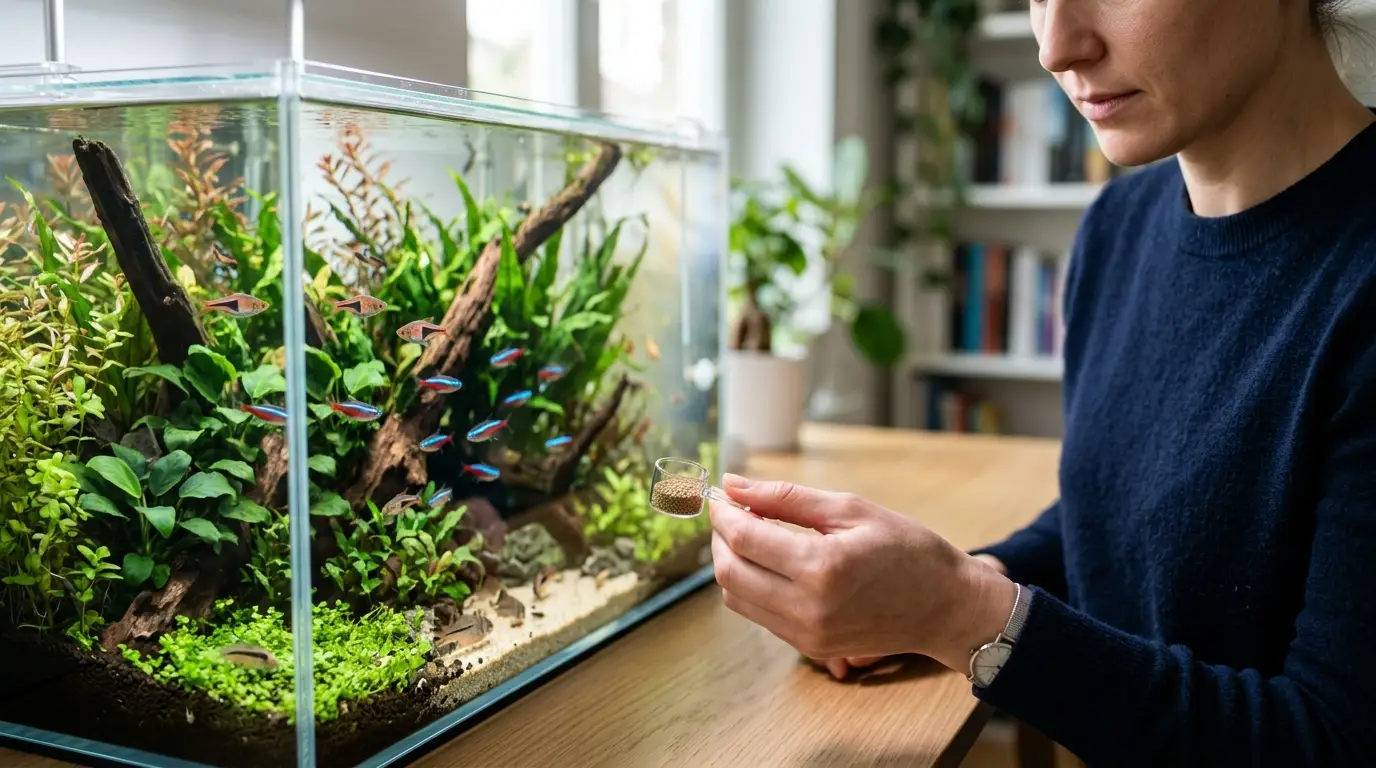
Start small. Offer a pinch. Count how long it takes to clear. If food remains after two minutes, reduce next time. If fish finish in 10 seconds and still look eager, add a tiny bit more, then stop.
Try these easy tools:
- Use micro pellets for steady, even feeding.
- Feed in two mini sessions, 30 seconds apart, to cut rush and waste.
- Keep a small spoon or measuring scoop just for fish food.
As your fish grow, recheck portions. How Much Food Should You Feed Aquarium Fish will shift with age, seasonal temps, and tank mates.
Special Cases: Fry, Invertebrates, Fasting, Vacation Feeders
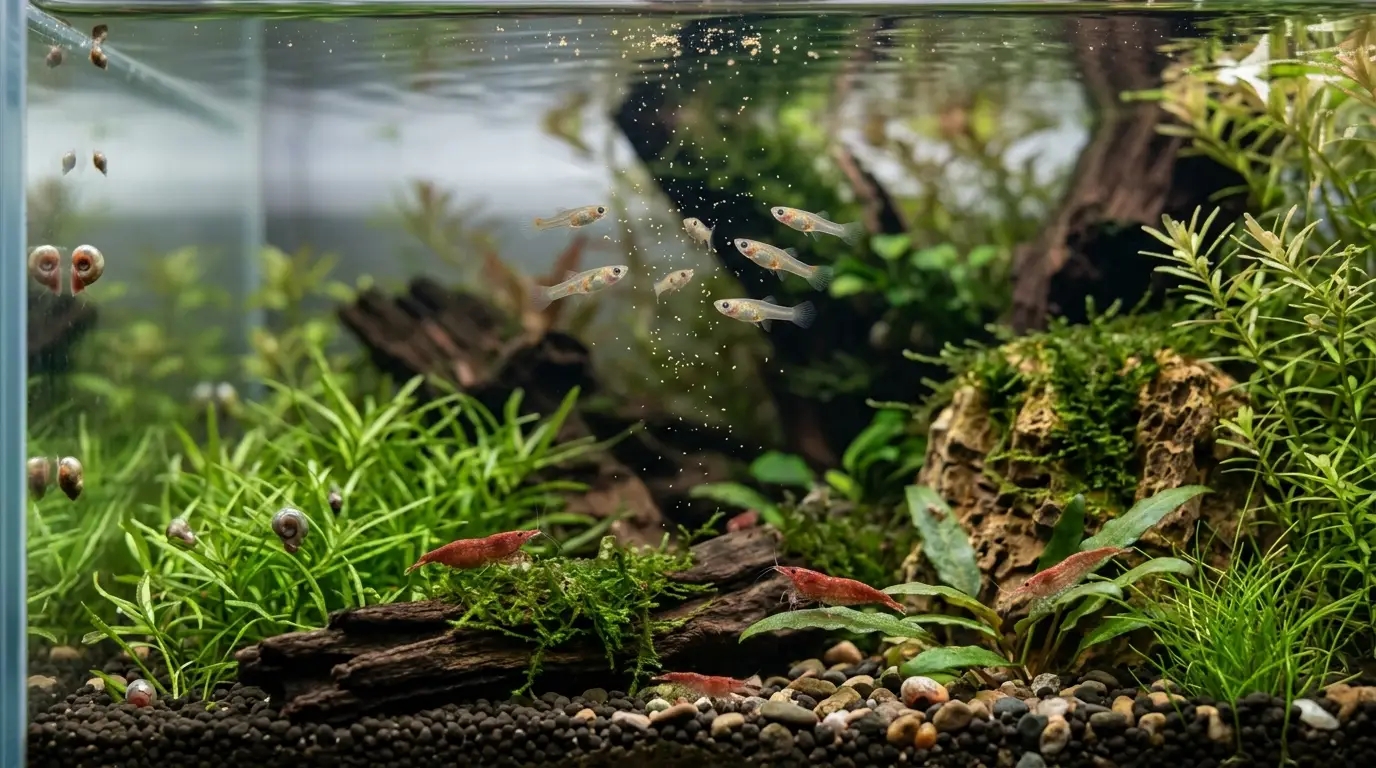
Fry need tiny, frequent meals. Use powdered fry food, infusoria, or baby brine shrimp three to five times daily. Do extra water changes to handle the load.
Shrimp and snails browse all day. Offer small wafers or biofilm foods every other day. Remove leftovers after a few hours.
Short fasts help adult fish. One skip day per week clears the gut and reduces waste. For trips, use an auto-feeder for dry foods or pre-portioned gel foods. For most healthy tanks, fish can handle two to three days without food.
Troubleshooting: Signs You Are Overfeeding or Underfeeding
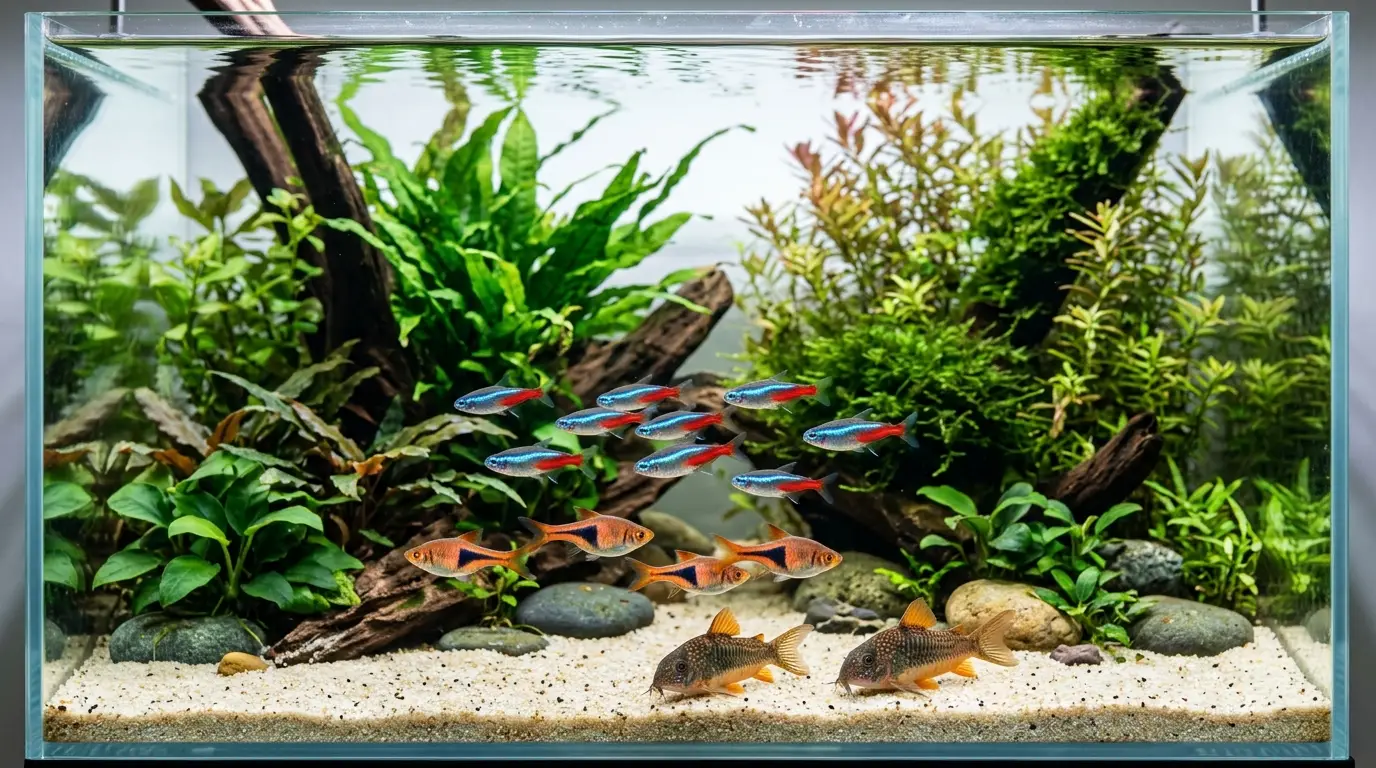
Overfeeding looks like bloated bellies, stringy poop, cloudy water, surface film, or algae spikes. You may also see food stuck in plants or under decor.
Underfeeding shows in sunken bellies, clamped fins, dull color, or nipping due to hunger. If a shy species loses out at meals, switch to sinking foods or target feed after lights dim.
When you are unsure How Much Food Should You Feed Aquarium Fish, test water weekly. Rising ammonia or nitrite is a clear warning to cut back and clean up.
Food Types and Tools That Make Feeding Easier
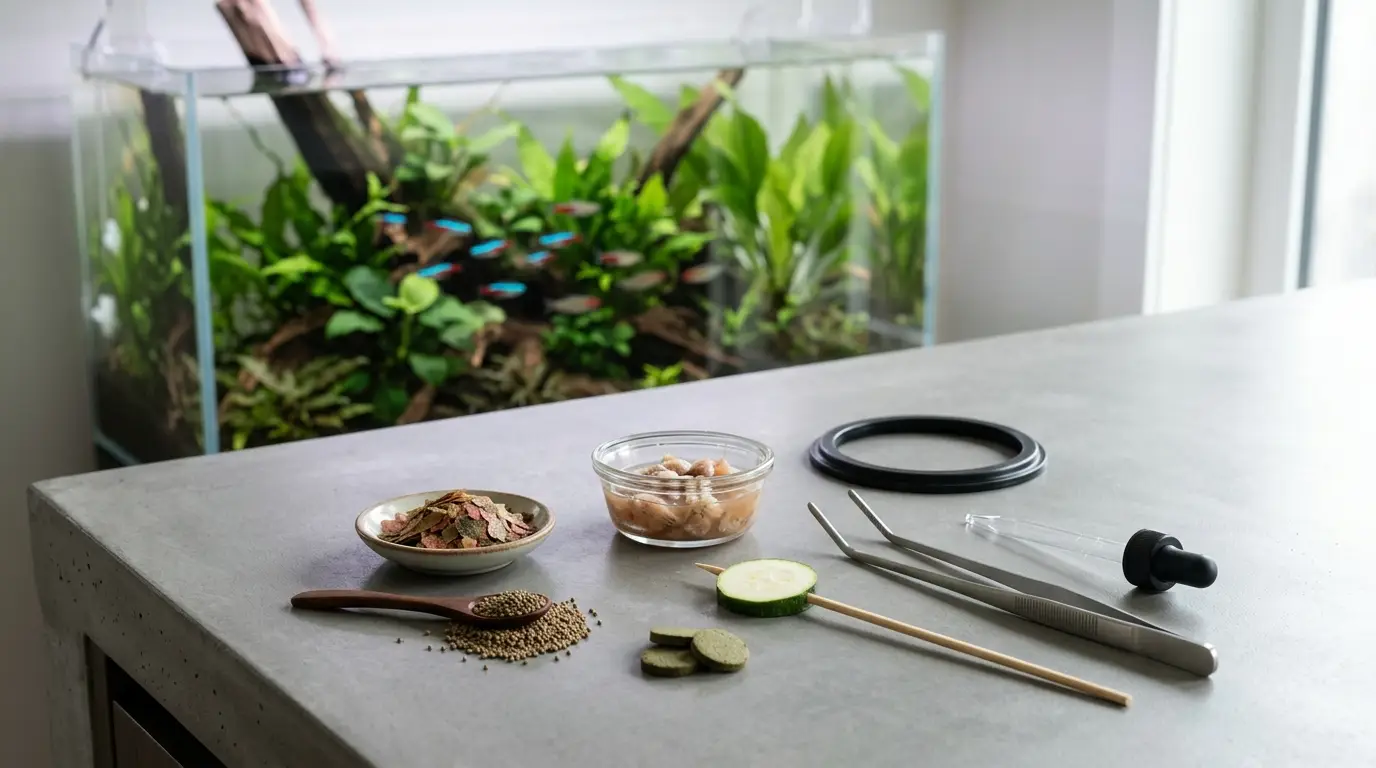
Choose foods that match mouth size and diet. Herbivores need more algae and spirulina. Carnivores and fry do best with protein-rich micro foods.
Good options include:
- Flakes: Easy for top feeders. Crush for small mouths.
- Micro pellets: Even sinking and better portion control.
- Frozen foods: Bloodworms, daphnia, brine shrimp. Rinse before feeding.
- Live foods: Great enrichment. Use from trusted sources.
- Veggies for plecos and goldfish: Zucchini, peas, spinach, blanched and cooled.
Helpful tools:
- Feeding rings to stop food from drifting.
- Tongs or pipettes for target feeding.
- Auto-feeders for stable, small portions.
Matching food and method is a big part of How Much Food Should You Feed Aquarium Fish. The right format means less waste and healthier fish.
Frequently Asked Questions of How Much Food Should You Feed Aquarium Fish
How often should I feed new fish after bringing them home?
Feed lightly the first day and observe. Offer small meals twice daily for a week while you watch behavior and check water.
Can fish overeat if they still beg after feeding?
Yes. Many fish beg from habit. Stick to the 30–120 second rule to avoid health issues.
How Much Food Should You Feed Aquarium Fish in a planted tank?
Often less than in bare tanks. Plants catch stray food, so use smaller pinches and more sinking micro pellets.
Do bottom feeders need extra food if I feed flakes up top?
Usually yes. Many will miss surface food. Add sinking wafers at night so they get their share.
Is it okay to skip a day of feeding?
For healthy adult fish, skipping one day weekly is helpful. It prevents bloat and lowers waste.
What is the best way to feed frozen foods?
Thaw in a cup of tank water and strain. Feed small amounts so nothing rots on the bottom.
How Much Food Should You Feed Aquarium Fish during a vacation?
Use an auto-feeder with tiny portions or pre-set gel food. For short trips of two to three days, most fish are fine without food.
How do I know if I am feeding the right amount?
Your fish should finish within two minutes. Bellies look full but not round, and water stays clear with stable test results.
Are pellets better than flakes?
Neither is always better. Pellets help with portion control. Flakes suit top feeders. Rotate for balance.
How Much Food Should You Feed Aquarium Fish when they are stressed or sick?
Feed less and pick easy-to-digest foods. Focus on clean water and only small, frequent meals if they are still eating.
Conclusion
Feeding well is simple once you watch your fish and your water. Keep meals small, finish within two minutes, skip a day each week, and match food to species. If you ever wonder How Much Food Should You Feed Aquarium Fish, let behavior and test results guide you.
Try the two-minute method at your next feeding and note what changes. If this helped, share it with a fish-keeping friend, subscribe for more clear guides, or drop a question in the comments so we can fine-tune your feeding plan together.