Most guppies live 2–3 years; top care can push them to 4–5.
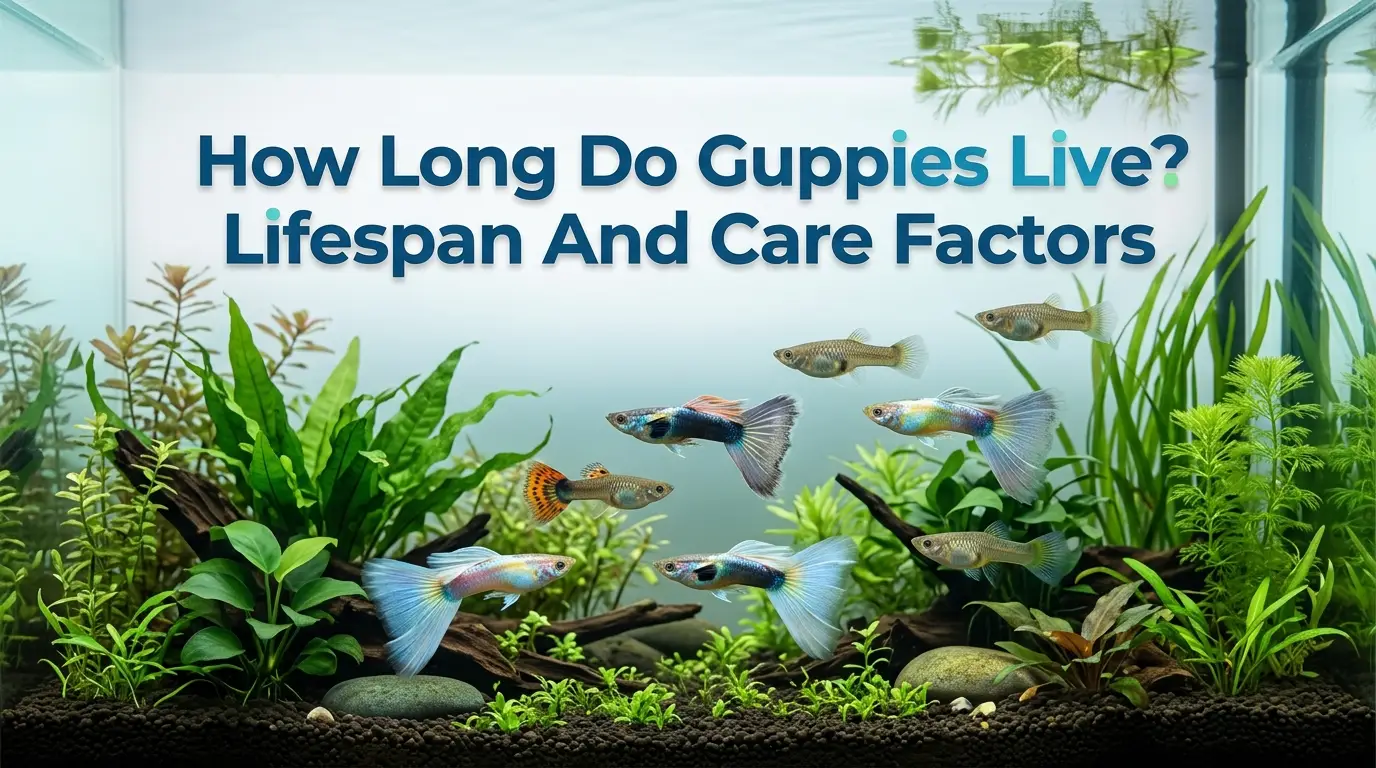
If you keep guppies or plan to start, you’ve likely asked how long do guppies live and what you can do to help them thrive. In this friendly, research-backed guide, I break down How Long Do Guppies Live? Lifespan and Care Factors with proven tips, simple steps, and real-world advice from years of keeping and breeding guppies. Let’s make your guppies live longer, look brighter, and stay healthy.
Guppy Lifespan at a Glance
Guppies, also known as Poecilia reticulata, are hardy livebearers. In home tanks, the typical lifespan is 2–3 years. With steady water quality, a balanced diet, and low stress, many keepers report 3–4 years. Rare cases reach 5 years.
Key points to know:
- Store-bought guppies are often 2–4 months old, so their time with you is part of that 2–3 year span.
- Fancy strains may live a bit shorter than wild-type or Endler-influenced lines.
- Females under heavy breeding stress often live shorter lives.
If you want the simple answer to how long do guppies live, plan for 2–3 years and aim higher with sharp care.
What Affects Guppy Lifespan Most
Genetics and Strain Quality
Strain quality matters. Select guppies from healthy, well-kept lines. Inbreeding can weaken the immune system. This can shorten lifespan. Outcrossed or Endler-based lines often show hardier traits.
Water Quality Basics
Clean water is your main lever. Keep ammonia and nitrite at 0 ppm. Keep nitrate under 20–30 ppm. Use a filter sized for the tank and test weekly. Chlorine and chloramine must be removed with a conditioner at each water change.
Tank Size and Stocking
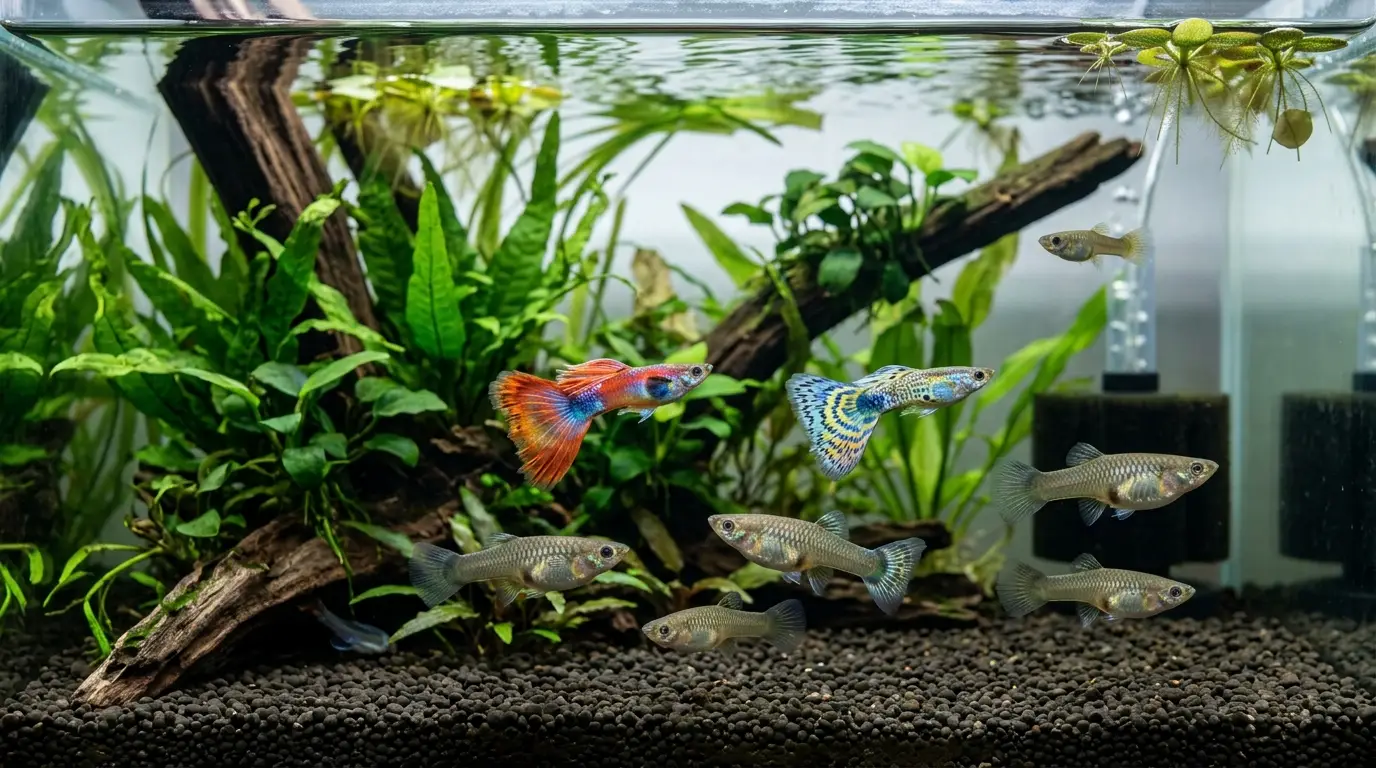
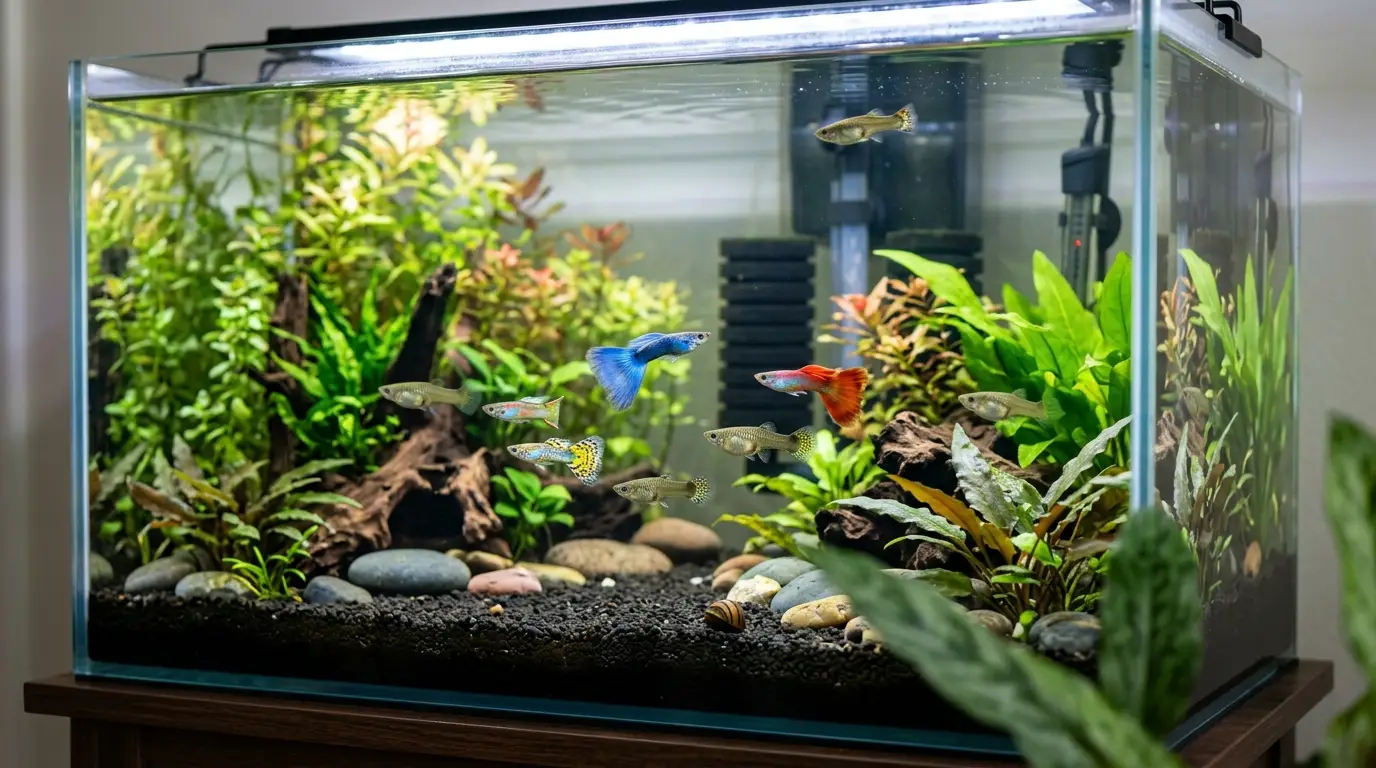
Space reduces stress. A 10-gallon tank can hold a small group. A 20-gallon is better for a colony. Avoid crowding. More water means more stable chemistry.
Temperature and Heater Use
Guppies do best at 75–78°F. Warmer water speeds up the metabolism and aging. Cooler water can cause disease. A stable heater helps avoid swings that stress fish.
Diet and Feeding Rhythm
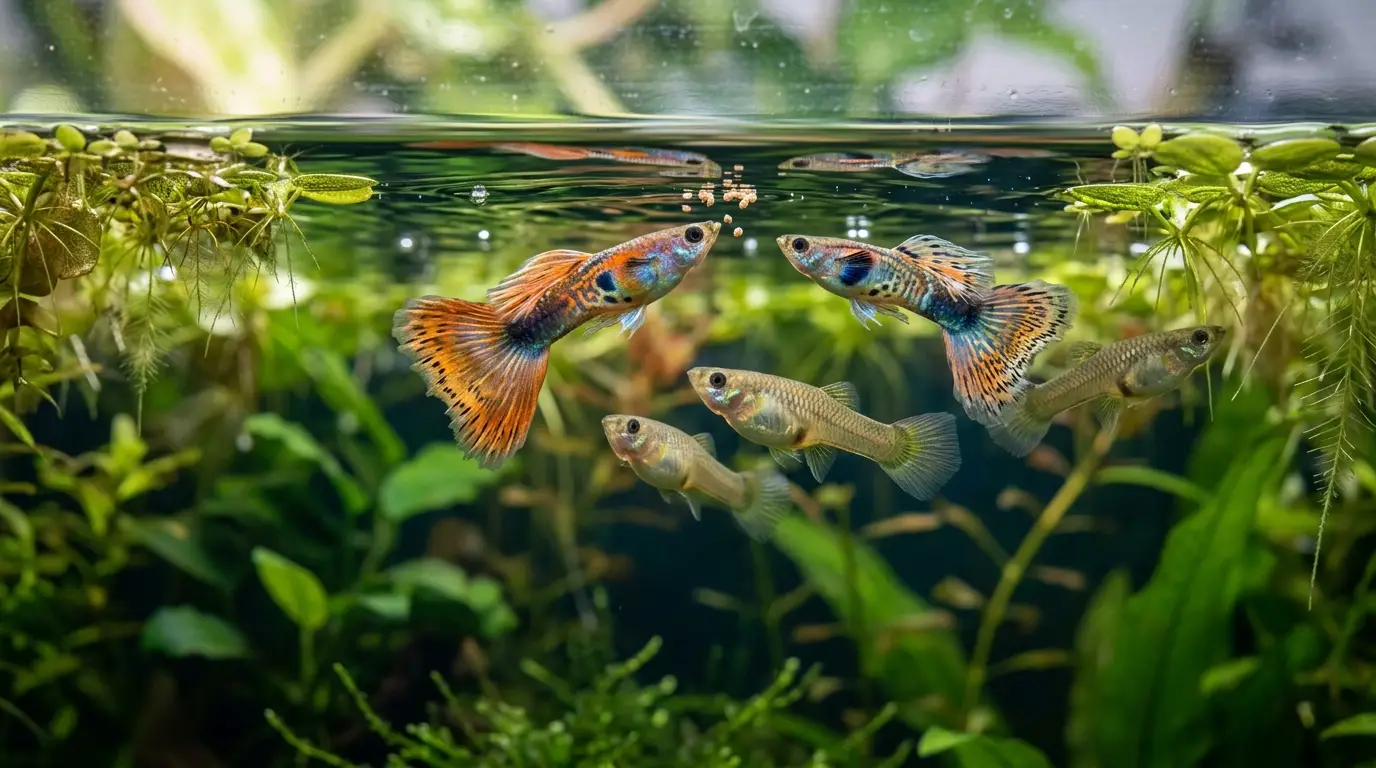
Feed small portions two to three times daily. Use a mix of high-quality flakes or pellets, along with frozen or live foods like daphnia or baby brine shrimp. Overfeeding leads to waste and shortens life.
Stress and Tank Mates
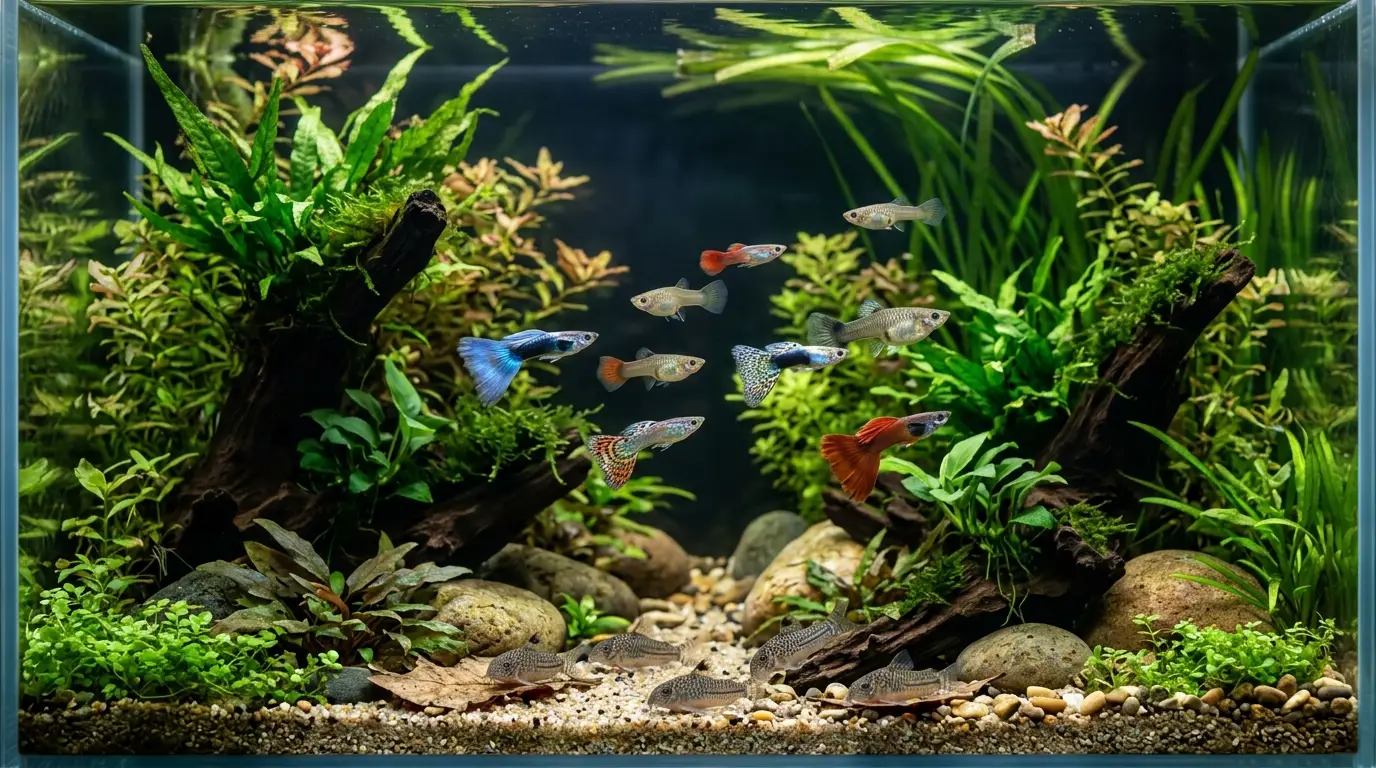
Stress kills slowly. Avoid fin-nippers such as tiger barbs. Offer plants and hiding spots. Keep a calm ratio of one male to two or three females to reduce chasing.
Disease Prevention and Quarantine
Quarantine new fish for 2–4 weeks. Look for ich, velvet, or fin rot. Early treatment prevents spread. Good biosecurity is a lifespan booster.
Breeding Load and Energy Use
Breeding takes energy. Females that breed nonstop age faster. Give females a break by separating sexes or reducing male numbers. Males with very long fins can tire more easily.
Light, Rest, and Enrichment
Provide a day-night cycle. About 8–10 hours of light is enough. Add plants and gentle flow. Good rest and a simple scape reduce stress and extend life.
Wild vs. Home Aquarium Lifespan
In the wild, guppies face predators, droughts, and food swings. Many live 1–2 years. In tanks, we remove those risks. With stable water, stable heat, and steady food, the average moves to 2–3 years. If you ask how long do guppies live at home with top care, a few can reach 4–5 years. That upper limit is rare, but real in dialed-in setups.
Step-by-Step Care Plan to Extend Lifespan
Use this simple plan if you want to push the high end of how long do guppies live.
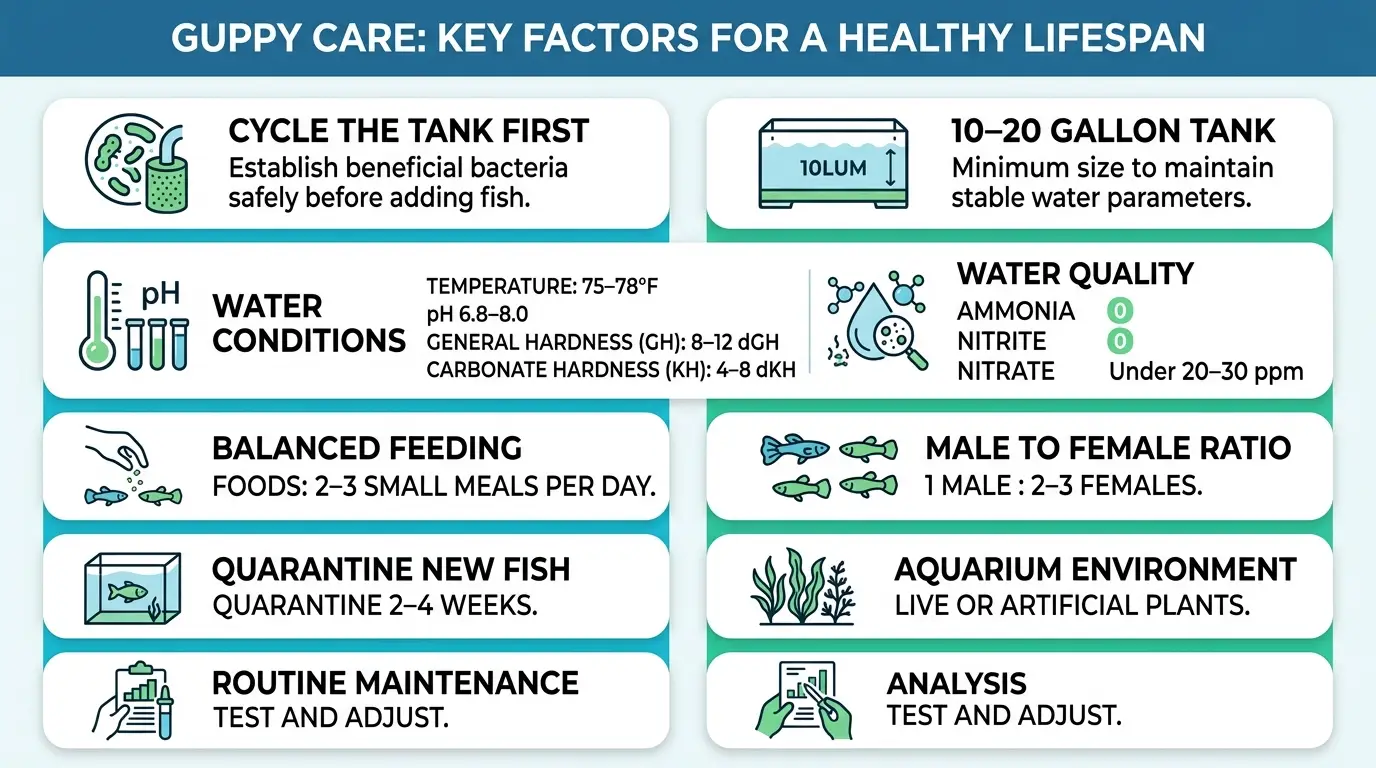
- Cycle the tank first
- Confirm ammonia 0, nitrite 0, nitrate under 20–30 ppm before adding fish.
- Pick a right-sized tank
- 10 gallons for a small group. 20 gallons or more for a colony.
- Keep stable water
- Temperature 75–78°F.
- pH 6.8–8.0, GH 8–12 dGH, KH 4–8 dKH.
- Weekly 30–50% water changes with dechlorinator.
- Feed for health, not for speed
- Two to three small meals per day.
- Rotate quality flakes/pellets with frozen or live foods.
- Add a light fasting day each week.
- Manage stocking and sex ratio
- Aim for one male to two or three females.
- Remove bullies or move them to a different tank.
- Quarantine every new fish
- 2–4 weeks in a spare tank.
- Observe for parasites or disease.
- Add plants and hiding spaces
- Live or fake plants lower stress and help fry survival.
- Watch and adjust
- Test water often.
- Fix small issues fast before they grow.
Personal tip: In my own 20-gallon planted guppy tank at 76°F, with strict water changes and mixed feeding, I kept a female line for 3.5–4 years on average. The longest-lived male hit just under 4 years. The key was stable water, light feeding, and low stress.
Common Mistakes That Shorten Lifespan
- Skipping the nitrogen cycle. Adding fish to an uncycled tank burns gills and shortens life.
- Overfeeding. Extra food rots, spikes waste, and invites disease.
- Cold or swinging temperatures. A few degrees of swing can trigger illness fast.
- Aggressive tank mates. Nippers tear fins and cause constant stress.
- Neglecting water changes. Nitrate creep and dissolved organics push fish over the edge.
- Buying weak stock. Stressed, over-bred fish fail early. Choose healthy, alert fish.
Signs Your Guppy Is Aging and How to Help
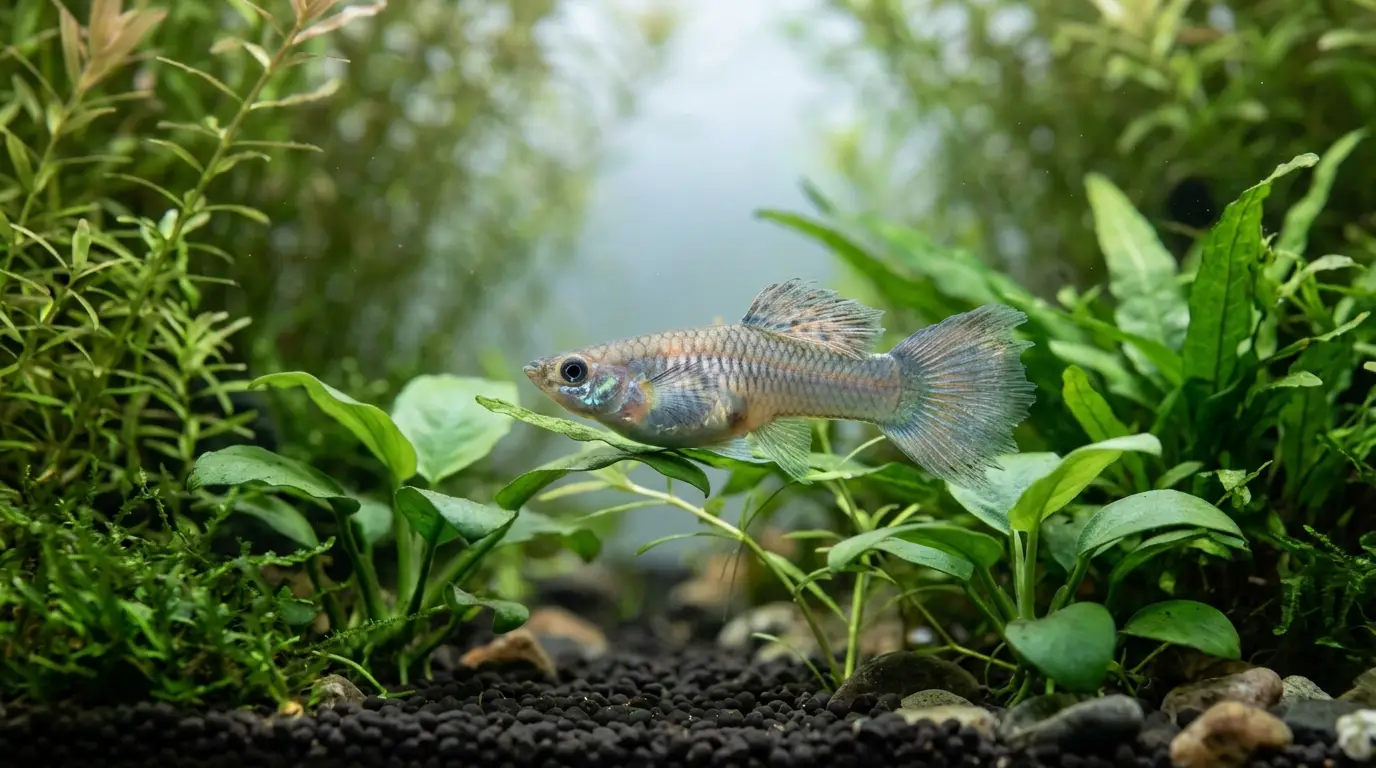
As guppies age, you may see faded colors, slower swim speed, and a thinner body. Curved spines and worn fins are common. Older fish rest more and chase less.
How to support seniors:
- Lower flow and add extra cover.
- Offer smaller, softer foods. Frozen daphnia or soaked micro-pellets work well.
- Keep water extra clean and stable.
- Consider moving seniors to a quiet tank.
Lifespan by Strain and Sex
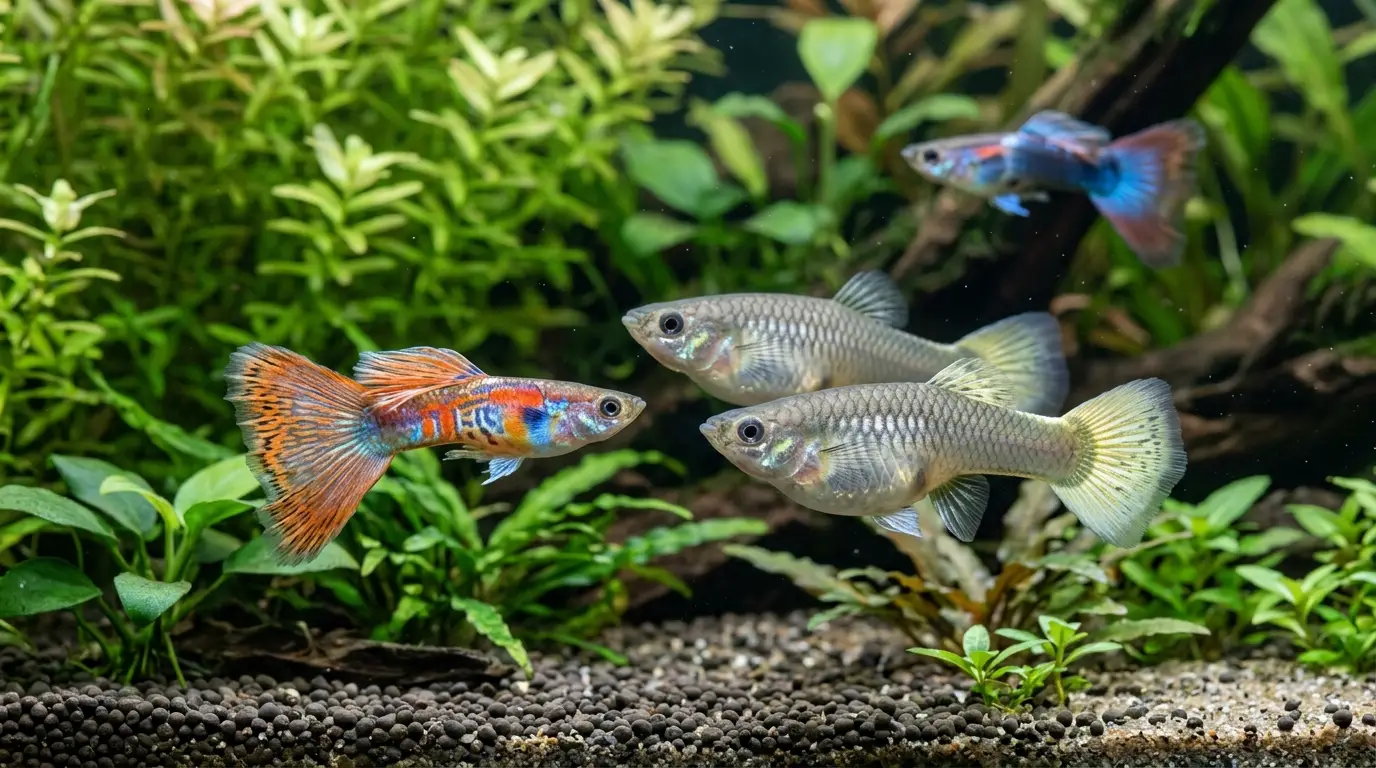
If you ask how long do guppies live across strains, the range shifts a bit. Fancy long-fin males often tire faster and can live shorter than sturdy females in the same line. Females that breed nonstop may age sooner. Endler-influenced lines are often hardier and can live longer, sometimes 3–4 years or more. Albino or very inbred lines may be more sensitive to light and stress.
These are tendencies, not rules. Your care still makes the biggest difference.
Troubleshooting Early Deaths
If you keep wondering how long do guppies live and yours do not reach 2 years, run this check.
- Test water today. Ammonia and nitrite must be 0. Nitrate under 20–30 ppm.
- Confirm the tank is fully cycled. If not, use bottled bacteria and daily tests.
- Verify temperature. Hold steady at 75–78°F with a reliable heater.
- Use dechlorinator every water change. Chlorine and chloramine kill fast.
- Review acclimation. Drip or slow-float for at least 20–30 minutes.
- Look for disease. White spots, gold dust, clamped fins, or red streaks need quick action.
- Recheck stocking and mates. Remove bullies. Reduce crowding.
- Audit feeding. Cut back volume. Rinse frozen foods to reduce excess.
Frequently Asked Questions
How long do guppies live in a home aquarium?
Most guppies live 2–3 years in a stable, well-kept tank. With great care, a few can reach 4–5 years.
How long do guppies live in the wild?
Wild guppies often live 1–2 years due to predators and harsh conditions. Captive care removes these risks and extends lifespan.
Do male or female guppies live longer?
Females can live longer if not bred nonstop. Males with very long fins may tire more and live a bit shorter.
How long do guppies live without a filter?
Without a filter, lifespan drops fast due to ammonia spikes and low oxygen. Use a filter and do regular water changes for stable health.
Does temperature affect how long guppies live?
Yes. 75–78°F is a safe range. High heat speeds aging; low or swinging temps cause stress and disease.
Can diet change how long guppies live?
A varied diet of quality flakes or pellets plus frozen or live foods boosts health and immunity. Overfeeding shortens life.
How long do guppies live in a 10-gallon tank?
A 10-gallon can still give 2–3 years if well filtered and not crowded. A 20-gallon offers more stability and is easier to manage.
Conclusion
If you came here asking how long do guppies live, think 2–3 years as the norm and aim for 3–4 years with clean water, steady heat, balanced food, and low stress. Small habits compound: test weekly, change water on schedule, and feed with care. Your guppies will reward you with color, energy, and extra time.
Ready to level up your setup? Put the care plan into action this week, log your test results, and share your progress or questions in the comments.