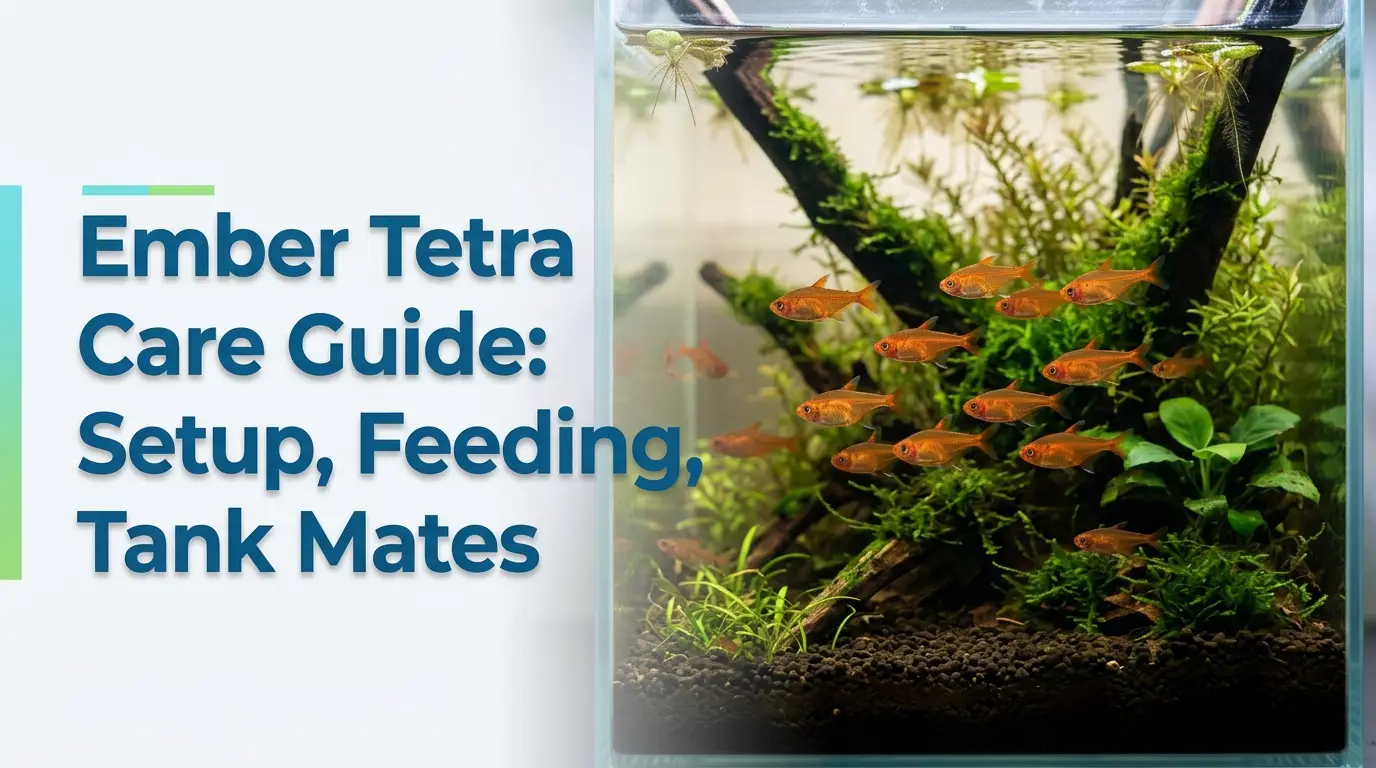
Keep ember tetras in warm, soft, planted tanks with gentle flow and clean water.
If you want tiny fish with big color and easy charm, you’ll love this ember tetra care guide. I’ve raised, bred, and shipped Hyphessobrycon amandae for years, and this ember tetra care guide blends hands-on lessons with proven best practices. Read on for a friendly, expert roadmap that covers setup, water, diet, tank mates, health, and breeding without the fluff.
Ember tetras at a glance
Ember tetras, Hyphessobrycon amandae, come from slow, plant-rich streams in Brazil. They shine orange-red, grow to about 0.6–0.8 inches, and live 2–4 years with good care. They are peaceful, active, and love to school. This ember tetra care guide treats them as a true nano fish that thrives in stable, planted tanks.
Key facts
- Size: 0.6–0.8 inches
- Temperature: 76–80°F
- pH: 6.0–6.8 (can accept 5.5–7.0 if stable)
- Hardness: 1–8 dGH, low KH
- Temperament: Peaceful shoaler, mid-water
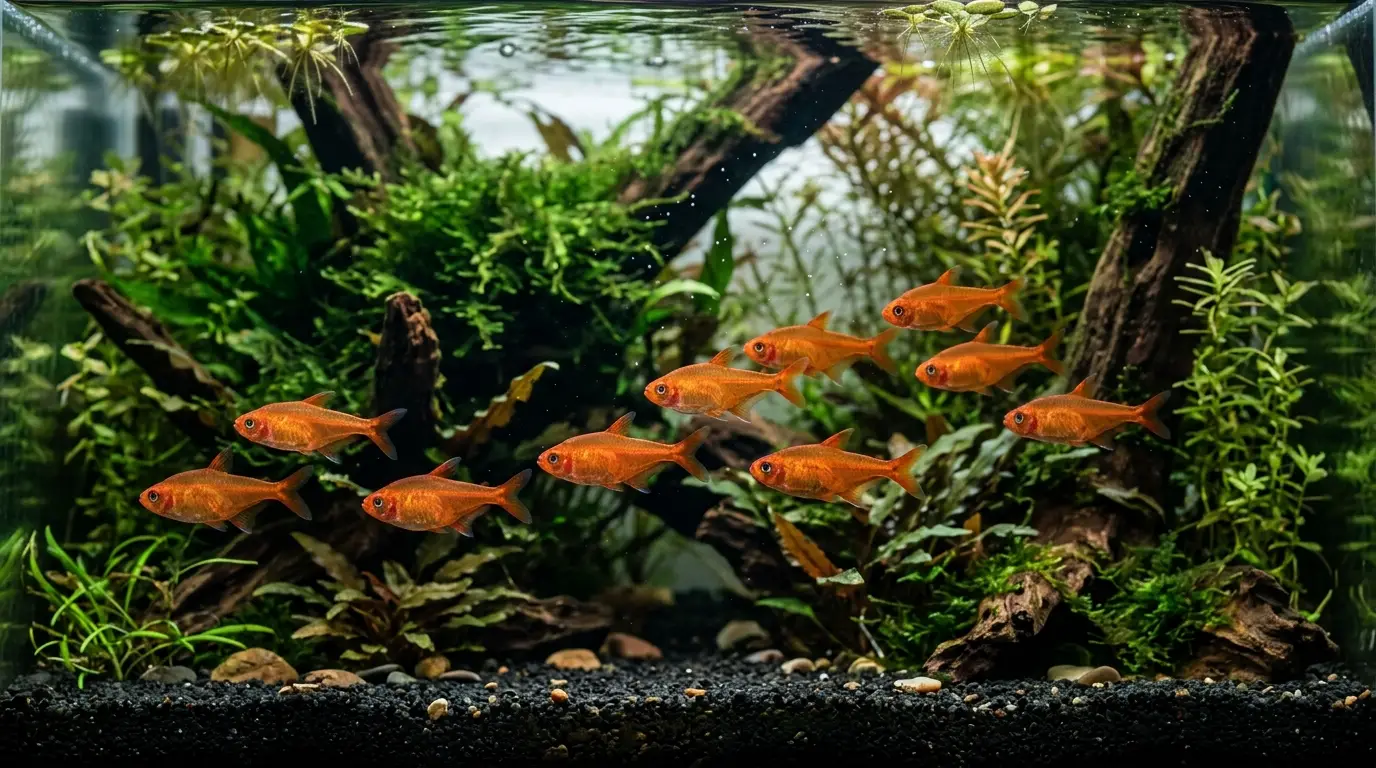
What I’ve learned over time: they glow brightest over dark sand with floating plants. Keep them in groups of 10 or more for bold color and calm behavior.
Ideal tank setup
Go for a 10-gallon tank or larger. A 5-gallon can work in a pinch, but water swings are faster and stress rises. Dark sand, driftwood, and live plants help them feel safe. A tight lid is a must, as startled fish can jump.
Core gear checklist
- Tank: 10 gallons or more for a stable school
- Filter: Sponge or gentle HOB with a pre-filter
- Heater: Reliable unit with a thermometer
- Light: Low to medium, with a dim period at night
- Substrate: Fine sand or small gravel
- Plants: Stem plants, moss, and floaters for cover
- Water conditioner: Neutralizes chlorine and chloramine
- Test kit: Ammonia, nitrite, nitrate, pH, KH, GH
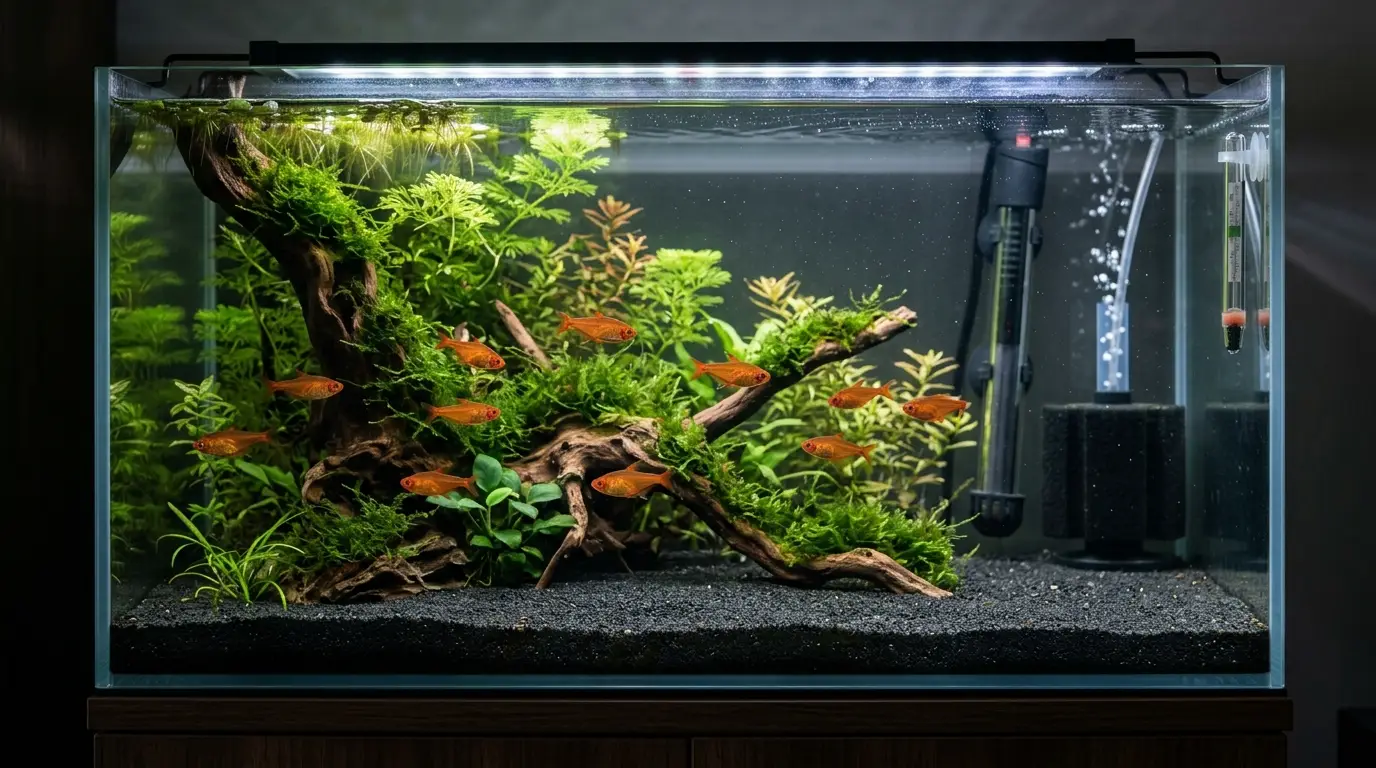
Cycle the tank before fish. Add beneficial bacteria and wait for ammonia and nitrite to hit zero. This step is non-negotiable in any ember tetra care guide.
Water parameters and filtration
Aim for warm, soft, slightly acidic water. Keep it steady. Big changes cause stress, color loss, and illness. Think smooth, not perfect.
Targets to keep
- Temperature: 76–80°F
- pH: 6.0–6.8 (stable is better than “ideal”)
- GH: 1–8 dGH
- KH: 0–3 dKH (watch for pH swings)
- Ammonia/Nitrite: 0 ppm
- Nitrate: Under 20 ppm, under 10 ppm is great
- TDS: Often 80–200 ppm in home tanks
Filtration tips
- Use a sponge filter or a small HOB with a gentle return.
- Turnover of 4–6x tank volume per hour works well.
- Seed new filters with media from a mature tank when possible.
- Rinse sponges in tank water, not tap, to save bacteria.
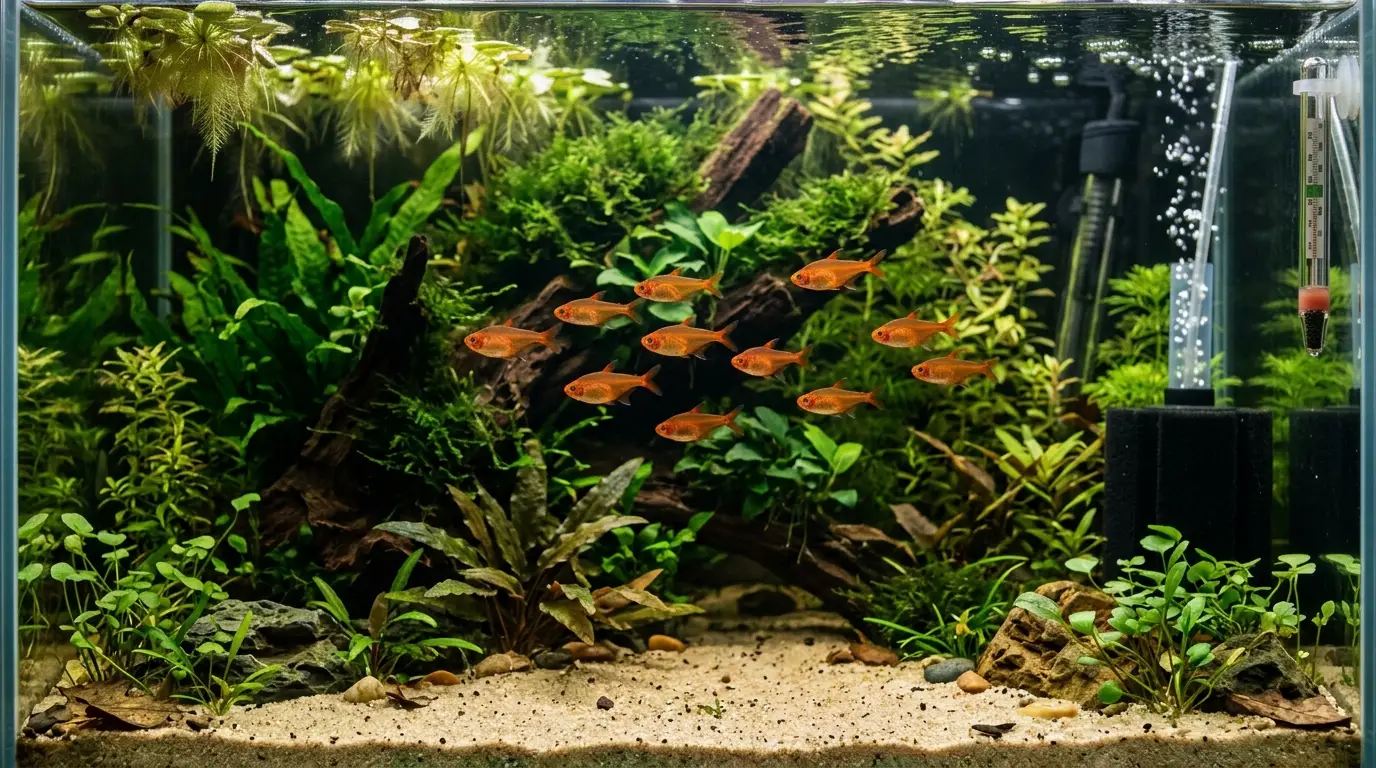
Do ember tetras need a heater? Yes, unless your room stays in the upper 70s day and night. Consistent heat is a key line in any ember tetra care guide.
Diet and feeding
Embers are micro-predators by nature. They peck at tiny life in plants and leaf litter. In tanks, feed small foods that match their mouth size. Variety keeps them healthy and bright.
Great everyday foods
- Quality micro-pellets, 0.5–0.8 mm
- Crushed flake with high protein
- Frozen and live: baby brine shrimp, daphnia, cyclops, microworms
Feeding tips
- Offer 2–3 tiny meals a day, what they finish in 60–90 seconds.
- Use a weekly light fast to prevent bloating.
- Target feed if you keep faster fish with them.
- Rotate foods to cover vitamins and fatty acids.
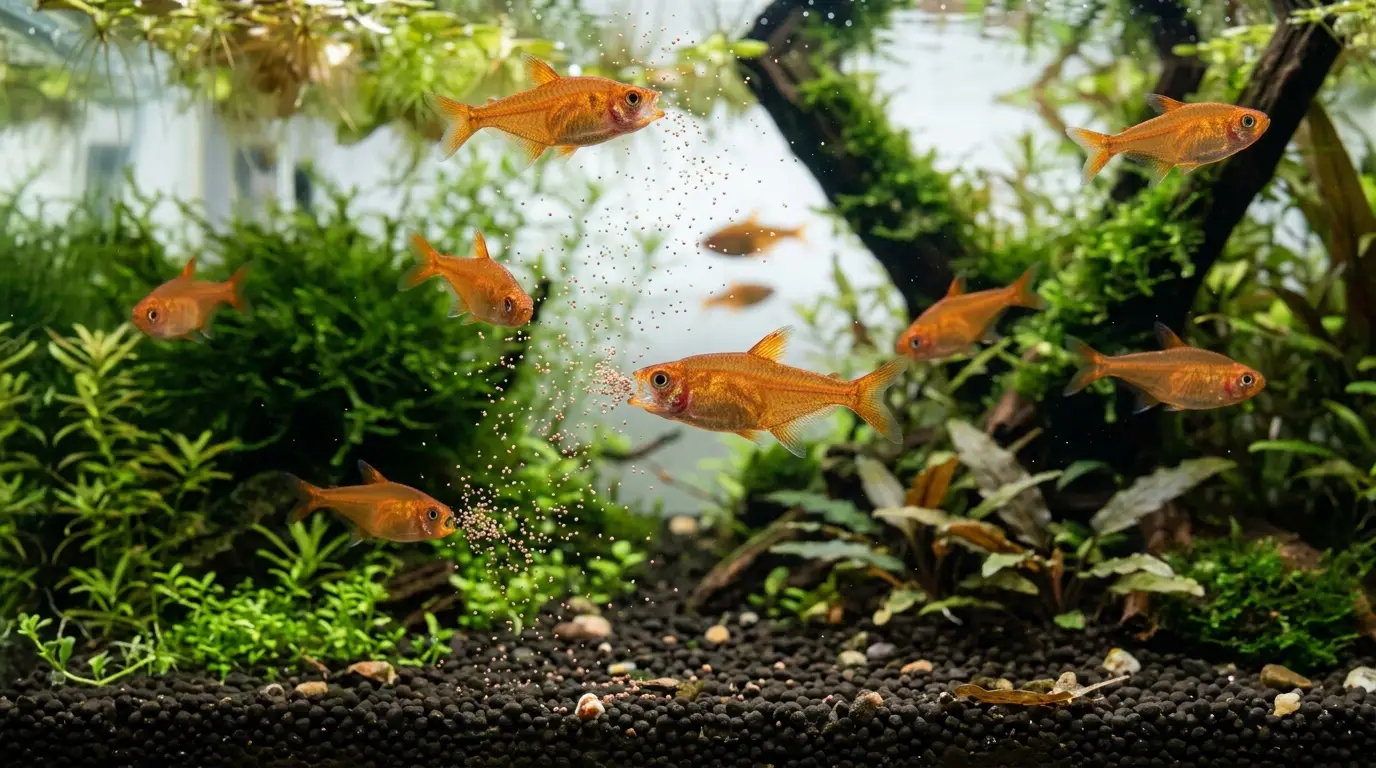
My rule of thumb: If a pellet looks big for a neon tetra, it is too big for an ember. That single check has saved many bellies in my ember tetra care guide practice.
Behavior, schooling, and tank mates
Ember tetras school mid-water and relax in numbers. In groups of 8–12 or more, they color up and explore. In small groups, they hide, fade, and nip at each other. More fish equals less stress.
Good neighbors
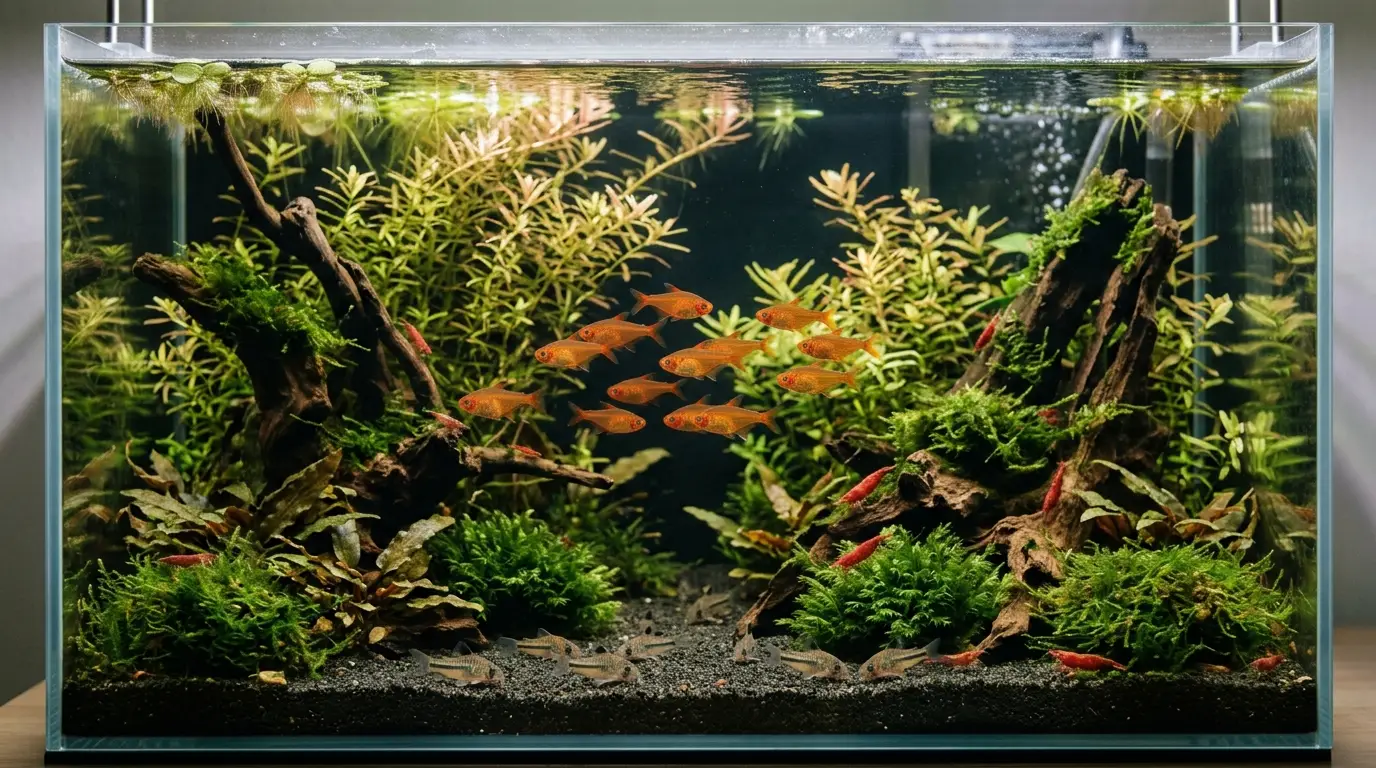
- Pygmy corydoras (pygmaeus, habrosus, hastatus)
- Otocinclus catfish
- Dwarf rasboras and microrasboras
- Small pencilfish
- Neocaridina and Caridina shrimp (adults are safer)
Fish to avoid
- Fin-nippers like some barbs
- Large tetras or gouramis that may see them as food
- Big cichlids or boisterous fish
One hard lesson: I tried them with a curious betta. It worked for a week, then the betta started stalking. In a true ember tetra care guide, I mark bettas as case-by-case, not a sure match.
Planting, hardscape, and lighting
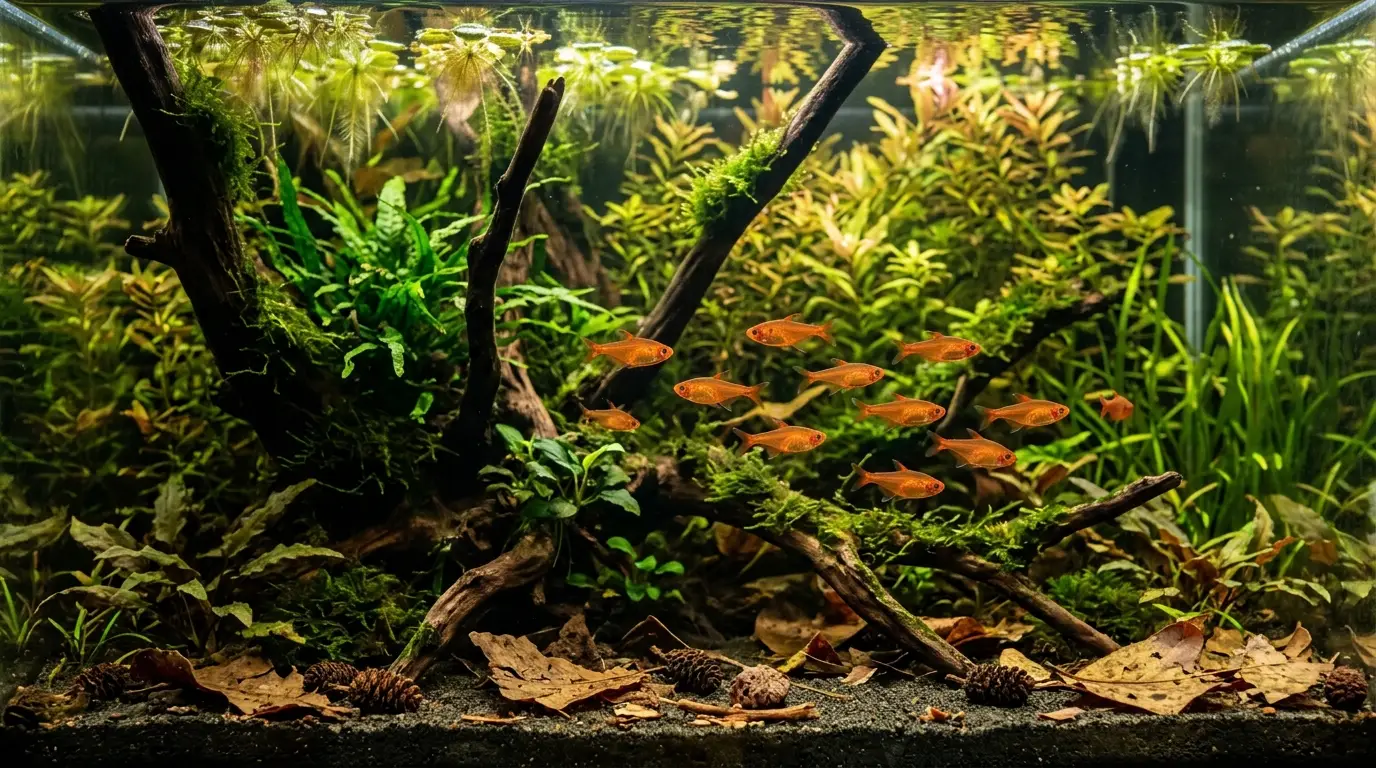
Think warm, tea-stained streams. Use driftwood, seed pods, and leaf litter to mimic their home. Add floating plants to break light and reduce stress. They look like fireflies over a dark forest floor.
Aquascape ideas
- Foreground: fine sand for easy cleaning
- Midground: crypts, small swords, and moss on wood
- Background: stems like Rotala, Ludwigia, Hygrophila
- Floaters: salvinia, frogbit, red root floaters for shade
- Botanicals: catappa leaves and alder cones for tannins
Lighting tips
- Low to medium light flatters their color.
- A dark background and substrate boost contrast.
- CO2 is optional; plants help water quality but keep it stable.
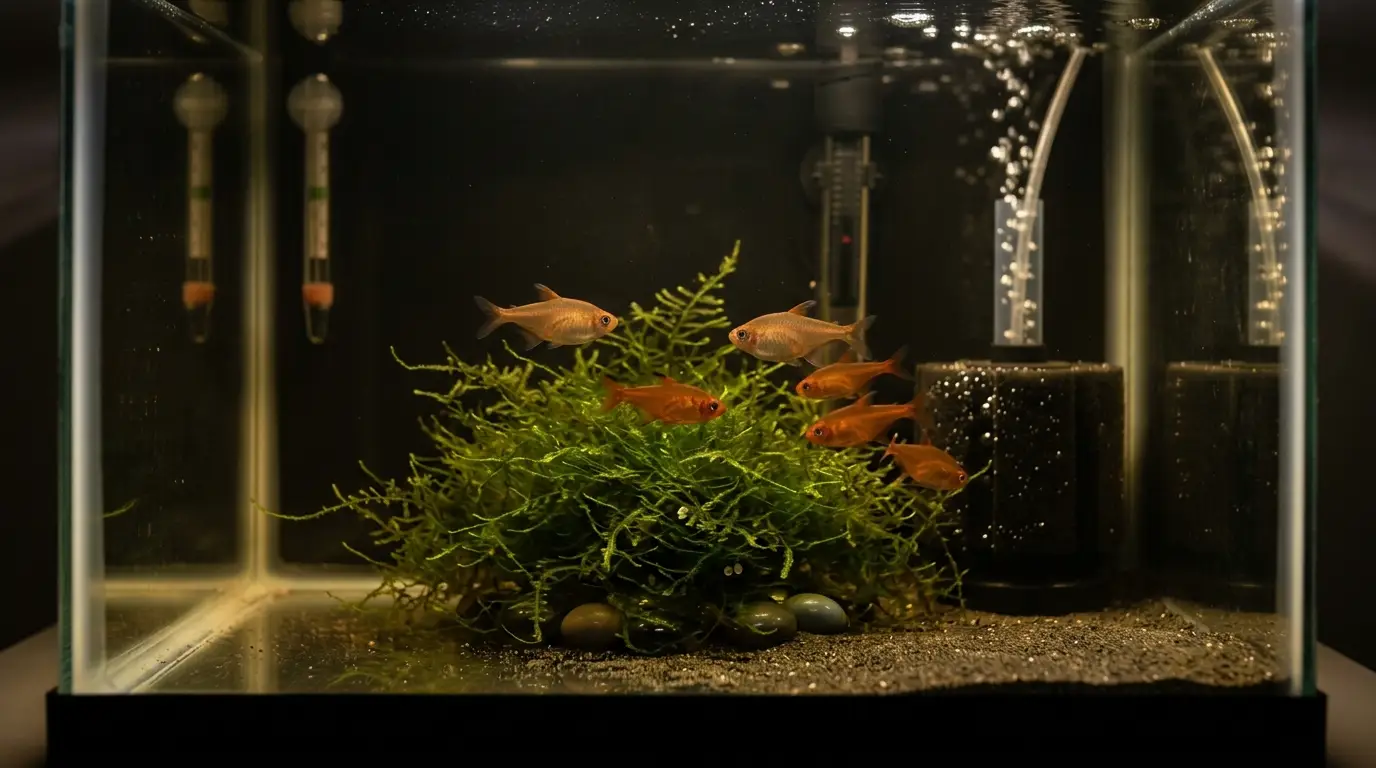
In my tanks, a big clump of moss doubles as a spawning pad. That simple trick earns a spot in every ember tetra care guide I write.
Routine care and maintenance
Simple habits keep embers glowing. Watch them daily. Small, regular tasks beat big, rare fixes.
Weekly tasks
- Change 30–40% of water with matched temperature.
- Vacuum lightly to avoid uprooting plants.
- Clean glass for clear viewing.
- Test nitrate and pH if the tank is new or heavily stocked.
Monthly tasks
- Rinse filter media in old tank water.
- Trim plants to keep flow paths open.
- Check heater accuracy with a reliable thermometer.
Acclimation steps
- Float the bag to match temperature.
- Drip acclimate 30–60 minutes for soft, acidic tanks.
- Lights off for the first evening reduces stress.
These small steps anchor an ember tetra care guide that works for beginners and pros alike.
Health, stress signs, and disease prevention
Healthy embers show bright color, open fins, and steady schooling. Stress shows as faded hues, clamped fins, hiding, gasping, or flashing on decor. Fast action prevents full-blown disease.
Prevention first
- Quarantine all new fish for 2–4 weeks.
- Keep ammonia and nitrite at zero.
- Avoid temperature and pH swings.
- Feed varied foods and do regular water changes.
Common issues
- Ich: white spots, treat with heat and meds per label.
- Fin rot: ragged fins, improve water and treat early.
- Bacterial film on gills: labored breathing, check oxygen and filter flow.
If problems hit, reduce light, raise oxygen with surface ripples, and review parameters. Reliable testing and steady care are the backbone of any ember tetra care guide.
Breeding ember tetras
Breeding is simple with the right setup. Females look rounder; males show deeper orange. Condition both sides for a week on live and frozen foods.
Breeding setup
- Tank: 5–10 gallons, bare bottom
- Filtration: air-driven sponge
- Water: soft and acidic, pH 5.8–6.4, 78–80°F
- Spawning medium: fine-leaf moss or marbles
- Light: very dim
Process
- Add a well-fed pair or small group at dusk.
- They scatter eggs at first light.
- Remove adults after spawning to save eggs.
- Hatch in 24–36 hours; fry free-swim in 3–4 days.
- Start with infusoria or commercial liquid fry food.
- Move to vinegar eels and then baby brine shrimp.
- Keep water pristine with tiny, frequent changes.
With patience, you will see the first orange glow around week six. That moment never gets old, and it keeps me writing each ember tetra care guide with a smile.
Budget, sourcing, and ethics
Plan your budget before you buy. Most embers cost a few dollars each. The school is the main cost, not the fish alone.
Typical costs
- Fish: 10–20 embers
- Gear: sponge filter, heater, light, plants, test kit
- Food: micro-pellets and frozen staples
Smart sourcing
- Choose captive-bred fish when possible.
- Avoid dyed or stunted stock.
- Ask how long the store has held them; longer is better.
- Quarantine all new fish at home.
Ethics matter. Responsible choices protect wild habitats and improve your success rate. Any honest ember tetra care guide should point you that way.
Frequently Asked Questions of ember tetra care guide
How many ember tetras should be kept together?
Keep at least 8–10, but 12 or more is better. Larger groups reduce stress and bring out natural color and schooling.
What is the best tank size for ember tetras?
A 10-gallon tank is the sweet spot for a small school. It offers stable water and space for plants and gentle flow.
Do ember tetras need a heater?
Yes, they do best at 76–80°F. A heater keeps temperature steady, which is vital in any ember tetra care guide.
Can ember tetras live with shrimp?
Yes, adult shrimp are usually safe, and embers rarely hunt them. They may eat tiny shrimplets, so add dense moss for cover.
How long do ember tetras live?
Most live 2–4 years with good care. Stable water, varied food, and a calm tank extend lifespan.
Are ember tetras beginner friendly?
Yes, they are great for beginners who cycle the tank first. Follow a clear ember tetra care guide and keep parameters steady.
How often should I do water changes?
Do 30–40% weekly for most setups. Heavily planted or lightly stocked tanks can stretch changes, but test water to be sure.
Conclusion
Tiny fish, big payoff. With warm, stable water, a planted scape, and a proper school, ember tetras will glow like embers in the dusk. Use this ember tetra care guide to set up right, build good habits, and enjoy a stress-free nano community. Start today: test your water, add plants, and grow the school. If this helped, subscribe for more guides, share your setup, or drop a question in the comments.