Introduction
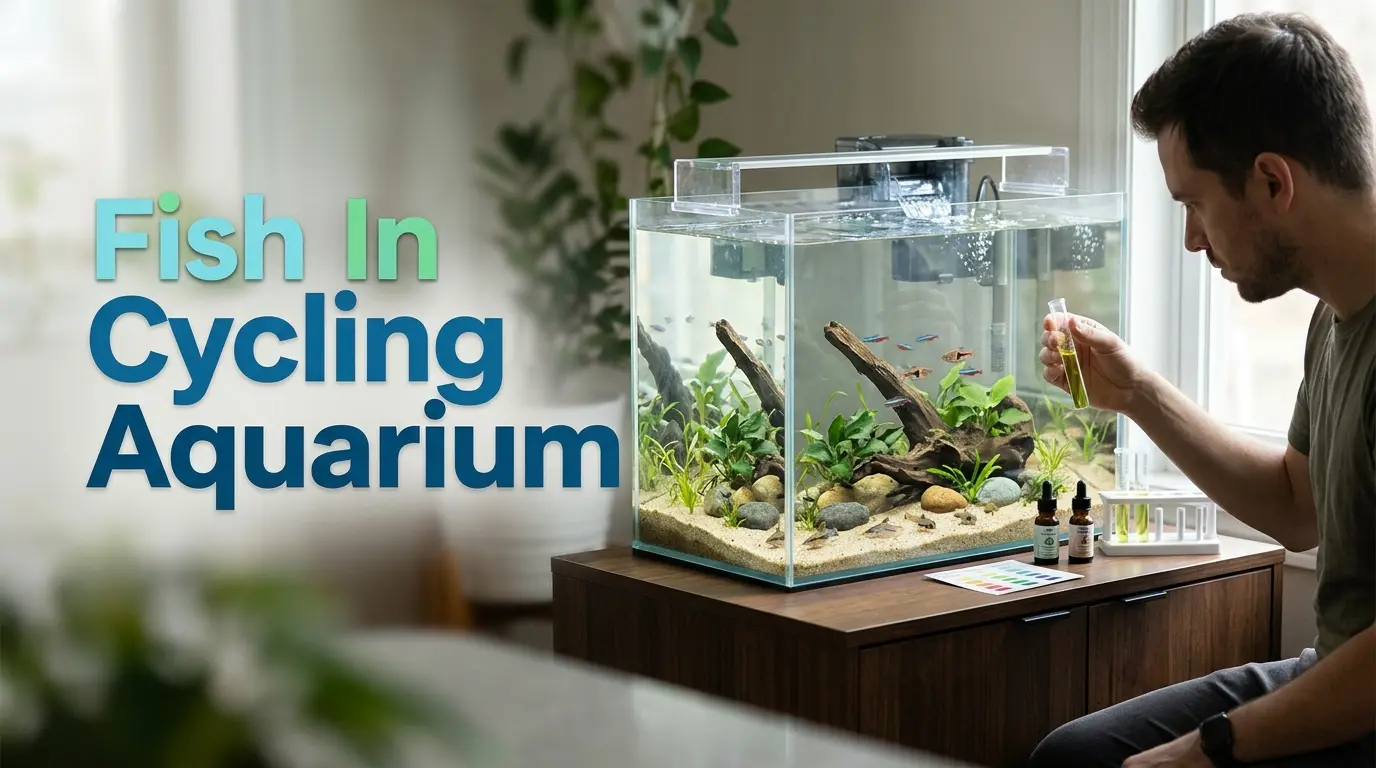
If you have already added fish to a new aquarium in the United States, do not panic. You can complete a fish-in cycle, but you must test the water often, control ammonia and nitrite, and be ready to change water. The safest choice is still to cycle a new tank before adding fish.
A new aquarium has little of the helpful bacteria that break down fish waste. During the cycle, ammonia rises first, nitrite may follow, and nitrate appears as the biological filter develops. Until that process is stable, fish can become stressed or die from poor water quality.
This guide explains how to cycle an aquarium with fish, how often to test, when to change water, which fish are more sensitive, and what to do if ammonia or nitrite rises.
What Does “Cycling an Aquarium” Mean?
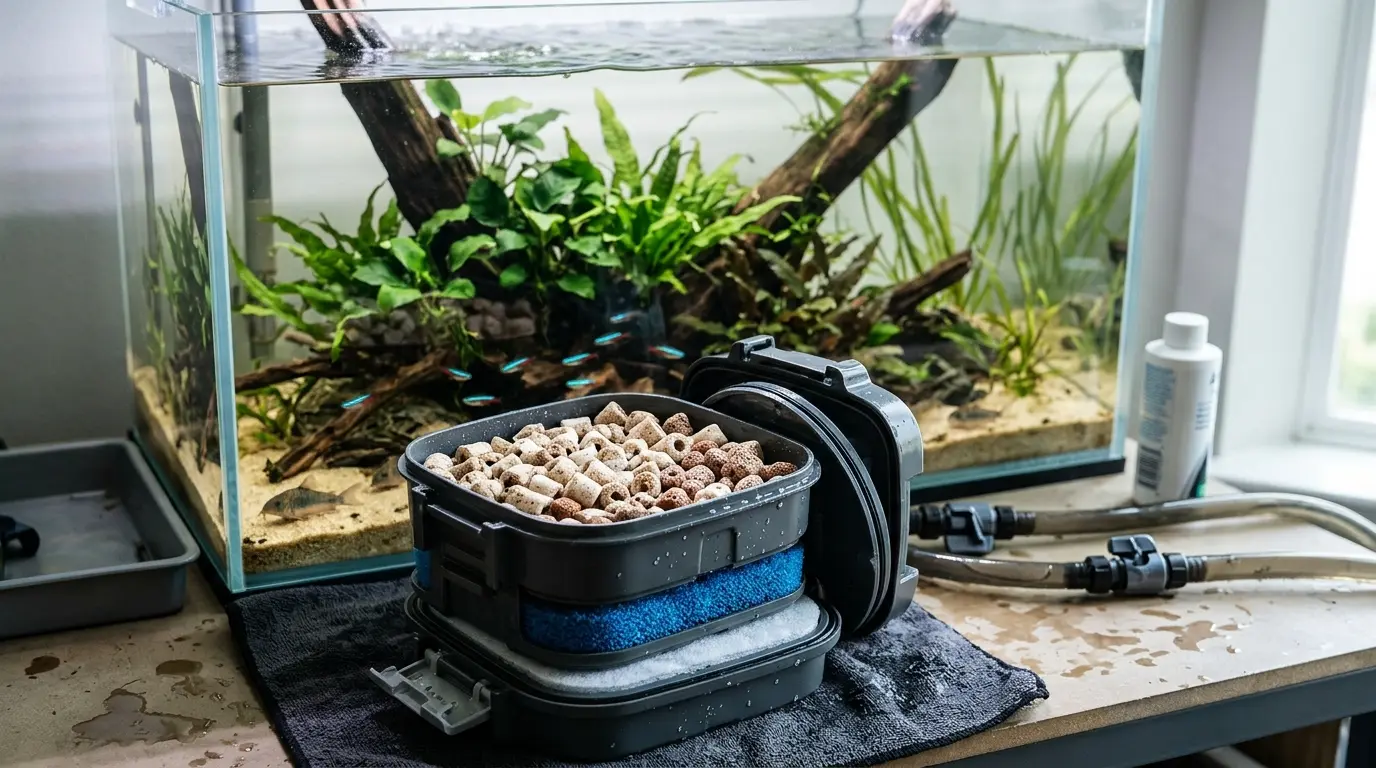
Cycling an aquarium means growing a stable colony of bacteria in the filter and other wet surfaces. These bacteria help change toxic fish waste into less harmful compounds.
The basic process is:
- Fish release waste, and waste breaks down into ammonia.
- Ammonia-oxidizing bacteria convert ammonia into nitrite.
- Nitrite-oxidizing bacteria convert nitrite into nitrate.
- Regular water changes remove nitrate and other waste.
Ammonia and nitrite are toxic to fish. Nitrate is usually less toxic at low levels, but it can still harm fish when it builds up over time.
The cycle does not happen only in the water. Most helpful bacteria grow on surfaces with oxygen and water flow, especially:
- Filter sponge and filter media
- Gravel or sand
- Decorations
- Plants
- Aquarium walls
The filter is the main biological tool because it provides a large, well-oxygenated surface. Replacing all filter media at once can remove much of the bacterial colony.
How long does an aquarium cycle take?
A new aquarium often takes several weeks to cycle. The exact time varies with temperature, pH, oxygen, surface area, fish load, cleaning habits, and whether mature filter media or a reliable bacterial starter is used.
Do not decide that a tank is cycled because the water looks clear. Clear water does not prove that ammonia and nitrite are safe. A test kit is needed.
A tank is generally considered biologically established when:
- Ammonia remains at 0 ppm.
- Nitrite remains at 0 ppm.
- Nitrate appears and can be controlled with water changes.
- These results stay stable while the aquarium has its normal fish load.
Fishless Cycling Is Safer Than Fish-In Cycling
A fishless cycle uses an ammonia source without live fish. It allows the beneficial bacteria to grow before animals are exposed to ammonia and nitrite.
Fishless cycling is usually the better method because it:
- Protects fish from toxic water.
- Lets you build a stronger biological filter.
- Makes testing and adjustment easier.
- Reduces the need for emergency water changes.
- Allows you to confirm that the filter can process an ammonia dose before stocking.
If your tank is empty, wait before adding fish. Use an aquarium-safe ammonia source or another established method, and follow a tested cycling plan. Never add household ammonia that contains soap, fragrance, surfactants, or other additives.
A fish-in cycle becomes necessary when fish are already in the tank. It may also happen by accident after:
- Adding too many fish at once
- Replacing all filter media
- Cleaning filter media in chlorinated tap water
- Removing most of the substrate
- Allowing the filter to stop for a long period
- Using medication that harms part of the bacterial colony
The goal is not to make the cycle happen faster at any cost. The goal is to keep toxic compounds low while the bacteria grow.
How to Cycle an Aquarium With Fish
Use the following steps if fish are already in a new or uncycled aquarium.
1. Test the water right away
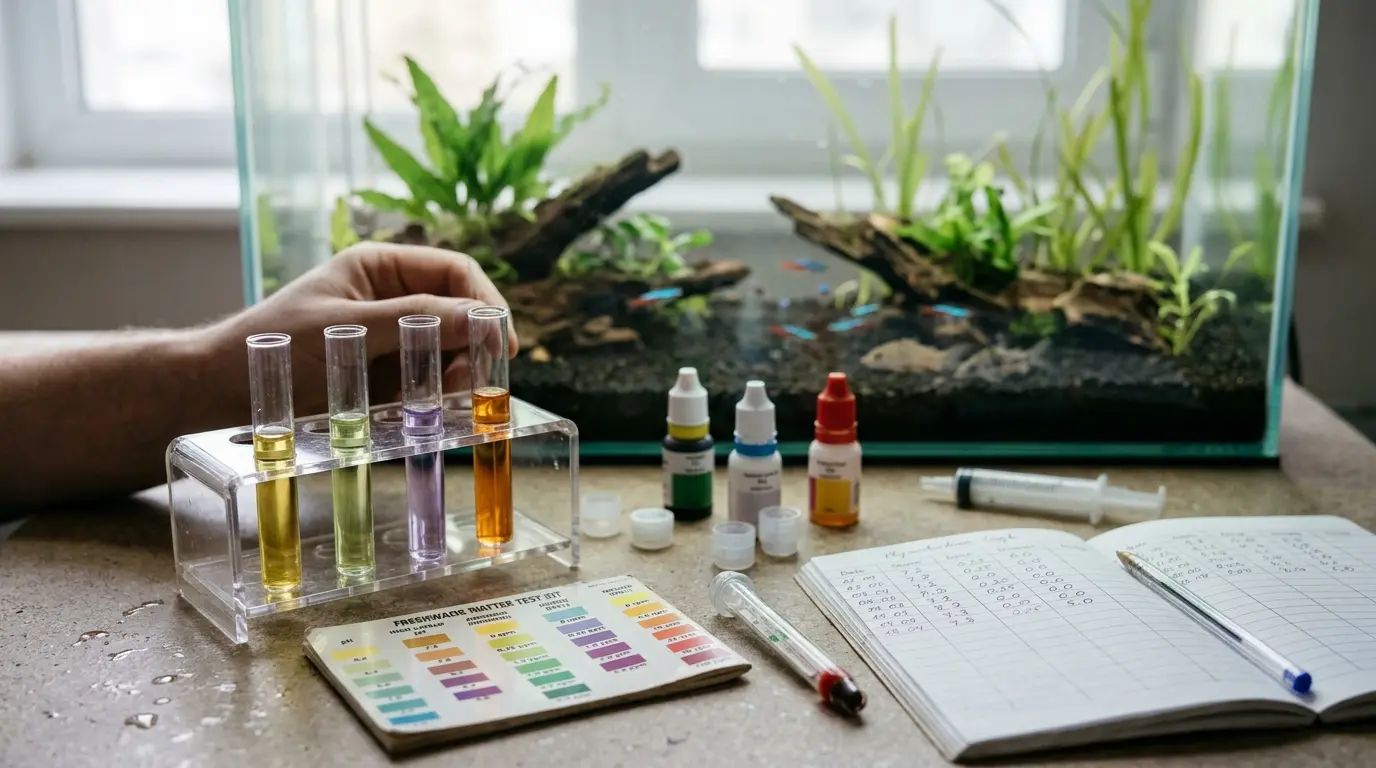
Use a liquid aquarium test kit when possible. Test for:
- Ammonia
- Nitrite
- Nitrate
- pH
- Temperature
Test the source water as well if your tap water contains ammonia, nitrite, or nitrate. Some U.S. municipal water systems use chloramine, which can affect aquarium water and may produce ammonia when treated.
Test at least once each day during the early stage of a fish-in cycle. Test more often if:
- Ammonia or nitrite is detectable.
- Fish are gasping or acting weak.
- You added new fish.
- The filter stopped working.
- You changed filter media.
- The aquarium is small or heavily stocked.
Record the results. A written log helps you see whether the numbers are rising, falling, or staying stable.
2. Use a water conditioner
Treat tap water with a conditioner made to remove chlorine and neutralize chloramine. Add the correct dose for the volume of new water, unless the product label gives different instructions.
Untreated tap water can damage fish gills and kill helpful bacteria. Water treated for human drinking is not automatically safe for aquarium animals.
Match the new water to the aquarium as closely as possible for:
- Temperature
- pH, when practical
- General water chemistry
Avoid sudden, large changes in temperature or pH. A clean container used only for aquarium work can reduce the chance of soap or chemical contamination.
3. Change water when ammonia or nitrite is detectable
In a fish-in cycle, the safest target is:
- Ammonia: 0 ppm
- Nitrite: 0 ppm
If either one is above zero, perform a partial water change. The size depends on the test result, fish behavior, tank size, and water chemistry. A moderate change may help with a small reading, while a larger change may be needed when the result is high or fish show distress.
Retest after the water change. If ammonia or nitrite remains detectable, repeat partial changes as needed. The biological cycle can still continue because bacteria remain on the filter and other surfaces.
Do not wait for the water to turn cloudy or for fish to look sick. Ammonia and nitrite can be harmful before a visible problem appears.
4. Reduce waste while bacteria grow
Feed lightly during the cycle. Give only what fish can eat quickly, and remove uneaten food. Extra food breaks down into more ammonia.
You can also reduce the biological load by:
- Pausing the addition of new fish
- Removing dead plant leaves
- Removing uneaten food
- Avoiding unnecessary medications
- Keeping the aquarium well aerated
- Keeping the filter running continuously
Do not starve fish for long periods without a reason. Small, controlled meals are safer than large feedings.
5. Protect the filter bacteria
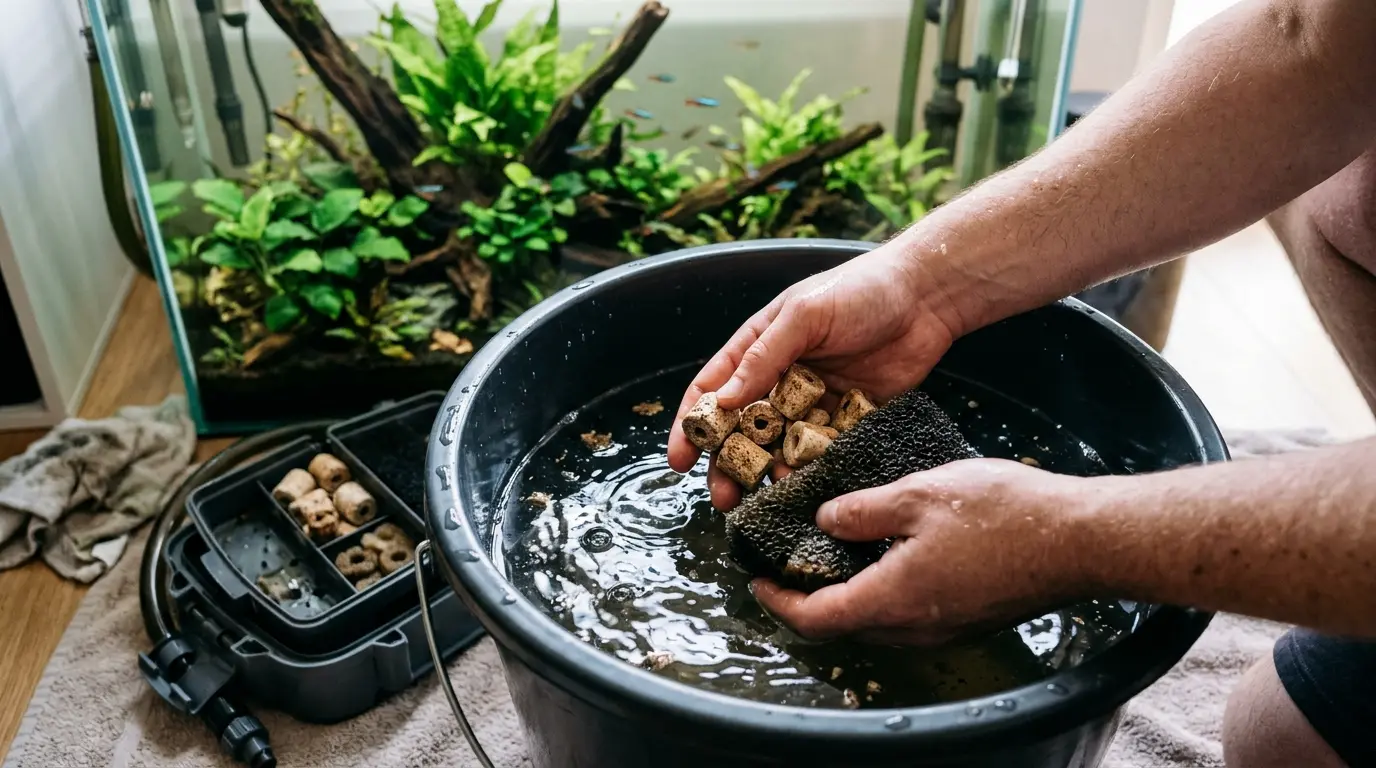
Keep the filter running day and night. Beneficial bacteria need water flow and oxygen.
When cleaning filter media, gently rinse it in removed aquarium water. Do not rinse biological media under untreated tap water because chlorine or chloramine can kill bacteria.
Do not replace all filter cartridges or sponges at the same time. If a cartridge must be replaced, keep the old media in the filter with the new media for a period of time when the equipment allows it.
Never turn off a filter for long periods unless the manufacturer gives a specific reason. A stagnant filter can lose oxygen, which can damage the bacterial colony.
6. Add no more fish during the cycle
Every fish adds waste. Adding more fish before ammonia and nitrite stay at zero can overload the developing filter.
Wait until the aquarium gives stable readings for at least several days under normal feeding. Then add fish slowly, retesting after each addition. A stable cycle does not mean the tank can support unlimited fish.
What Levels Are Safe for Fish?
For a cycling aquarium, aim for zero detectable ammonia and zero detectable nitrite. Many home test kits report ammonia as total ammonia, which includes both toxic ammonia and the less toxic ammonium form.
The more toxic form becomes more common as pH and temperature rise. This means the same test result can pose different risks under different conditions. A reading that looks small on a test strip should not be ignored.
| Water test | Desired reading during a fish-in cycle | What to do if detected |
|---|---|---|
| Ammonia | 0 ppm | Change water, reduce feeding, test again |
| Nitrite | 0 ppm | Change water, test again, improve aeration |
| Nitrate | Low and controlled | Perform routine water changes |
| Chlorine or chloramine | 0 ppm | Treat replacement water before it enters the tank |
| pH | Stable for the fish | Avoid sudden correction without a clear reason |
Test-kit colors can be hard to read. Follow the kit instructions, use the correct sample size, and check the expiration date. Test strips can be useful for quick checks, but liquid tests may give clearer results for ammonia and nitrite.
Why pH matters
A sudden pH change can stress fish. At the same time, a higher pH can increase the share of total ammonia present in the more toxic form.
Do not chase a specific pH number unless the fish require it. Stable water is often safer than repeated attempts to force the pH up or down. If your source water has unusual pH, hardness, or alkalinity, contact a local aquarium specialist or aquatic veterinarian for help with species-specific care.
What Fish Are Best for a Fish-In Cycle?
No fish is truly safe in toxic water. Some species may appear hardier, but that does not make ammonia or nitrite harmless.
The best choice is to avoid a fish-in cycle. If fish are already present, keep the number low and choose species based on the complete aquarium setup, not only their reputation for toughness.
Consider:
- Adult size
- Minimum tank size
- Water temperature
- pH and hardness needs
- Social needs
- Waste production
- Compatibility with other fish
- Availability of a backup tank
Avoid using fish as disposable “starter fish.” This practice can cause pain, disease, and death. A cheap or commonly available species still deserves safe water and proper care.
Sensitive fish may show signs of stress sooner, but all fish can be harmed by poor water quality. Fish with long-term exposure to suboptimal water may suffer gill damage, reduced growth, weakened immune function, or recurring disease.
Signs That Fish Are in Trouble
Water tests matter more than appearance, but fish behavior can signal an urgent problem.
Watch for:
- Gasping at the surface
- Rapid gill movement
- Hanging near the filter output
- Clamped fins
- Loss of balance
- Sudden hiding
- Refusing food
- Red or inflamed gills
- Lethargy
- Unusual darting or flashing
These signs can have several causes, including low oxygen, ammonia, nitrite, temperature stress, disease, or poor water chemistry.
If fish are gasping or losing balance, act at once:
- Test ammonia, nitrite, temperature, and pH.
- Add strong surface movement or an air stone if available.
- Perform a partial water change with conditioned, temperature-matched water.
- Stop feeding until the immediate water problem is under control.
- Retest and repeat the water change if toxic readings remain.
- Move fish only if the receiving aquarium is fully conditioned and safe.
If fish remain severely distressed, contact an aquatic veterinarian or an experienced local aquarium professional. Do not add random medications before identifying the likely cause.
Common Fish-In Cycling Mistakes
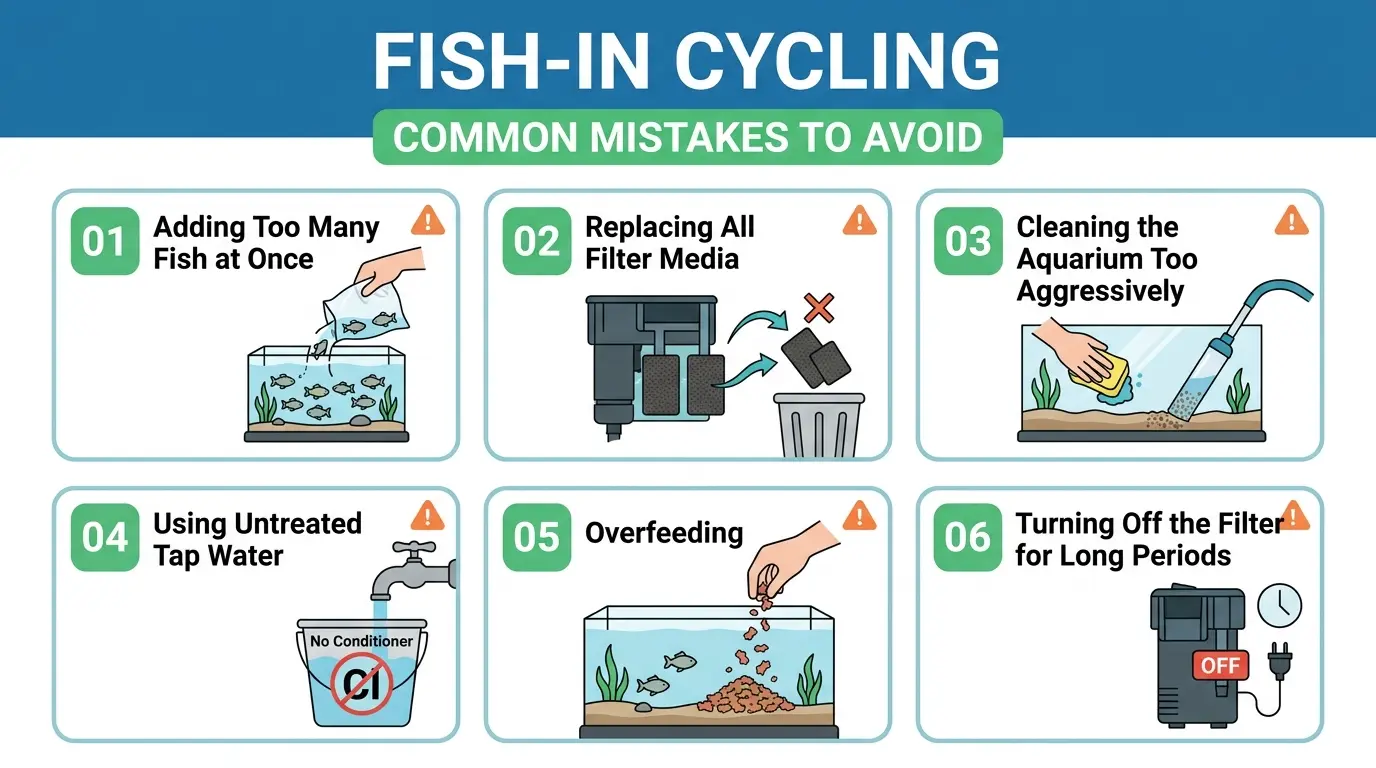
Adding too many fish at once
A filter that can process waste from two small fish may not handle ten fish. Add stock in stages and allow the test results to guide the pace.
Relying on cloudy water
Cloudy water may be caused by bacteria, dust, suspended waste, or other changes. Clear water can still contain dangerous ammonia or nitrite. Always test.
Replacing the whole filter cartridge
A large share of the useful bacteria may live on the filter media. Replacing it all at once can cause a new ammonia or nitrite spike.
Cleaning the aquarium too aggressively
A deep cleaning that removes all substrate, decorations, and filter media can remove much of the biological habitat. Clean in sections unless there is a serious contamination problem.
Using untreated tap water
Chlorine and chloramine can harm fish and bacteria. Condition every batch of tap water before adding it.
Overfeeding
Uneaten food becomes waste. Feed small amounts and remove food that remains after feeding.
Trusting bottled bacteria without testing
Bacterial products may help in some setups, but they do not remove the need for testing. Storage conditions, age, temperature, species of bacteria, and tank conditions can affect performance. Treat product claims as instructions to follow, not proof that your aquarium is cycled.
Using ammonia neutralizers as a complete fix
Some conditioners temporarily bind or detoxify certain forms of ammonia or nitrite, depending on the product. They do not replace water changes, oxygen, testing, or a mature biological filter. Follow the label and test the water.
Turning off the filter at night
The filter supplies oxygen and keeps water moving across the biological media. Continuous operation is usually essential.
How Often Should You Change Water During a Fish-In Cycle?
There is no single percentage that fits every aquarium. Water changes should be based on test results, fish condition, tank size, and the condition of the replacement water.
A practical routine is:
- Test daily at the start.
- Change water whenever ammonia or nitrite is detectable.
- Retest after each change.
- Continue until both remain at zero.
- Perform regular maintenance after the cycle stabilizes.
A partial water change lowers the concentration of ammonia and nitrite but does not remove the source. Fish continue to produce waste, so testing must continue.
For example, if a tank has 1 ppm ammonia and you remove half the water, the concentration may fall to about 0.5 ppm before new waste and water chemistry change the result. This is a simple estimate, not a guarantee. The real result depends on the accuracy of the test, the source water, and what remains in the aquarium.
If your tap water contains ammonia, nitrite, or nitrate, water changes may not solve the problem by themselves. Test the source water and ask your water utility for its current water-quality report. A local aquarium professional can help you choose a treatment plan.
How Do You Know the Cycle Is Complete?
A cycle is complete when the aquarium’s biological filter consistently keeps ammonia and nitrite at zero with the normal fish load and feeding schedule.
Look for this pattern:
- Ammonia reads 0 ppm.
- Nitrite reads 0 ppm.
- Nitrate is detectable or increases between water changes.
- Results remain stable for several days.
- Fish are eating and behaving normally.
- No emergency water changes are needed to keep toxic readings down.
Do not add a large group of fish as soon as one test reads zero. Stability matters more than a single result.
After the cycle, keep testing weekly for a while and whenever you:
- Add fish
- Change filter media
- Treat disease
- Lose power
- Deep-clean the tank
- Notice unusual behavior
- Change feeding levels
A mature aquarium can still have an ammonia spike. “Cycled” does not mean maintenance-free.
Fish-In Cycling: A Simple Decision Table
| Situation | Best next step |
|---|---|
| No fish are in the tank | Use a fishless cycle |
| Fish are present and ammonia is 0 ppm | Test daily and feed lightly |
| Ammonia is above 0 ppm | Change water, reduce waste, retest |
| Nitrite is above 0 ppm | Change water, improve aeration, retest |
| Fish are gasping | Add oxygen, change water, test immediately |
| The filter stopped | Restore flow, check water, avoid feeding until stable |
| You replaced all filter media | Monitor closely for a new cycle |
| Water is cloudy but tests are normal | Keep testing; do not assume the tank is unsafe or safe |
| Source water contains ammonia or chloramine | Use a suitable conditioner and seek local water-quality advice |
| Fish continue to decline | Contact an aquatic veterinarian or qualified aquarium professional |
Frequently Asked Questions
Can fish survive a cycling aquarium?
Some fish survive a fish-in cycle, but survival does not mean the process is safe. Ammonia and nitrite can damage fish even when they do not die immediately. Frequent testing and water changes reduce risk.
Should I remove the fish during the cycle?
Usually, do not move fish into an uncycled replacement tank. Moving them can add stress and expose them to another ammonia spike. If you have a known-safe, fully cycled aquarium that is suitable for the fish, relocation may be an option.
Can live plants cycle an aquarium?
Live plants can absorb some ammonia and provide surfaces for bacteria, but plants do not guarantee a completed cycle. A planted tank still needs testing, filtration, and controlled stocking.
Does a water change stop the nitrogen cycle?
No. A water change removes some dissolved waste but usually leaves bacteria on the filter, substrate, and other surfaces. Water changes are a key part of safely managing a fish-in cycle.
Can I add fish when nitrate appears?
Not by itself. Nitrate may show that part of the cycle is active, but ammonia and nitrite must also remain at zero. Add fish slowly only after the aquarium gives stable results under its normal load.
Conclusion
The safest way to prepare a new aquarium is to complete a fishless cycle before adding fish. If fish are already in the tank, a careful fish-in cycle can protect them: test often, keep ammonia and nitrite at zero, change water when either is detected, feed lightly, maintain strong filtration, and add no new fish until the water is stable.
Your next step is simple: test ammonia, nitrite, nitrate, pH, and temperature today. Record the results, then act on the numbers rather than the appearance of the water.