
Kuhli loaches thrive in soft, clean water with sand and many hides.
If you want a peaceful, active, and quirky bottom dweller, you are in the right place. In this kuhli loach care guide, I will share proven tips from years of hands-on keeping, plus clear steps you can follow today. You will learn how to set up the tank, dial in water, feed well, and prevent stress so your loaches live long and look great. Let’s dive in.
Kuhli Loach Overview and Behavior
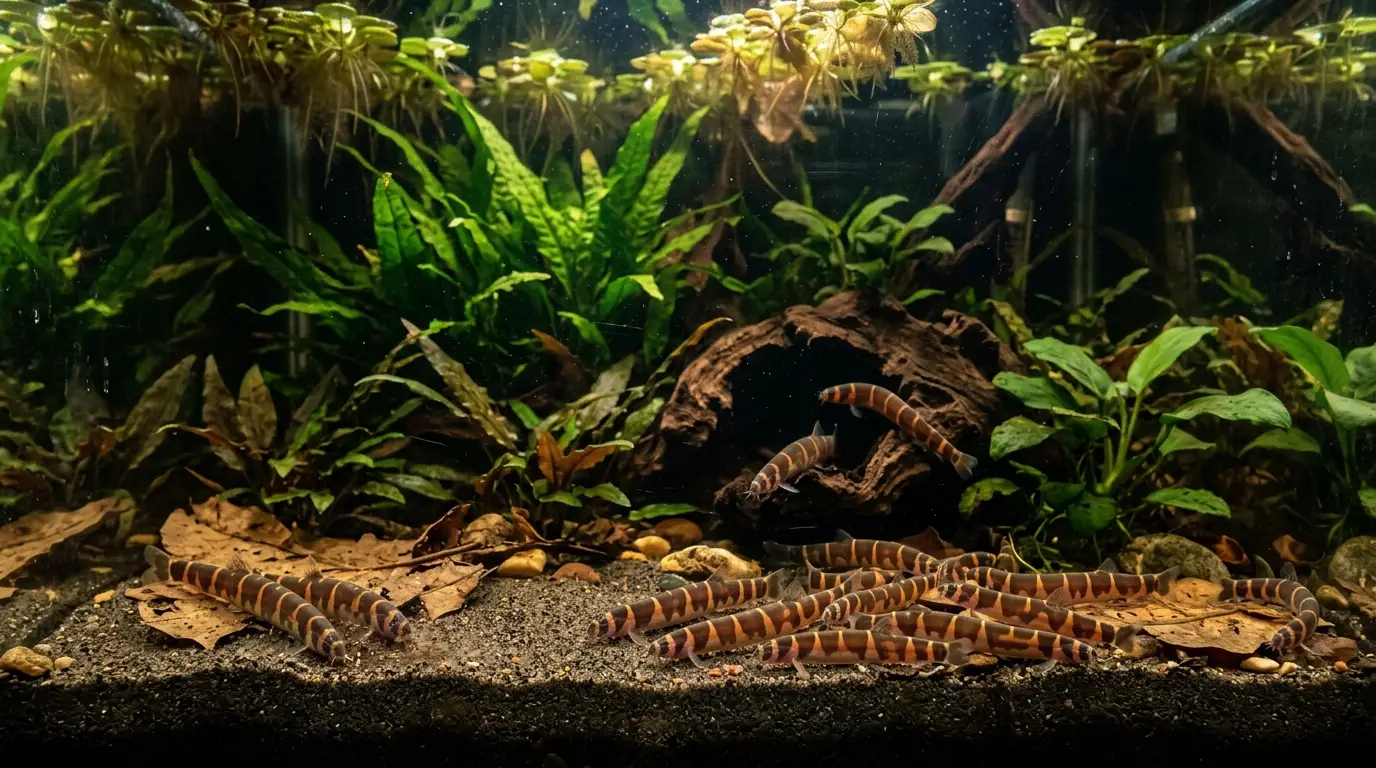
This kuhli loach care guide starts with what makes them special. Kuhli loaches belong to the Pangio group. Many sold as Pangio kuhlii are often Pangio semicincta. They are eel-shaped, shy at first, and very social.
They live in groups. Keep at least eight to twelve. In a group, they explore more and hide less. Life span can reach eight to ten years with stable care.
They are crepuscular to nocturnal. They sift sand for food and love leaf litter. A tight lid is a must. They can fit through tiny gaps.
- Adult size is three to four inches.
- Origin is Southeast Asia, in slow streams and leaf beds.
- They prefer dim light and calm flow.
h3 Are kuhli loaches nocturnal?
They are most active at dusk and night. With dim light and safe hides, they will also come out by day.
Ideal Tank Setup
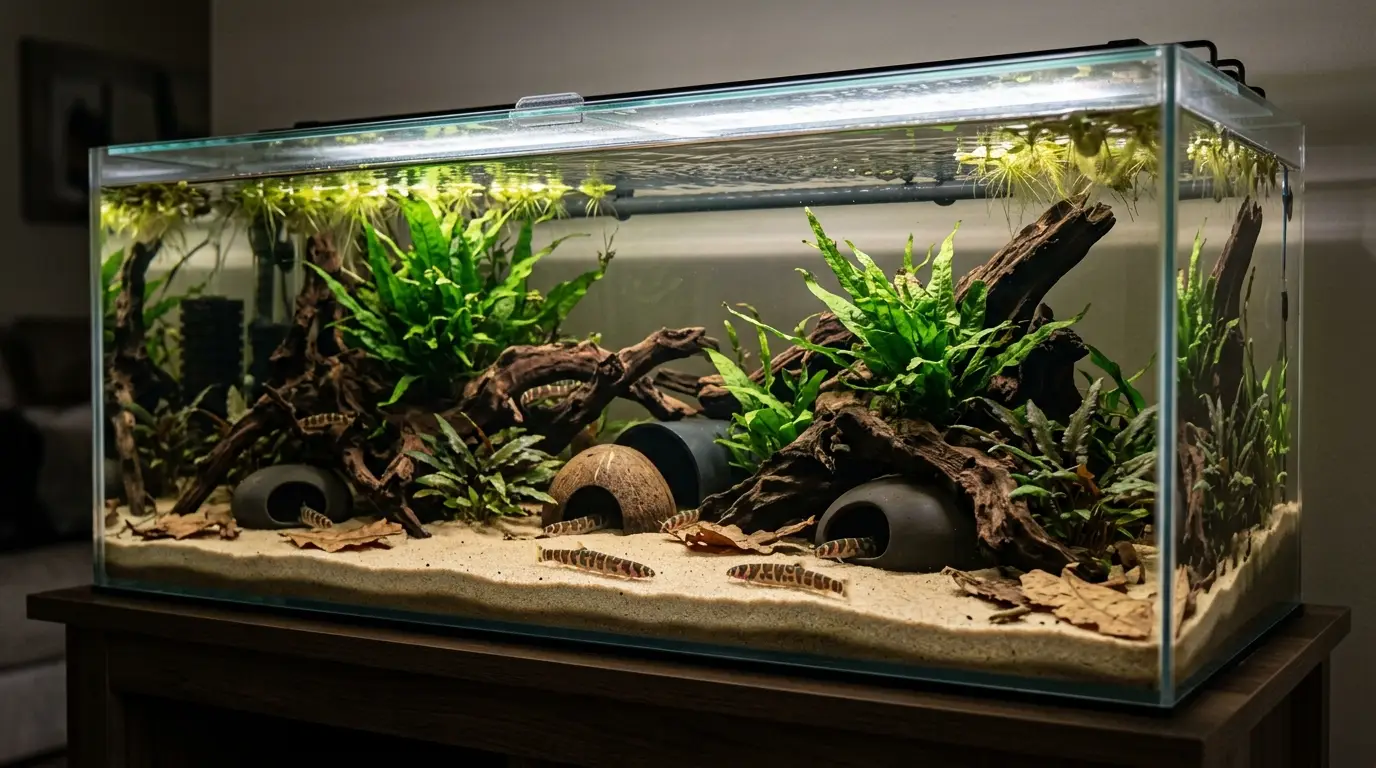
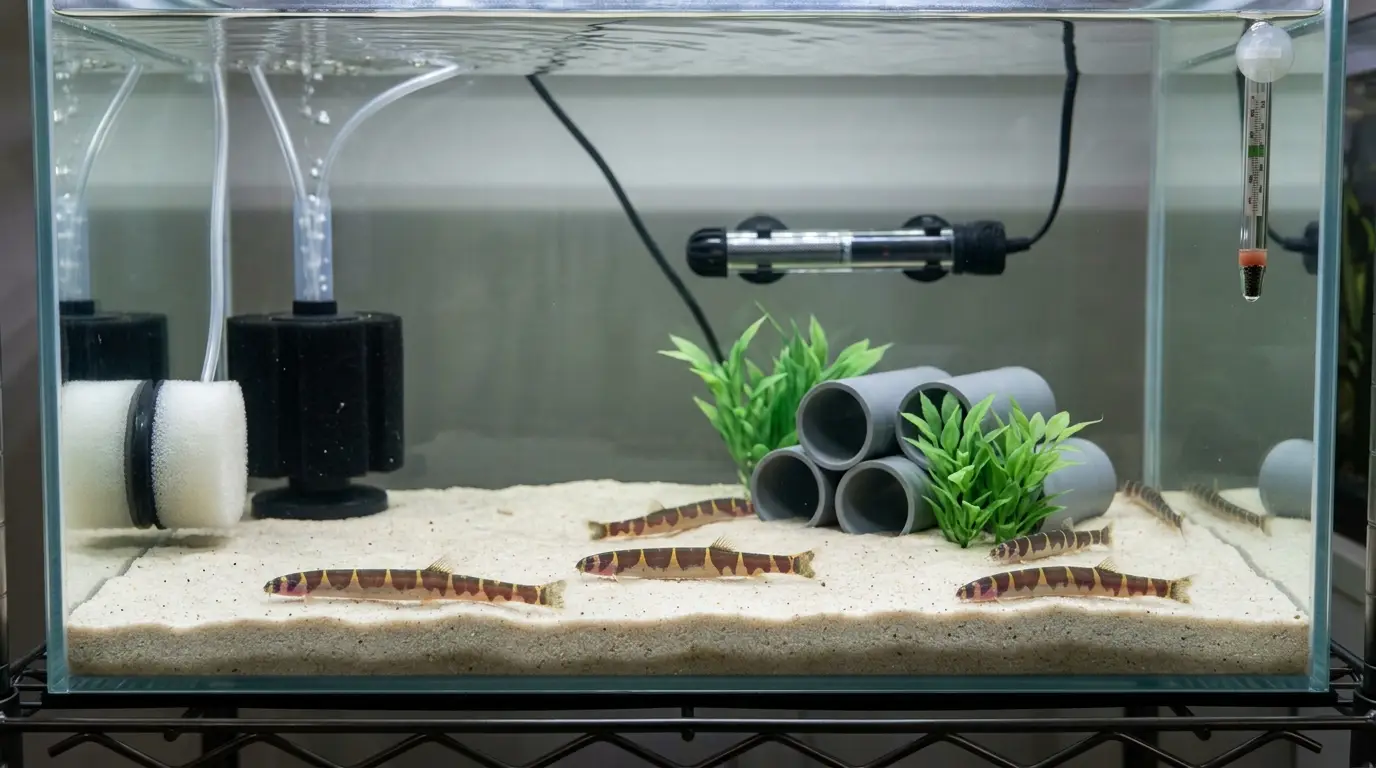
A solid setup is the base of this kuhli loach care guide. Use a 20-gallon long tank or larger for a group. More floor space is better than height. A tight lid with fine mesh stops escapes.
Pick a soft sand bed. Fine sand keeps their barbels safe. Add many hides. Use caves, PVC elbows, coconut shells, driftwood, and piles of leaves. Live plants like java fern, crypts, and floating plants help them feel safe.
Keep flow gentle. A sponge filter or a canister with a spray bar works well. Light should be low to medium. Warm the tank to 75 to 80°F.
- Substrate: fine sand only.
- Decor: wood, caves, leaf litter, dense plants.
- Filtration: gentle, well cycled, with pre-filter sponge on intakes.
Personal tip: My first group went into smooth gravel. Their barbels wore down, and they hid for weeks. I switched to sand, and they were out within days.
Water Parameters and Stability
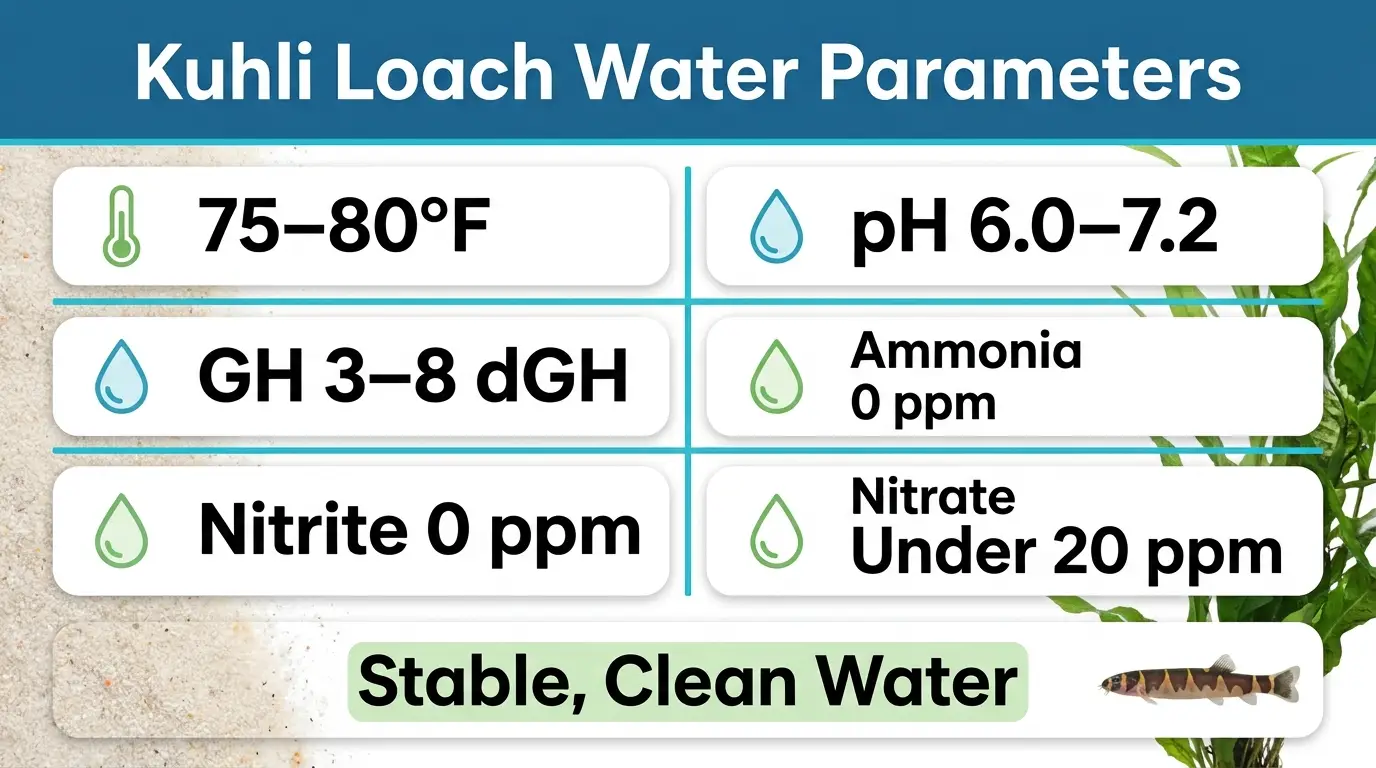
Water drives success in any kuhli loach care guide. Aim for soft, slightly acidic water. Keep it stable and very clean.
- Temperature: 75 to 80°F.
- pH: 6.0 to 7.2.
- GH: 3 to 8 dGH.
- KH: low to moderate.
- Ammonia and nitrite: 0 ppm.
- Nitrate: under 20 ppm.
Cycle the tank well and test weekly. If your tap is hard, mix in reverse osmosis water and remineralize to target GH and KH. Match temperature and TDS at water change time to avoid stress. Stability matters more than chasing a perfect number.
h3 Can kuhli loaches live in hard water?
They can adapt to moderate hard water if other factors are sound. For best health and breeding, shift slowly to softer water.
Diet and Feeding Routine
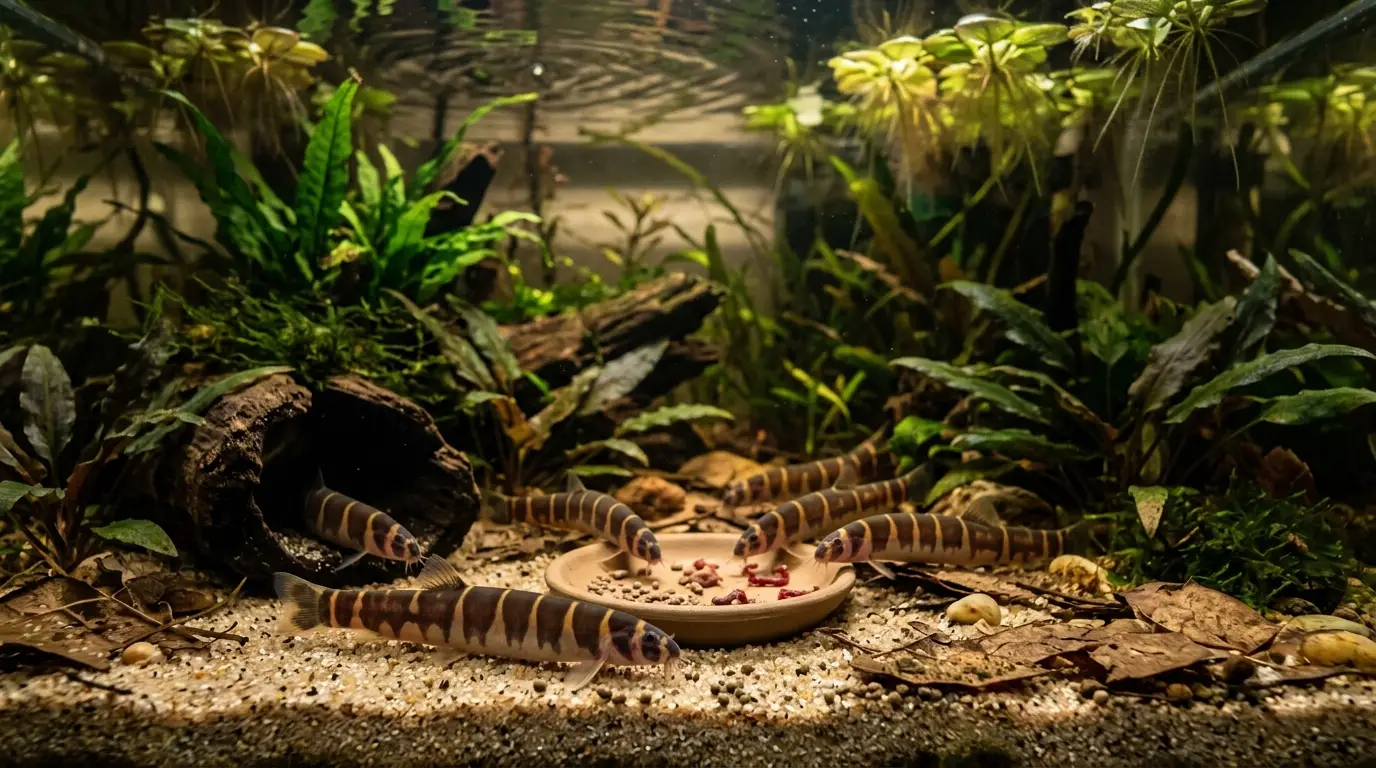
Feeding is a core part of this kuhli loach care guide. Kuhli loaches are omnivores and micro hunters. They need sinking foods. Feed at dusk when they are bold.
Offer a mix across the week:
- Quality sinking wafers and micro pellets.
- Frozen and live foods like bloodworms, blackworms, daphnia, and baby brine shrimp.
- Gel foods and small bits of blanched zucchini or spinach.
Feed small amounts, twice a day if you can. Use a feeding dish or a turkey baster to target food to the sand. Remove leftovers to keep water clean.
h3 Do kuhli loaches eat snails?
They may snack on tiny, soft snails or eggs, but they are not snail hunters. Do not count on them for snail control.
Tankmates and Community Planning
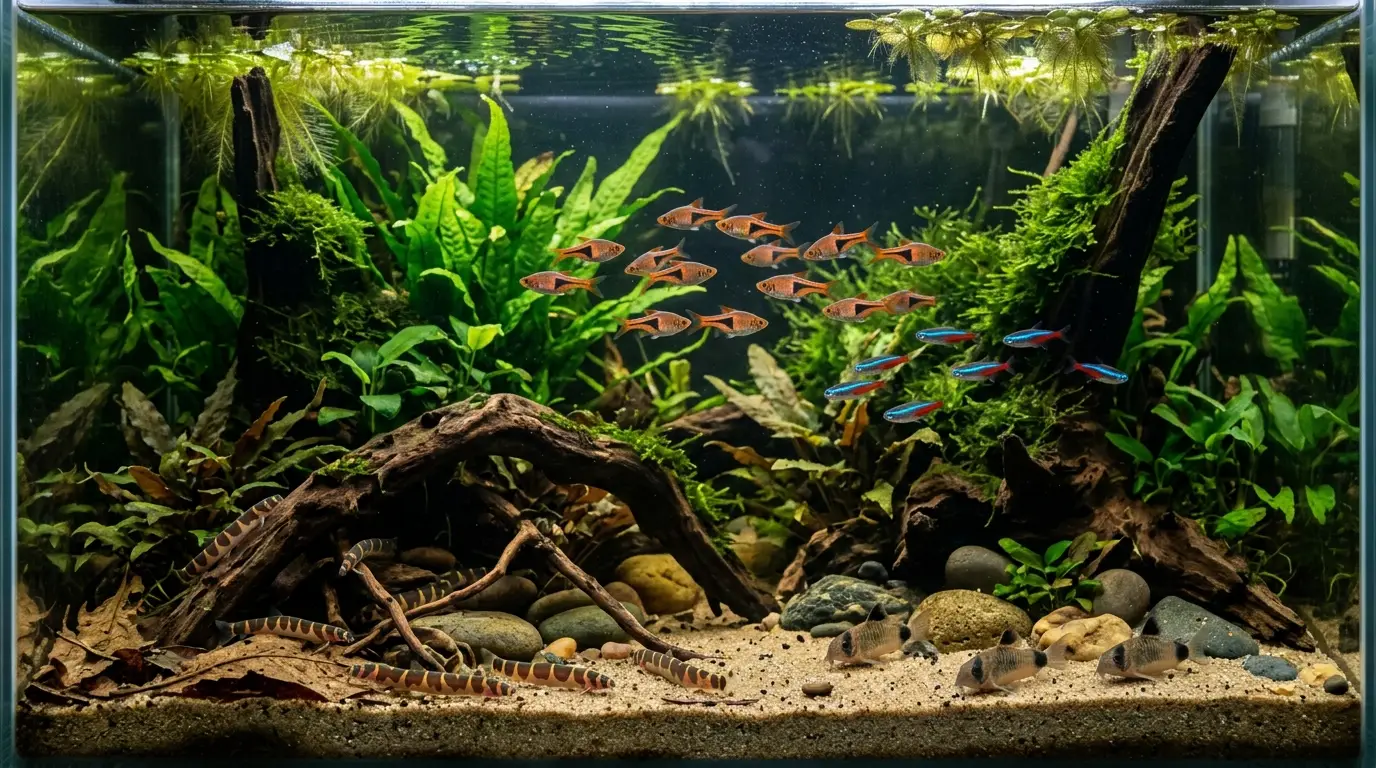
Peaceful friends are a must in any kuhli loach care guide. Good matches are calm, mid-water fish that will not outcompete them at dinner.
Great picks include:
- Rasboras, small danios, and peaceful tetras.
- Honey or sparkling gouramis.
- Corydoras with extra food on the bottom.
- Peaceful livebearers in softer water mixes.
Use caution with shrimp. Adults may be fine, but tiny shrimplets can be food. Avoid big cichlids, bettas that guard the bottom, or fin nippers. Keep the kuhli loach group large so they feel safe.
Health, Disease Prevention, and Quarantine
A smart kuhli loach care guide puts health first. Loaches have thin scales and are drug-sensitive. Many meds, like copper and strong malachite green, can harm them. Use loach-safe doses and follow labels with care.
Watch for signs:
- Flashing, clamped fins, swollen belly, or red sores.
- Ich shows as white dots; act fast with heat and a loach-safe plan.
- Thin new fish may have worms; a proper quarantine helps.
Quarantine all new fish for two to four weeks. Keep sand clean and smooth to protect barbels. Good food and low stress are the best shields. Evidence supports that stable water and a clean substrate cut risk more than any tonic.
Breeding Kuhli Loaches
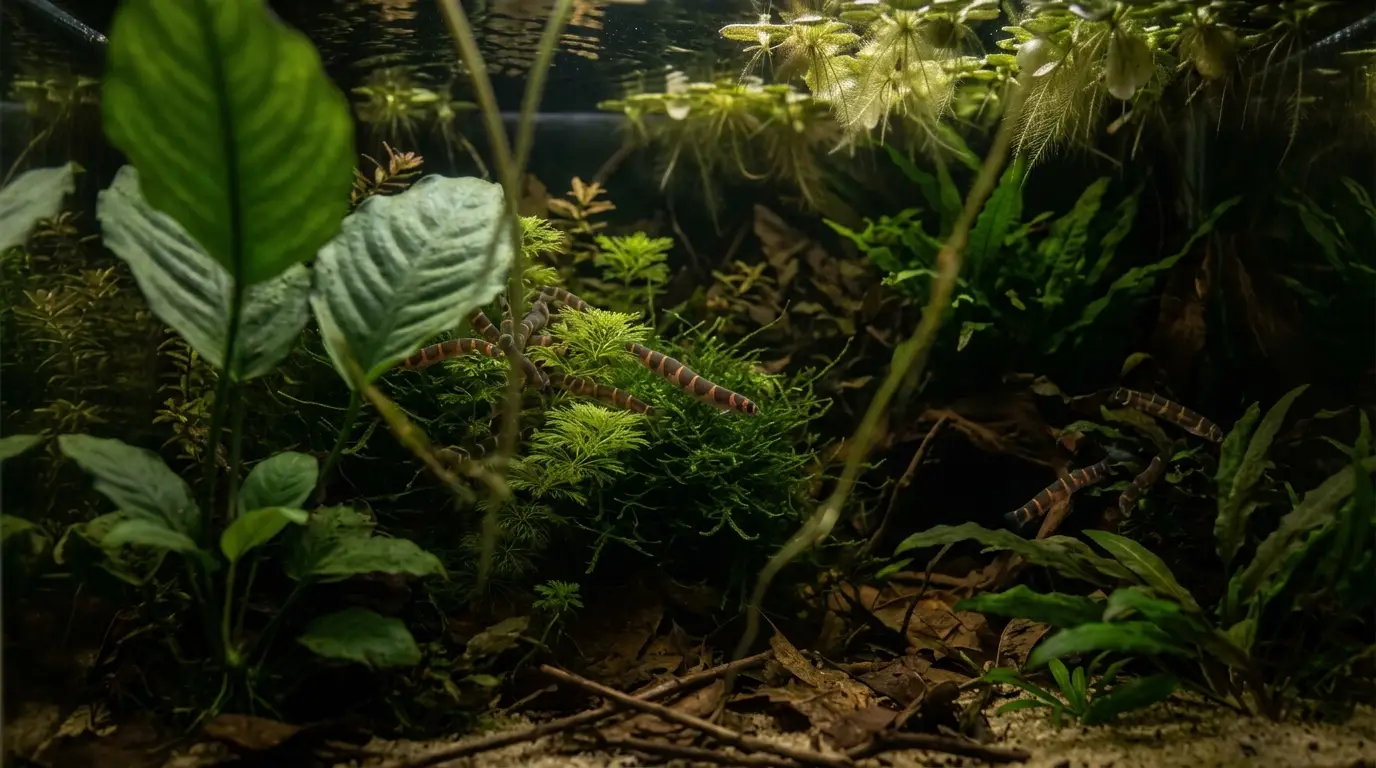
Breeding is a rare win in a home kuhli loach care guide. It is possible, but not easy. They are egg scatterers. Eggs are small and green. They spawn in dense plants or mops at night.
Tips that can help:
- Use very soft, acidic water with gentle flow.
- Keep a big, mature group.
- Feed heavy with live and frozen foods.
- Do small, cool water changes to mimic rain.
After eggs appear, move adults so they do not eat them. Start fry on infusoria or green water. Shift to baby brine shrimp as they grow.
Maintenance Schedule and Practical Tips
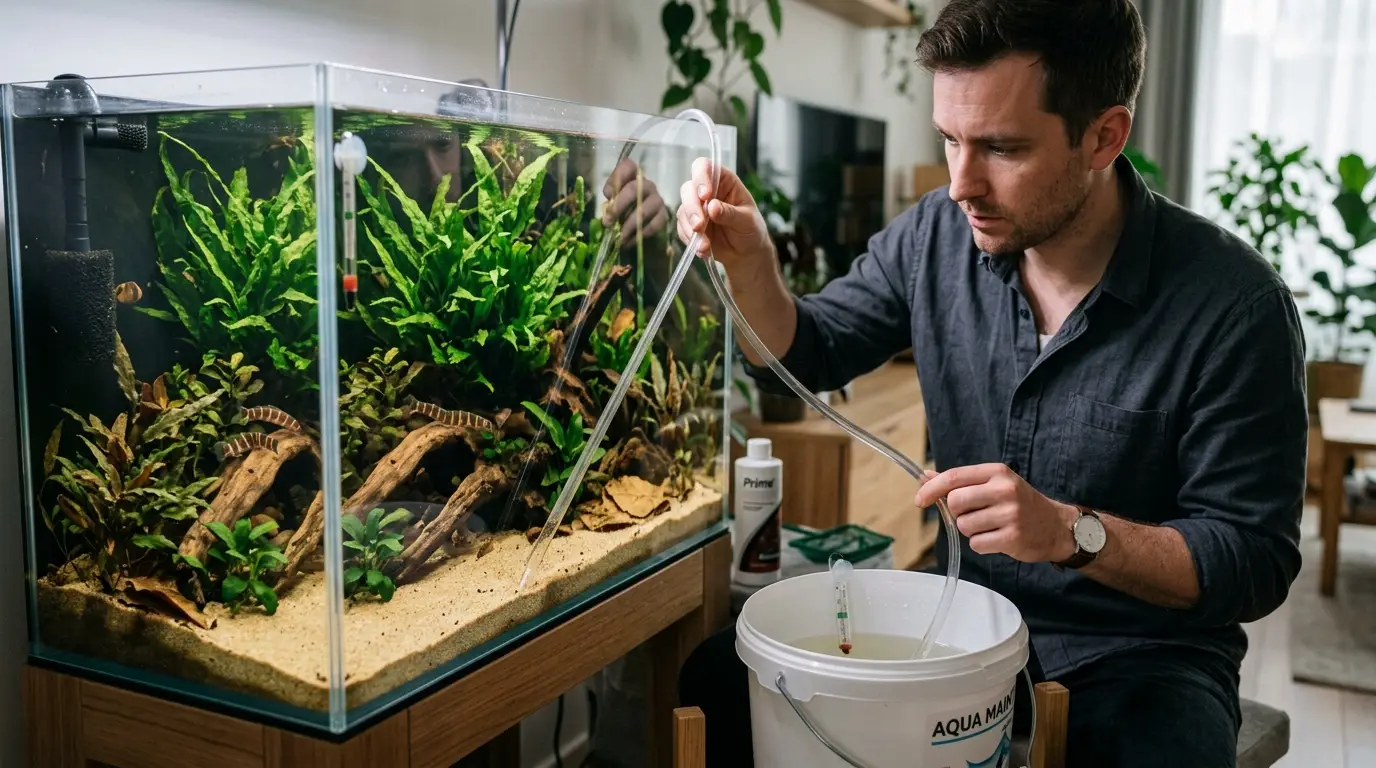
Routine care holds this kuhli loach care guide together. Do weekly water changes of 30 to 40 percent. Match temperature and TDS. Siphon the top of the sand only. Do not dig deep into the bed.
Clean filter media in tank water to keep bacteria alive. Replace carbon and fine pads as needed, not all at once. Refresh leaves and hides when they break down. Keep lights at eight hours to reduce stress.
Personal notes and lessons:
- I once left a small gap near the filter. A loach jumped. Tape every gap.
- Overfeeding led to a mini ammonia spike. Tiny meals, more often, work better.
- A red night light helps watch them feed without stress.
Cost, Sourcing, and Ethics
Ethics matter in a kuhli loach care guide. Many kuhlis are wild-caught. Ask how fish were held and shipped. Look for clear eyes, full bellies, and steady movement. Avoid dyed or painted fish.
Expect a small group to cost more than a pair. Buy at least eight. Quarantine and, if needed, deworm under guidance. Drip acclimate for one to two hours. Support sellers who handle fish with care and offer honest IDs within the Pangio complex.
Frequently Asked Questions of kuhli loach care guide
How many kuhli loaches should I keep together?
Keep at least eight to twelve. A large group cuts stress and brings out natural behavior.
Do kuhli loaches clean the tank?
They eat leftover bits, but they are not cleaners. You still need water changes and a filter.
Can kuhli loaches live with bettas?
Sometimes, but bettas may guard the bottom. If the betta is calm and there are many hides, it can work.
Will kuhli loaches uproot plants?
No. They weave through leaves but do not eat or uproot plants. Use rooted plants and a sand bed.
How often should I feed kuhli loaches?
Feed small meals once or twice a day. Evening feedings suit their active time.
Are kuhli loaches good for beginners?
Yes, if you focus on soft water, sand, hides, and clean, stable care. They are hardy once settled.
Conclusion
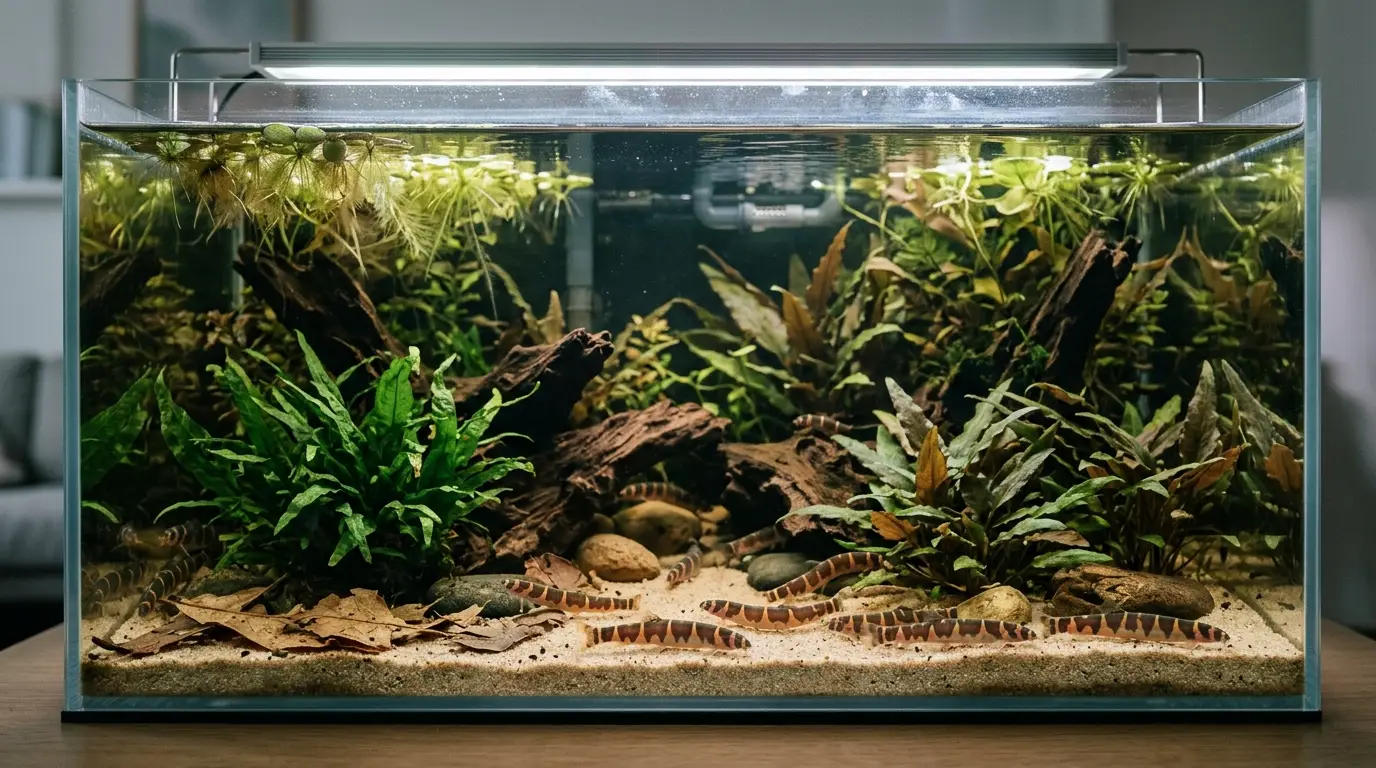
You now have a clear plan to keep kuhlis happy and active. Set up soft water, use sand and many hides, and feed small sinking foods at night. Keep a large group and protect them with a tight lid and smart quarantine.
Use this kuhli loach care guide to tune your tank this week. Start with a water test, add more hides, and make a simple feeding plan. If you found this helpful, subscribe for more practical guides, share your setup, or drop a question in the comments.