
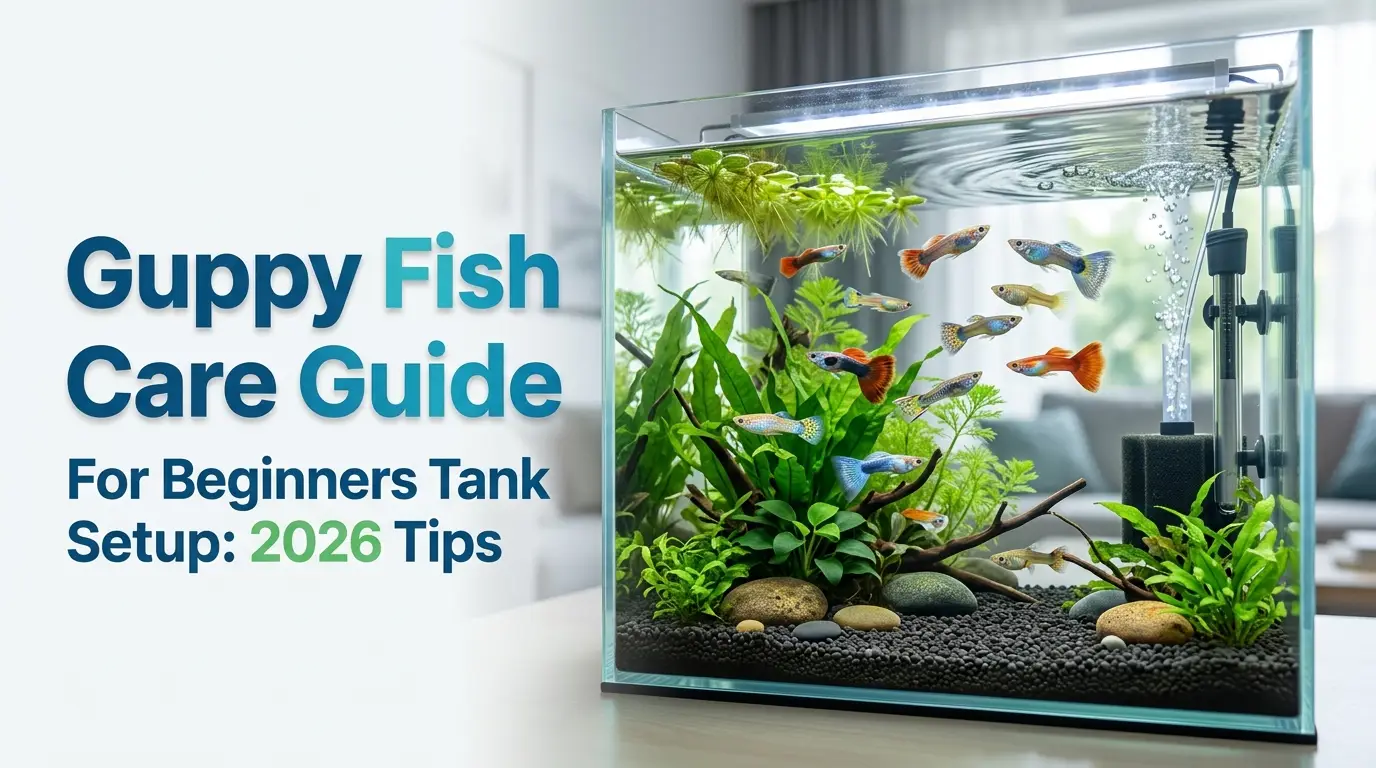
Start with a 10–20 gallon cycled tank, gentle filter, heater, stable water.
Guppies are bright, hardy, and fun. Yet they still need the right start. In this guppy fish care guide for beginners tank setup, I share proven steps, common pitfalls, and friendly tips from years of keeping livebearers. Follow along to build a clean, stable tank that keeps guppies healthy and active from day one. You will learn gear choices, water care, feeding, breeding basics, and an easy weekly routine.
What Makes Guppies Great Beginner Fish
Guppies are peaceful, colorful, and always moving. They handle a wide range of water conditions. They also breed with ease, which can be a joy or a surprise.
They are livebearers. This means they give birth to free-swimming fry. Good care helps them thrive. A stable tank helps their colors glow.
This guppy fish care guide for beginners tank setup shows you how to set a strong base. When the basics are right, guppies reward you with bright looks and lively behavior.
Tank Size and Equipment Checklist
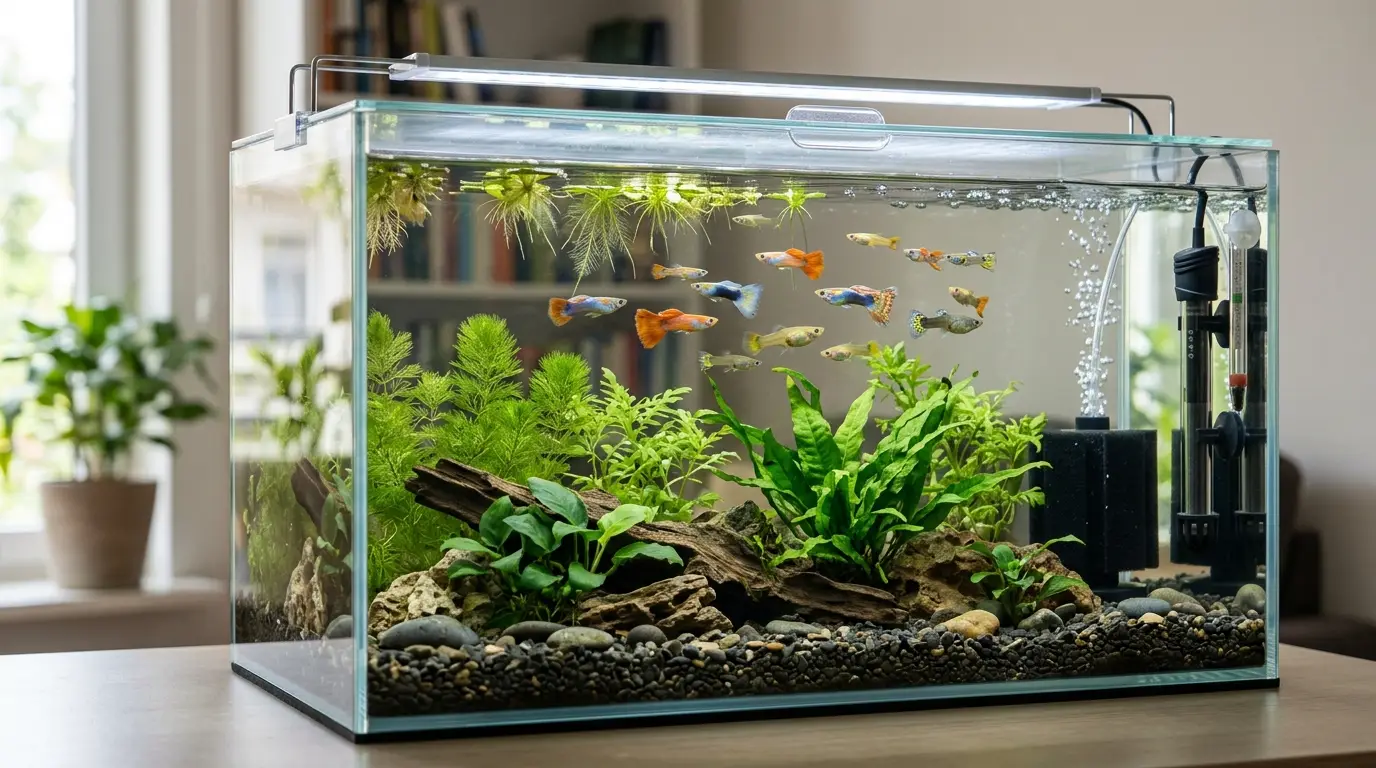
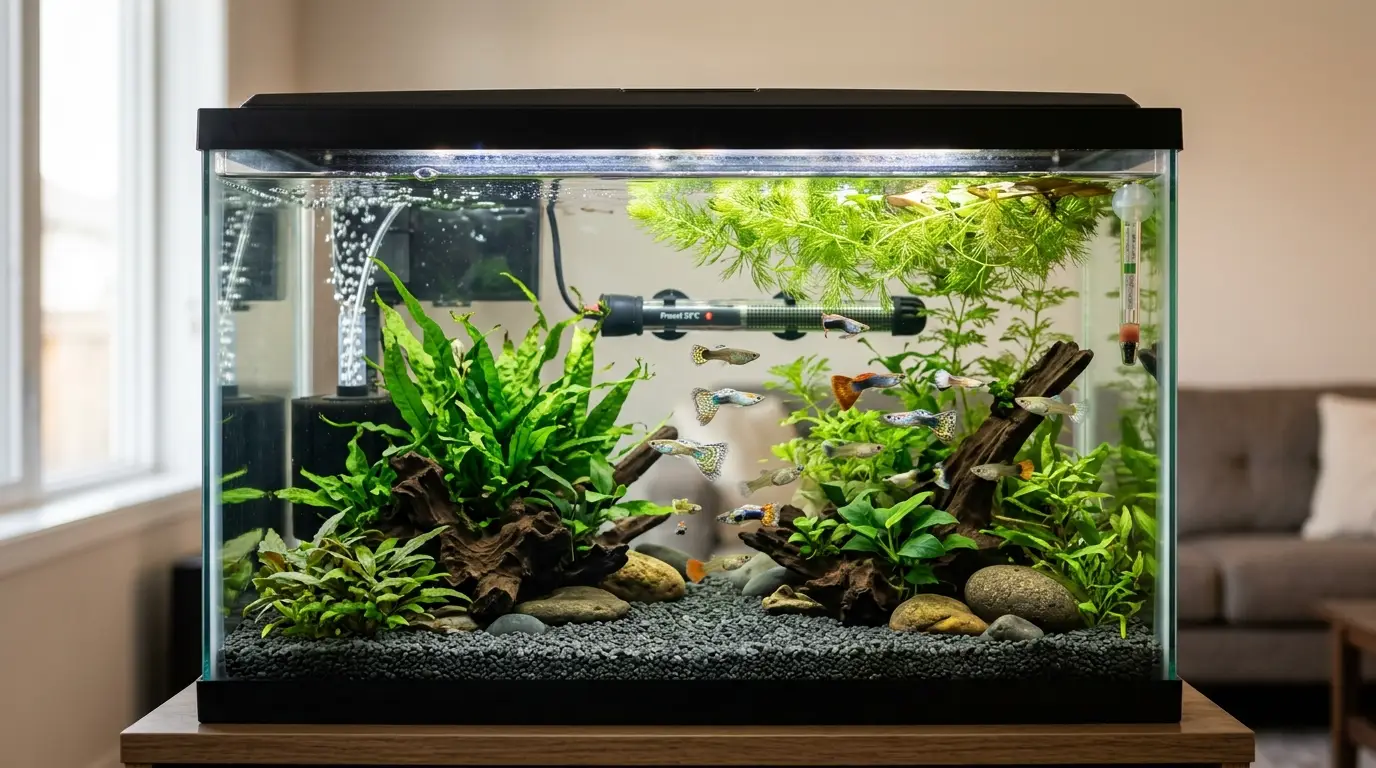
Start with space. A 10–20 gallon tank is ideal for a small group. It is easier to keep stable than a tiny bowl. I began with a 10 gallon and wished I had gone bigger. More water means fewer swings.
Use this simple checklist:
- Tank: 10–20 gallons with a tight lid to stop jumps
- Filter: sponge or hang-on-back with gentle flow
- Heater: set to 75–80°F (24–27°C), plus a thermometer
- Light: simple LED for plants and viewing
- Substrate: fine gravel or sand
- Water conditioner: removes chlorine and chloramine
- Test kit: liquid tests for ammonia, nitrite, nitrate, pH
- Siphon, bucket, and algae scraper: for cleanups
- Net and dedicated towels: for safe handling
- Optional: air pump for extra oxygen, timer for lights
A sponge filter is great. It is cheap, safe for fry, and easy to clean. This guppy fish care guide for beginners tank setup favors simple gear that lasts.
Water Parameters and Cycling 101
The nitrogen cycle is the heart of your tank. It turns toxic ammonia into nitrite, then into nitrate. You want ammonia and nitrite at 0 ppm. Keep nitrate under 20–40 ppm with water changes.
How to fishless cycle:
- Set up the tank with filter, heater, and water.
- Add bottled bacteria, then a small dose of pure ammonia.
- Test daily. Keep 1–2 ppm ammonia at first.
- When nitrite spikes, keep going. Bacteria are growing.
- When you can add 2 ppm ammonia and get 0 ammonia and 0 nitrite in 24 hours, you are cycled.
- Do a big water change to lower nitrate. Then add fish.
Target water for guppies:
- Temperature: 75–80°F (24–27°C)
- pH: 6.8–8.0, stable is best
- GH: 8–12 dGH (they like hard water)
- KH: 3–8 dKH for pH stability
- Ammonia/Nitrite: 0 ppm
- Nitrate: under 20–40 ppm
I once rushed fish into an uncycled tank. They stressed and hid. Now I cycle every tank and test weekly. This guppy fish care guide for beginners tank setup makes cycling simple and safe.
Substrate, Plants, and Aquascape
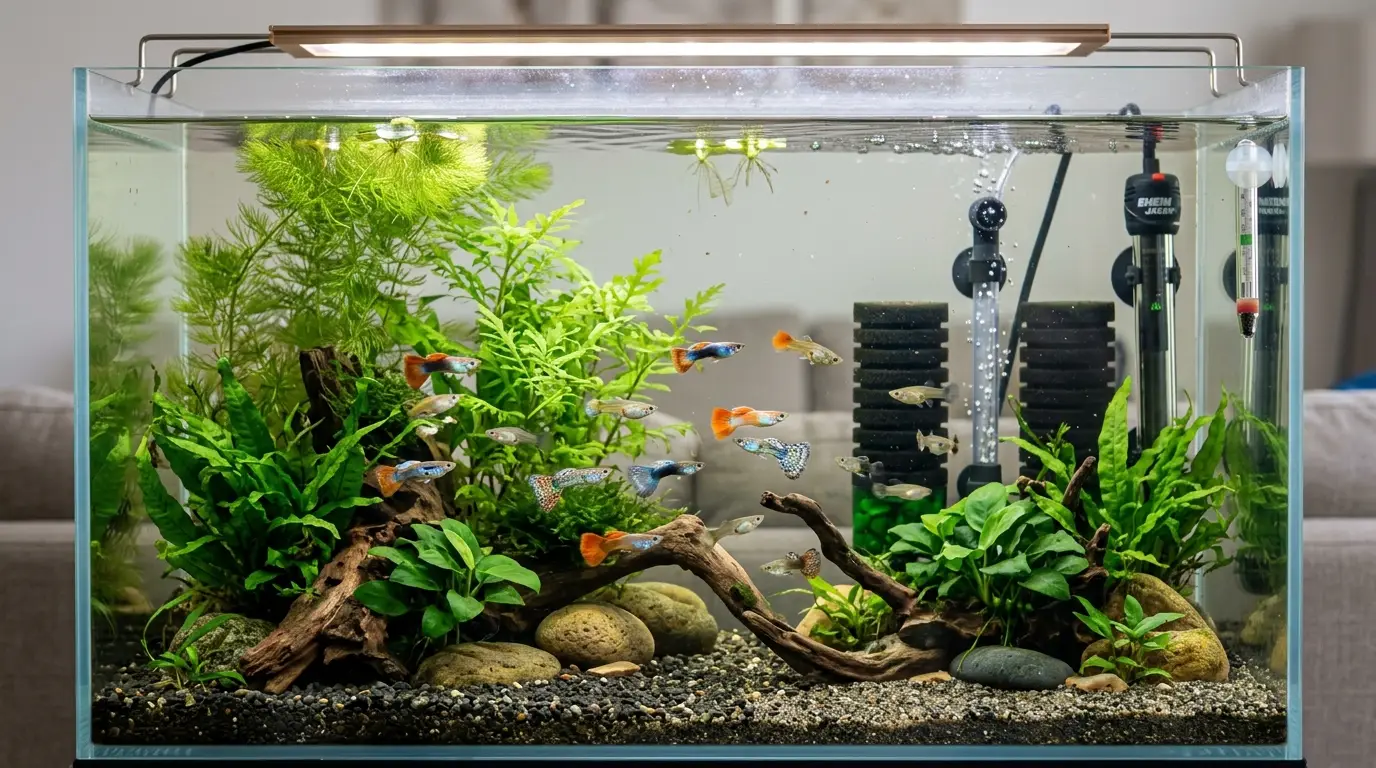
Pick a fine gravel or sand. Dark colors make guppies pop. Rinse substrate well before use.
Choose easy plants:
- Java fern and Anubias on wood or rock
- Hornwort or water sprite for fast growth
- Floating plants like frogbit for cover
Plants help a lot. They soak up waste and offer safe spots for fry. Keep lights on 8–10 hours a day. Add hides with rock and driftwood. Leave open water for swimming.
This guppy fish care guide for beginners tank setup favors low-tech, live plants. They boost health and reduce stress.
Stocking, Tank Mates, and Behavior
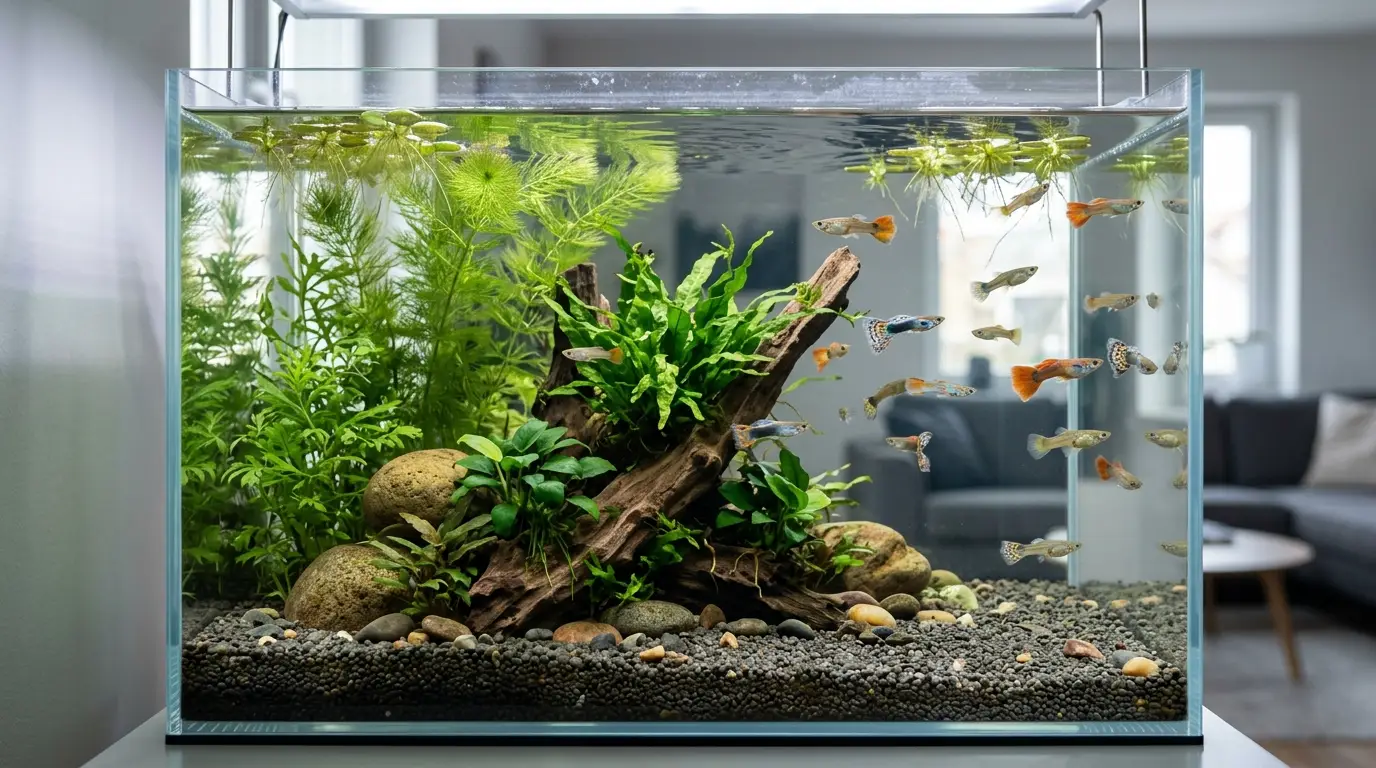
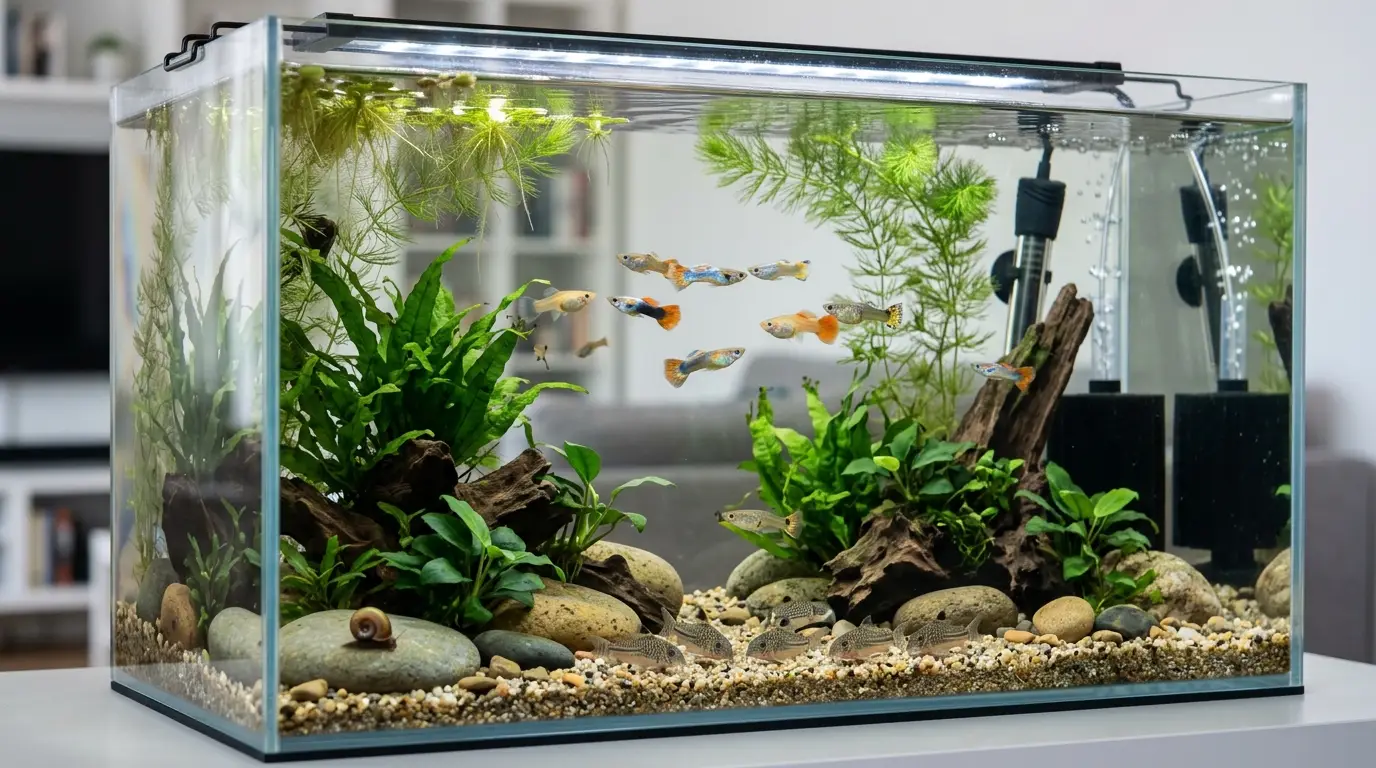
Start slow. For a 10 gallon, keep 5–6 guppies. A 20 gallon can hold 10–12. Watch your filter and nitrate levels. Add fish in small groups.
Decide on males only or a mix. All males give bright color with no fry. Mixed groups breed often. If you mix, keep one male for every two to three females.
Good tank mates:
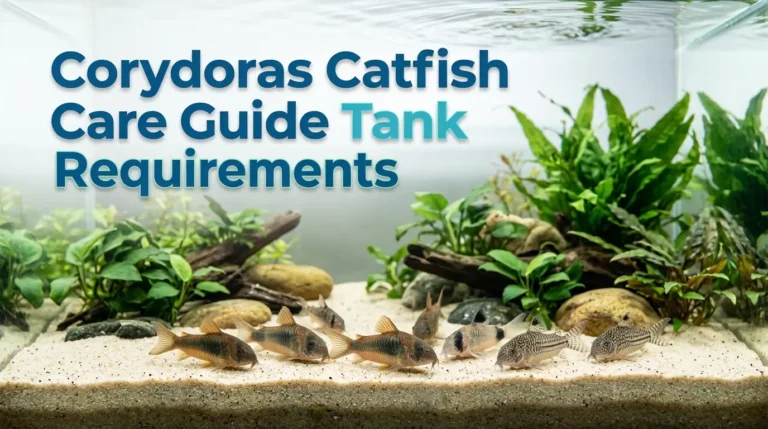
- Peaceful bottom fish like pygmy corydoras
- Small snails for cleanup
- Shrimp can work, though adults may eat tiny fry
Avoid fin nippers like tiger barbs. Be careful with bettas. Endlers can crossbreed with guppies. This guppy fish care guide for beginners tank setup helps you pick safe friends.
Acclimate new fish slowly. Float the bag. Add a little tank water every few minutes for 20–30 minutes. Then net fish into the tank.
Feeding and Nutrition
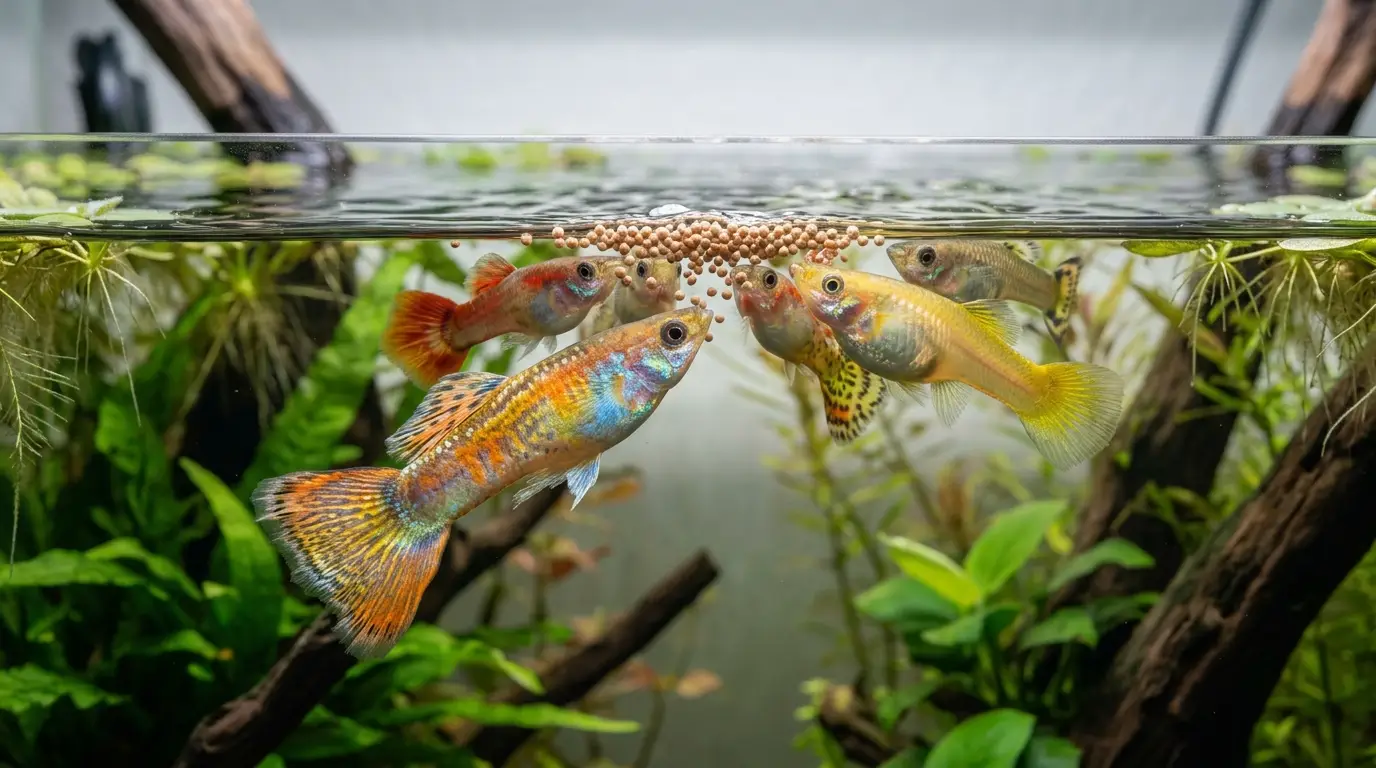
Feed small amounts once or twice a day. Only what they finish in 30–60 seconds. Skip one feeding a week to prevent bloating.
Good foods:
- Quality micro pellets or flakes
- Baby brine shrimp for color and growth
- Daphnia for digestion
- Occasional bloodworms as a treat
- Spirulina flakes and blanched spinach for greens
Rotate foods for balance. Overfeeding is the top cause of cloudy water. This guppy fish care guide for beginners tank setup keeps feeding simple, varied, and clean.
Routine Care and Maintenance Schedule
Consistency wins. Use this easy plan:
- Daily: check fish, temperature, and equipment
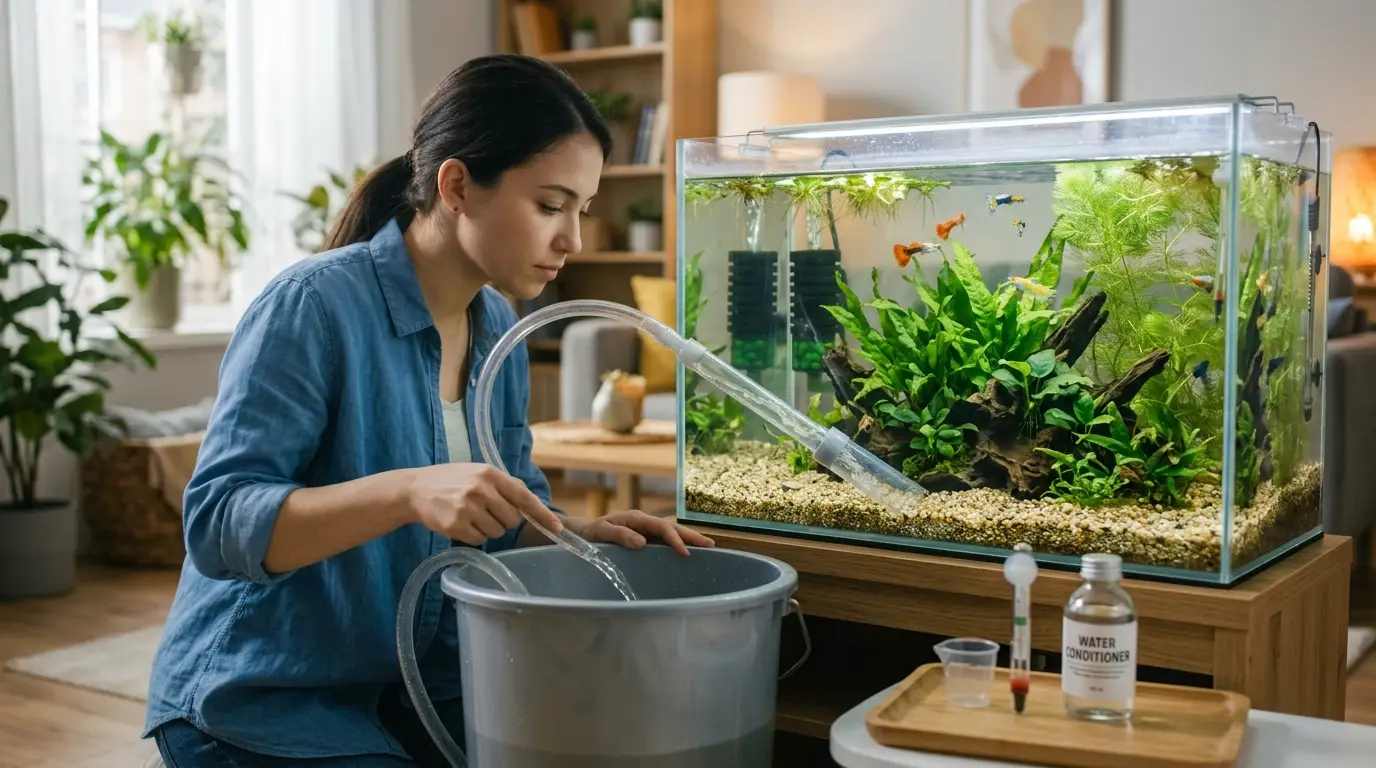
- Weekly: test water, change 25–40%, vacuum lightly
- Biweekly: rinse filter sponge in old tank water
- Monthly: trim plants and deep clean hard-to-reach spots
Keep a log. Track test results and changes. Small, steady care beats big, rare fixes. With this guppy fish care guide for beginners tank setup, your routine will feel fast and stress-free.
Health, Quarantine, and Common Issues
Quarantine new fish for 2–4 weeks. A small bare tank works fine. This stops disease from entering your main tank.
Watch for warning signs:
- White spots like salt grains (ich)
- Torn or fuzzy fins (fin rot)
- Flashing, clamped fins, gasping
- Stringy poop or sunken belly (parasites)
Act fast. Improve water first. Raise heat slowly for ich if needed. Use the right medication as directed. Do not mix meds. Salt can help, but watch plants and inverts. This guppy fish care guide for beginners tank setup teaches early checks that save fish.
Breeding Basics and Fry Care
Guppies breed often. Gestation is about 21–30 days. Females look boxy near the rear when close to giving birth. A dark gravid spot is common.
Tips for controlled breeding:
- Keep a 1 male to 2–3 female ratio
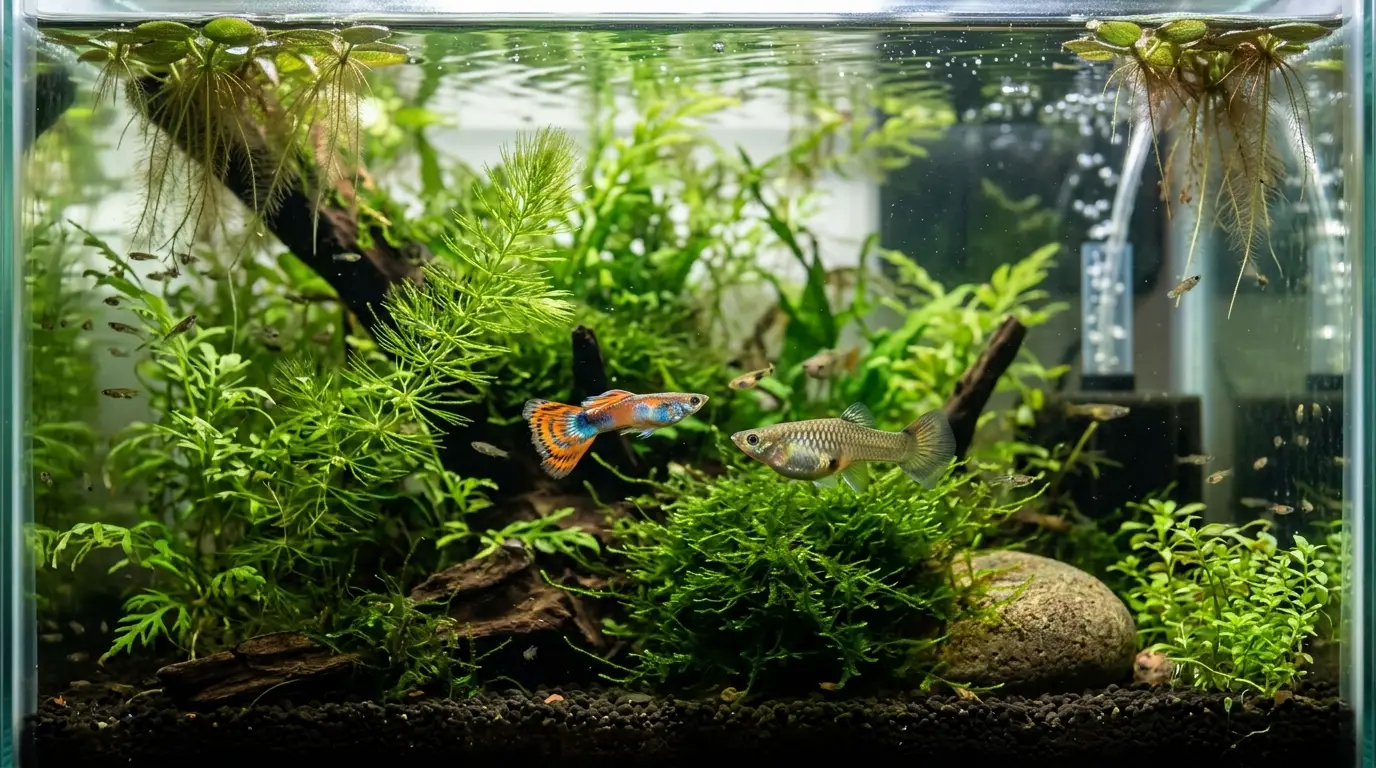
- Add dense plants for fry cover
- Move fry to a grow-out tank if you want high survival
- Feed fry crushed flakes and baby brine shrimp
Plan ahead. Rehome extras with care. This guppy fish care guide for beginners tank setup helps you enjoy breeding without crowding the tank.
Budget and Shopping List
You can keep costs low and still do it right. Expect a modest setup to cost less than many hobbies.
Must-haves:
- 10–20 gallon tank, lid, heater, filter
- Substrate, conditioner, test kit
- Siphon, bucket, net, light
Nice-to-haves:
- Live plants and plant fertilizer
- Extra sponge filter
- Auto-feeder and timer
- Hardscape for looks
Buy quality where it counts. A reliable heater and test kit save fish and money. As this guppy fish care guide for beginners tank setup shows, smart choices pay off fast.
Troubleshooting and Mistakes to Avoid
Avoid these common traps:
- Skipping the cycle
- Overfeeding and overstocking
- Cleaning filter media under tap water
- Chasing pH with quick-fix chemicals
- Mixing aggressive tank mates
- Ignoring GH and KH for guppies that like hard water
Use a liquid test kit for accuracy. Keep notes and act on trends. This guppy fish care guide for beginners tank setup turns problems into quick, calm fixes.
Frequently Asked Questions of guppy fish care guide for beginners tank setup
What size tank do guppies need to start?
A 10–20 gallon tank is best for beginners. It keeps water stable and gives room for a small group.
Do guppies need a heater and filter?
Yes, guppies need both. Warm, stable water and steady filtration prevent stress and disease.
How often should I change the water?
Change 25–40% each week. Test nitrate to adjust your schedule if needed.
Can I keep only male guppies?
Yes. Male-only groups look colorful and do not produce fry. Watch for mild fin nipping and provide space.
What water parameters are best for guppies?
Keep 75–80°F, pH 6.8–8.0, ammonia and nitrite at 0, and nitrate under 20–40 ppm. Hard water supports strong health.
How can I stop guppies from overbreeding?
Keep only males, or separate sexes. Use dense plants and remove fry if you want fewer survivors.
Are guppies good with shrimp or snails?
Yes, with some care. Adults may eat tiny shrimp, but snails are usually safe.
Conclusion
You now have a clear plan for a stable guppy tank. Start with a cycled 10–20 gallon setup, steady heat, and gentle flow. Add easy plants, feed small, and keep a simple weekly routine. Watch your fish daily. Test and change water on schedule.
Set up your tank this week using the steps above. Then share your progress, ask questions, or subscribe for more hands-on guides. Your guppies will thank you with color, energy, and a calm, joyful tank.
One Comment