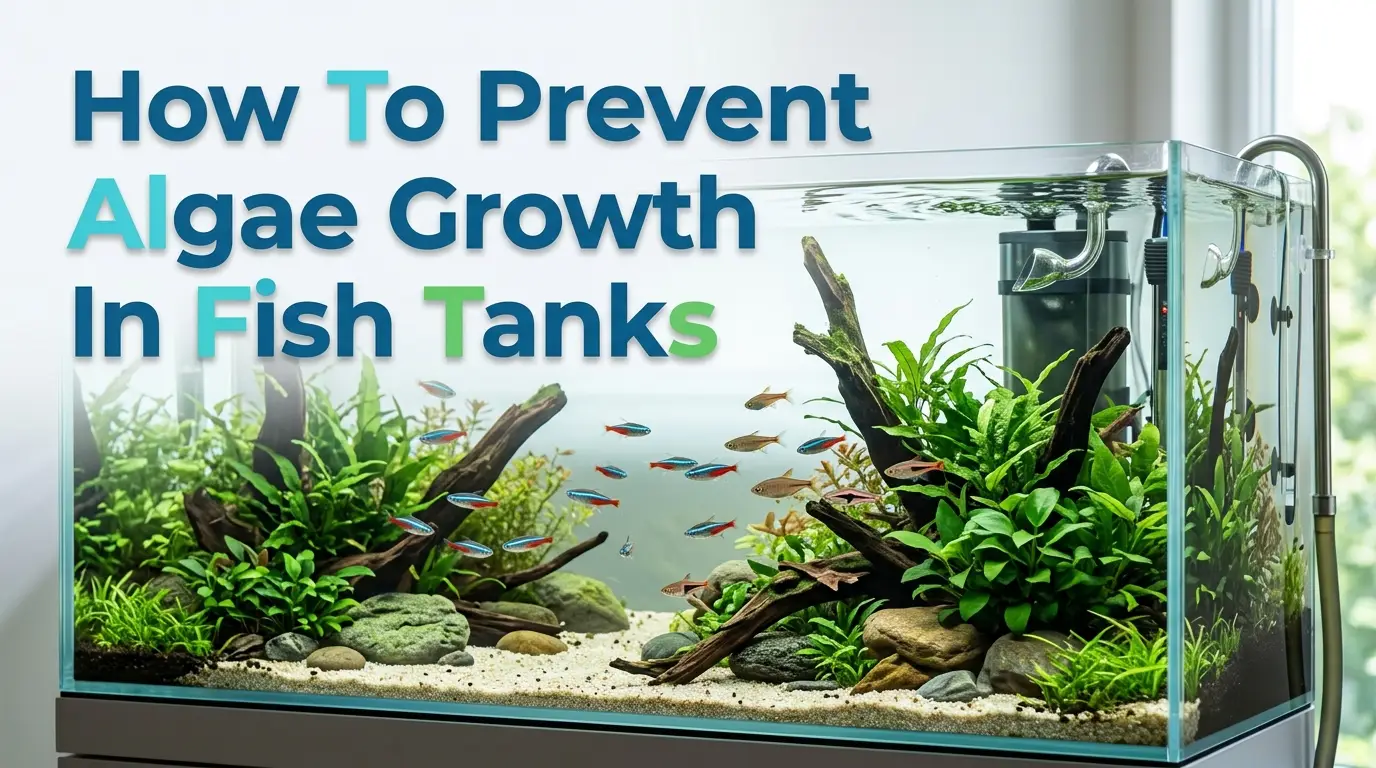
Control light and nutrients, add plants, and keep a steady maintenance routine.
If you keep fish, algae can feel like a constant fight. I’ve kept freshwater tanks for years, from nano betta bowls to lush planted aquascapes. In this guide, I’ll show you how to prevent algae growth in fish tanks with simple steps, clear targets, and proven habits. You will learn what causes outbreaks, how to fix them fast, and how to stop them from coming back.
Understanding what algae is and why it grows
Algae is a simple plant-like life form. It uses light and nutrients to grow. In tanks, it shows up as green film, brown dust, fuzzy hair, or black tufts.
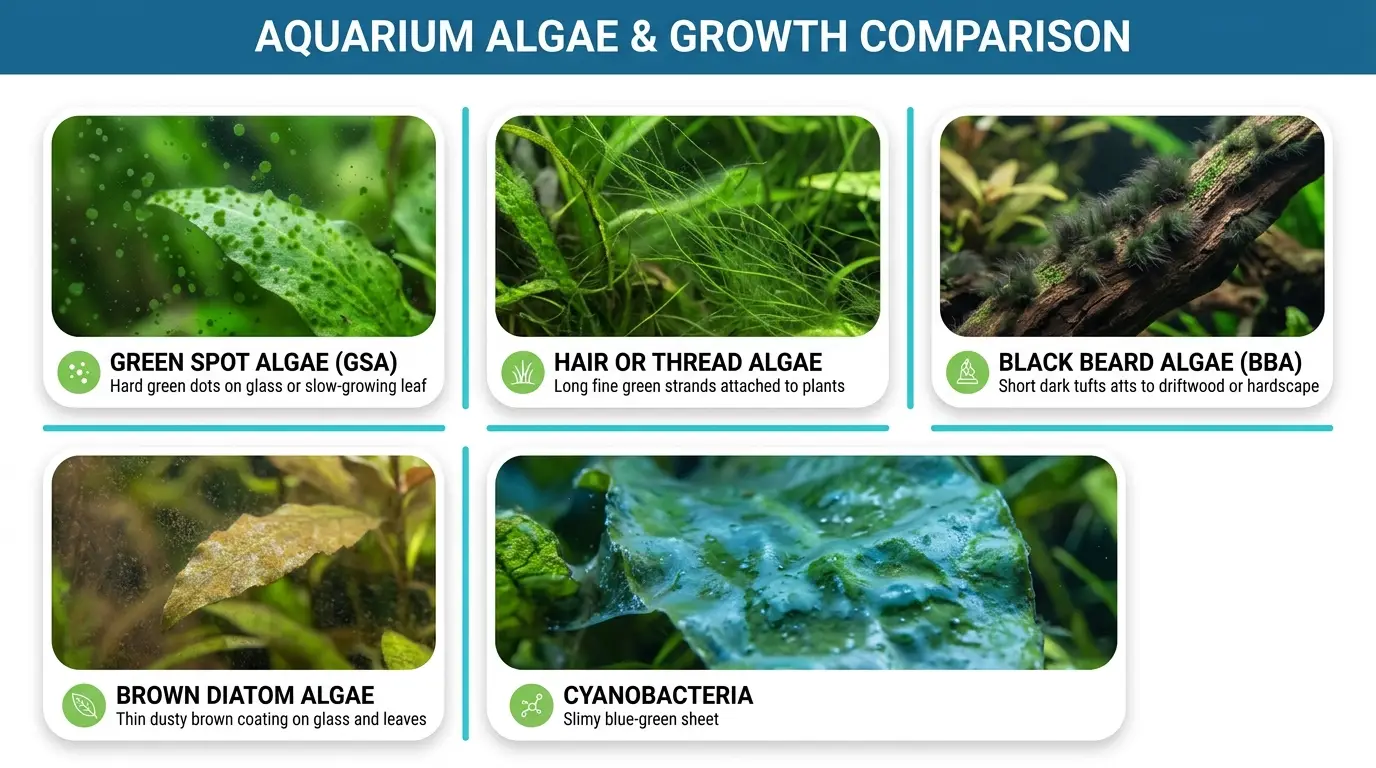
Common types you may see:
- Green spot algae. Hard green dots on glass and slow leaves.
- Green dust algae. A soft green coat on glass.
- Hair or thread algae. Long, fine strands on plants and hardscape.
- Black beard algae. Dark tufts on wood, rocks, and filter parts.
- Diatoms. Brown dust, common in new tanks due to silica.
- Cyanobacteria. A slimy blue-green sheet. It is not algae, but it looks like it.
Why it takes over:
- Extra light or long light periods.
- Extra nutrients, like nitrate and phosphate.
- Unstable CO2 or low oxygen in planted tanks.
- Dirty filters, dead spots, and trapped waste.
- New tank swings during the first months.
If you ask how to prevent algae growth in fish tanks, start by fixing the cause, not just the look. A stable balance beats quick fixes every time.
The prevention blueprint: balance first
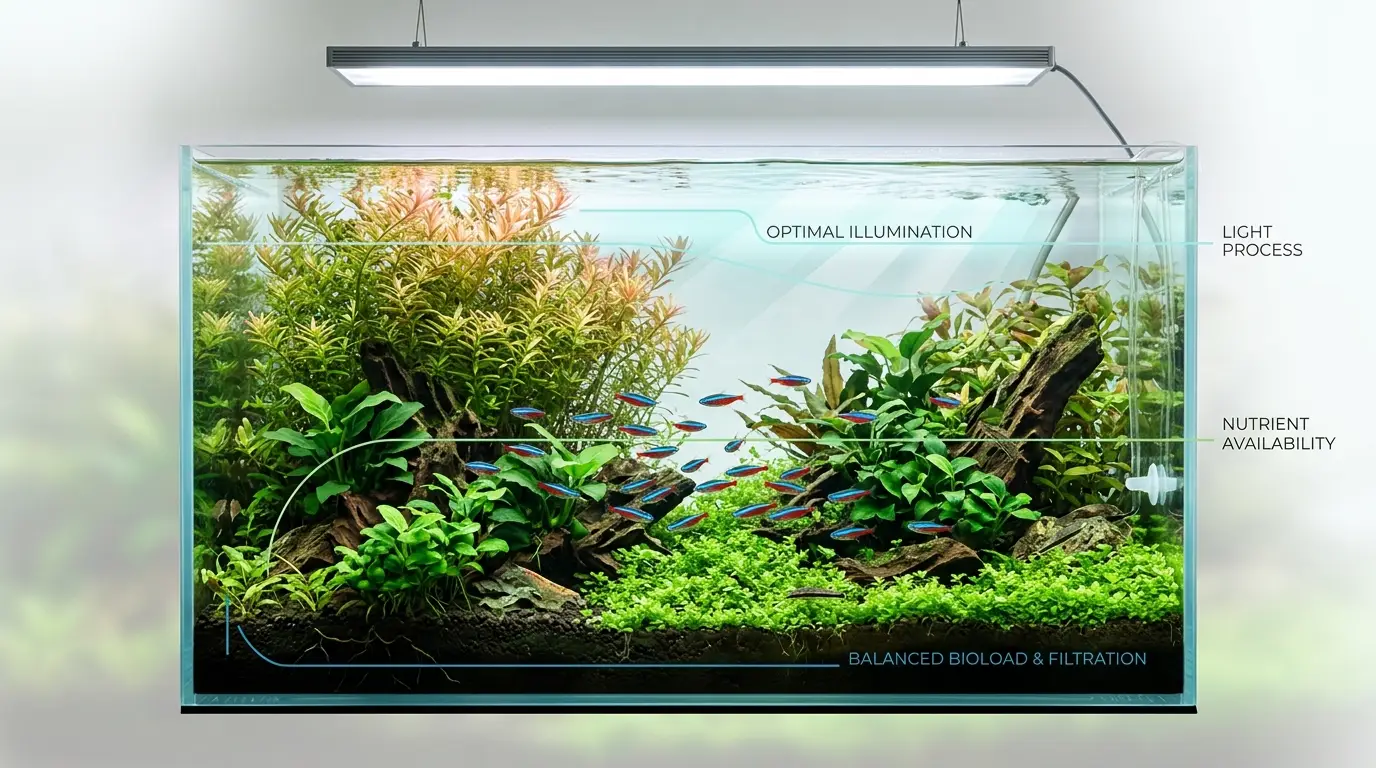
Think of your tank as a triangle: light, nutrients, and CO2 or oxygen. When one side is too strong or too weak, algae rushes in.
Key steps:
- Pick your style. Low-tech tanks use lower light and no pressurized CO2. High-tech tanks use stronger light and stable CO2.
- Match light to plant mass. Light drives plant demand. Less plant mass needs less light.
- Keep bio-load in check. Fewer fish and less food mean less waste and fewer algae blooms.
This is how to prevent algae growth in fish tanks in a lasting way. Build balance first, and the rest gets easy.
Set up your tank for success
Good setup stops trouble before it starts.
Tips I use on every new tank:
- Choose a size you can maintain. More water is more stable.
- Place the tank away from windows. Direct sun fuels algae fast.
- Use a filter with 5 to 10 times tank volume per hour.
- Rinse substrate until clear. Dust can feed diatoms.
- Pre-soak wood and rocks. They can leach organics.
- Quarantine new plants and decor. Dip to remove hitchhikers.
These steps sound simple, yet they set the base for how to prevent algae growth in fish tanks for the long term.
Light control that works
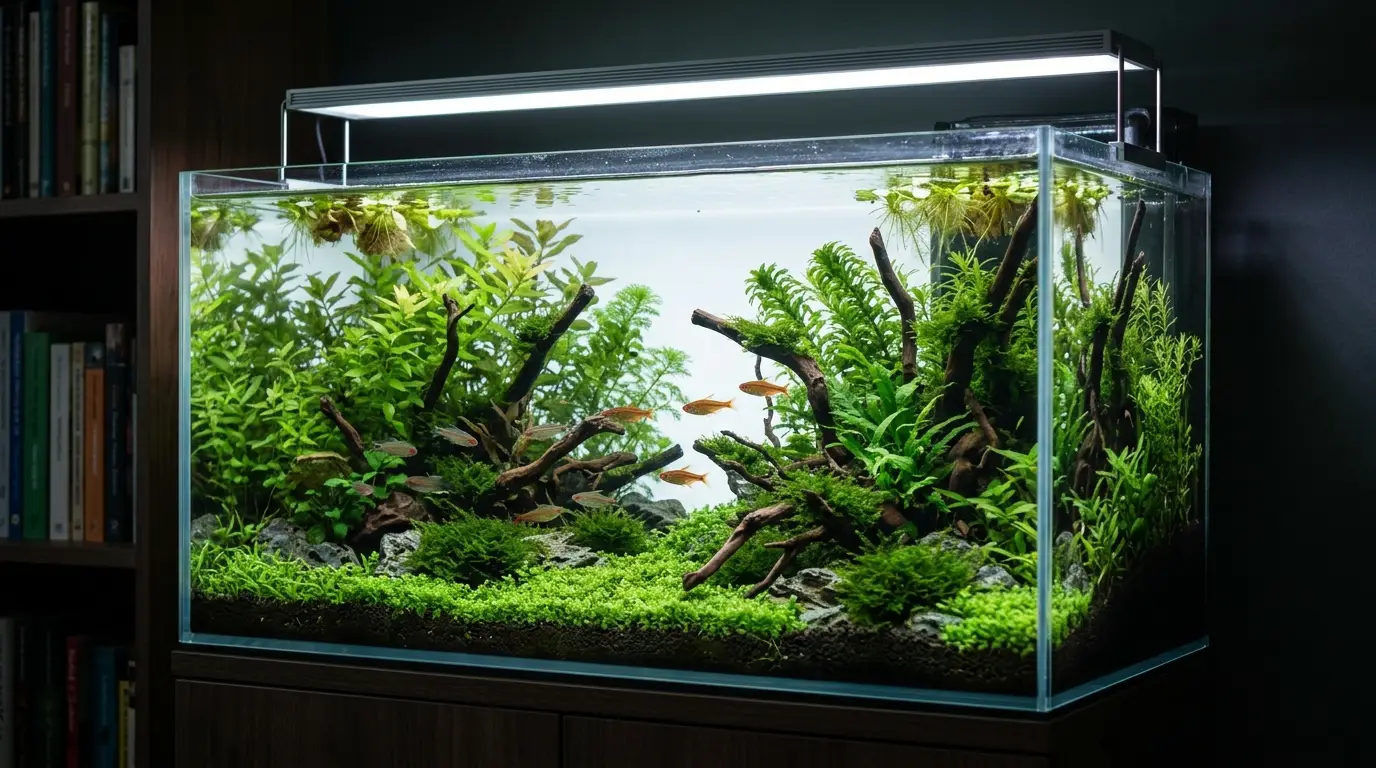
Light is the gas pedal for algae and plants. Use it with care.
Simple rules:
- Start at 6 to 7 hours per day on a timer. Add 30 minutes per week if needed.
- Use a 6,500 to 7,000 K spectrum for freshwater plants.
- Keep the fixture clean. Dust cuts output and skews balance.
- Avoid room glare and sun. Curtains help near bright windows.
- If green water blooms, try a 2 to 3 day blackout. Then reset your schedule.
When people ask how to prevent algae growth in fish tanks, I point to light control first. It is the fastest win.
Nutrient management and water changes
Nutrients feed plants and algae. Aim for steady levels instead of zero.
Targets that work well:
- Ammonia and nitrite at 0 ppm.
- Nitrate at 10 to 20 ppm in planted tanks.
- Phosphate at 0.1 to 0.5 ppm.
- GH and KH stable, based on your fish and plants.
Practical steps:
- Feed small amounts once or twice a day. Remove uneaten food.
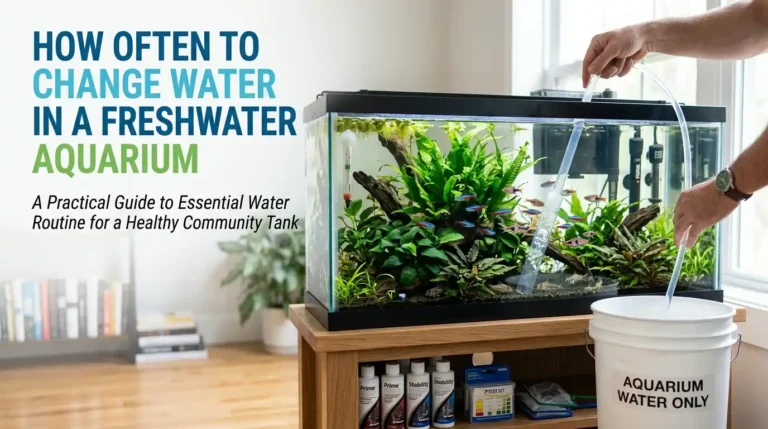
- Change 25 to 50 percent of water weekly.
- Vacuum the substrate to lift waste. Do a light pass under plants.
- If your tap has high phosphate or silica, blend with RO or DI water.
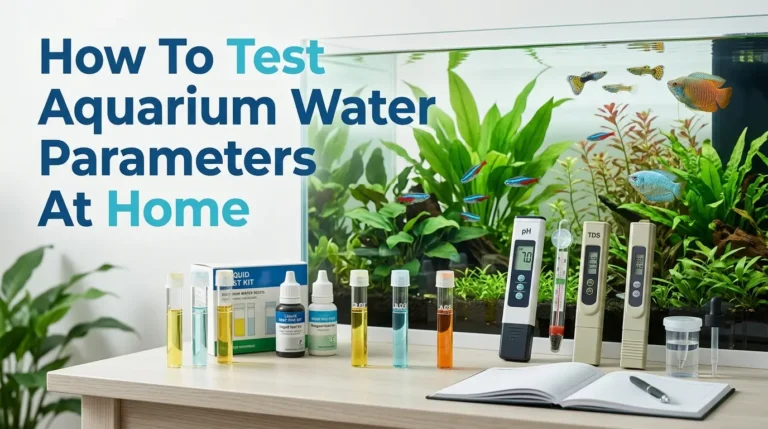
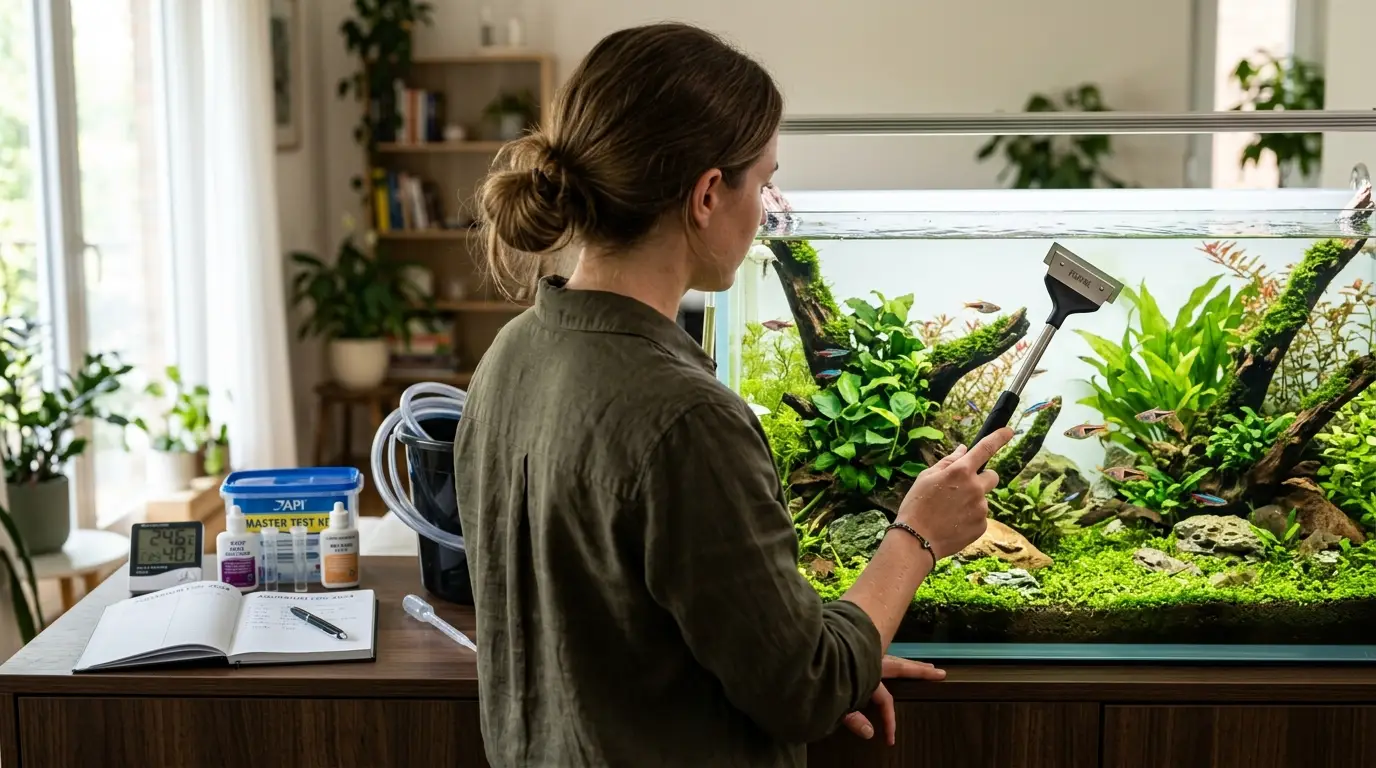
- Test weekly at the same time of day. Log results to see trends.
Balanced nutrients are key in how to prevent algae growth in fish tanks. Stable beats perfect.
Plant power: outcompete algae
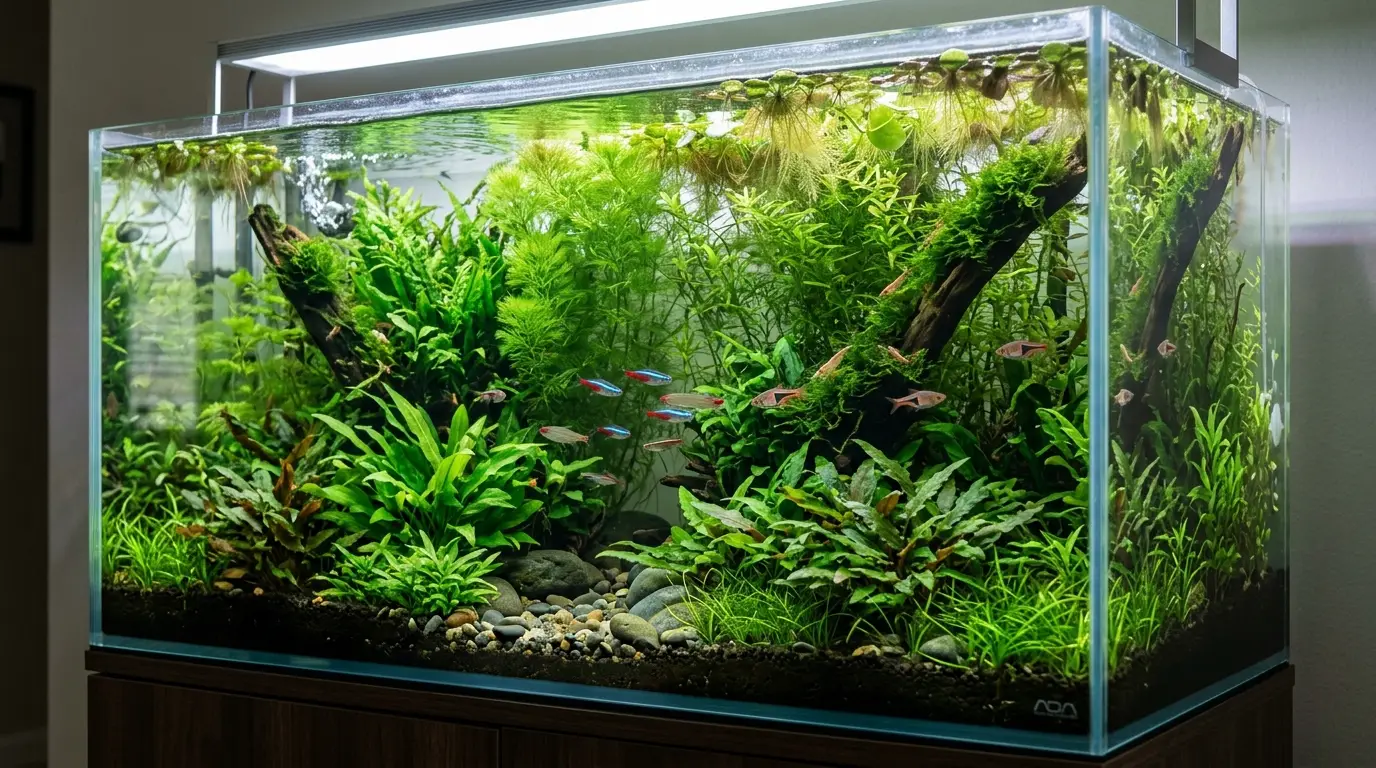
Fast plants starve algae by using light and nutrients first.
Great choices:
- Stem plants like hornwort, water sprite, and anacharis.
- Floaters like salvinia, frogbit, and water lettuce.
- Rooted plants like crypts and swords for long term cover.
- Mosses on wood for shrimp and fry.
Dosing tips:
- Add a complete fertilizer at low to medium levels.
- Dose potassium and trace elements if leaves pale.
- For high-tech tanks, add pressurized CO2. Keep it stable.
- Use liquid carbon with care and never overdose.
If you want a simple way on how to prevent algae growth in fish tanks, plant heavy from day one.
Filtration, flow, and media choices
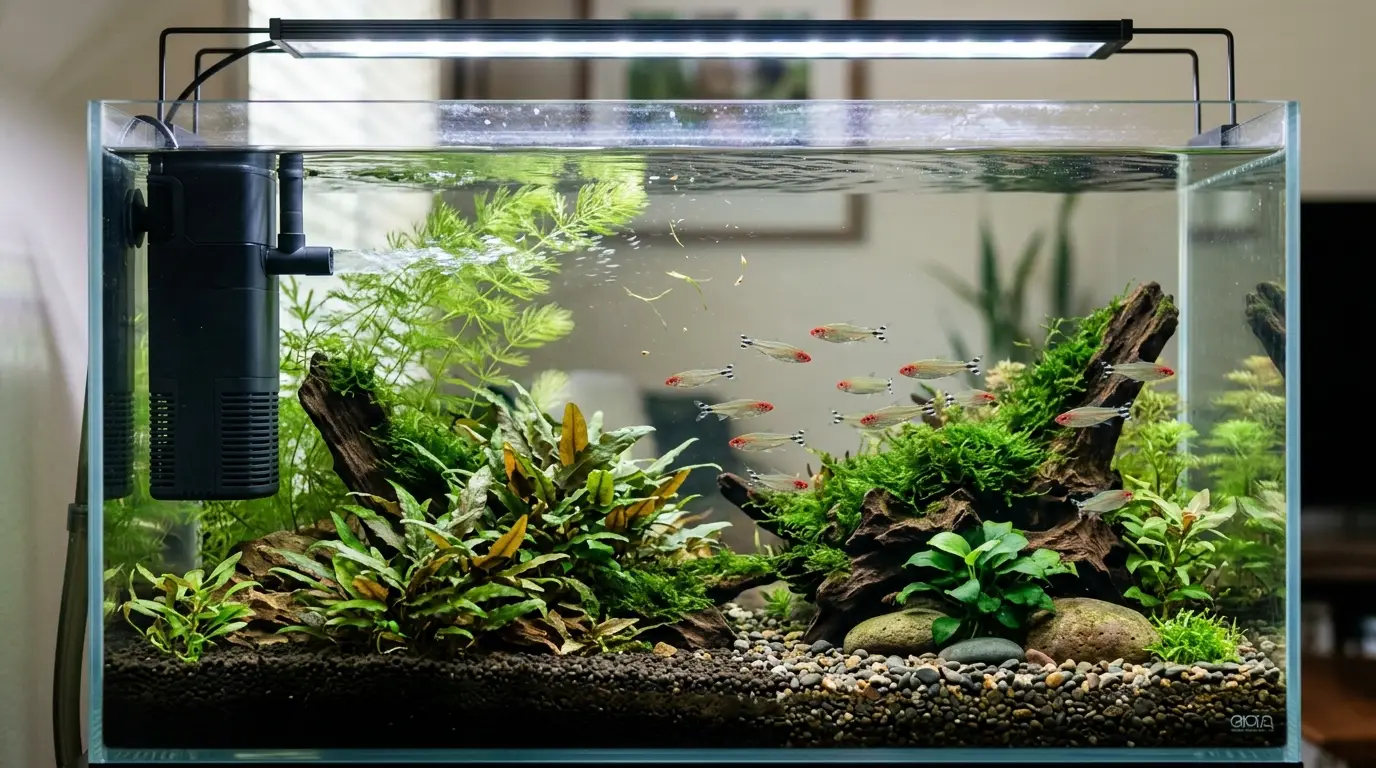
Strong flow and clean media reduce algae fuel.
What to use:
- Mechanical media to catch fine waste. Rinse it weekly in tank water.
- Biological media like ceramic rings for bacteria. Clean very gently.
- Chemical media like activated carbon or phosphate remover when needed.
- A small powerhead to fix dead spots behind rocks and plants.
- A UV sterilizer for green water or cloudy bacterial blooms.
Good flow carries CO2 and nutrients to leaves. It also stops film from building up where algae loves to start. This is a big part of how to prevent algae growth in fish tanks that many miss.
Routine cleaning without stressing fish
A tidy tank keeps algae in check and fish happy.
My simple routine:
- Scrape glass with a safe blade or pad once a week.
- Brush rocks and wood with a soft toothbrush.
- Siphon light over the surface of planted areas.
- Gently swish filter sponges in removed tank water.
- Stagger media cleaning so you keep your bacteria safe.
Do not deep clean the whole system at once. That shock can trigger algae blooms. Slow and steady wins.
Safe helpers: algae eaters and useful tools
Clean-up crews help, but they are not a cure. They work best with good habits.
Good picks:
- Nerite snails for glass and hard algae.
- Amano shrimp for soft and hair algae.
- Otocinclus for diatoms on leaves.
- Bristlenose plecos for wood and glass.
- True Siamese algae eaters for black beard algae.
Use care with so-called Chinese algae eaters. They can get large and may nip fish. If you use algaecides, follow the label and increase oxygen. The smart path on how to prevent algae growth in fish tanks is to pair helpers with balance, not use them as a bandage.
Troubleshooting: match the algae to the fix
Once you name the algae, the fix is clear.
Quick guide:
- Green water. Too much light or an ammonia spike. Do a blackout, large water changes, and use UV.
- Hair algae. Extra light or low CO2. Reduce light time, improve CO2, and remove by hand.
- Black beard algae. Unstable CO2 or high organics. Stabilize CO2, spot treat with peroxide, and trim leaves.
- Diatoms. New tank or high silica. Wipe off, add otos or nerites, and wait a few weeks.
- Cyanobacteria. Low nitrate and poor flow. Increase nitrate to 10 to 20 ppm, add flow, and do a short blackout.
This checklist is core to how to prevent algae growth in fish tanks after a bloom. Fix the root cause and it stays gone.
Testing schedule and tracking what matters
Data turns guesswork into control.
Easy plan:
- Test nitrate and phosphate weekly until trends are clear.
- Log light hours, dosing, and water changes.
- Note algae spots on a simple sketch of the tank.
- When algae appears, adjust one thing at a time.
- Re-test and log results in three to seven days.
With this plan, you can explain how to prevent algae growth in fish tanks with proof, not hope.
Personal lessons from years of aquariums
I once battled black beard algae for months. The fix was not a magic product. It was a timer, a stable CO2 level, and weekly 40 percent water changes.
Another time, a sunny spring window turned a clear tank into pea soup. A two-day blackout, a small UV unit, and a shorter light schedule solved it. These real wins shape how I teach how to prevent algae growth in fish tanks today: keep it simple, make one change at a time, and be patient.
Frequently Asked Questions of How to Prevent Algae Growth in Fish Tanks
How many hours should aquarium lights be on to prevent algae?
Aim for 6 to 8 hours daily on a timer. Increase slowly if plants need more.
Can I stop algae without adding chemicals?
Yes. Control light, feed less, plant heavy, and change water weekly. Chemicals are a last resort.
Do live plants really reduce algae?
They do. Fast plants use light and nutrients first, which starves algae.
Why does my new tank get brown algae?
Diatoms thrive in new tanks with extra silica. Wipe it off and wait a few weeks.
Are algae eaters enough to keep the tank clean?
They help, but they do not fix root causes. Balance and routine are still key.
Is sunlight good or bad for aquariums?
Direct sun often causes blooms. Keep tanks out of strong window light.
What water parameters help prevent algae?
Keep ammonia and nitrite at zero. Hold nitrate near 10 to 20 ppm and phosphate near 0.1 to 0.5 ppm.
Conclusion
Algae is a signal, not a sentence. When you balance light, nutrients, and flow, your tank will stay clear and calm. Set a timer, plant heavy, feed light, and stick to your weekly routine. If a bloom shows up, match it to the cause and fix one thing at a time.
Start today: shorten your light period, plan a water change, and log your test results. Want more tips and gear checklists? Subscribe, share your tank story, or leave a question so we can solve it together.