
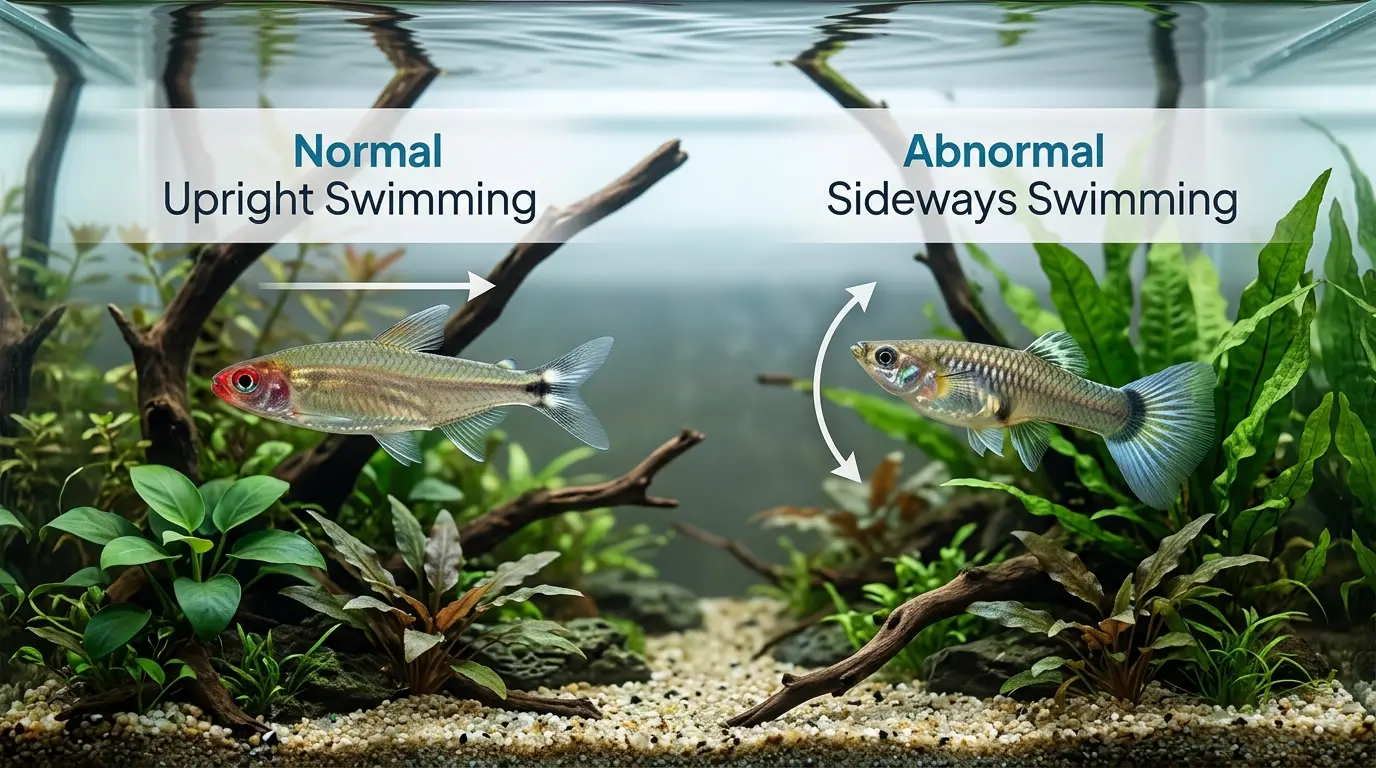
Fish swimming sideways often signals swim bladder issues, stress, or poor water quality.
If you have ever asked yourself Why Is My Fish Swimming Sideways? Causes and What It Means, you are in the right place. I’ve helped many hobbyists fix this scary sight, and I’ll guide you through clear steps, real examples, and proven treatments. Stick with me to learn what’s normal, what’s urgent, and how to get your fish back to smooth, upright glides.
What Sideways Swimming Means
Sideways or tilted swimming is usually a sign your fish is losing control of its buoyancy. That control comes from the swim bladder, gas exchange, and muscle balance. When something is off, your fish may list to one side, float, or sink.
In simple terms, this is a symptom, not a final diagnosis. It can be mild, like a stressed fish after a big water change. Or it can be serious, like an infection or injury. If you came here wondering Why Is My Fish Swimming Sideways? Causes and What It Means, the answer often starts with water quality, diet, and the swim bladder.
This section sets the stage for Why Is My Fish Swimming Sideways? Causes and What It Means by framing the problem and the urgency.
Quick Triage: What To Check Right Now

Start with fast checks. Small wins here can save a life.
- Test water. Ammonia 0 ppm. Nitrite 0 ppm. Nitrate under 20–40 ppm. If high, do a 25–50% water change.
- Check temperature. Keep it stable for your species. Sudden swings cause stress and tilt.
- Add air. Extra aeration helps when oxygen is low or fish are stressed.
- Stop feeding for 24 hours. Overfeeding often causes buoyancy issues.
- Watch the fish. Look for clamped fins, gasping, bloating, red streaks, or white poop.
- Isolate if needed. A breeder box or hospital tank reduces bullying and lets you treat safely.
These steps begin to answer Why Is My Fish Swimming Sideways? Causes and What It Means in the most practical way: fix the water first, then assess.
Main Causes Explained
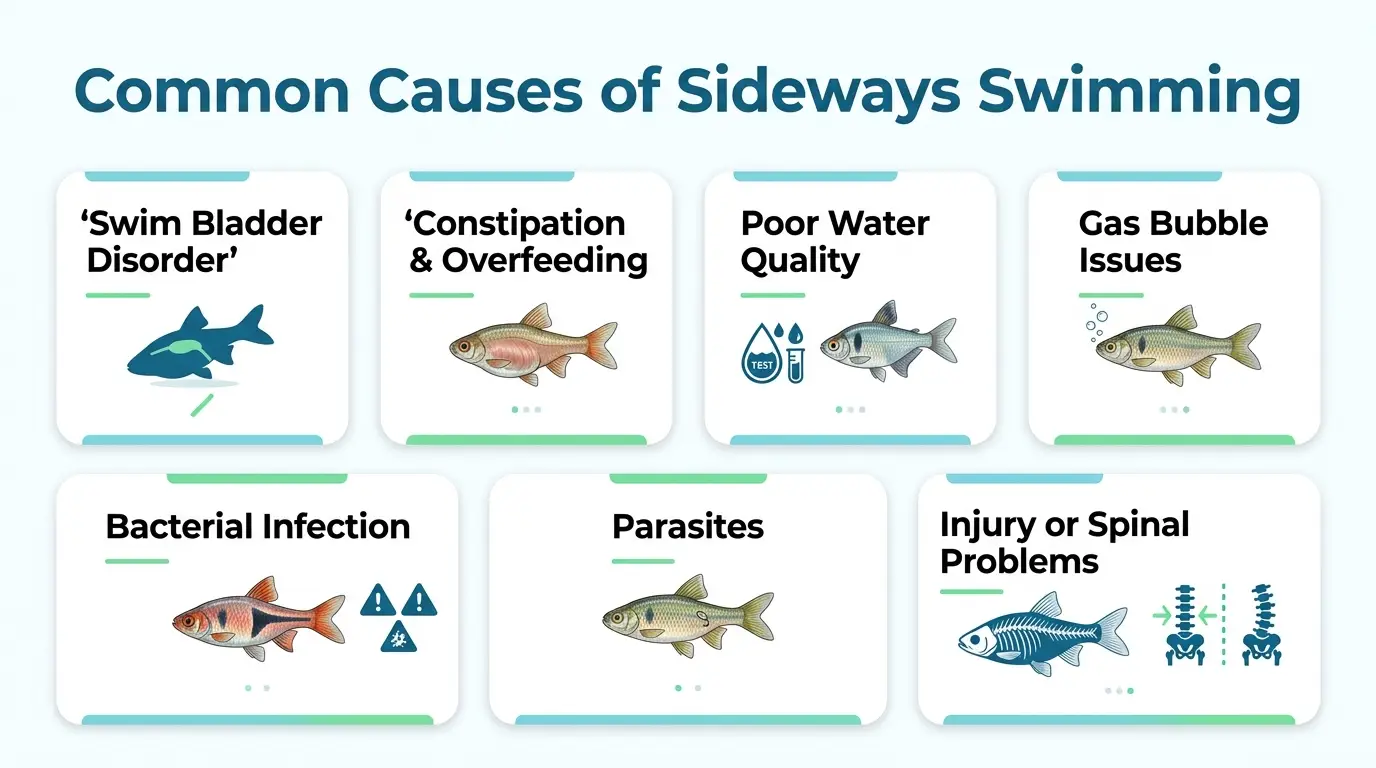
Here are the most common reasons I see when people ask Why Is My Fish Swimming Sideways? Causes and What It Means. I’ll share what it looks like and what to do next.
Swim Bladder Disorder
- What it is: The swim bladder helps a fish float and sink. When it is inflamed, compressed, or infected, control is lost.
- Signs: Floating to one side, sinking, tail-up or head-up posture, rolling.
- First steps: Fast for 24–48 hours, improve water, add air, reduce flow.
Constipation and Overfeeding
- What it is: Blocked intestines compress the swim bladder.
- Signs: Swollen belly, no poop or stringy white poop, lazy swimming.
- First steps: Fast. Then feed a small blanched pea (for omnivores like goldfish). Rotate a varied, high-fiber diet.
Poor Water Quality (Ammonia, Nitrite, Nitrate)
- What it is: Toxic spikes damage gills and stress the fish.
- Signs: Gasping, red gills, lethargy, listing or erratic motion.
- First steps: Big but safe water change, dechlorinate, test daily. Keep ammonia and nitrite at 0.
Gas Bubble Issues and Supersaturation
- What it is: Too much dissolved gas can form bubbles under skin or in the eye.
- Signs: Bubbles on fins or eyes, odd floating.
- First steps: Fix aeration and filtration setup. Avoid drawing air into return lines.
Bacterial Infection
- What it is: Internal infection can swell tissues and affect the swim bladder.
- Signs: Rapid breathing, red sores, pinecone scales (dropsy), loss of balance.
- First steps: Quarantine. Check water. Seek vet advice for antibiotics.
Parasites (Internal or Gill)
- What it is: Worms or protozoa damage the gut or gills.
- Signs: Weight loss with normal eating, flashing, mucus, white poop.
- First steps: Quarantine. Consider anti-parasitic meds like praziquantel per label. Verify with a vet when possible.
Injury or Spinal Problems
- What it is: Net mishaps, rough decor, or birth defects.
- Signs: Bent spine, sudden tilt after a crash, labored motion.
- First steps: Gentle isolation, low flow, stable water. Healing takes time.
Body Shape and Genetics
- What it is: Round-bodied fish, like fancy goldfish, have cramped organs.
- Signs: Recurrent buoyancy swings after meals.
- First steps: Small, frequent feedings. Soak pellets. Focus on fiber. Expect occasional flare-ups.
This cause map is the backbone of Why Is My Fish Swimming Sideways? Causes and What It Means and is based on common cases seen by hobbyists and aquatic vets.
What It Means by Species

Different fish have different risks. This is where Why Is My Fish Swimming Sideways? Causes and What It Means gets species-specific.
Goldfish (Common and Fancy)
- Fancy types (orandas, ryukins) are prone due to round bodies.
- Keep feeding light and frequent. Use sinking pellets to reduce air gulping.
Betta Fish
- Bettas often gulp air. Overfeeding is a top trigger.
- Keep gentle flow, warm stable water (76–80°F), and a varied diet.
Guppies, Mollies, Platies
- Often affected by sudden ammonia spikes in small tanks.
- Keep stocking modest. Do weekly water changes.
Cichlids
- Prone to bloat from rich diets or parasites.
- Feed quality food, avoid overfeeding, and keep clean, stable water.
Matching the advice to species sharpens the answer to Why Is My Fish Swimming Sideways? Causes and What It Means for your setup.
Treatments That Work (Based on Cause)
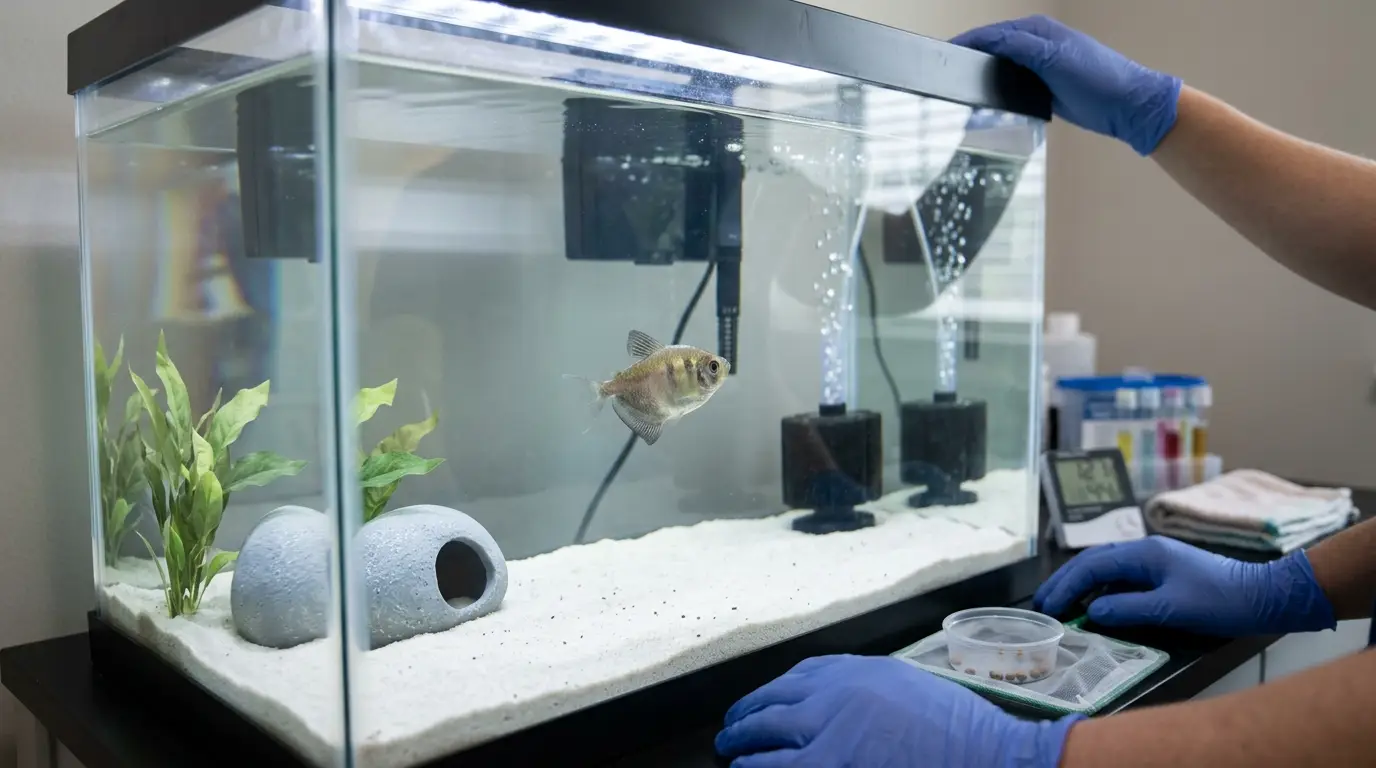
Always start with water quality and stress control. Then target the cause. The plan below reflects both research and real tank wins from my own cases.
- Fasting protocol
- Stop feeding for 24–48 hours for mild buoyancy issues.
- Resume with small, easy-to-digest meals.
- Fiber boost
- For omnivores, offer one blanched, skinned pea. Mash it for small mouths.
- Rotate frozen daphnia or brine shrimp for gentle relief.
- Epsom salt bath (for swelling and constipation, not for open wounds)
- Use magnesium sulfate at 1–3 teaspoons per gallon in a separate container.
- Bathe for 15–20 minutes while observing. Return fish if stress shows.
- Flow and oxygen
- Lower strong currents. Add air stones for better gas exchange.
- Medication (vet-guided when possible)
- Antibiotics for clear bacterial signs (lethargy, sores, dropsy). Use only in quarantine and as directed.
- Anti-parasitics like praziquantel for suspected worms. Follow label and do not mix meds without guidance.
- Gentle handling
- Avoid nets that bend spines. Use soft catch cups.
- Diet reset
- Use sinking, high-quality pellets. Soak dry food to reduce air intake.
- Feed 1–2 times a day, only what is eaten in under 1 minute.
These steps are the practical core of Why Is My Fish Swimming Sideways? Causes and What It Means, showing you how to act, not just what to fear.
Prevention: Keep Your Fish Upright and Healthy

Good habits make sideways swimming rare. Here is a simple plan I use on client tanks.
- Test and change water
- Ammonia 0, nitrite 0, nitrate under 20–40 ppm.
- Change 25–40% weekly for most community tanks.
- Stable temperature and pH
- Avoid swings. Match new water to tank temp.
- Smart feeding
- Small meals. Rotate pellets, frozen, and veggie options for omnivores.
- Avoid floating foods for buoyancy-prone fish.
- Tank setup
- Right size tank and filter. Gentle flow for bettas and fancy goldfish.
- Add plants for shelter and biology support.
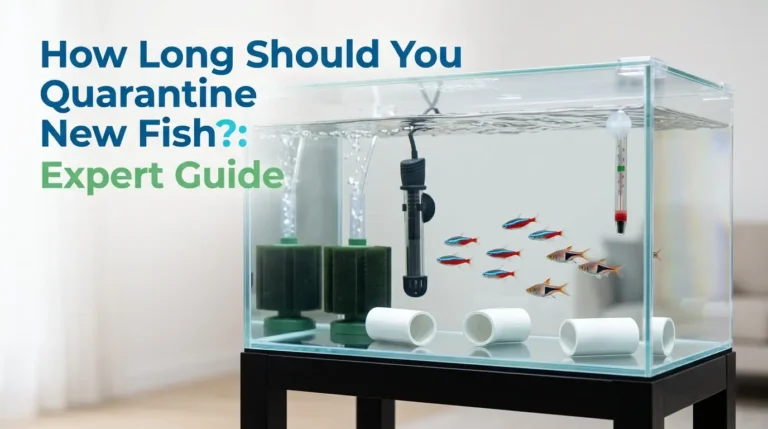
- Quarantine new fish
- 2–4 weeks to watch for parasites or disease.
- Observe daily
- Note changes in posture, appetite, and poop. Early action saves time and stress.
When people ask Why Is My Fish Swimming Sideways? Causes and What It Means, prevention is the steady answer that keeps problems from returning.
When To Call a Vet or Seek Help

Some cases need expert care. Do not wait if you see:
- Severe tilt for more than 48 hours after water fixes and fasting
- Pinecone scales, ulcers, rapid breathing, or sudden weight loss
- Repeated sideways swimming after every meal, despite diet changes
- Fish cannot right itself or keeps getting stuck at the surface or bottom
If you are still asking Why Is My Fish Swimming Sideways? Causes and What It Means after these checks, a fish-savvy vet can run tests, prescribe correct meds, and guide you on dosing and timing.
Frequently Asked Questions of Why Is My Fish Swimming Sideways? Causes and What It Means
Is sideways swimming always a swim bladder problem?
Not always. It can be stress, bad water, constipation, or injury. Check water first, then adjust diet and flow.
Can overfeeding cause my fish to float or tilt?
Yes. A swollen gut can press on the swim bladder. Fast for a day, then feed small, soft meals.
Will a pea fix swim bladder issues?
A pea can help mild constipation in omnivores like goldfish. It will not cure infections or injuries.
How fast should I act if my fish starts listing?
Act the same day. Test water, add air, and stop feeding. Many cases improve within 24–48 hours.
Do I need medicine right away?
No. Start with water and fasting. Use meds if signs point to infection or parasites, and follow expert advice.
Is it safe to use Epsom salt?
Short baths can help with swelling or constipation. Use correct doses and watch the fish the whole time.
Why do fancy goldfish tilt more often?
Their round bodies crowd organs, so buoyancy swings are common. Use sinking food, small meals, and steady water.
Conclusion
Sideways swimming is a signal, not a sentence. Fix the water, reduce stress, and feed with care. Most mild cases improve fast. Tough cases need targeted treatment or vet help. Now that you understand Why Is My Fish Swimming Sideways? Causes and What It Means, you can act with calm and focus.
Take a moment today to test your tank, adjust feeding, and watch your fish closely. If you found this guide useful, share it with a fellow fish keeper, subscribe for more tips, or leave a comment with your tank details so I can help you troubleshoot.