Pick the right tank, cycle it, add fish slowly, maintain weekly.
If you want a calm, clean, and healthy aquarium, you are in the right place. I’ve set up many tanks for friends, clients, and my own home. This guide gives a clear step by step fish tank setup for beginners. I’ll show you what works, what fails, and how to avoid stress for you and your fish.
Choose Your Tank Size and Location
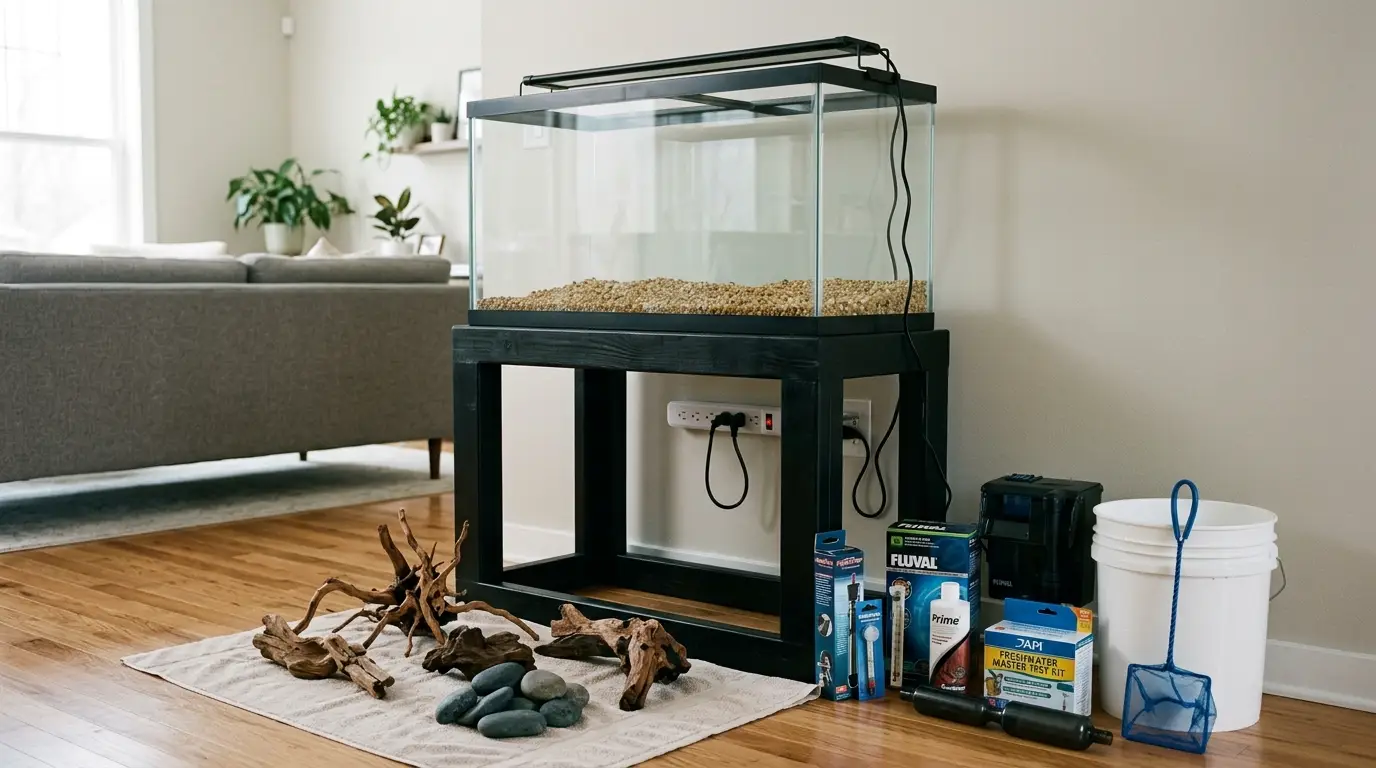
A good step by step fish tank setup for beginners starts with the right tank. Bigger tanks are more stable. A 20-gallon is a sweet spot for new hobbyists. It gives you room for mistakes and room for fish to grow.
Pick a strong, level stand. Keep the tank away from windows and vents. Direct sun can cause algae. Drafts can shift temps. Leave space behind the tank for cables and the filter. Water is heavy. A filled 20-gallon can weigh over 200 pounds.
Aim for outlets nearby. Run a drip loop on each power cord. This keeps water from running into the outlet. I once skipped a drip loop. The splash from a water change tripped my breaker. Don’t be me.
Gather Essential Equipment
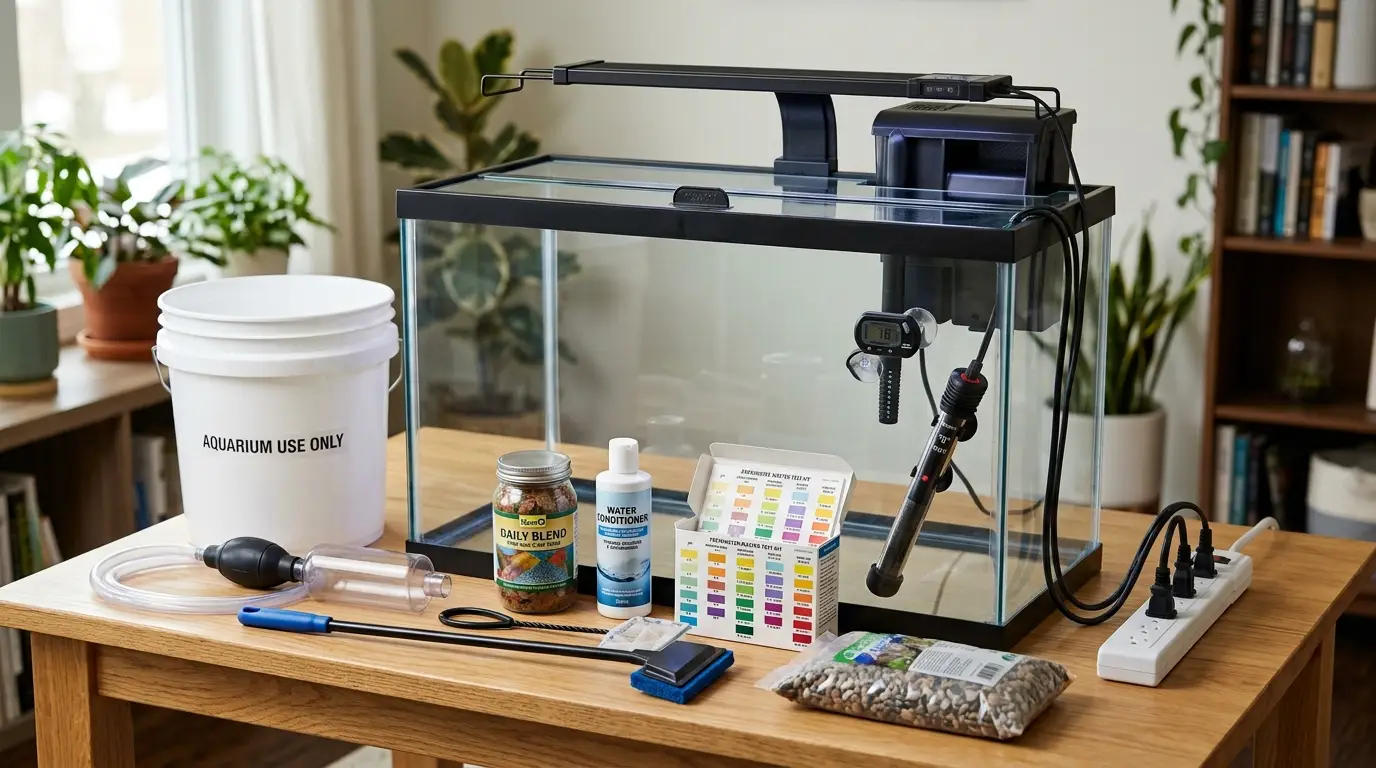
A full step by step fish tank setup for beginners needs the right gear. You do not need the most pricey kit. You do need safe, proven tools.
Get these items:
- Filter suited to your tank size
- Heater and thermometer for tropical fish
- Light with a timer
- Substrate like gravel or sand
- Water conditioner to remove chlorine
- Liquid test kit for ammonia, nitrite, nitrate, pH
- Siphon, bucket, and algae scraper
- Net, fish food, and a lid
- Power strip with surge protection
Pick a filter that turns the tank volume 4 to 6 times per hour. For a 20-gallon, aim for 80 to 120 gph. Heaters work best at 3 to 5 watts per gallon. A 100-watt heater fits many 20-gallon tanks.
Rinse, Place, and Aquascape
Here is where the fun begins in a step by step fish tank setup for beginners. Rinse gravel in a bucket until the water runs clear. Do not use soap. Soap is toxic to fish.
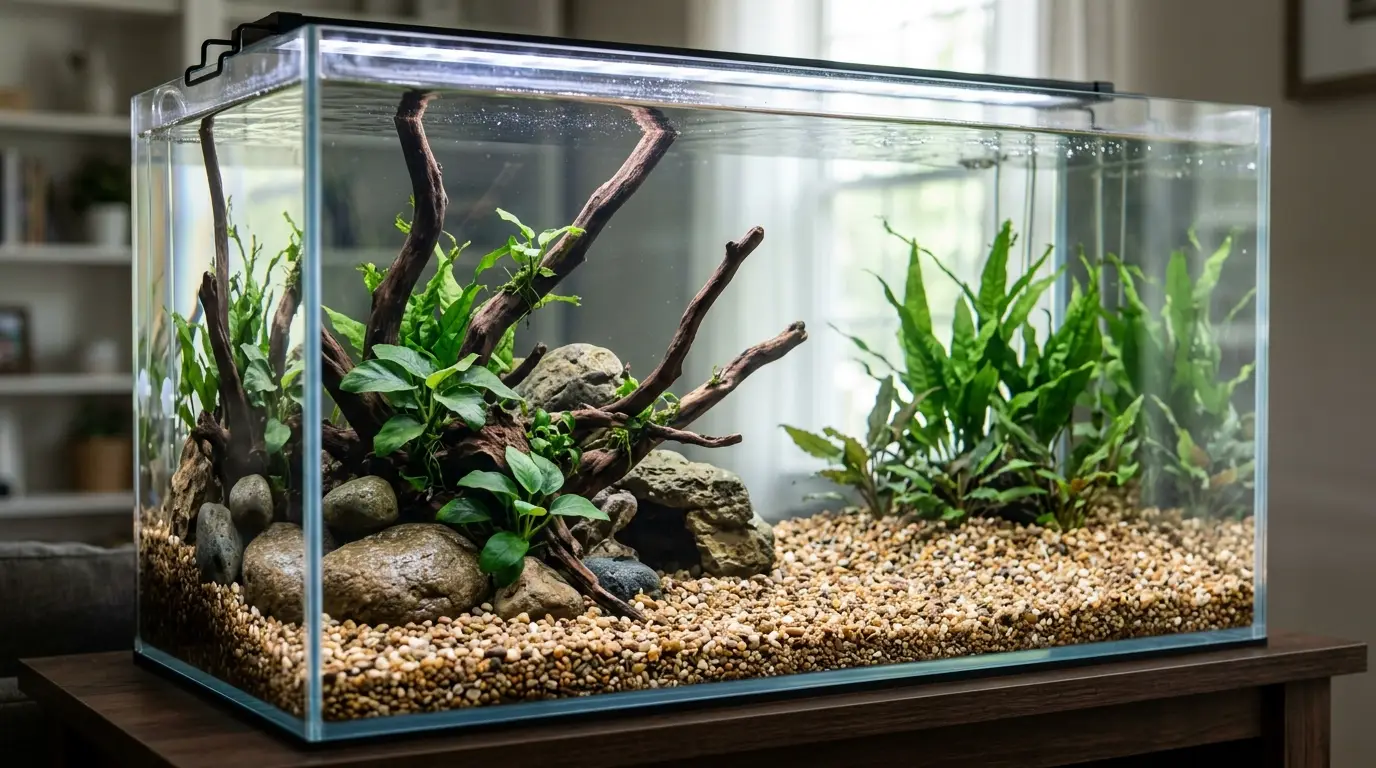
Lay the substrate 1 to 2 inches deep. Add a background to hide wires. Place rocks and wood before filling. Make sure they sit flat on the glass. Build for fish needs. Caves help shy fish. Open space helps active fish. Think of the rule of thirds to make it look natural.
If you use live plants, plan taller plants in the back. Add root tabs under heavy root feeders. I often plant easy picks like Anubias on wood. It is hard to kill and looks great.
Install Equipment and Fill
This is a key part of any step by step fish tank setup for beginners. Put the filter on the back and set the intake a few inches from the bottom. Place the heater near flow so heat spreads well. Leave the heater off until the tank is full.
Put a plate on the substrate to stop the gravel from flying. Fill the tank slowly with tap water that has been treated with a dechlorinator. Add the water conditioner at the start of the fill. Top off to the rim line, not all the way to the top.
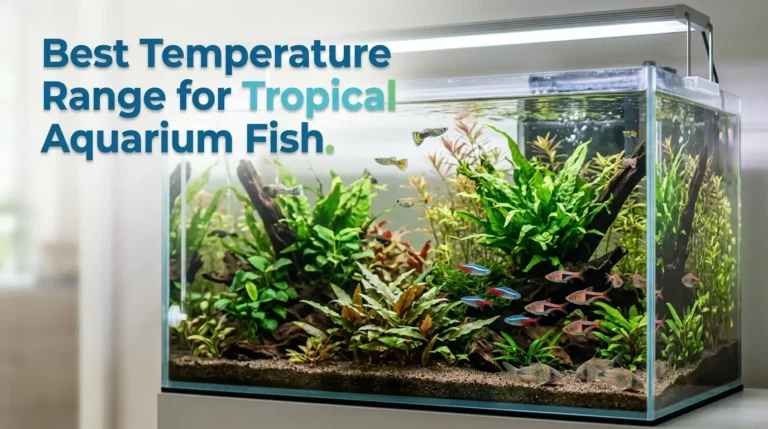
Set the heater to the target temp. Most tropical fish like 75 to 80°F. Plug in the light and use a timer for 6 to 8 hours per day to start. Put on the lid to cut jumpers and dust.
Start the Nitrogen Cycle
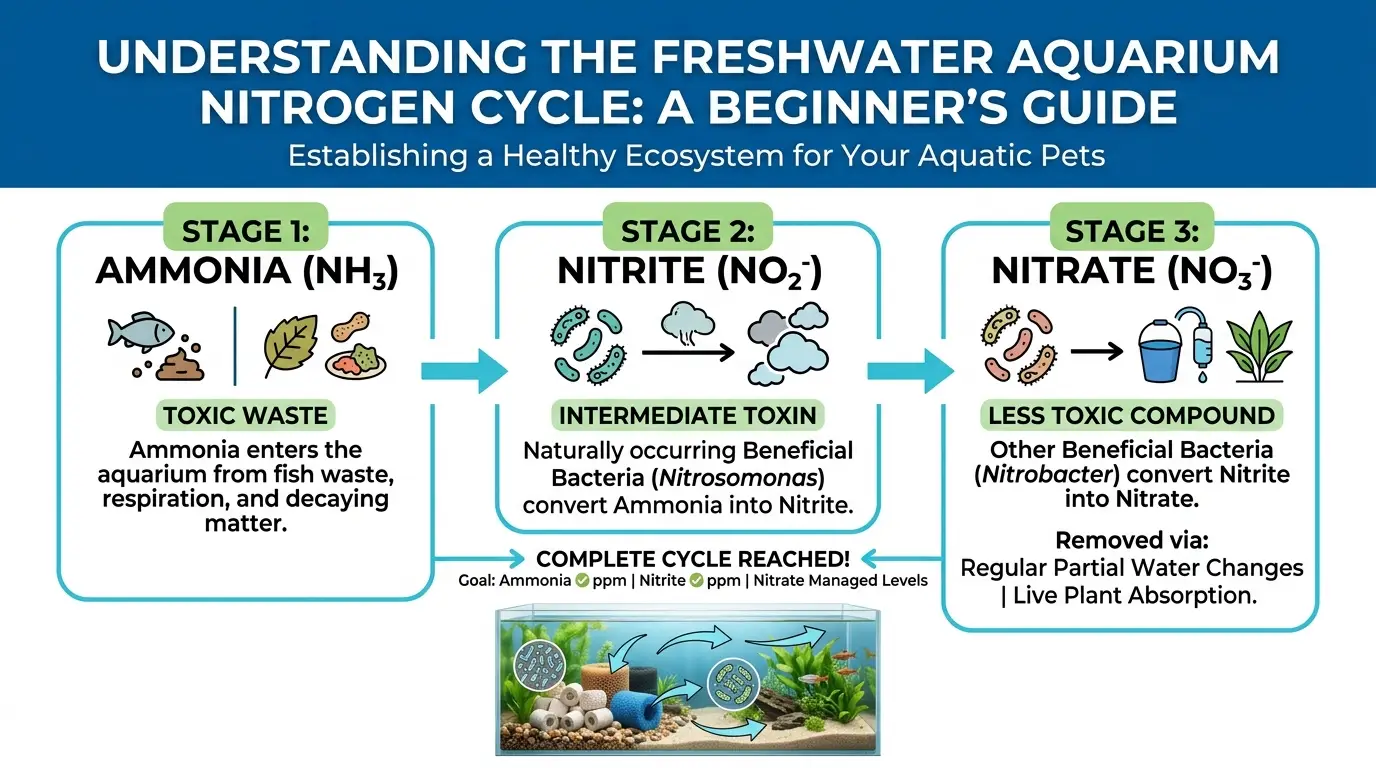
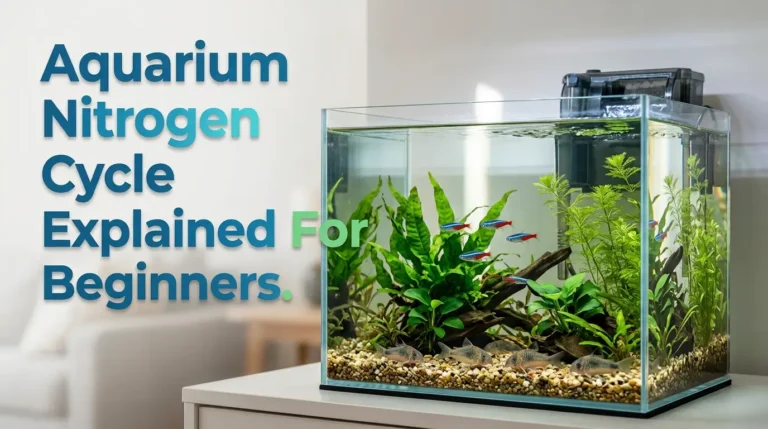
A strong step by step fish tank setup for beginners must cycle the tank. The cycle grows bacteria that change toxic waste to safer forms. Ammonia turns to nitrite, then to nitrate. This takes time.
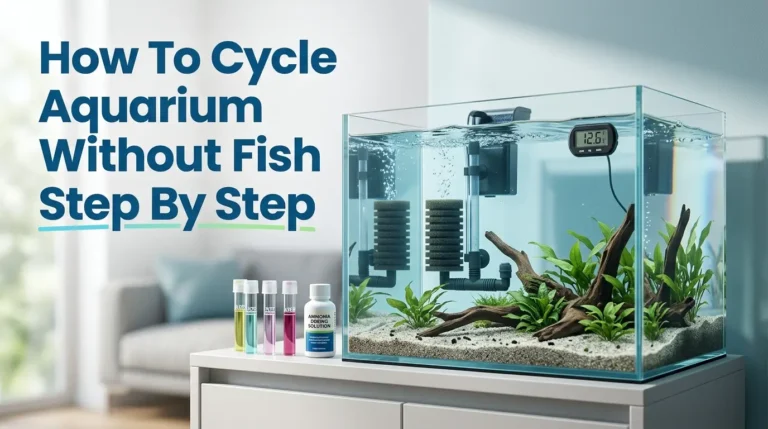
Do a fishless cycle:
- Add bottled ammonia to reach about 2 ppm. Or add a small pinch of fish food daily.
- Test for ammonia and nitrite every 2 to 3 days.
- When nitrite appears, keep dosing small ammonia to feed the bacteria.
- When both ammonia and nitrite read zero in 24 hours after a dose, you are cycled.
- Do a large water change to bring nitrates below 20 to 40 ppm.
Seeding speeds it up. Use media from a healthy, mature tank. Most cycles take 2 to 6 weeks. Be patient. Rushing this step is the top cause of fish loss I see.
Add Fish Safely and Slowly
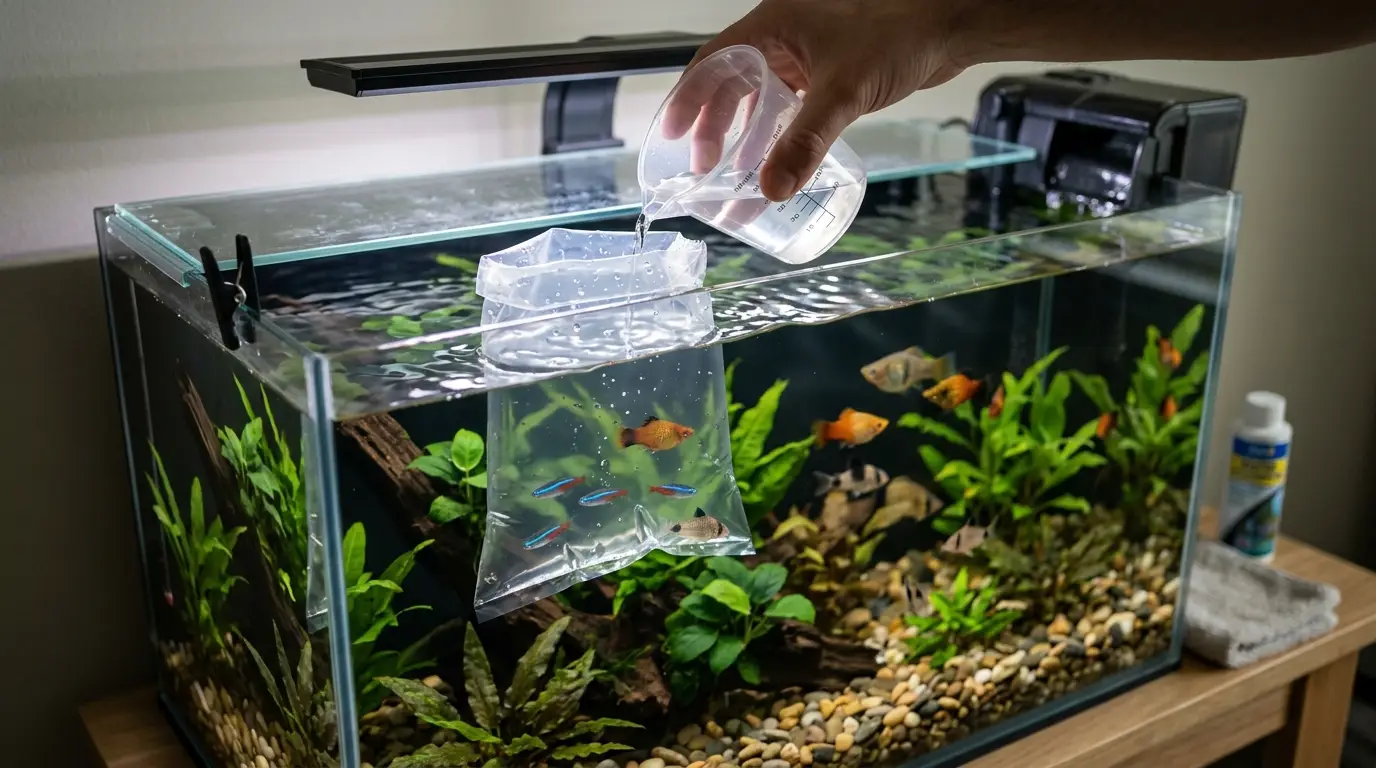
The most exciting part of a step by step fish tank setup for beginners is adding fish. Start with hardy fish. Good picks are zebra danios, platies, guppies, or corydoras. Avoid big waste makers like goldfish in small tanks. Skip fin nippers with long fin fish.
Stock in small groups over weeks, not all at once. Here is a safe way to add fish:
- Turn off the tank light to reduce stress.
- Float the bag for 15 minutes to match temperature.
- Add a cup of tank water to the bag every 5 minutes for 20 minutes.
- Net the fish into the tank. Do not pour store water in.
- Watch fish for calm breathing and normal swim.
Test water the next day. If ammonia or nitrite is above 0.25 ppm, change water and slow down.
Routine Care and Water Changes
The heart of any step by step fish tank setup for beginners is steady care. The routine is simple and fast once you learn it.
Do this weekly:
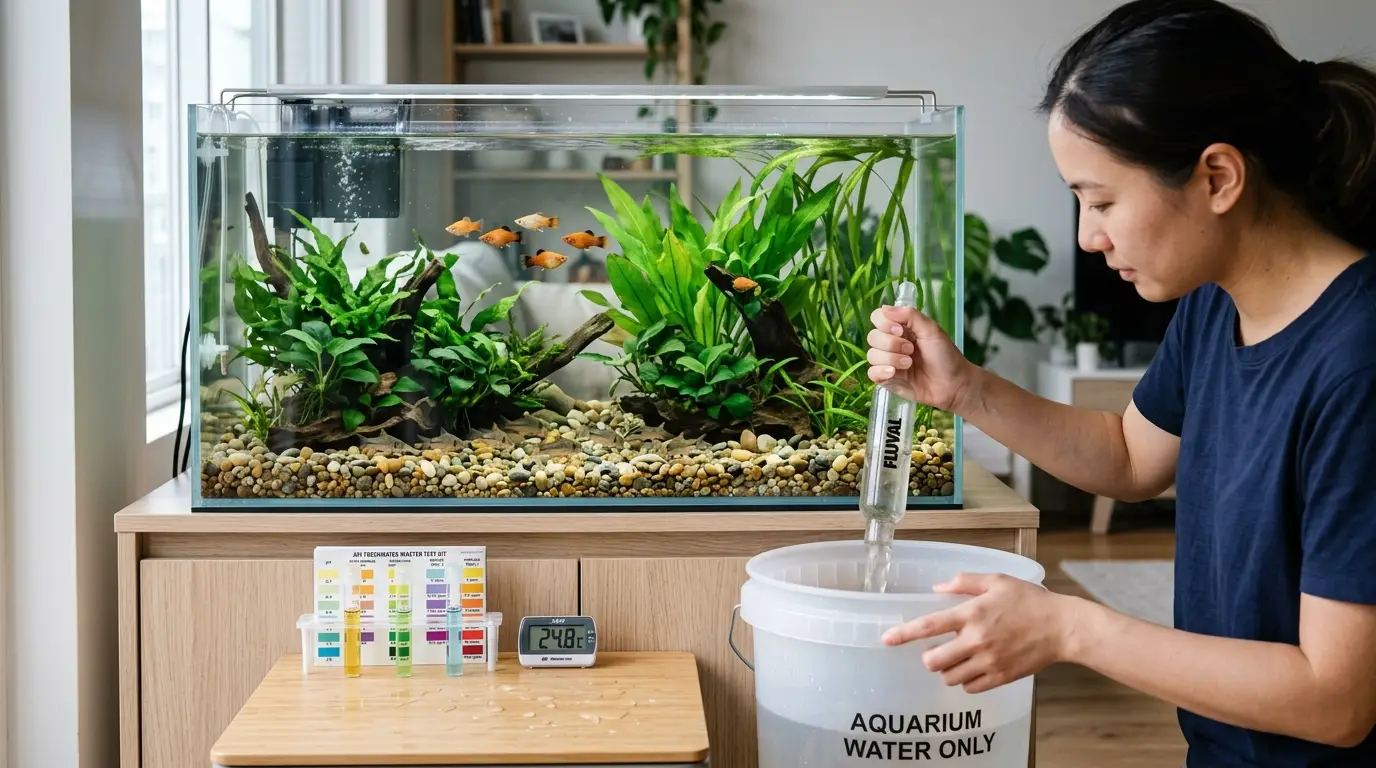
- Test ammonia, nitrite, nitrate, and pH
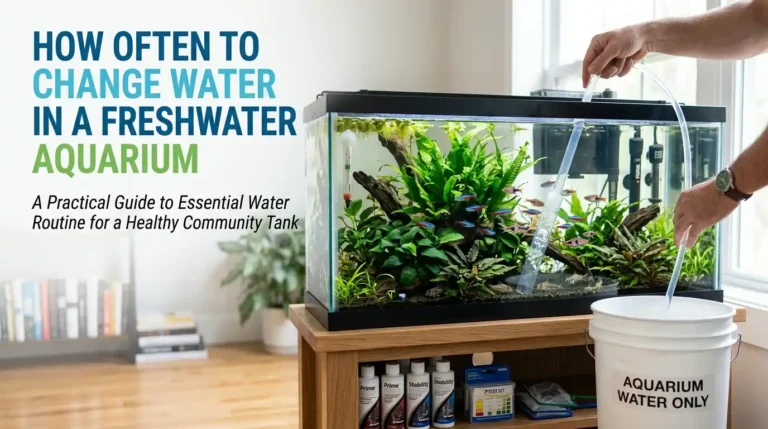
- Change 25 to 30% of the water with treated tap water
- Vacuum the gravel to lift trapped waste
- Wipe glass and check the filter flow
Do this monthly:
- Rinse filter media in old tank water, never tap water
- Trim plants and clean light covers
- Check heater and thermometer for stable temps
Feed small amounts once or twice a day. Only what fish eat in 30 to 60 seconds. Overfeeding makes ammonia and algae spike.
Budget, Starter Kits, and an Example Build
A budget plan helps with a step by step fish tank setup for beginners. Here is a simple guide.
Starter kit route:
- A 20-gallon kit with light and filter is a fair start
- Add a heater, test kit, water conditioner, and siphon
- Swap the kit filter media for a sponge and ceramic rings
Piecing it together:
- 20-gallon tank and stand
- Mid-size hang-on-back filter or a sponge filter with air pump
- 100-watt heater and digital thermometer
- LED light with timer
- Gravel, net, lid, and tools
Example 20-gallon build:
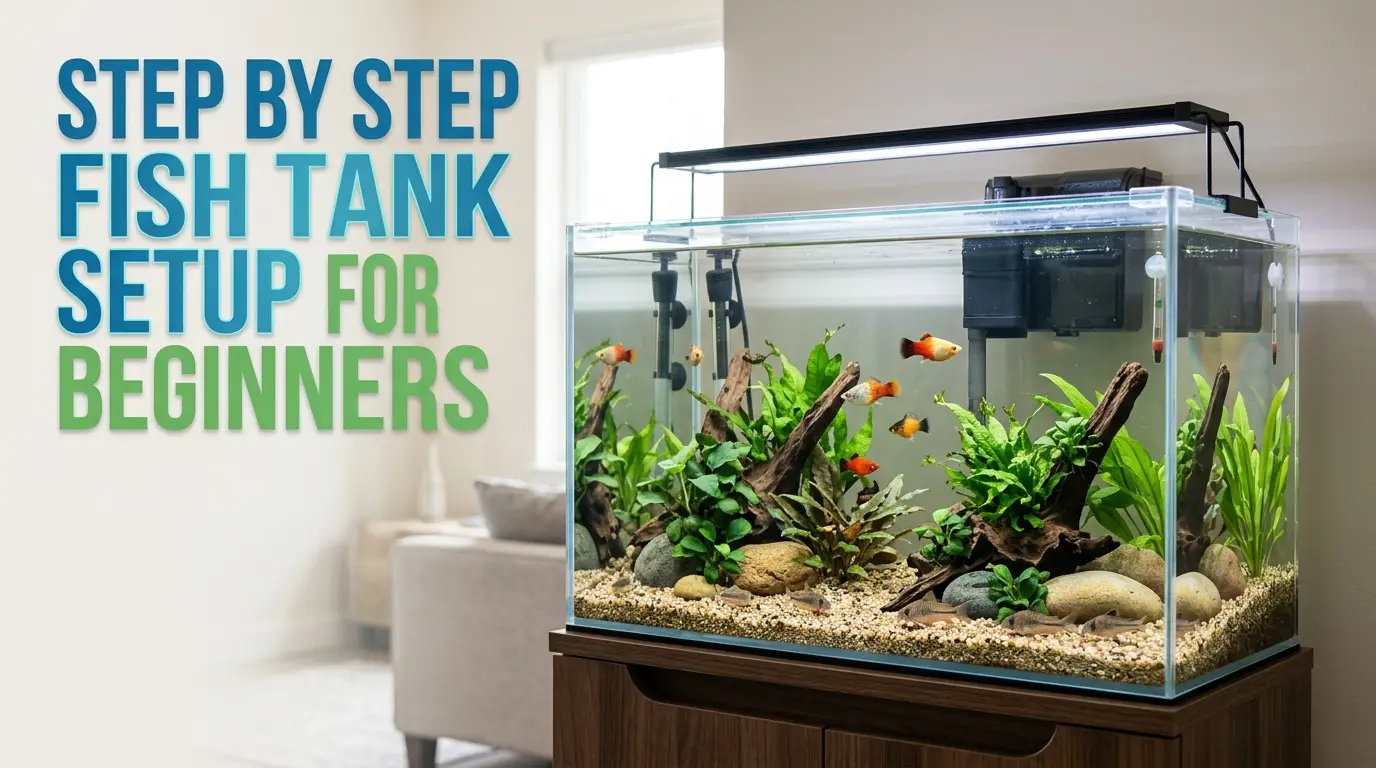
- Stock: 8 to 10 platies, 6 corydoras, and some easy plants
- Temp: 76°F, pH near neutral
- Water change: 30% weekly
- Food: A quality flake plus sinking wafers
I have set up this exact combo many times. It is calm, bright, and easy to keep.
Common Mistakes Beginners Make
You can avoid pain with this stage of a step by step fish tank setup for beginners. I learned some of these the hard way.
Watch out for:
- Skipping the cycle or adding fish too fast
- Washing filter media in tap water
- Overfeeding and then fighting algae blooms
- Mixing fish that do not match on temp or behavior
- Putting the tank in direct sun
- Using soap on gear or decorations
- Not using a lid and losing jumpers
- Trusting the “inch per gallon” rule without checking adult size
Fixes are simple. Slow down. Test often. Change water. Research each fish before you buy.
Troubleshooting and Health Basics
You need a plan B in any step by step fish tank setup for beginners. Problems happen even to pros.
Common issues:
- Cloudy water: Common in new tanks. Check ammonia, do small water changes, and do not overfeed.
- Ammonia spike: Change 50% of the water now. Dose conditioner that binds ammonia. Reduce feeding.
- Algae bloom: Cut light to 6 to 8 hours. Do more water changes. Add fast plants like hornwort.
- White spots (ich): Raise temp slowly to 80 to 82°F if safe. Treat with a proven med and follow the label.
A small spare tank makes a great hospital or quarantine tank. It saves lives and money.
Advanced Tips When You’re Ready
Once your step by step fish tank setup for beginners runs smooth, you can level up. Keep it simple at first. Add one upgrade at a time.
Good next steps:
- Use live plants like Java fern, Anubias, and Amazon swords
- Try a brighter light and plant food for growth
- Add a second sponge filter for redundancy
- Learn gentle aquascape tricks like the golden ratio
- Set a smart plug to time lights and reminders
These small upgrades boost health and cut stress for both you and your fish.
Frequently Asked Questions of step by step fish tank setup for beginners
How long does cycling take for a new tank?
Most tanks cycle in 2 to 6 weeks. Testing often and seeding with media from a mature tank can speed it up.
Do I need a heater for all fish?
Tropical fish need a heater to stay in the 75 to 80°F range. Goldfish and white clouds can live in cool rooms, but stable temps are still key.
How many fish can I add to a 20-gallon?
Add fish slowly over weeks. Plan for adult size and waste, not just inches; a small community of 12 to 16 small fish is common.
Can I use tap water in my aquarium?
Yes, treat tap water with a dechlorinator before it enters the tank. Chlorine and chloramine harm fish and bacteria.
What should I do if ammonia shows up after adding fish?
Do a large water change and retest. Feed less, add a conditioner that detoxifies ammonia, and add bacteria if needed.
Conclusion
You now have a clear path from empty glass box to a calm, living scene. With this step by step fish tank setup for beginners, you can plan, cycle, stock, and care with confidence. Keep it simple, test often, and add fish slow.
Your first clean, healthy tank is close. Start today by picking your tank and gear. Subscribe for more build guides, or drop a comment with your tank size and goals. I’m happy to help you make it shine.