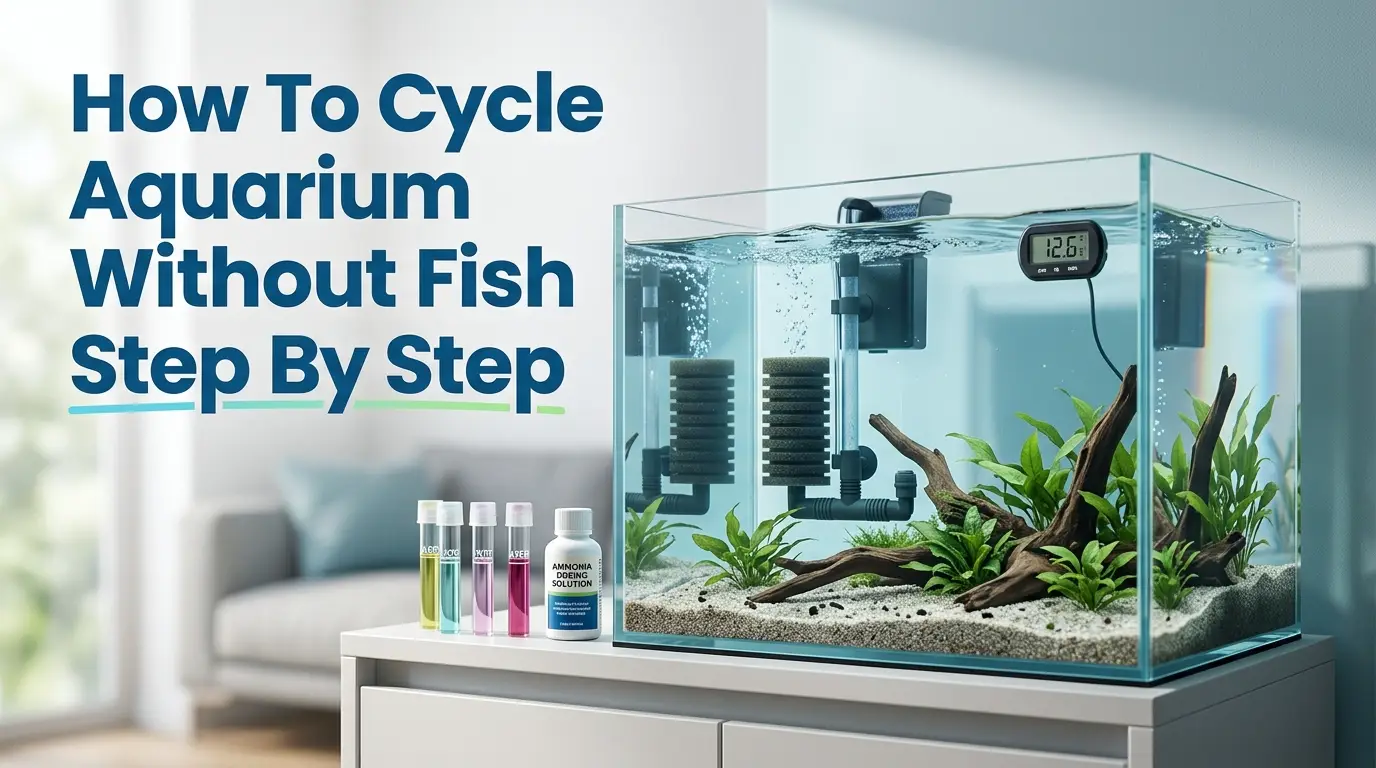
Dose ammonia, add bacteria, test daily, see nitrite spike, nitrate rise, big water change.
If you want clear water and happy fish, you need a safe start. This guide explains how to cycle aquarium without fish step by step so you build strong, stable bacteria before any fish go in. I’ve cycled dozens of tanks, from betta bowls to large cichlid setups. Follow along, and you’ll avoid stress, dead fish, and guesswork.
What Is a Fishless Cycle and Why It Matters
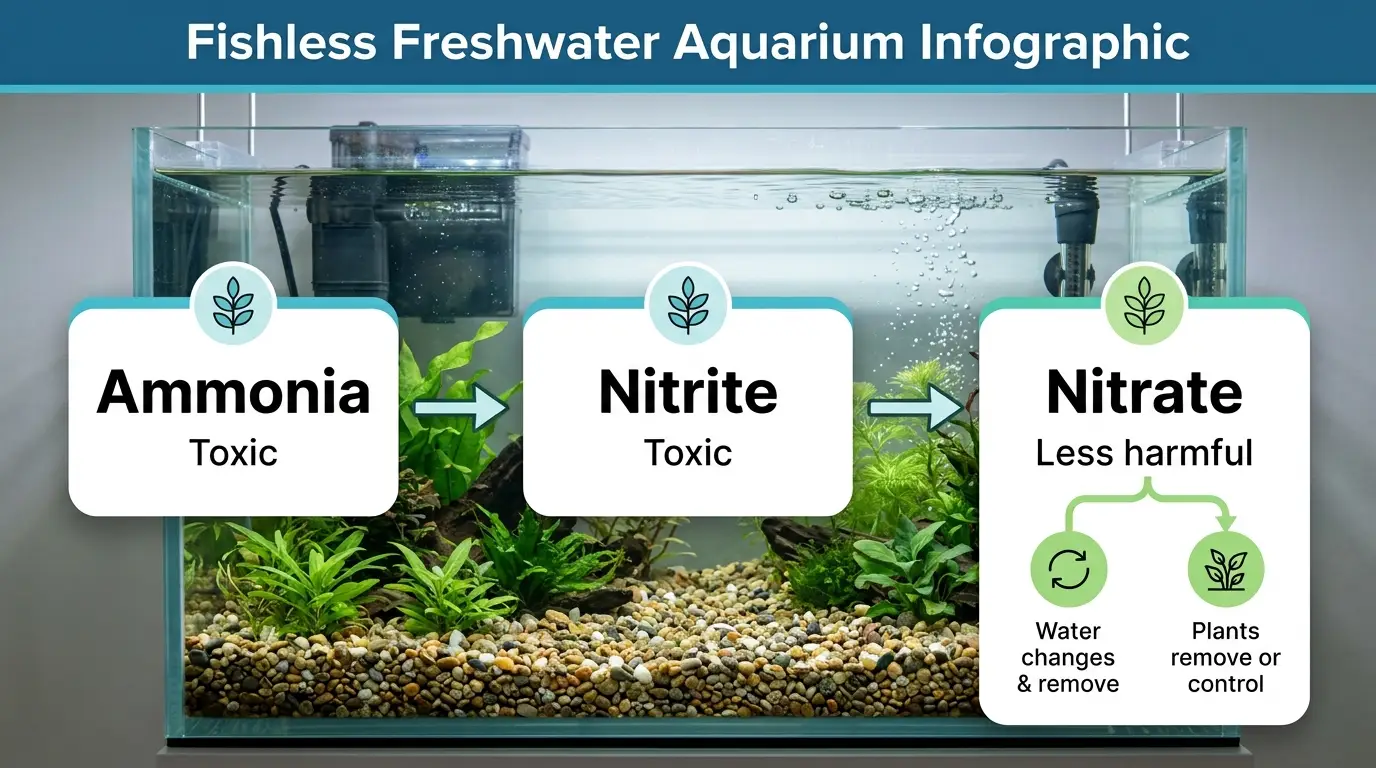
A fishless cycle builds a colony of good bacteria before any fish enter the tank. These bacteria turn toxic ammonia into nitrite, and then into nitrate, which is far less harmful.
Why do this without fish?
- It protects fish from ammonia and nitrite burns.
- It lets you control ammonia dose with no guilt.
- It builds a stable filter before you stock.
What happens in the cycle:
- Ammonia appears first.
- Nitrite rises after bacteria wake up.
- Nitrate rises as the final step. You remove it with water changes and plants.
If you want a proven plan for how to cycle aquarium without fish step by step, fishless cycling is the safest path.
Supplies You Need Before You Start
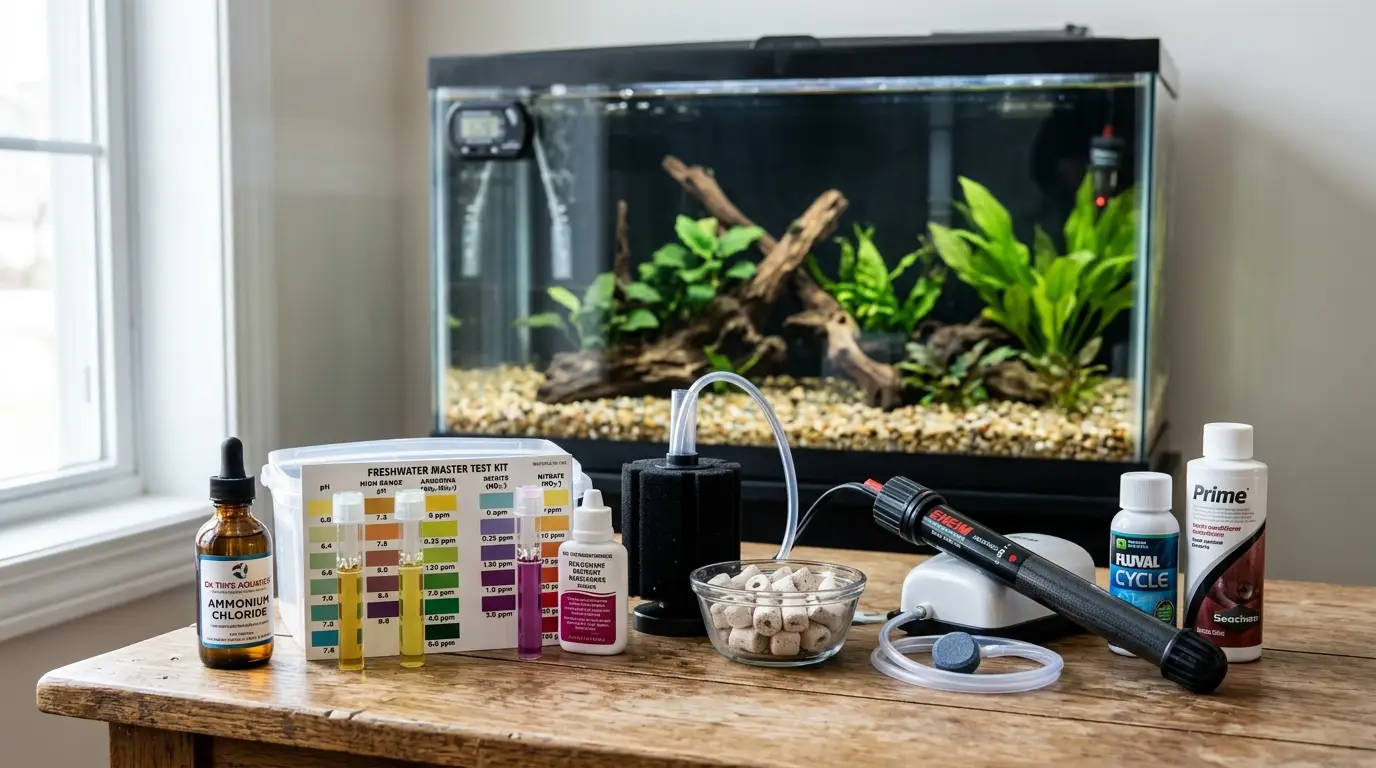
Gather the right tools so your cycle runs smooth.
- Dechlorinator Use it on all tap water to remove chlorine and chloramine.
- Liquid test kit Tests for ammonia, nitrite, nitrate, and pH. Avoid only strips.
- Pure ammonia or ammonium chloride Use unscented, no surfactants. It is your “ghost fish.”
- Filter with bio-media Sponge, ceramic rings, or bio-balls where bacteria live.
- Thermometer and heater Keep 75–82°F to speed bacteria growth.
- Air pump or strong surface ripple Bacteria love oxygen.
- Optional bottled bacteria Helps start the colony faster.
- KH buffer if needed Baking soda can boost KH and prevent a pH crash.
These items make how to cycle aquarium without fish step by step simple and repeatable.
Step-by-Step: How to Cycle Aquarium Without Fish
Use this clear plan for how to cycle aquarium without fish step by step. It is easy and repeatable.
- Prepare the tank
- Set up the tank, filter, and heater.
- Rinse media in tap water once to remove dust.
- Fill with tap water and add dechlorinator.
- Set temperature
- Aim for 75–82°F. Warm water helps bacteria grow faster.
- Add oxygen
- Turn up the filter flow or add an air stone.
- Dose ammonia to about 2 ppm
- Add a small amount of pure ammonia or ammonium chloride.
- Wait 30 minutes, test ammonia, and adjust.
- Do not exceed 4–5 ppm. High ammonia can stall the cycle.
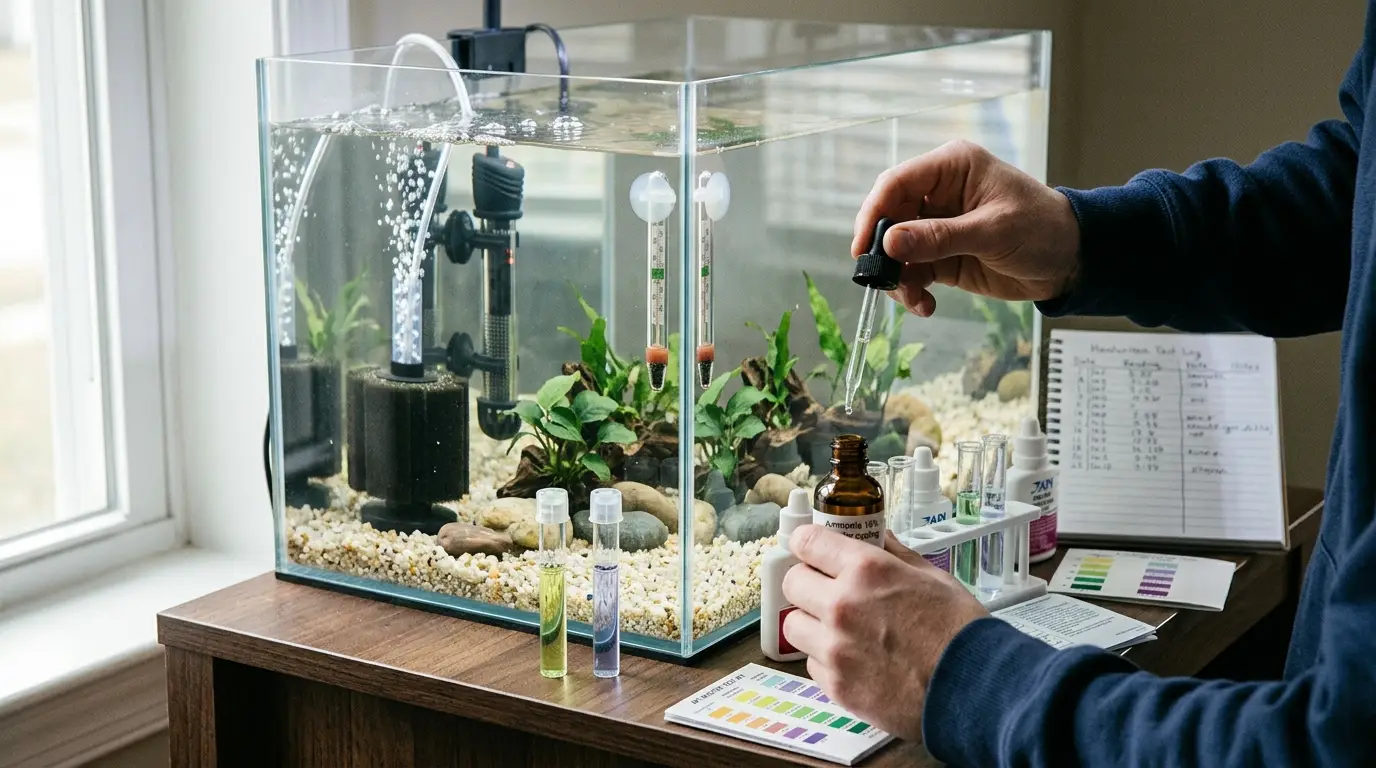
- Optional: Add bottled bacteria
- Follow the label. It can shorten the cycle by days or weeks.
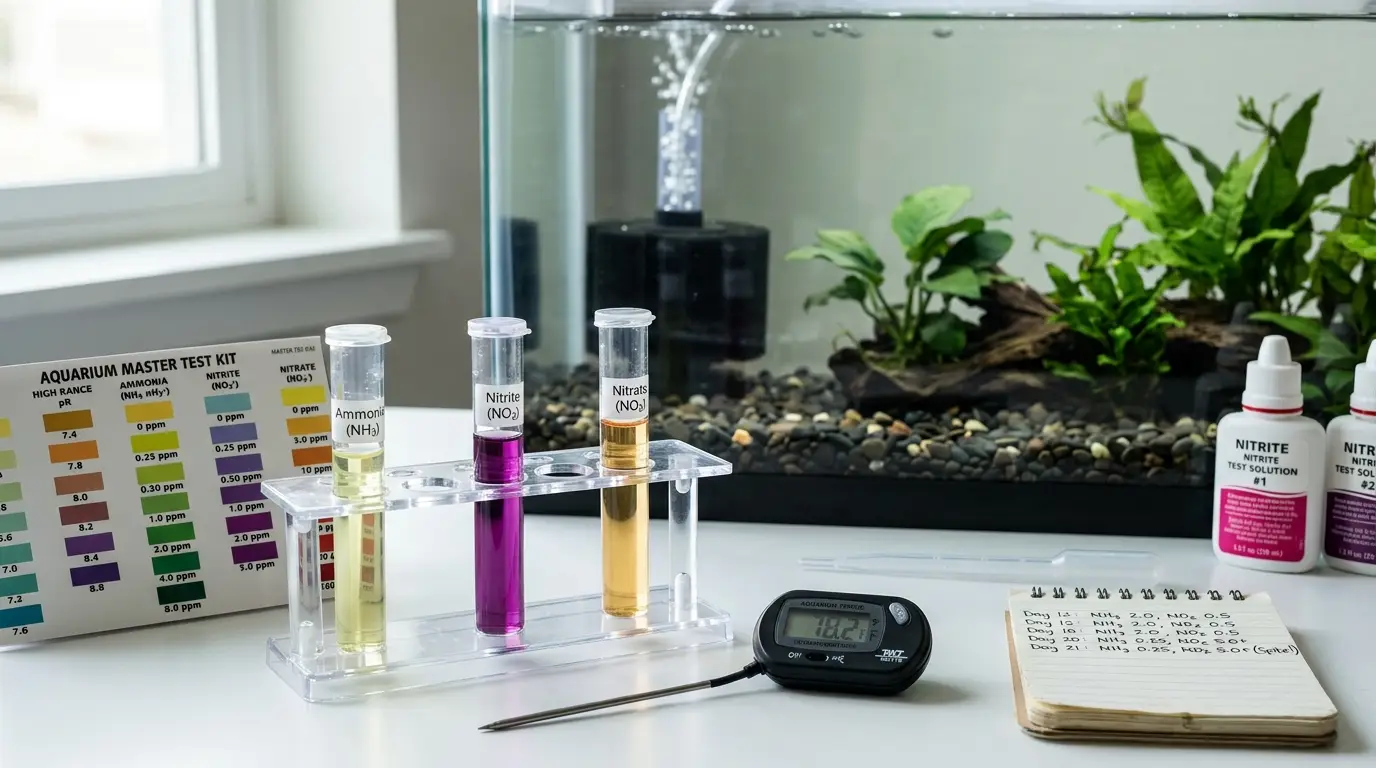
- Test daily
- Test ammonia, nitrite, and pH.
- Write results in a log. It helps you spot trends.
- Feed the colony
- If ammonia drops below 1 ppm and nitrite appears, dose ammonia back to 2 ppm.
- Keep dosing only after it drops. Do not pour ammonia every day without tests.
- Watch for nitrite spike
- Nitrite will rise. It may hit the max on the test. That is normal.
- If nitrite stays sky high for many days, do a 30–50% water change and keep going.
- Keep pH stable
- If pH falls under 6.6, bacteria slow down.
- Boost KH with a small dose of baking soda if needed. Go slow and test.
- Verify the finish line
- When the tank can take 2 ppm ammonia to 0 ammonia and 0 nitrite within 24 hours on two days in a row, the cycle is done.
- Nitrate should show on your test.
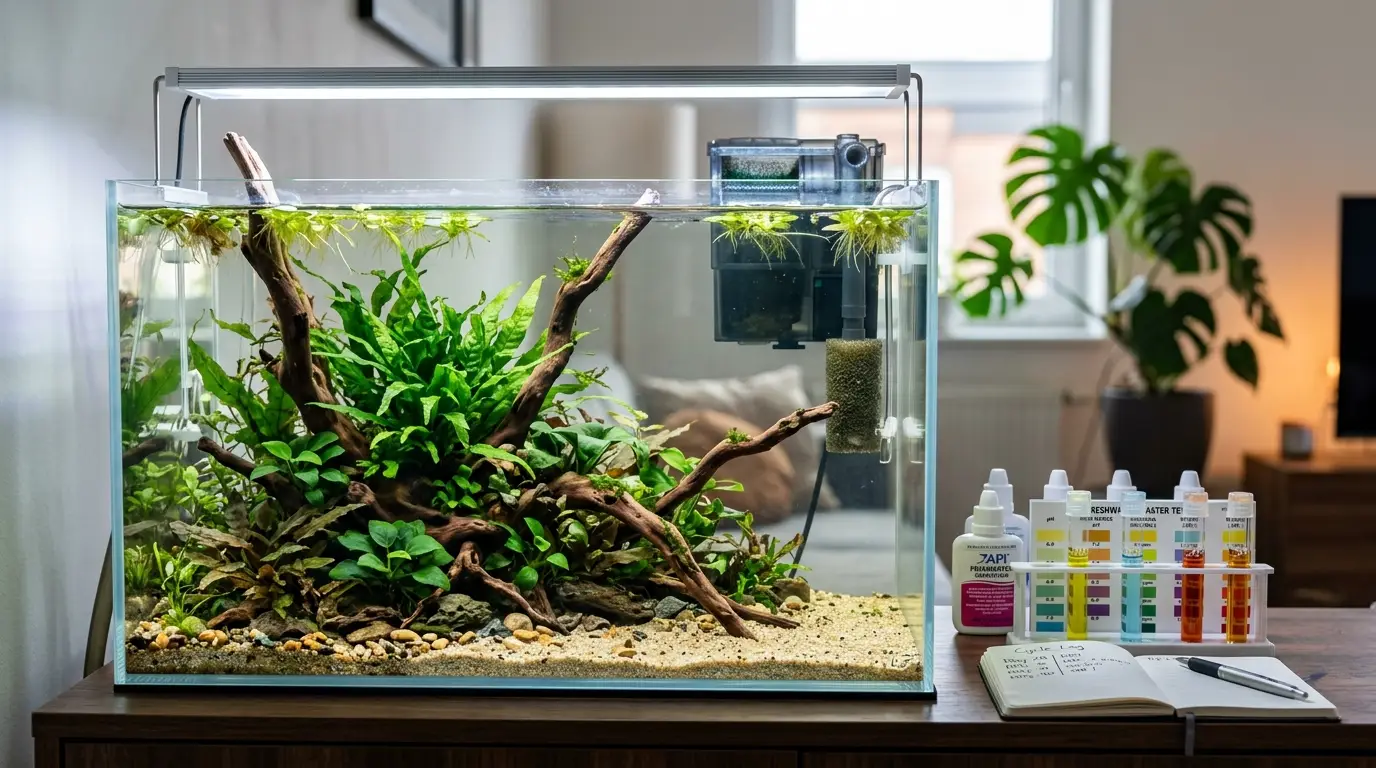
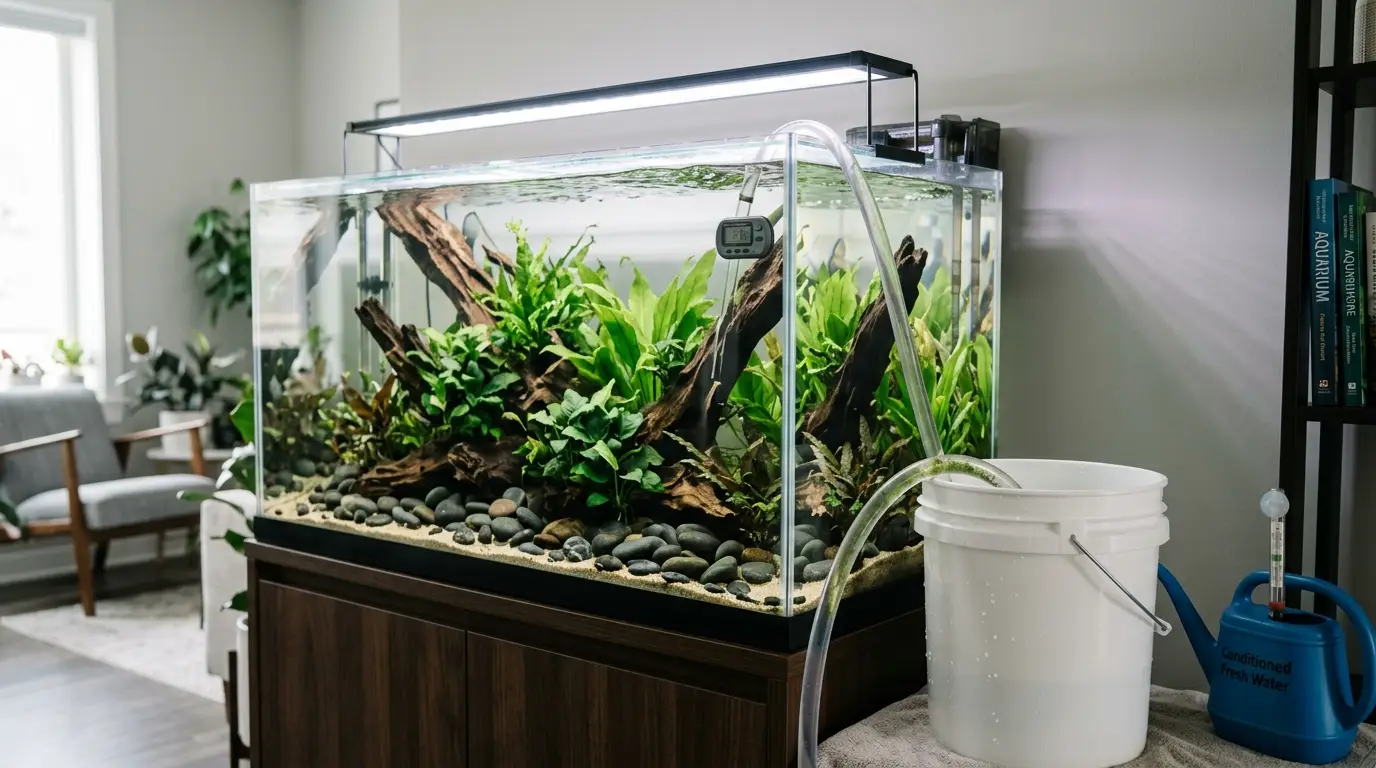
- Big water change
- Do a 50–80% water change to cut nitrate below 20–40 ppm.
- Match temp and dechlorinate.
- Stock with care
- Add your first fish the same day you finish the big water change.
- Feed light and test for a week.
This is the clean way to master how to cycle aquarium without fish step by step.
What To Test, When To Test, and What It Means
Plan a simple test routine. It saves time and worry.
Days 1–7
- Test ammonia and nitrite daily. pH every few days.
- Expect ammonia to start to drop by days 3–7. Nitrite will appear.
Days 8–21
- Nitrite often spikes and lingers. Keep dosing ammonia back to 2 ppm only after it falls.
- If nitrite stalls very high, do a large water change and raise oxygen.
Days 22+
- Both ammonia and nitrite should drop to zero within 24 hours after dosing.
- Nitrate climbs. That means your second bacteria stage is strong.
Key tips
- Keep notes. Trends tell the story.
- Do not chase numbers with many chemicals. Focus on oxygen, pH, and steady ammonia feeding.
- If pH crashes, add a bit of KH and increase water changes.
This plan fits any setup and helps you track how to cycle aquarium without fish step by step with confidence.
Seeding the Cycle: How To Speed Things Up
Seeding moves living bacteria from an established tank to your new filter. It can cut weeks off your cycle.
Great seed sources
- A used sponge or ceramic rings from a healthy tank.
- A handful of substrate from a stable tank in a mesh bag.
- Squeezings from a mature sponge filter poured over your new media.
- Quality bottled bacteria stored cool and within date.
How to do it right
- Keep seed media wet and oxygenated during transfer.
- Do not rinse seed media in tap water. Use tank water.
- Add seed media directly into your filter for maximum flow.
With seeding, how to cycle aquarium without fish step by step becomes much faster, often in days, not weeks.
Common Mistakes and How To Fix Them
Avoid these traps. I have made most of them at least once.
- Adding too much ammonia Over 5 ppm can stall bacteria. Fix it with a big water change and then re-dose to 2 ppm.
- Skipping dechlorinator Chlorine or chloramine kills bacteria. Always treat new water.
- Using scented ammonia Surfactants harm fish and bacteria. Only use clear, unscented ammonia or ammonium chloride.
- Letting pH crash Low pH slows the cycle. Raise KH with small, measured baking soda doses.
- Poor oxygen Bacteria need oxygen. Increase surface ripple or add an air stone.
- Lights on all day Algae blooms waste nutrients. Keep lights off during the cycle unless you have plants.
These simple fixes keep how to cycle aquarium without fish step by step on track.
How Long Does a Fishless Cycle Take?
Time varies with temperature, oxygen, pH, and seeding.
- With no seeding and room temp Expect 4–6 weeks.
- With bottled bacteria and warm water Expect 1–3 weeks.
- With heavy seeding from a stable tank It can finish in 3–10 days.
Do not rush the last step. Wait for two back-to-back days where 2 ppm ammonia becomes 0 ammonia and 0 nitrite within 24 hours. That is the gold standard finish for how to cycle aquarium without fish step by step.
Stocking After the Cycle: Do It Smart
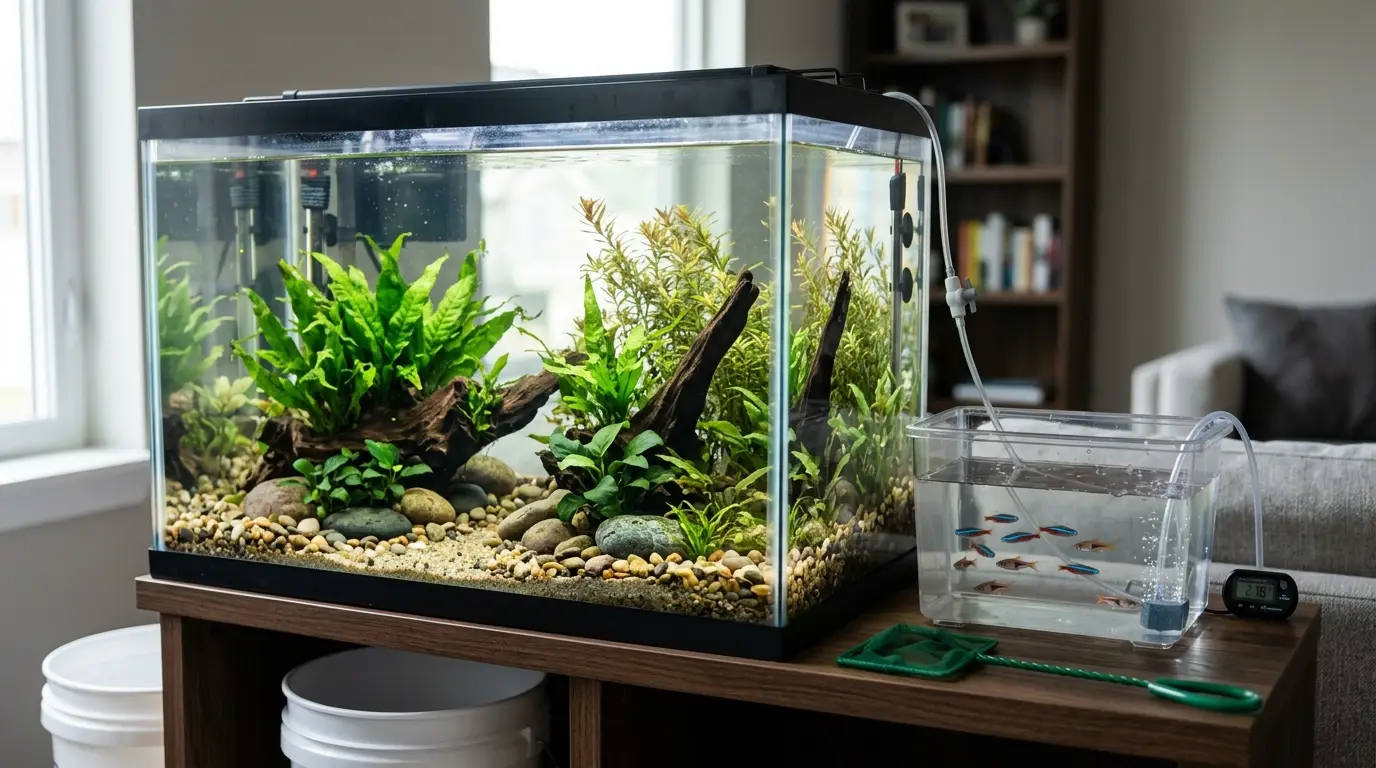
Your filter can handle a tested amount of waste. Respect that limit.
- Right after the big water change Add your first planned group, not the entire dream list.
- Feed light for the first week Then test ammonia and nitrite every other day.
- Add more fish in steps Allow 5–7 days between groups so bacteria can grow more.
If you plan a full stock right away
- Verify your tank can clear 2–3 ppm ammonia to zero in 24 hours on two days in a row.
- That shows the biofilter is strong enough for a larger load.
Smart stocking is the last step in how to cycle aquarium without fish step by step.
Keep It Stable After You Add Fish
Cycling does not end your work. It starts the easy habit loop.
- Weekly water changes 25–50% based on nitrate and stocking.
- Test nitrate Aim to keep it under 20–40 ppm with changes and plants.
- Clean filter media in tank water Never under the tap. Keep the biofilm safe.
- Do not overfeed Feed what fish eat in 30–60 seconds.
- Avoid big pH swings Make changes slow and steady.
These habits protect all the work you put into how to cycle aquarium without fish step by step.
Frequently Asked Questions of how to cycle aquarium without fish step by step
How long does a fishless cycle usually take?
Most tanks finish in 2 to 6 weeks. Seeding, warm water, good oxygen, and steady pH make it faster.
Can I speed up the cycle without risking fish health?
Yes. Add seeded media, keep 75–82°F, boost oxygen, and use fresh bottled bacteria. Keep ammonia near 2 ppm and do not over-dose.
What ammonia source is safe to use?
Use clear, unscented pure ammonia or ammonium chloride. Avoid products with surfactants, dyes, or scents.
Do live plants change the cycle?
Plants absorb ammonia and nitrate, which can shorten the cycle. Keep testing, since plants can “hide” the numbers and make it seem done too soon.
Why did my nitrite stay high for days?
That is a nitrite stall. Do a large water change, raise oxygen, keep pH stable, and continue dosing ammonia to 2 ppm only after it drops.
Is my water conditioner blocking the cycle?
Most conditioners bind ammonia as ammonium, which your bacteria can still use. Your test kit may read it, so rely on trends and not just single tests.
What proves my tank is fully cycled?
Your tank processes 2 ppm ammonia to 0 ammonia and 0 nitrite within 24 hours, two days in a row, and shows nitrate. Then do a big water change and add fish.
Conclusion
You now have a clear roadmap for how to cycle aquarium without fish step by step. Dose ammonia, keep oxygen high, test daily, watch the trend, and finish strong with a big water change. This calm, fish-safe method sets you up for a stable, happy tank.
Start your cycle this week. Track your numbers, avoid the common traps, and enjoy that first stress-free stocking day. Want more tips and stocking ideas? Subscribe, share your results in the comments, and tell me what tank you are building next.