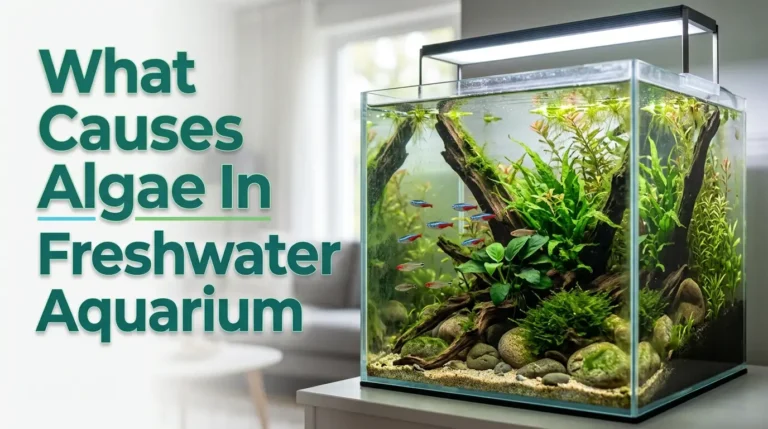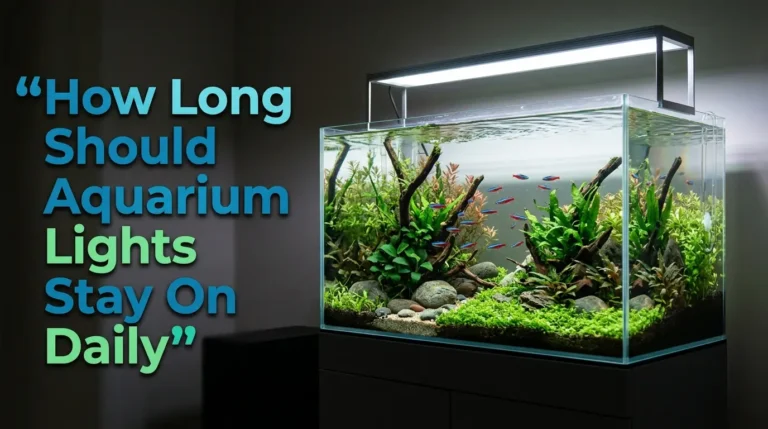
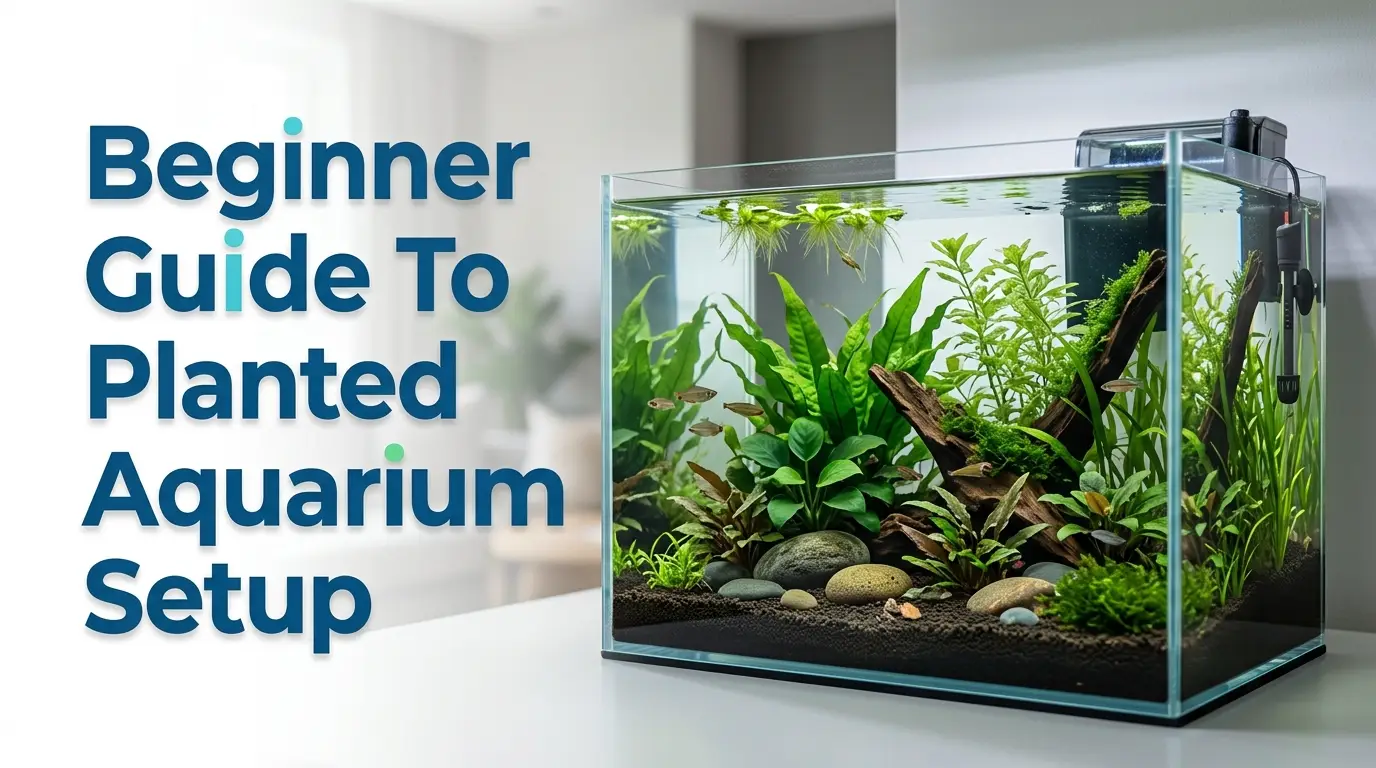
Start small, choose hardy plants, cycle tank, balance light, CO2, and nutrients.
If you want a calm, green slice of nature at home, this beginner guide to planted aquarium setup will help you do it right the first time. I’ve built dozens of planted tanks, from low-tech bowls to lush aquascapes. I’ll walk you through clear steps, real mistakes to avoid, and pro tips you can use today. By the end, you’ll have a full beginner guide to planted aquarium setup you can trust—and a plan you can follow with confidence.
Plan First: Goals, Size, Budget, Time
A strong plan makes your tank stable and stress-free. This is the foundation of any beginner guide to planted aquarium setup.
- Define your goal. Easy low-tech jungle look, or trimmed aquascape with a carpet?
- Choose a size you can maintain. A 10–20 gallon tank is a sweet spot for beginners.
- Set a budget. Include tank, stand, filter, light, substrate, hardscape, plants, and test kits.
- Be honest about time. Aim for 30–45 minutes per week for routine care.
- Check your water source. Use a dechlorinator and test pH, GH, KH, and nitrates.
Tip from experience: Small tanks swing fast. A 5-gallon can work, but a 20-gallon “long” is far more forgiving for a first planted tank.
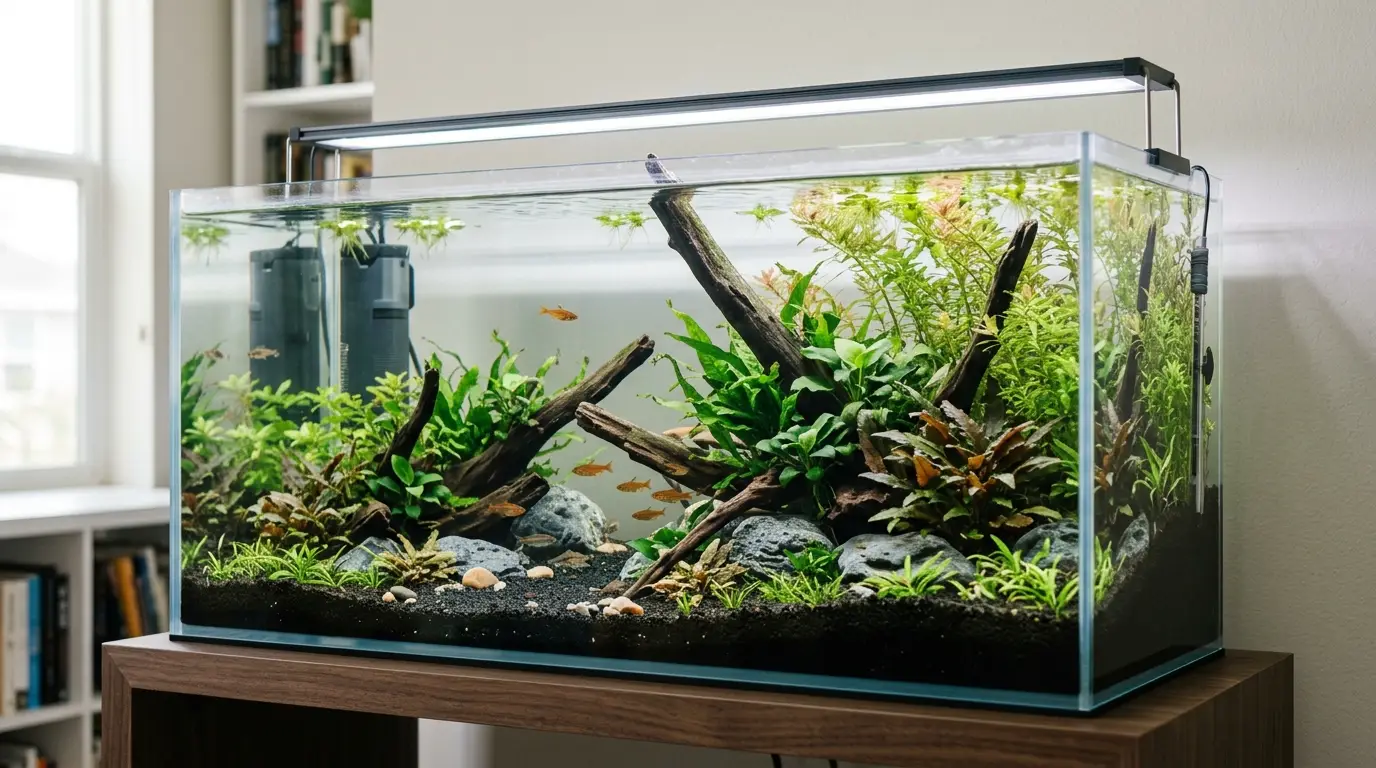
Choose the Right Tank, Stand, and Location
Good gear and placement make life easy. This part of a beginner guide to planted aquarium setup is simple yet vital.
- Pick a clear, rimless tank if you love a clean look. Standard tanks work great too.
- Use a sturdy, level stand. A foam mat under rimless tanks helps spread weight.
- Keep the tank away from direct sun to avoid algae and heat swings.
- Leave space behind for filter hoses, power cables, and tools.
- Place it where you will see it daily. You will care for what you see and enjoy.
Pro note: A 20-gallon long offers great planting depth, better light spread, and stable water.
Core Gear: Filter, Heater, Light, CO2, and Tools
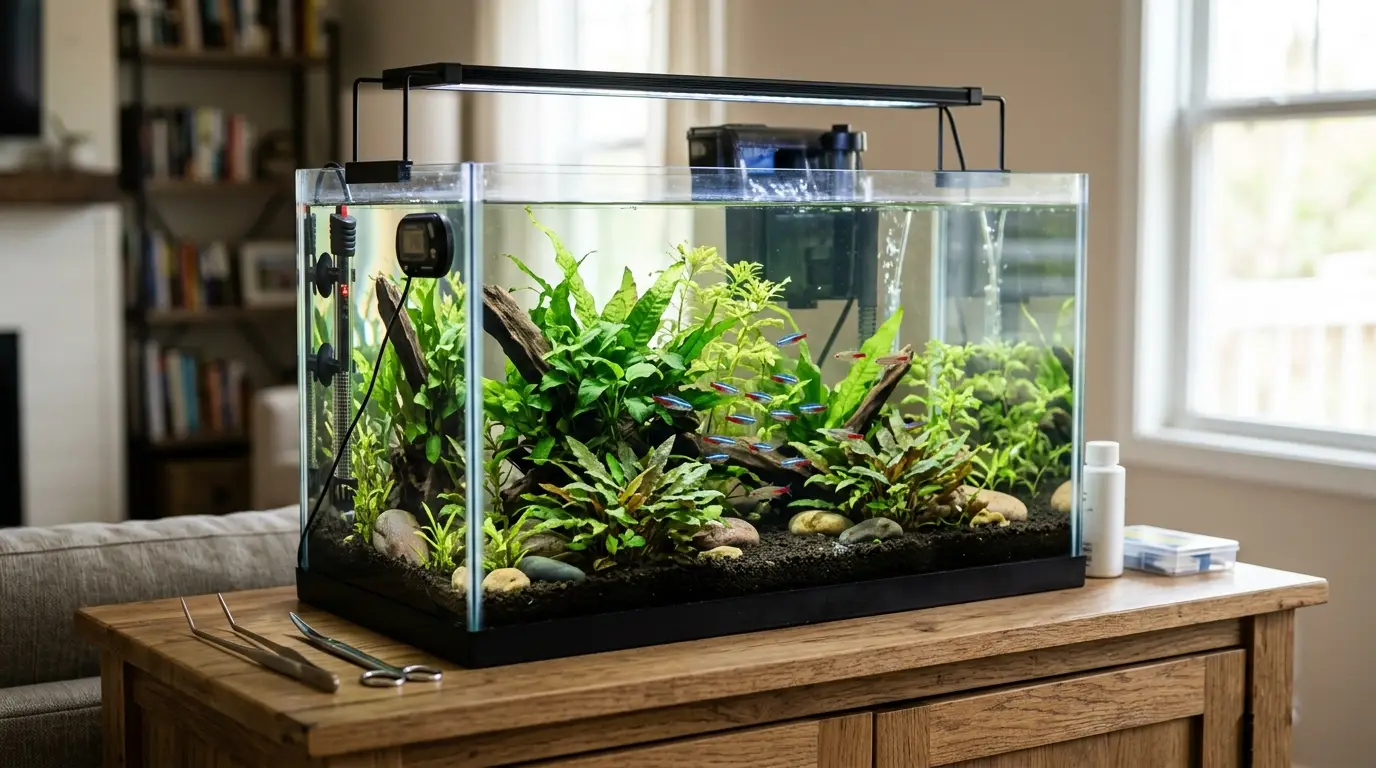
Let’s make the core of your beginner guide to planted aquarium setup clear and simple.
- Filter. Sponge and hang-on-back are easy. Canisters are quiet and powerful. Aim for gentle flow and good bio media.
- Heater. Most tropical plants and fish like 72–78°F. Use a reliable heater with a guard.
- Light. A full-spectrum LED with a timer is key. Start with 6 hours per day. Increase to 7–8 after the tank stabilizes.
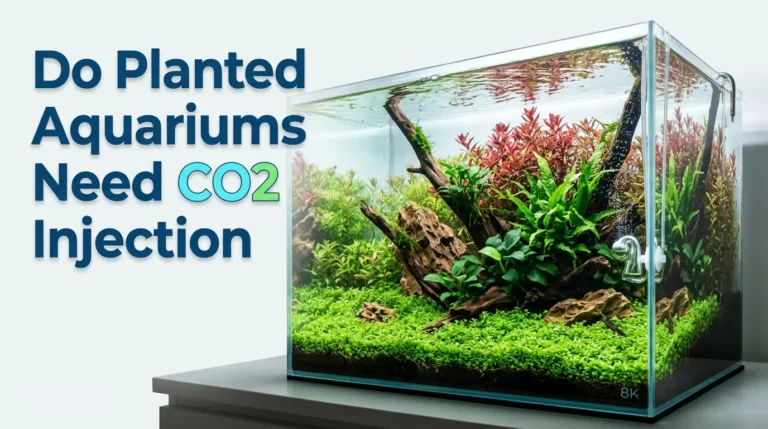
- CO2. Not required for success. It helps growth and color. Start without it or add later when you are ready.
- Tools and supplies. Water conditioner, test kits (ammonia, nitrite, nitrate, pH), thermometer, aquascaping scissors and tweezers, gravel vac, and buckets.
Quick tip: Use smart plugs or a timer for light and CO2. Consistency beats guesswork.
Substrate and Hardscape That Help Plants Thrive
Your base holds roots, bacteria, and the look of the scape. It is a big piece of any beginner guide to planted aquarium setup.
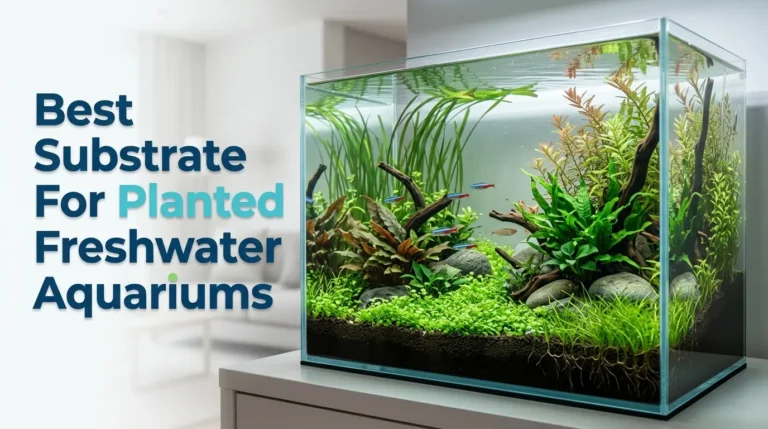
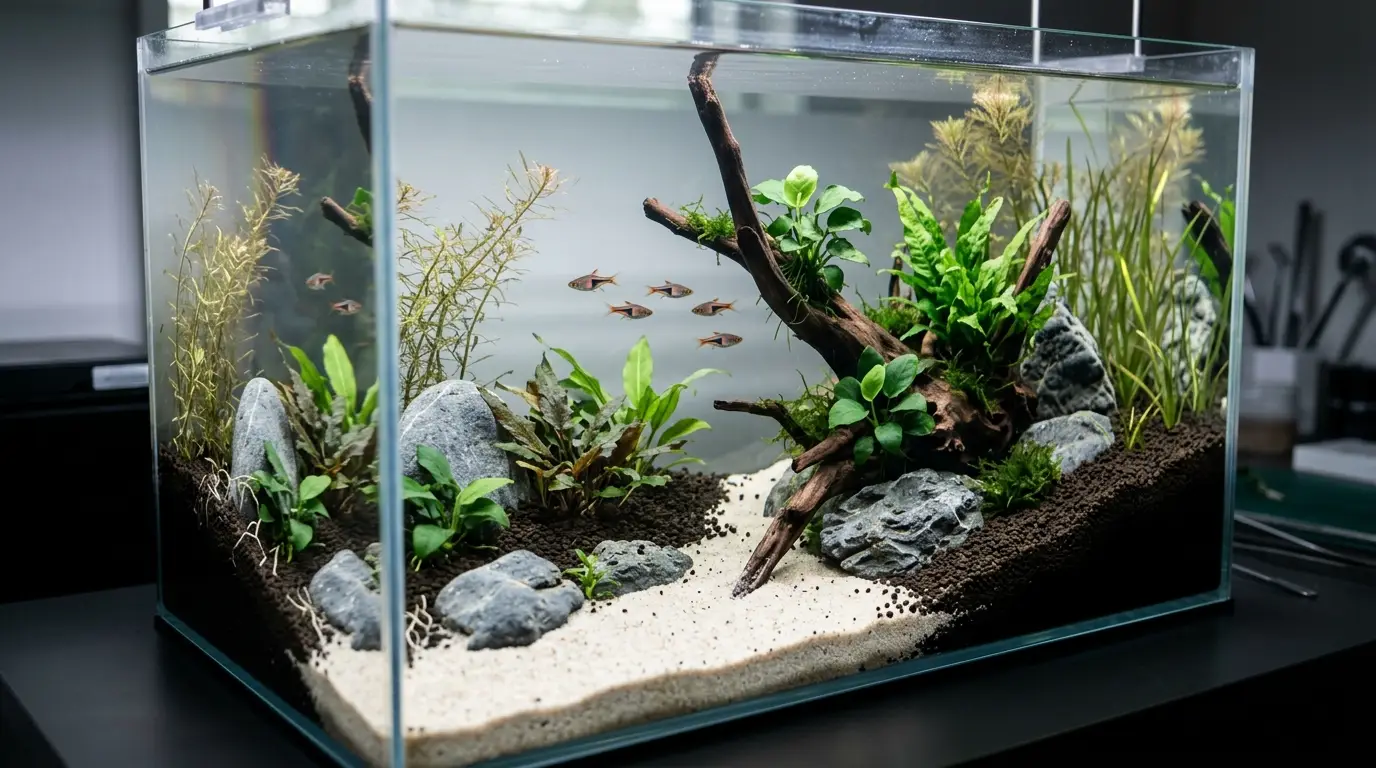
- Substrate options. Aquasoil feeds heavy root plants. Inert sand or gravel needs root tabs and water dosing.
- Layer idea. Many beginners use aquasoil in the back and sand in front for a clean path look.
- Hardscape. Choose safe wood and rock. Soak wood so it sinks. Avoid rocks that raise KH unless you want hard water.
- Layout basics. Use the rule of thirds. Pick one focal point. Leave some open space for contrast.
Personal note: I once buried the whole tank in heavy gravel. Plants stalled. Switching to aquasoil in key zones woke the tank up fast.
Water, Cycling, and Beneficial Bacteria
Every beginner guide to planted aquarium setup must explain the cycle. This keeps fish safe and plants happy.
- The nitrogen cycle. Waste turns to ammonia, then nitrite, then nitrate. You want ammonia and nitrite at zero.
- Fishless cycle. Add bottled bacteria and a pinch of pure ammonia or fish food to feed the cycle. Test often.
- How long? Plan for 3–6 weeks. Plants help speed it up by using ammonia and nitrate.
- Routine during cycle. Keep the light low (5–6 hours) to hold algae back. Do water changes if ammonia spikes.
Use dechlorinator for every new water change. Chlorine kills good bacteria.
Plant Selection for Beginners
Pick easy growers first. This is the heart of a beginner guide to planted aquarium setup.
- Rhizome plants. Anubias and Java fern. Tie them to wood or rock. Do not bury the rhizome.
- Stem plants. Water wisteria, Hygrophila, Ludwigia. Fast growers that soak up excess nutrients.
- Rosettes and background. Amazon sword, Cryptocoryne, Vallisneria. Use root tabs if substrate is inert.
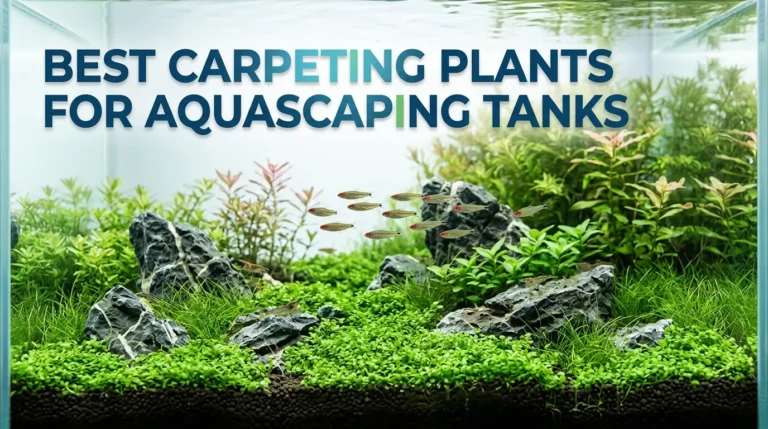
- Carpets. Dwarf sagittaria is low effort. Monte Carlo needs more light and CO2 but can work in medium setups.
- Floaters. Salvinia and frogbit help control light and nitrates.
Expect some “melt,” especially in crypts. New growth tells you the plant has adapted.
Step-by-Step Setup Checklist
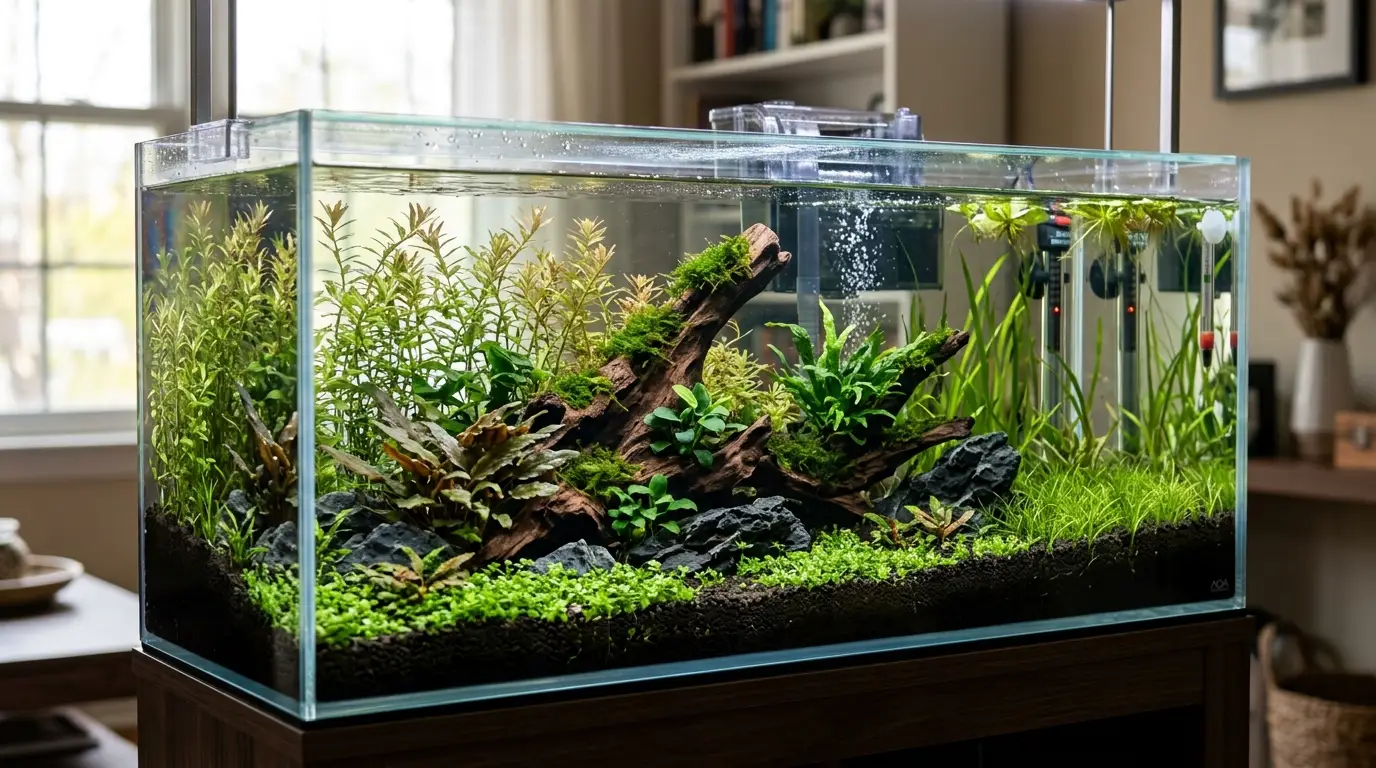
A clear checklist keeps this beginner guide to planted aquarium setup easy to follow.
- Rinse tank and place it level on the stand.
- Add substrate. Slope higher in the back to add depth.
- Set hardscape. Test your layout dry. Take a photo to guide planting.
- Mist the substrate. Plant taller stems in back, mid plants in the center, and low plants in front.
- For rhizomes, tie them to wood or rocks.
- Place the filter, heater, and light. Use a timer.
- Fill slowly onto a plastic bag or plate to avoid disturbing the scape.
- Dechlorinate, start the filter and heater, and set light to 6 hours.
- Dose bottled bacteria. Begin a fishless cycle and test water.
- After ammonia and nitrite hit zero, add fish and shrimp slowly.
I like to add a small starter crew of snails early. They clean up and do well in new tanks.
Lighting and Fertilizers Made Simple
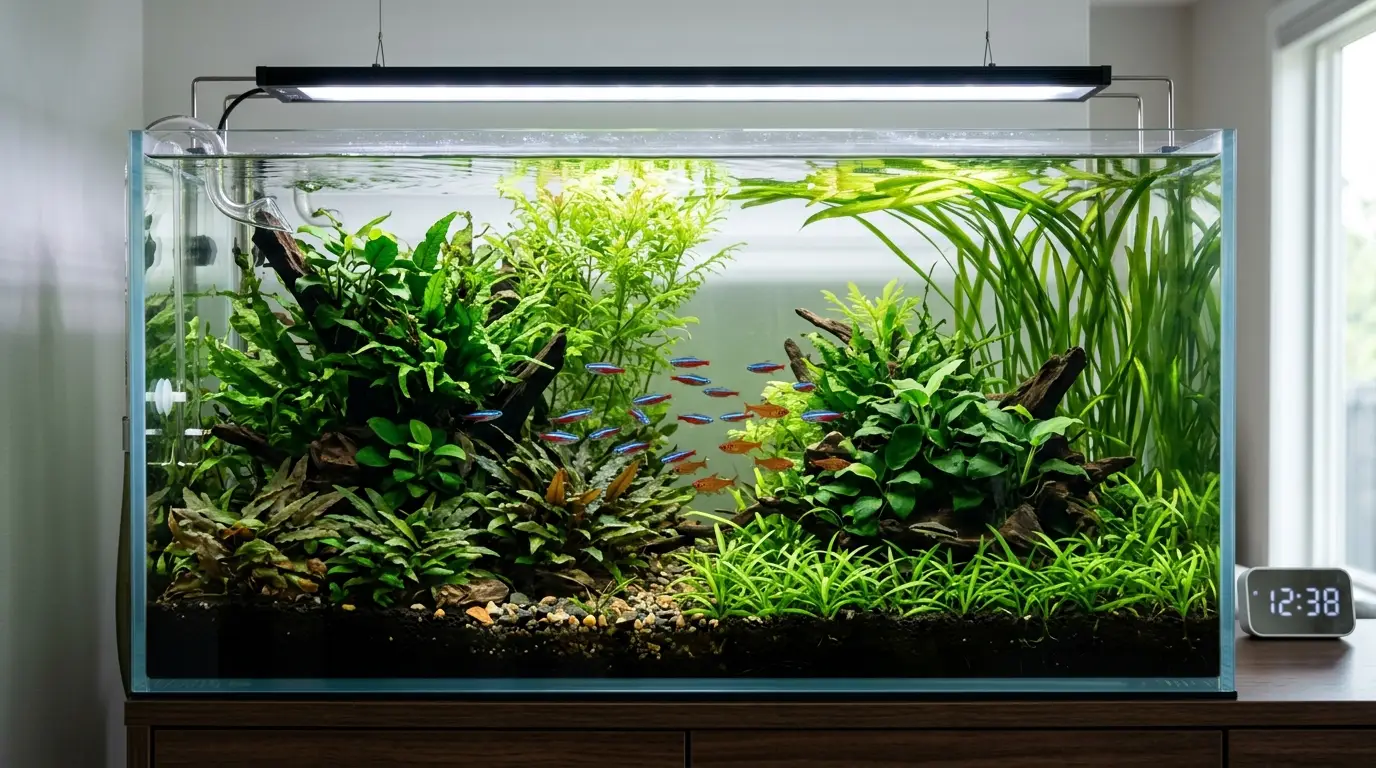
Balance is the theme of every beginner guide to planted aquarium setup.
- Photoperiod. Start with 6 hours. Move to 7–8 after algae settles. Keep it steady.
- Intensity. Most easy plants do fine with medium light. If algae shows, lower intensity or hours.
- Fertilizers. Use an all-in-one liquid 2–3 times per week. Add root tabs for heavy root feeders.
- Water changes. Do 30–50% weekly. This resets nutrients and keeps the tank clean.
Think of light as the gas pedal. More light needs more nutrients and, often, more CO2.
CO2: Do You Need It?
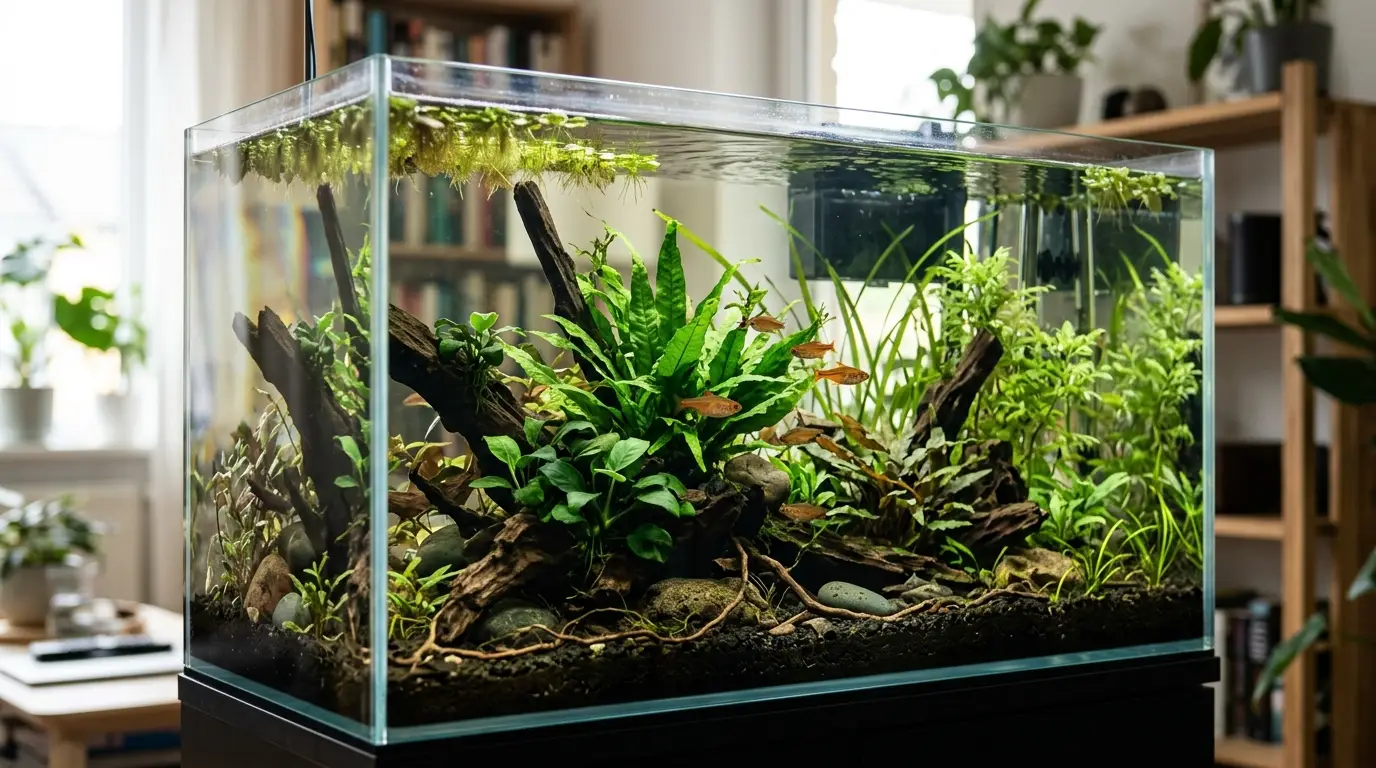
A beginner guide to planted aquarium setup should help you choose wisely.
- No CO2. Great for Anubias, Java fern, crypts, and many stems. Slower but steady growth.
- CO2 added. Faster growth, better color, and easier carpets. Use a drop checker and aim for light green.
- Safety. Boost CO2 before lights on and shut it off at lights out. Watch fish for stress. Good surface ripple keeps oxygen up.
Note: Some plants, like Vallisneria, may melt with liquid carbon products. Go slow and test your tank’s response.
Stocking Fish, Shrimp, and Snails That Fit Plants
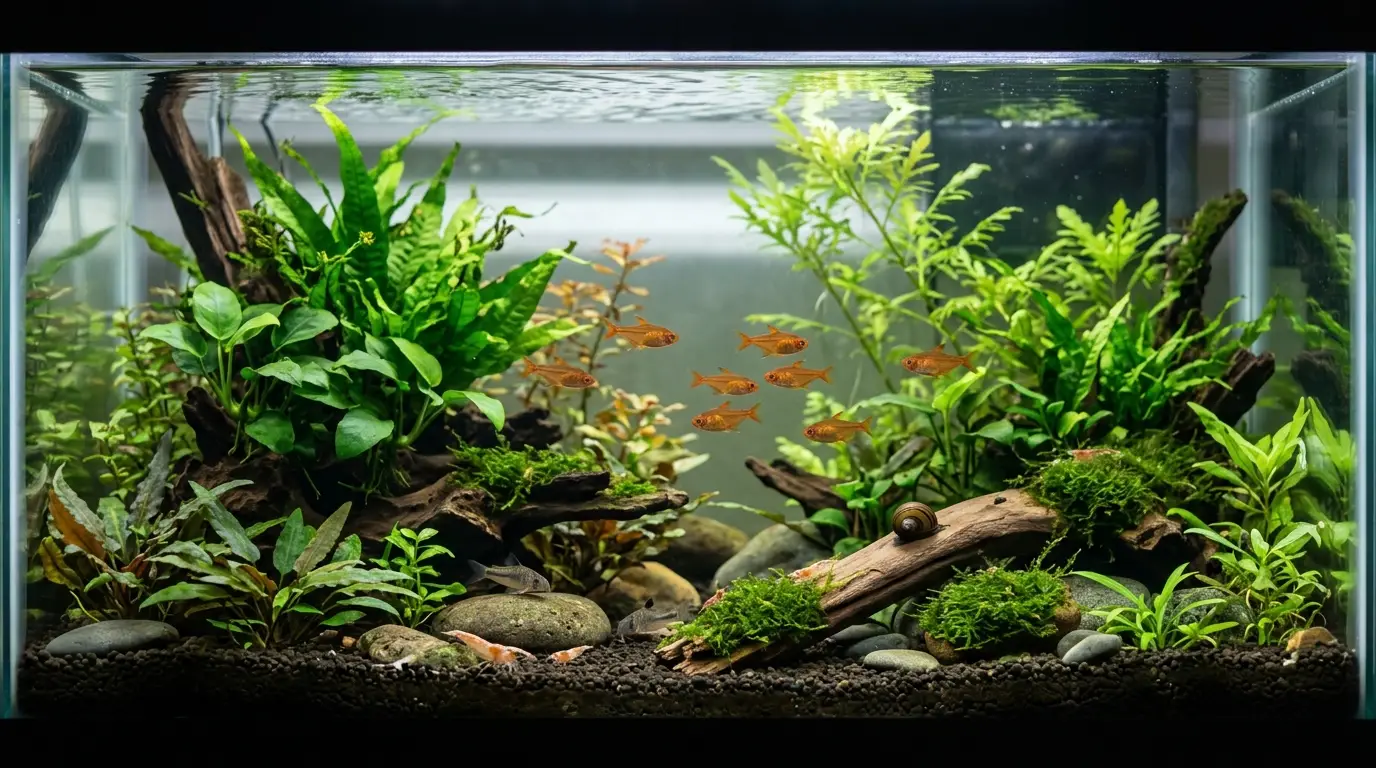
Livestock should match your scape goals. This is a key part of a beginner guide to planted aquarium setup.
- Great choices. Neon tetras, ember tetras, rasboras, corydoras, and dwarf gourami. Otocinclus do best in mature tanks.
- Clean-up crew. Amano shrimp, cherry shrimp, and nerite snails help with algae and waste.
- Avoid plant eaters. Goldfish, silver dollars, and many larger cichlids will uproot or eat plants.
Add fish slowly, test often, and feed light. Stable tanks grow better plants.
Weekly Care Routine and Water Parameters
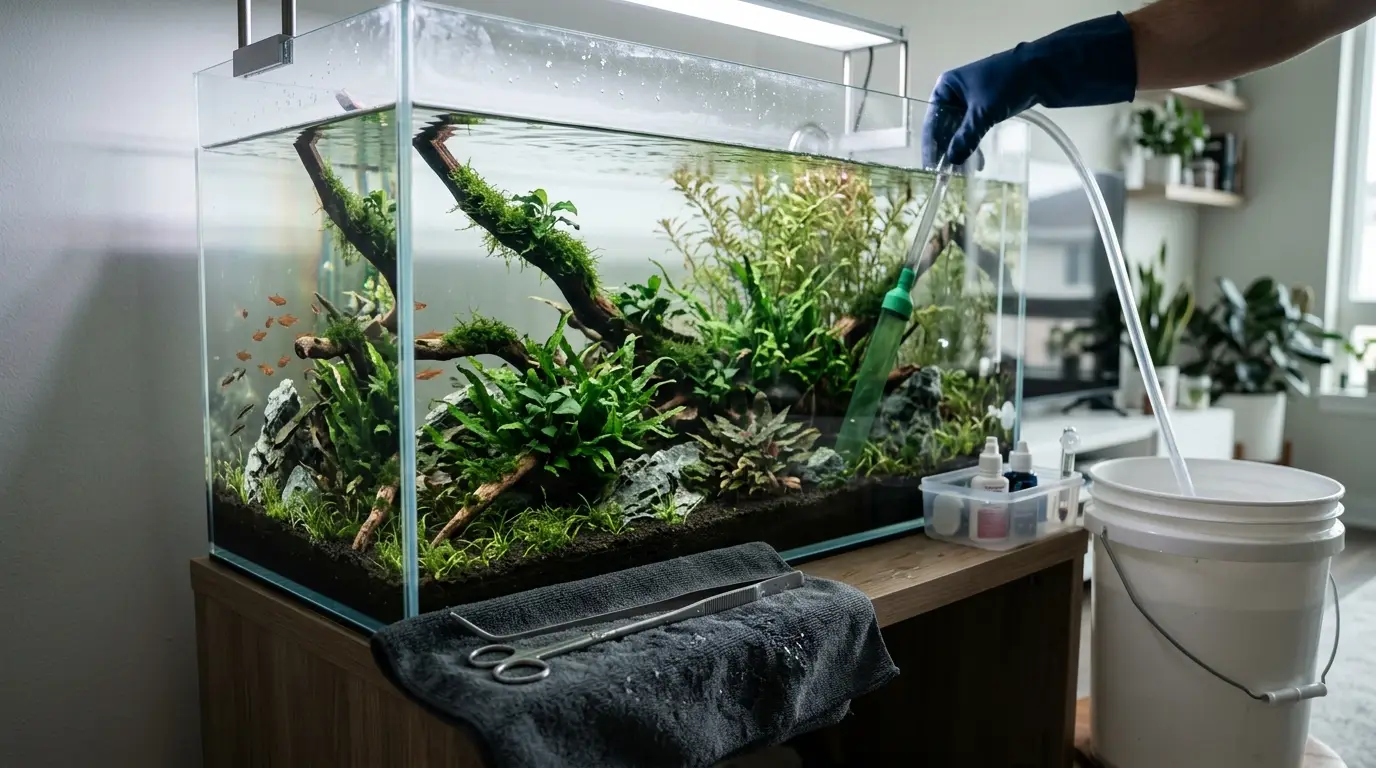
Simple habits win. In any beginner guide to planted aquarium setup, routine is the secret sauce.
- Weekly tasks. Water change, glass clean, trim plants, and dose ferts. Check filter flow and temperature.
- Testing. During the first month, test twice a week. Then weekly or when things look off.
- Water values. pH 6.5–7.8 is fine for most plants. Keep KH moderate for stability. Match temperature to your fish.
I keep a small notebook. I log doses, trims, and test results. Patterns become clear fast.
Algae Prevention and Fixes
Every tank gets algae. This beginner guide to planted aquarium setup helps you beat it with balance.
- Brown diatoms. Normal in new tanks. Wipe them off and add nerites or otos once stable.
- Green hair algae. Often from too much light and not enough CO2. Reduce light time and improve flow.
- Black beard algae. Comes from CO2 swings and low flow. Keep CO2 steady. Spot-treat with liquid carbon on hardscape only.
- Green dust algae. Leave it to complete its cycle, then wipe and water change.
I once ran my lights for 10 hours on week one. Algae party. Cutting back to 6 hours and boosting flow fixed it in days.
Budget and Smart Shopping Tips
Money matters in a beginner guide to planted aquarium setup. Spend where it counts.
- Spend more on light and filter. They drive health and clarity.
- Save on hardscape by using local stone and wood that passes a vinegar fizz test.
- Buy plants from hobbyist clubs. You get hardy, tank-grown stems for less.
- Start simple. Add CO2 and fancy gear after you master basics.
A solid starter 20-gallon planted tank can be done on a modest budget with smart picks.
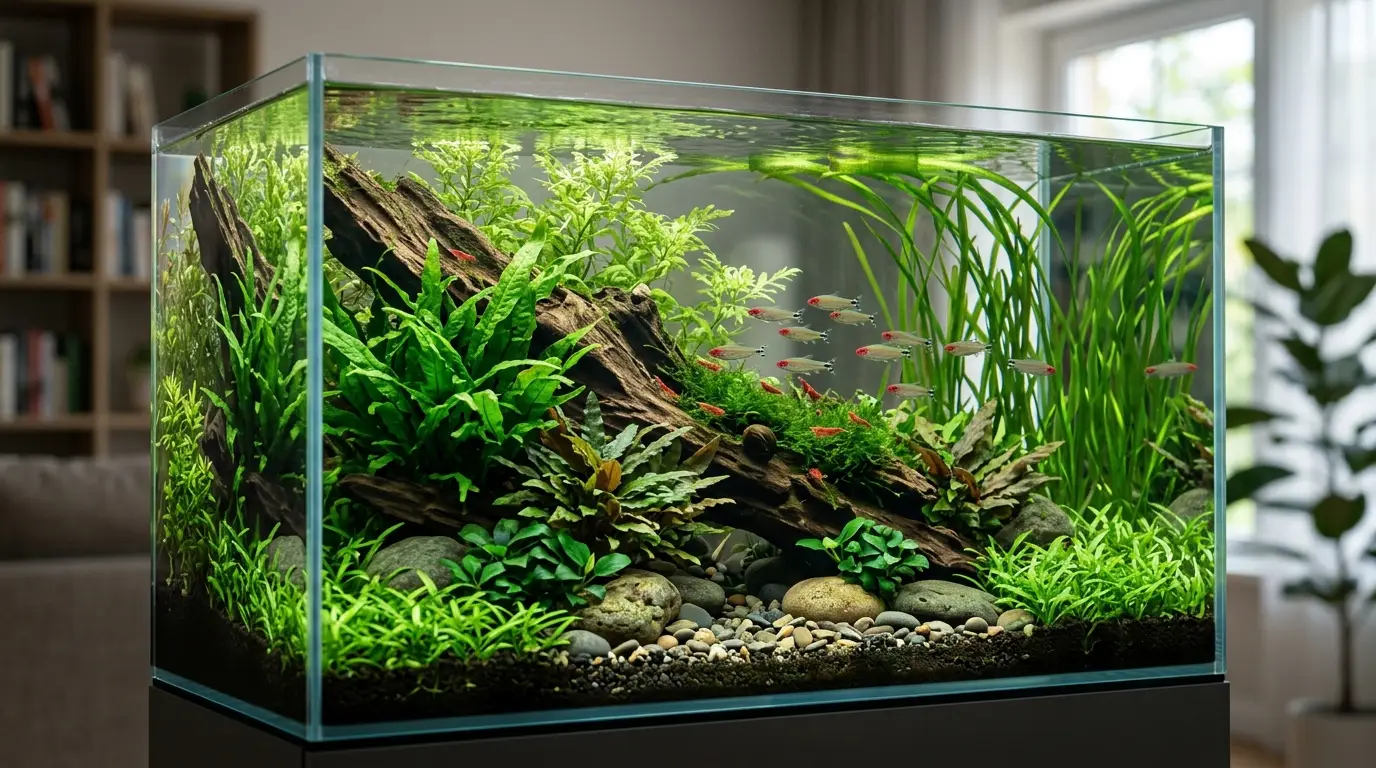
Common Mistakes to Avoid
These lessons shaped my own beginner guide to planted aquarium setup.
- Rushing the cycle. Solution: Be patient. Add livestock slowly.
- Too much light too soon. Solution: Start with 6 hours. Increase later.
- Burying rhizomes. Solution: Tie Anubias and Java fern to wood or rock.
- Over-cleaning filters. Solution: Rinse media in tank water, not tap, to save bacteria.
- Heavy fish load early. Solution: Stock light. Feed small, steady meals.
- Skipping tests. Solution: Test weekly to catch problems before they grow.
Frequently Asked Questions of beginner guide to planted aquarium setup
Do I need CO2 for a beginner planted tank?
No. Many easy plants thrive without CO2. Add it later if you want faster growth and deeper colors.
How long should I run my aquarium light each day?
Start with 6 hours. After the tank stabilizes and algae is under control, move to 7–8 hours.
What is the best substrate for beginners?
Aquasoil is simple and plant-friendly. Inert sand or gravel also works if you add root tabs and dose liquid fertilizers.
When can I add fish to a new planted tank?
After the cycle completes and ammonia and nitrite read zero. Add fish slowly and test water as you go.
Which beginner plants are the most forgiving?
Anubias, Java fern, crypts, water wisteria, and dwarf sagittaria are very forgiving. They adapt well and grow in low to medium light.
How often should I do water changes?
Do 30–50% once a week. This refreshes nutrients and keeps algae in check.
Can I use tap water for my planted tank?
Yes, with a water conditioner. Test pH, GH, and KH so you know what you are working with.
Conclusion
You now have a full beginner guide to planted aquarium setup you can use right away. Plan your scape, pick easy plants, start with short light hours, feed your bacteria, and be patient. Small, steady steps bring lush growth and clear water.
Set up your first tank this week and keep notes as you go. If you found this helpful, share it with a friend, subscribe for more guides, or leave a comment with your tank plans and I’ll help you tune them.