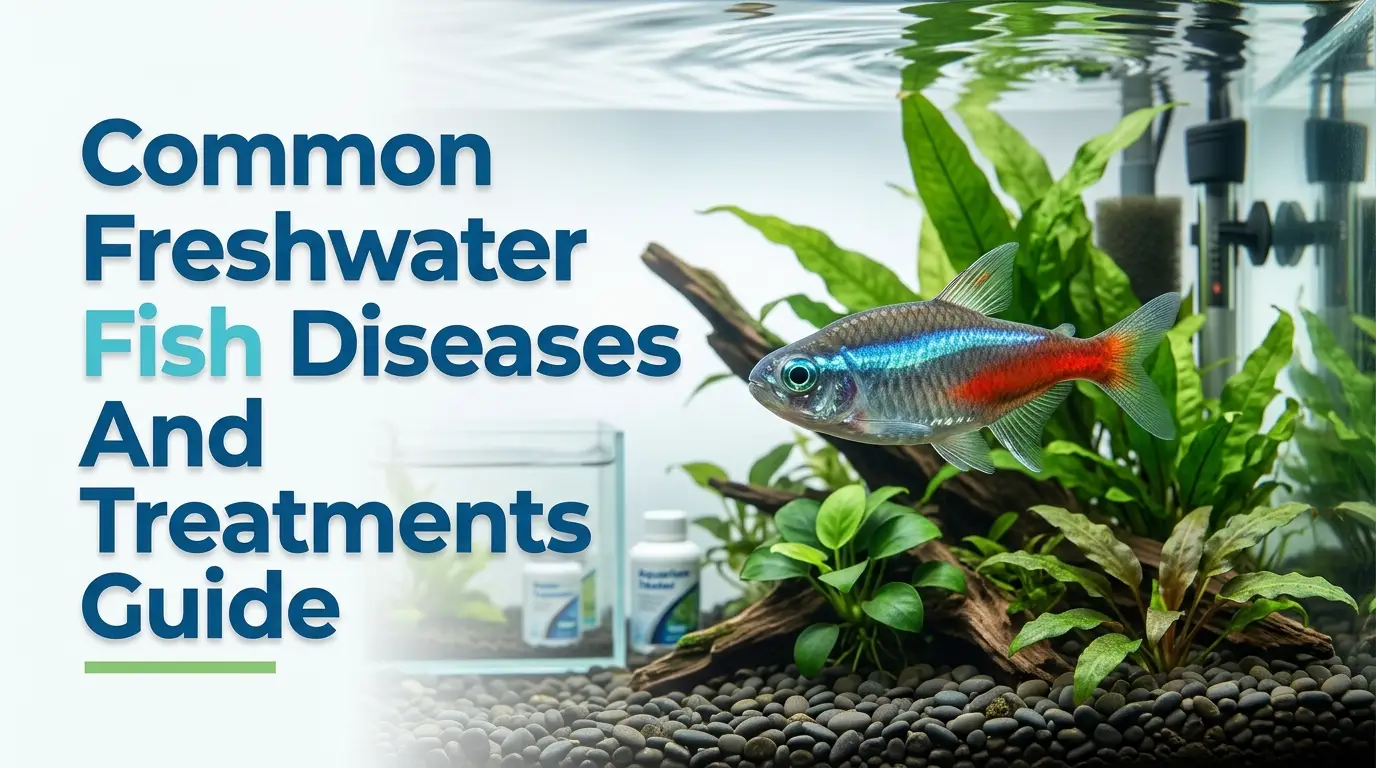
Most freshwater fish diseases come from stress; fix water, quarantine, and treat fast.
I’ve rehabbed many tanks and brought sick fish back from the brink. In this common freshwater fish diseases and treatments guide, you’ll learn how to read symptoms, choose the right meds, and protect your filter and plants. Stick with me, and you’ll turn panic into a calm plan that saves fish.
What a Healthy Fish Looks Like (and Why It Matters)
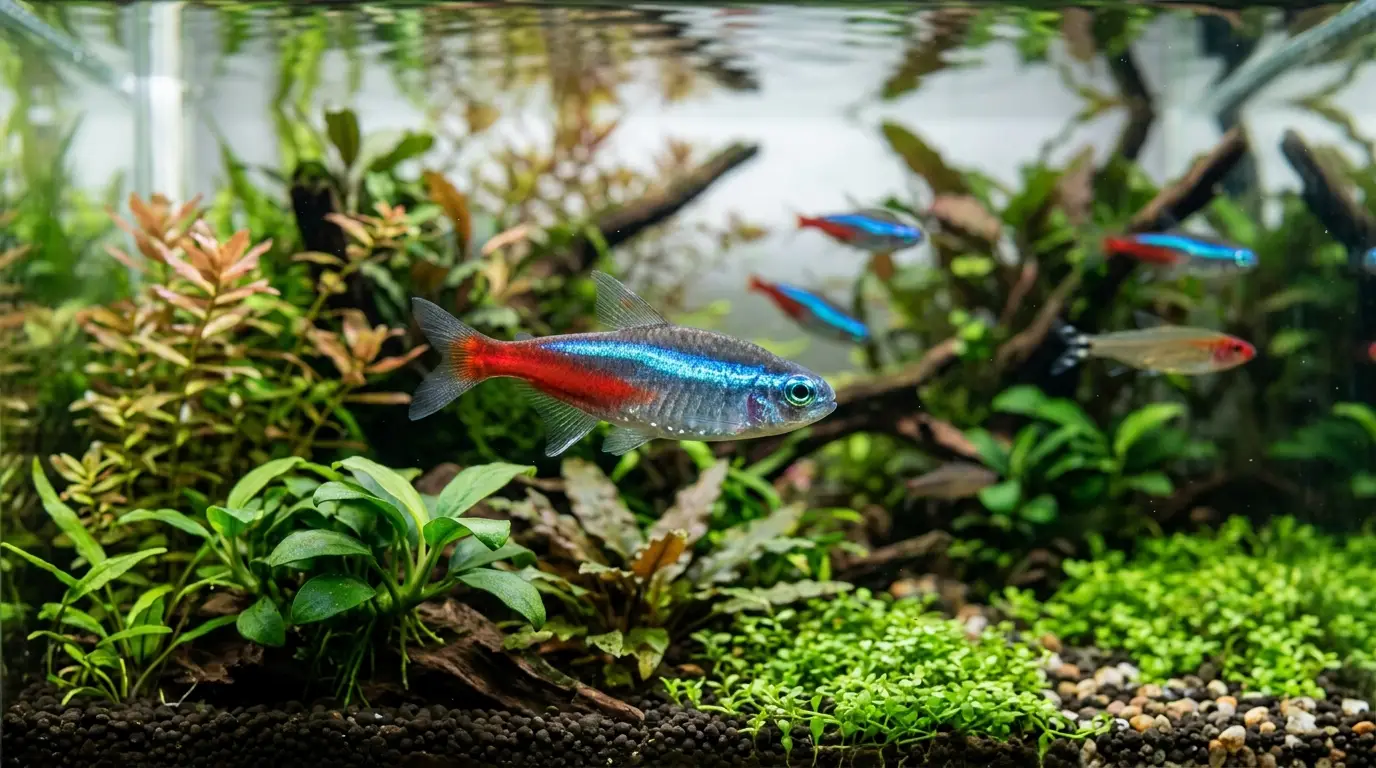
In this common freshwater fish diseases and treatments guide, we start with the baseline: normal looks and behavior. A healthy fish has clear eyes, smooth scales, full fins, and steady gill movement. It swims with purpose, eats well, and interacts with tank mates. When you know “normal,” small changes stand out fast.
Watch for these early red flags:
- Clamped fins or flashing against decor
- Gasping at the surface or hanging near the filter output
- White spots, fuzzy patches, frayed fins, or red sores
- Stringy white poop or swollen belly
- Isolation, hiding, or sudden loss of appetite
Early Warning, Quarantine, and Diagnosis
This common freshwater fish diseases and treatments guide pushes quick action. Move suspect fish to a hospital tank if possible. You reduce stress, protect healthy fish, and can dose meds accurately.
Steps I use the moment I see trouble:
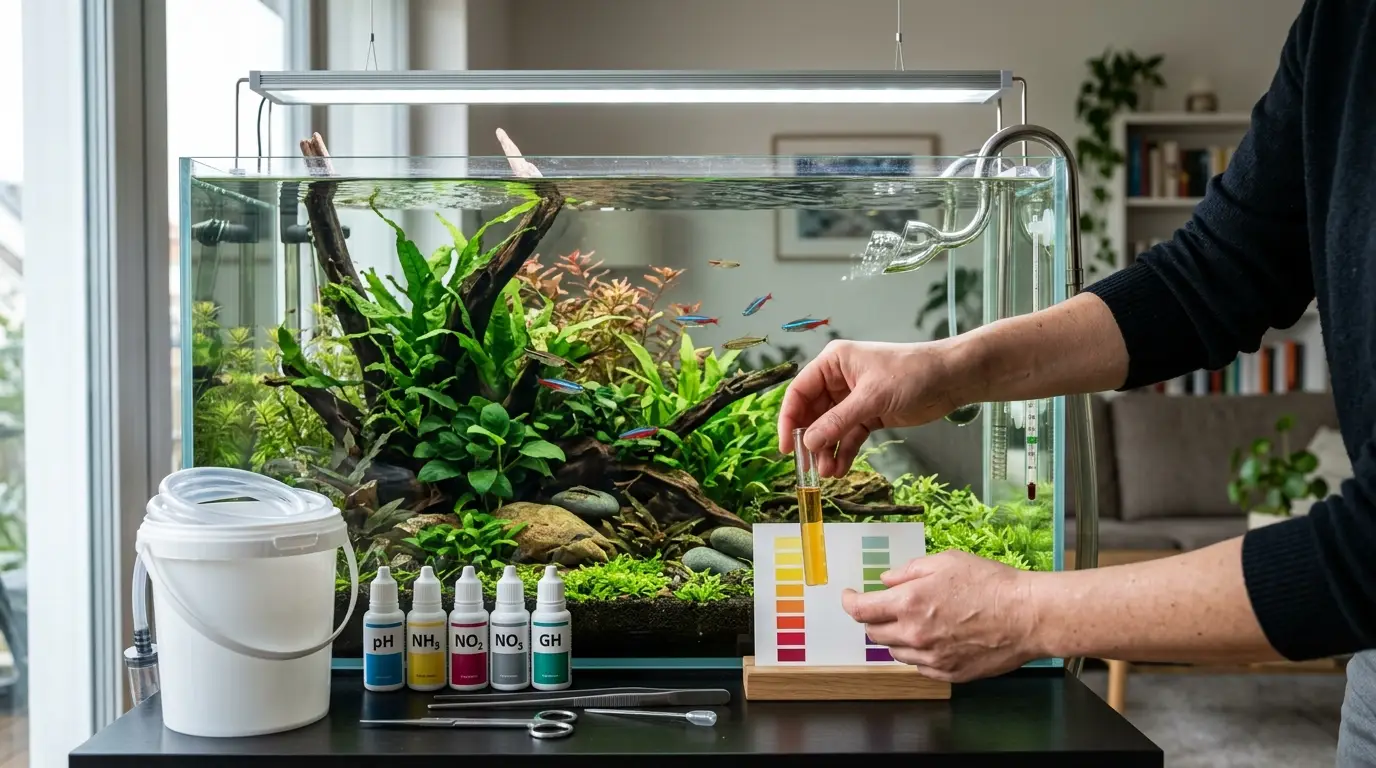
- Test water for ammonia, nitrite, nitrate, pH, KH, and temperature.
- Do a large partial water change with matched temperature.
- Add extra aeration. Most meds and high temps lower oxygen.
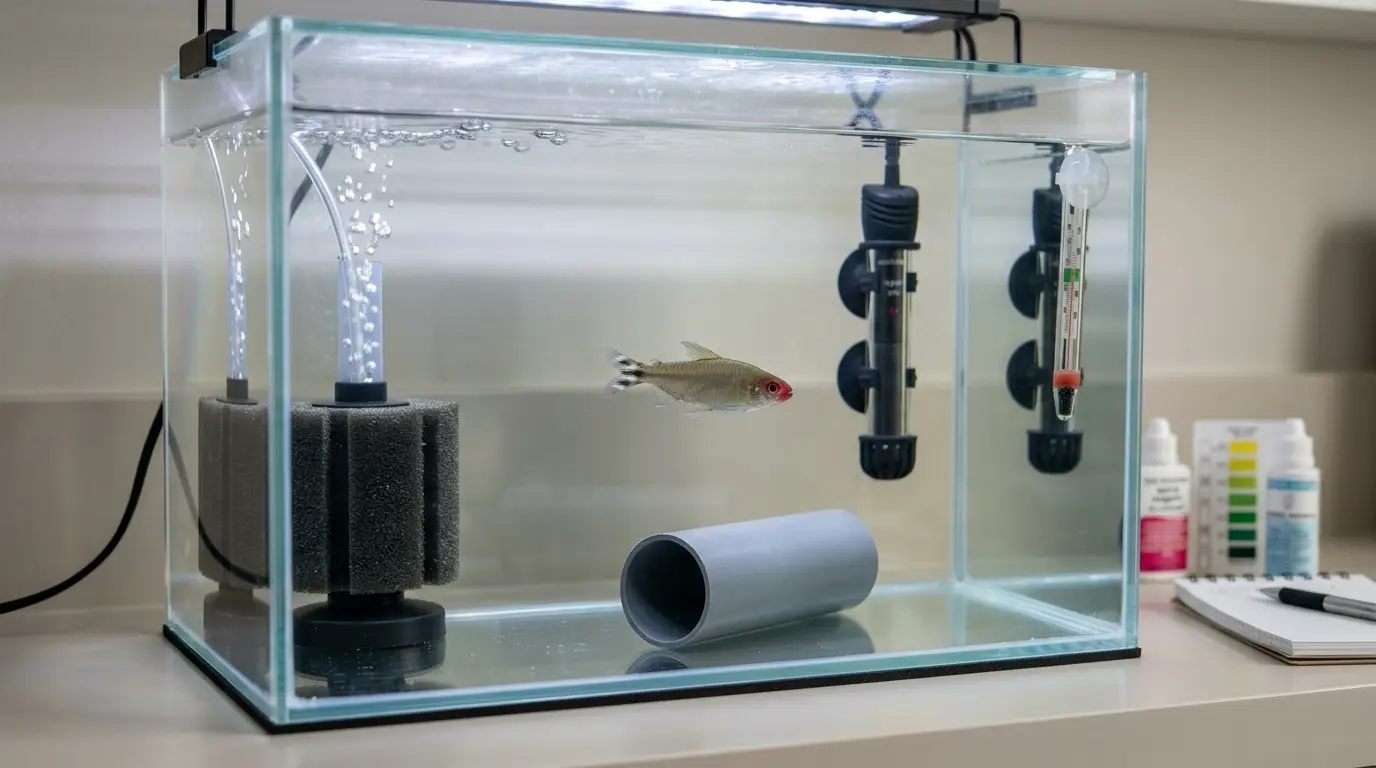
- Start a 10–20 gallon hospital tank with heater, sponge filter, and hiding places.
- Observe symptoms. Match to likely causes before medicating.
Water Quality and Stress Control
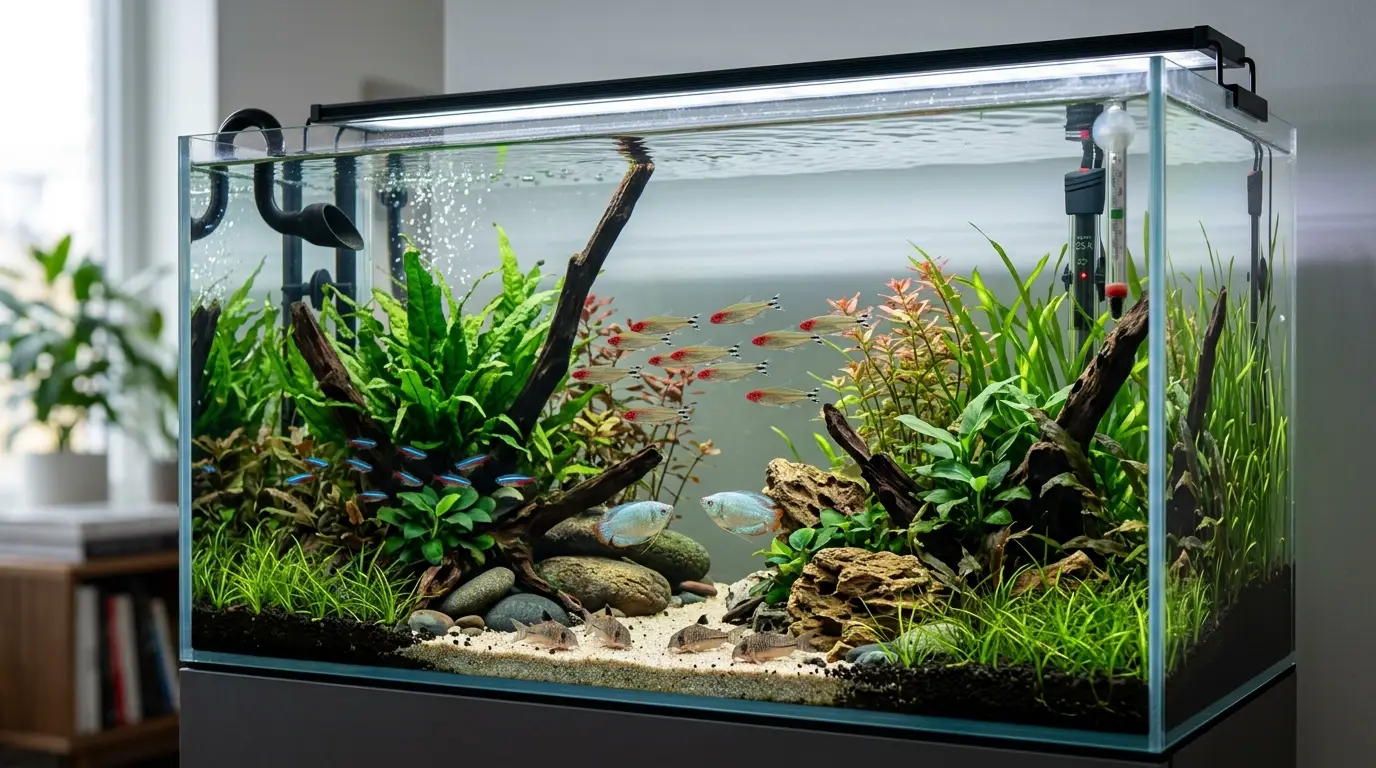
In this common freshwater fish diseases and treatments guide, water comes first. Bad water weakens the immune system. Then simple parasites or bacteria take over.
Core actions:
- Keep ammonia and nitrite at zero, nitrate under 20–40 ppm.
- Stable temperature. Most community tanks do well at 75–78°F.
- Do weekly water changes of 25–50% and vacuum the substrate.
- Rinse filters in tank water, not tap, to save good bacteria.
- Do not overstock or overfeed. Uneaten food drives spikes.
Does aquarium salt fix every disease?
No. Salt helps with some parasites and mild nitrite stress. It does not cure bacterial ulcers or advanced fungal growths.
Can I treat the main tank?
If you must, remove carbon and increase air. But plants, shrimp, and snails can be harmed by many meds. A hospital tank is safer.
How long should I quarantine new fish?
Quarantine new fish for 2–4 weeks. Watch for spots, fraying, odd poop, or labored breathing before adding them to your main tank.
Bacterial Diseases and Treatments
This common freshwater fish diseases and treatments guide covers the big hitters: fin rot, columnaris, ulcers, popeye, and dropsy. Bacteria often attack after stress, nips, or poor water.
Common problems and what works:
- Fin rot and tail rot: Ragged, shortening fins. Improve water. Use antibiotics like kanamycin or erythromycin in a hospital tank. Add extra aeration.
- Columnaris (often looks like fungus but is bacterial): Cottony patches on mouth or body, fast-moving. Treat fast with kanamycin + nitrofurazone. Lower stress and keep temp stable.
- Ulcers and red streaks: Open sores or bloody lines in fins. Combine clean water with a broad-spectrum antibiotic. Add a little aquarium salt for osmotic support if fish tolerate it.
- Popeye (exophthalmia): One or both eyes bulge. Often injury or water quality. Fix water first. For infection, use antibiotics. Epsom salt (magnesium sulfate) can help draw out fluid in a hospital tank.
- Dropsy (pineconing scales, bloat): Often kidney failure or severe infection. Act fast. Use antibiotics like kanamycin or nitrofurazone, Epsom salt baths, and pristine water. Prognosis can be poor.
Tips from my logbook:
- Remove carbon during treatment. Carbon will strip meds.
- Dose to actual water volume, not tank size on the box.
- Scaleless fish (loaches, corys) are sensitive. Start at half-dose and watch closely.
Fungal Diseases and Treatments
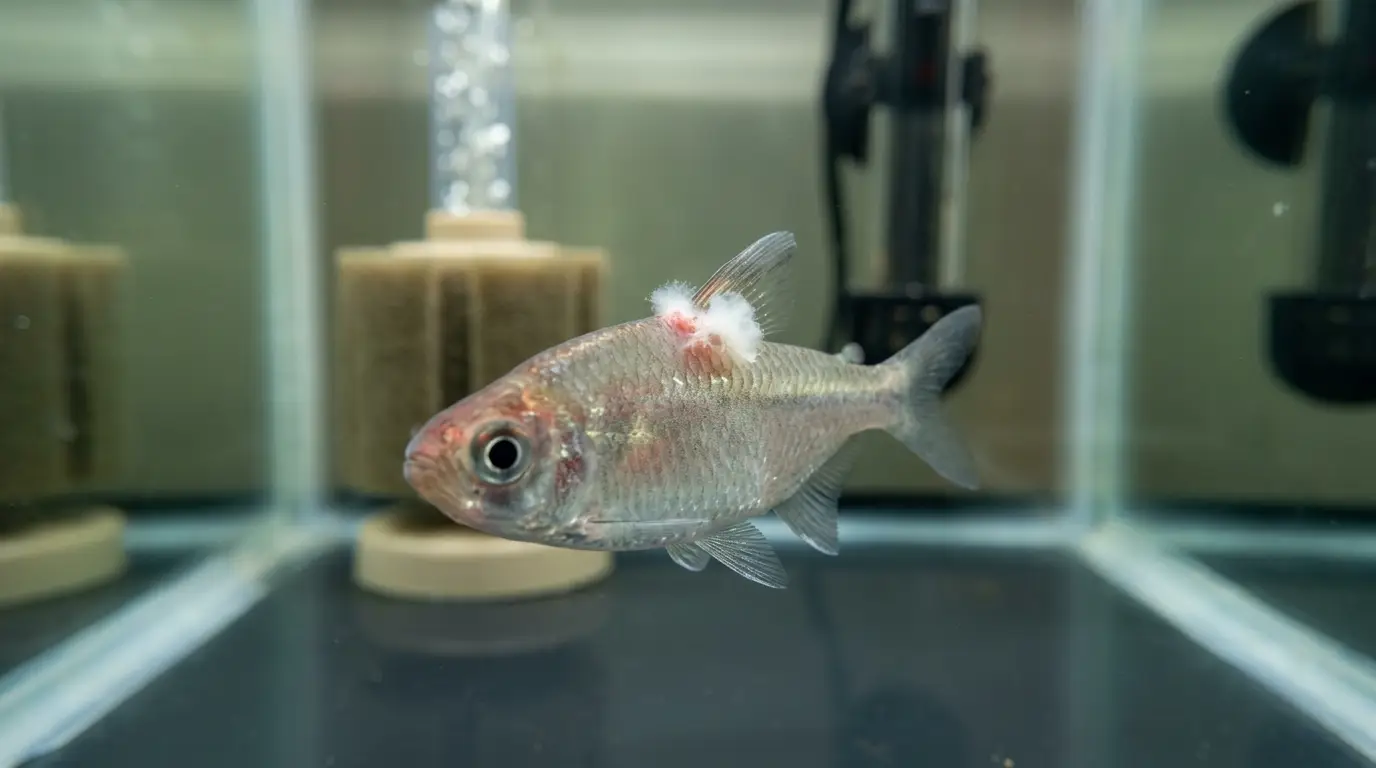
In this common freshwater fish diseases and treatments guide, fungal infections are next. True fungus (often Saprolegnia) looks like fluffy cotton on wounds or eggs.
Treatment steps:
- Improve water and reduce stress. Fungus loves weak fish.
- Use antifungals like malachite green, methylene blue, or specific fungal remedies. Hospital tank is best.
- For eggs, methylene blue can reduce fungus spread.
Pro tip:
- Many “white tufts” on fish are bacterial columnaris, not true fungus. If growth spreads fast or looks like a film on the mouth, switch to antibiotics.
Parasitic Diseases and Treatments
This common freshwater fish diseases and treatments guide would not be complete without parasites. They spread fast but many are curable.
Major culprits:
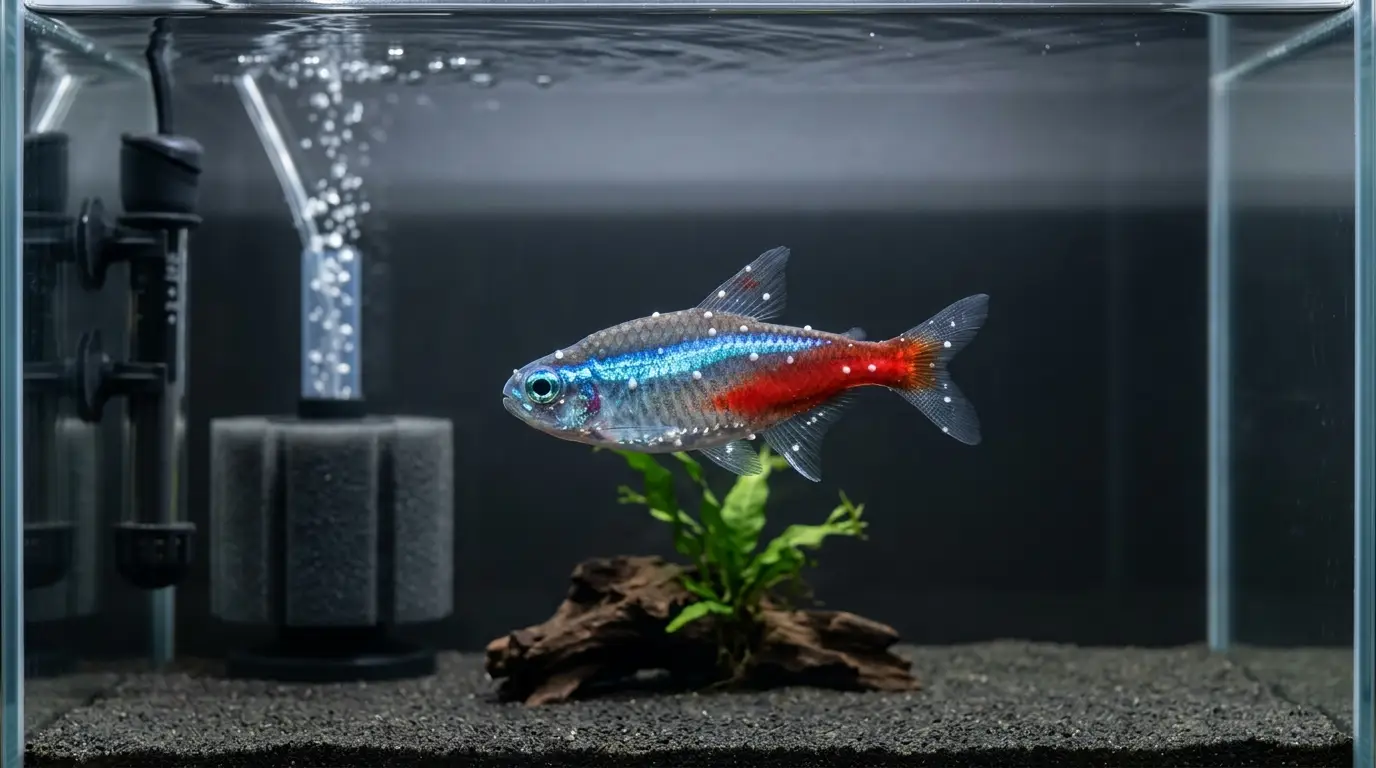
- Ich (white spot disease): Salt-like dots, flashing, gill stress. Raise temp slowly to 80–82°F if species tolerate. Treat with ich meds (malachite green + formalin, or ich-specific formulas). Keep treatment going one week after spots vanish.
- Velvet (oodinium): Gold dust sheen, rapid breathing, clamped fins. Dim lights. Use copper-based meds or formalin-based treatments in a hospital tank. Extra aeration is key.
- Flukes (gill/body trematodes): Gasping, excess mucus, rubbing. Praziquantel works well and is gentle on fish.
- Costia and Trichodina: Slimy coat, lethargy, fin clamping. Formalin-based treatments or salt at therapeutic levels if species allow.
- Anchor worm (Lernaea) and fish lice (Argulus): Visible parasites on skin. Manual removal plus treatments like dimilin or specialized anti-crustacean meds. Quarantine is a must.
Best practices:
- Treat the full parasite life cycle. Keep dosing as the label says, even after fish look better.
- Increase air. Many anti-parasitics lower oxygen.
Viral and Incurable Conditions
In this common freshwater fish diseases and treatments guide, we have to be honest. Some issues have no reliable cure. Focus on isolation, comfort, and prevention.
Tough cases:
- Lymphocystis: Cauliflower-like growths. Often clears with time and low stress. Do not pick at it.
- Iridovirus in gouramis: Lethargy, wasting. Supportive care only.
- Neon tetra disease (microsporidian): Color loss, curvature, fear of light. No cure. Euthanasia may be kindest to protect others.
When unsure, do this:
- Quarantine and observe.
- Improve water, reduce stress, and feed varied, clean foods.
- If fish suffer, consider humane options.
Medications, Dosing, and Hospital Tank Setup
A solid hospital tank makes this common freshwater fish diseases and treatments guide work in real life. It keeps your display safe and lets you measure meds right.
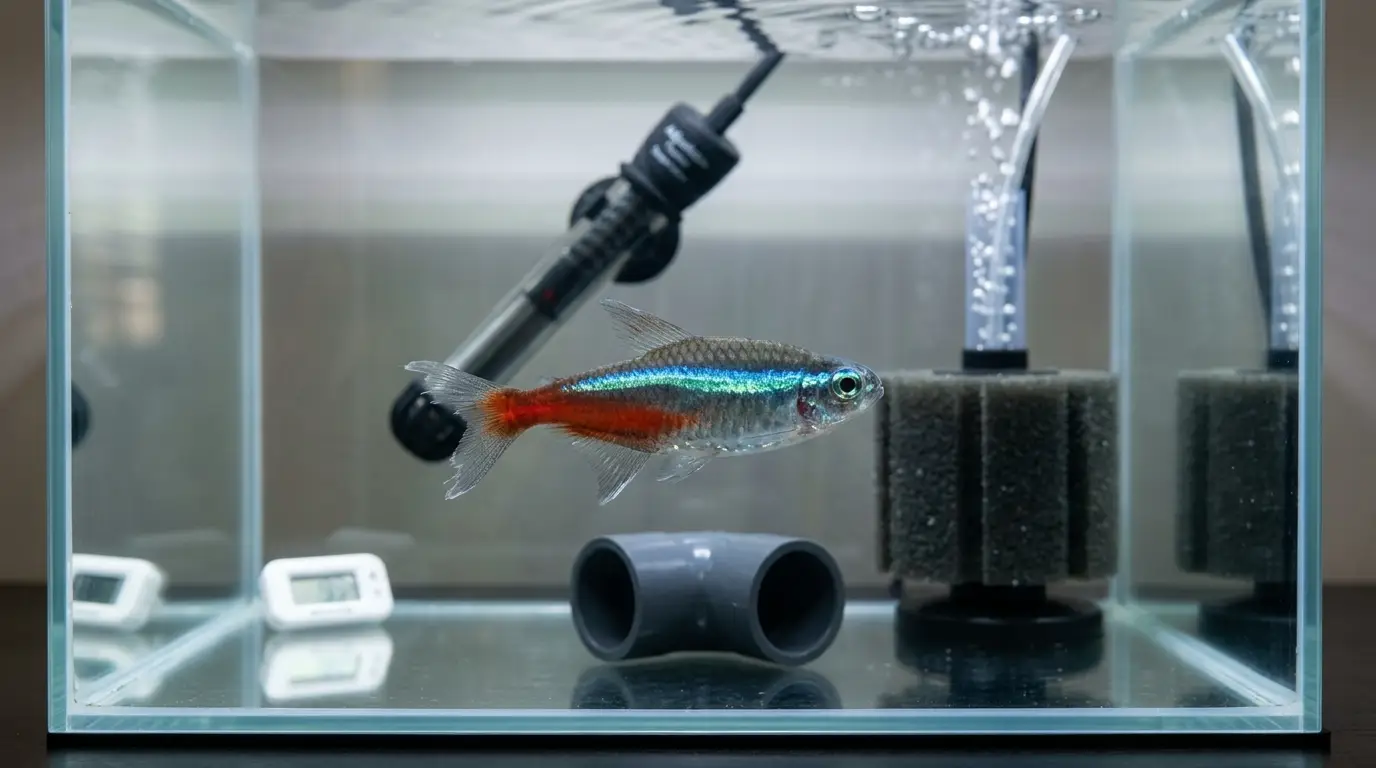
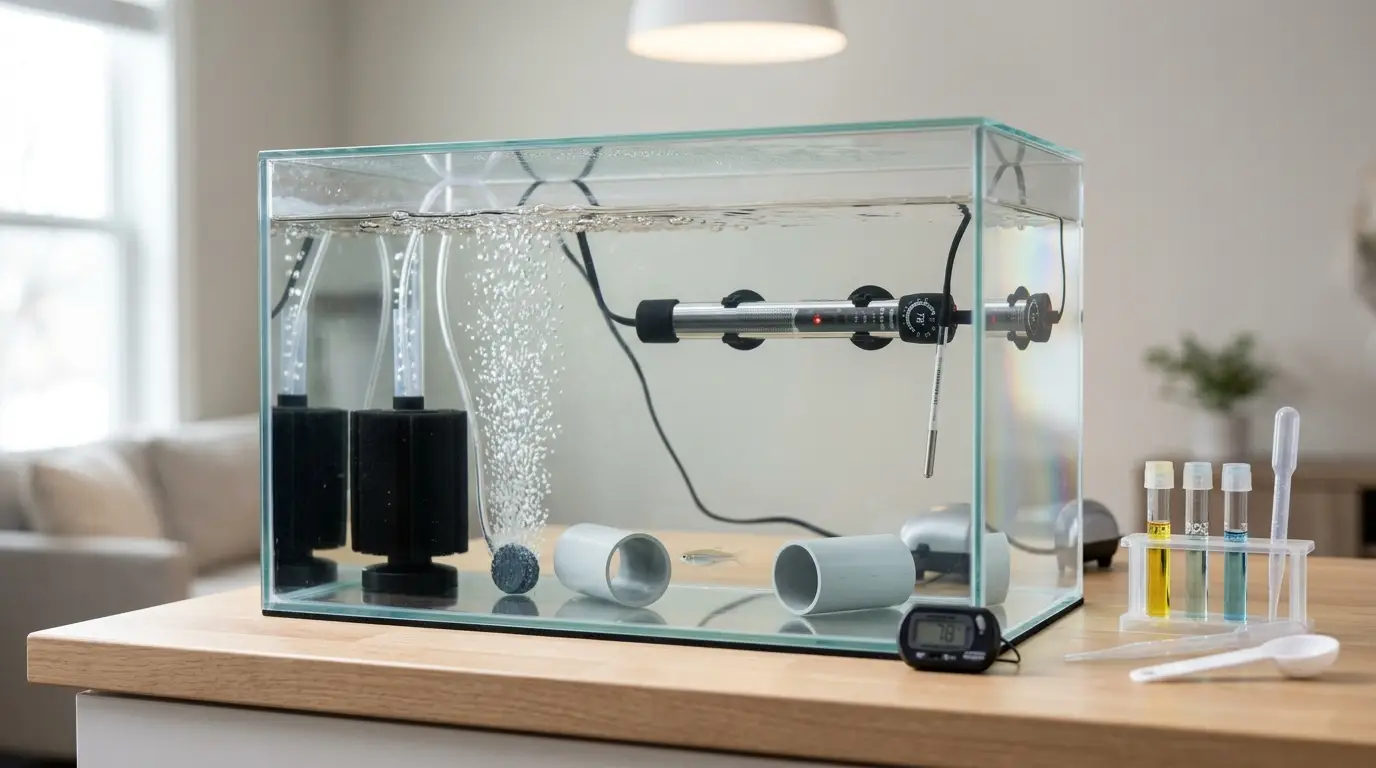
Simple hospital tank plan:
- Use a 10–20 gallon bare tank with a tight lid.
- Seed a sponge filter from your main tank when possible.
- Add a heater, air stone, hiding tube, and thermometer.
- Keep a journal: date, symptoms, meds, dose, water tests.
Medication tips:
- Read the label twice. Remove carbon and Purigen before dosing.
- Dose by actual water volume. Measure with a graduated cup.
- Never mix meds unless the label says it is safe.
- Increase aeration while treating.
- For salt: Use plain aquarium salt. Many community fish handle 1 tablespoon per 5 gallons. Some need less. Always research species first.
- Epsom salt is for short baths or measured use in bloat cases. It is not the same as aquarium salt.
- Copper can harm inverts and plants. Test copper levels if you use it.
Prevention Routine and Maintenance Schedule
Prevention is the quiet hero of this common freshwater fish diseases and treatments guide. Good routines block most outbreaks.
Weekly:
- Test water. Change 25–50%. Vacuum debris.
- Wipe glass and check filter flow.
- Observe fish at feeding. Look for clamped fins or odd swimming.
Monthly:
- Rinse filter media in tank water. Never in tap water.
- Trim plants and remove dead leaves.
- Review stocking and feeding amounts.
Always:
- Quarantine new fish 2–4 weeks.
- Feed small portions, varied diet: quality flakes, pellets, frozen, and blanched veg for herbivores.
- Wash hands and tools between tanks.
Real-Life Cases and Lessons Learned
Here’s where the common freshwater fish diseases and treatments guide meets the real world. In my first goldfish rescue, ich showed up after a cold snap. I raised the temp slowly, used an ich med, and boosted air. Treating one week past the last visible spot made the win stick.
Another time, a betta had velvet after a move. Dimming lights, using a copper-based med in a hospital tank, and daily checks saved him. The big lesson I keep seeing: fix water first, then med with care. Most crashes start with stress, not a mystery bug.
Frequently Asked Questions of common freshwater fish diseases and treatments guide
What is the fastest way to treat ich?
Raise the temperature slowly if your fish can handle it and add an ich-specific medication. Keep treatment going for at least a week after the last spot disappears.
How do I know if it’s fungus or columnaris?
True fungus looks like fluffy cotton on a wound. Columnaris spreads faster, often forms around the mouth, and responds to antibiotics, not antifungals.
Can aquarium salt hurt my fish or plants?
Some fish and most live plants are sensitive to salt. Start low, research your species, and consider treating in a hospital tank.
Should I feed fish while they are sick?
Yes, but small, clean meals only. Stop if they refuse food and focus on water quality and oxygen.
When should I stop treatment?
Follow the label and complete the full course. Stopping early often causes relapse and resistant pathogens.
Is dropsy contagious?
Dropsy is a symptom, not a single disease. It often results from infection or organ failure, so isolate the fish and improve water fast.
Can I use antibiotics in my main tank?
It is risky for your biofilter and inverts. Use a hospital tank when possible and add extra aeration.
Conclusion
Healthy freshwater fish start with stable water, low stress, and quick action when symptoms show. Work through a plan: test water, quarantine, match signs to likely causes, then treat with the right meds and solid aeration. Most outbreaks bend when you control the basics.
Set up a small hospital tank, keep a log, and follow dosing labels. You’ll prevent panic and protect your display tank. If this guide helped, share it with a friend, subscribe for more care tips, or leave a question so I can help you problem-solve your setup.