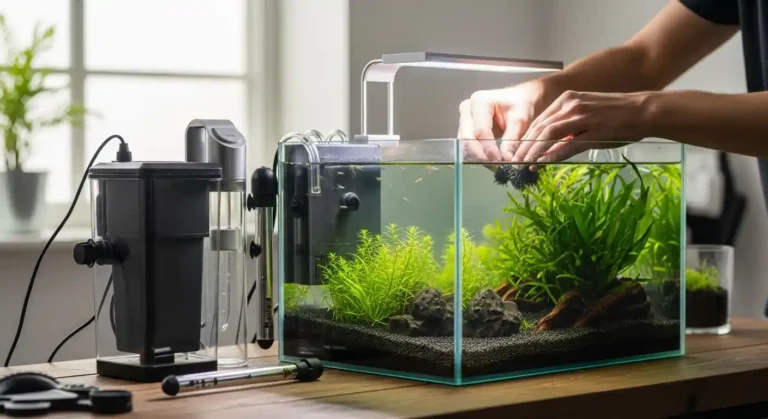
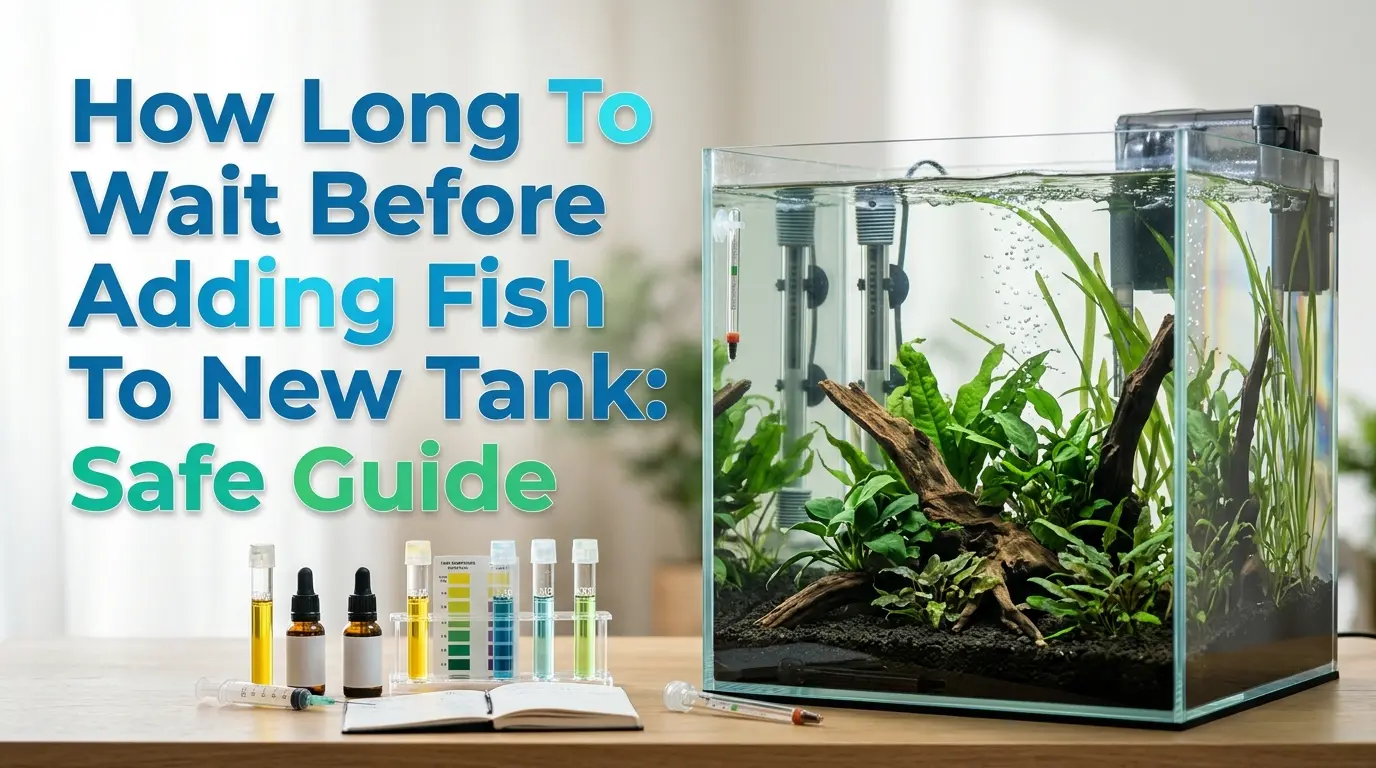
For most new aquariums in the United States, wait about 2 to 6 weeks before adding fish. The exact time depends on whether you start with new or mature filter media, use bottled bacteria, and complete a fishless cycle.
Time alone does not prove that a tank is ready. Add fish only when tests show:
- Ammonia: 0 ppm
- Nitrite: 0 ppm
- Nitrate: present or otherwise controlled through regular water changes
- Temperature and pH: stable and suitable for the fish
The safest method is to cycle the aquarium without fish first. This lets helpful bacteria grow in the filter before fish produce waste.
Why a New Fish Tank Needs Time
A new tank needs time for its biological filter to develop. This filter is not just the cartridge or sponge. It is also the large colony of bacteria that grows on filter media, gravel, decorations, and other surfaces.
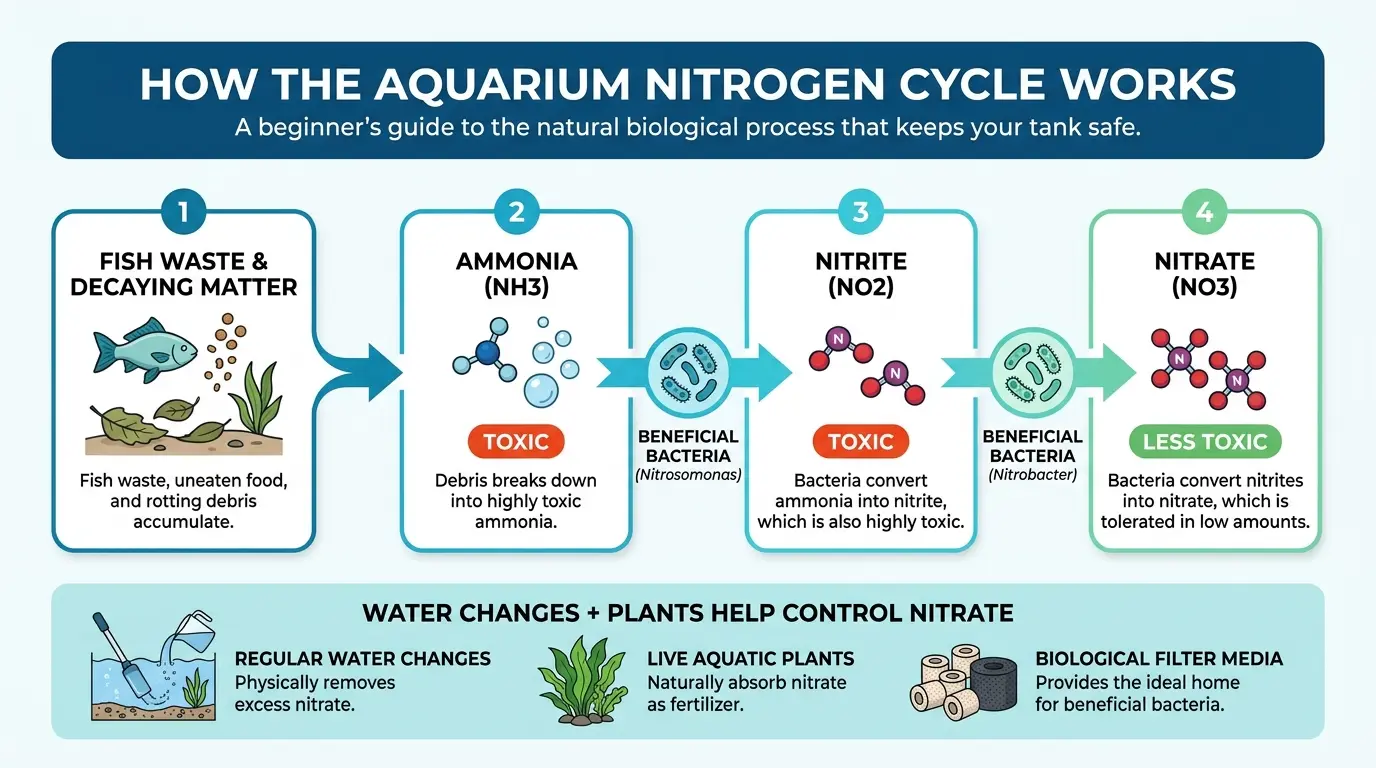
Fish release waste into the water. Uneaten food and decaying plants add more waste. Bacteria then process this waste in stages:
- Waste creates ammonia.
- One group of bacteria changes ammonia into nitrite.
- Another group changes nitrite into nitrate.
- Water changes and live plants help remove or control nitrate.
Ammonia and nitrite can harm or kill fish even when the water looks clear. This is often called new tank syndrome.
A filter can move water and remove dirt on its first day, but that does not mean it has completed the nitrogen cycle. Mechanical filtration removes particles. Biological filtration handles toxic waste, and biological filtration takes time to mature.
What “cycled” means
A cycled tank has enough beneficial bacteria to process fish waste without allowing ammonia or nitrite to build up.
A practical home test is this:
- Add a measured ammonia source according to a fishless cycling plan.
- Test ammonia and nitrite.
- Confirm that both return to 0 ppm within about 24 hours after the planned dose.
The exact test method depends on the ammonia product and test kit. Follow the product instructions, and do not add fish based only on a calendar date.
How Long Does It Take to Cycle a New Aquarium?
A new aquarium often takes 2 to 6 weeks to cycle. Some tanks take longer, especially when the water is cold, the pH is very low, or the tank has little filter media.
Here is a general guide:
| Starting setup | Typical waiting period | What changes the time |
|---|---|---|
| New tank with new filter media | 2–6 weeks | Temperature, pH, ammonia source, oxygen, and bacteria growth |
| Tank with mature media from a healthy aquarium | Several days to about 2 weeks | Media must stay wet and transfer must be quick |
| Tank using bottled bacteria | A few days to several weeks | Product quality, storage, water conditions, and ammonia load |
| Fish-in cycle | No safe fixed wait | Requires frequent tests and immediate action |
These are planning ranges, not guarantees. A test result is more useful than the number of days since setup.
Does a new tank need to run before adding fish?
Running the filter for a day or two helps confirm that the equipment works, but it does not usually cycle the tank. Beneficial bacteria need an ammonia source and time to multiply.
Simply adding water, gravel, decorations, and a filter does not create a mature biological filter. Likewise, cloudy water does not always mean that the cycle is complete. Cloudiness may come from harmless bacterial growth, dust, or other causes.
Can bottled bacteria speed up the cycle?
Some bottled bacterial products may shorten the cycling period. Their effect depends on the product, storage conditions, expiration date, water chemistry, and whether the tank has a suitable ammonia source.
Treat bottled bacteria as possible help, not proof that the tank is ready. Continue testing ammonia and nitrite. Do not add a full group of fish just because a label says the aquarium can be stocked immediately.
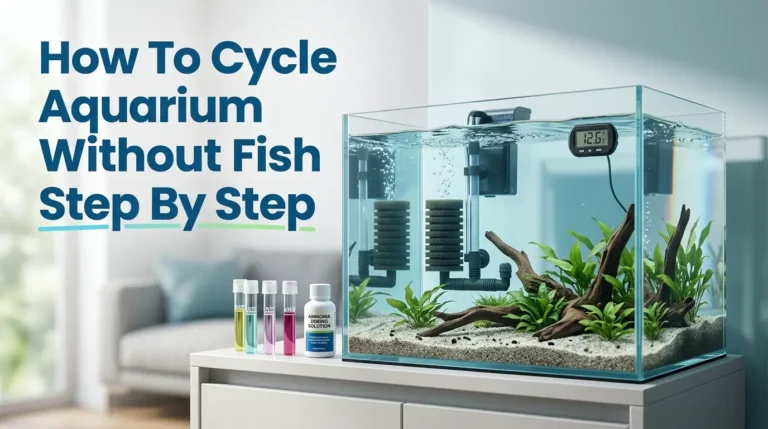
The Safest Method: Fishless Cycling
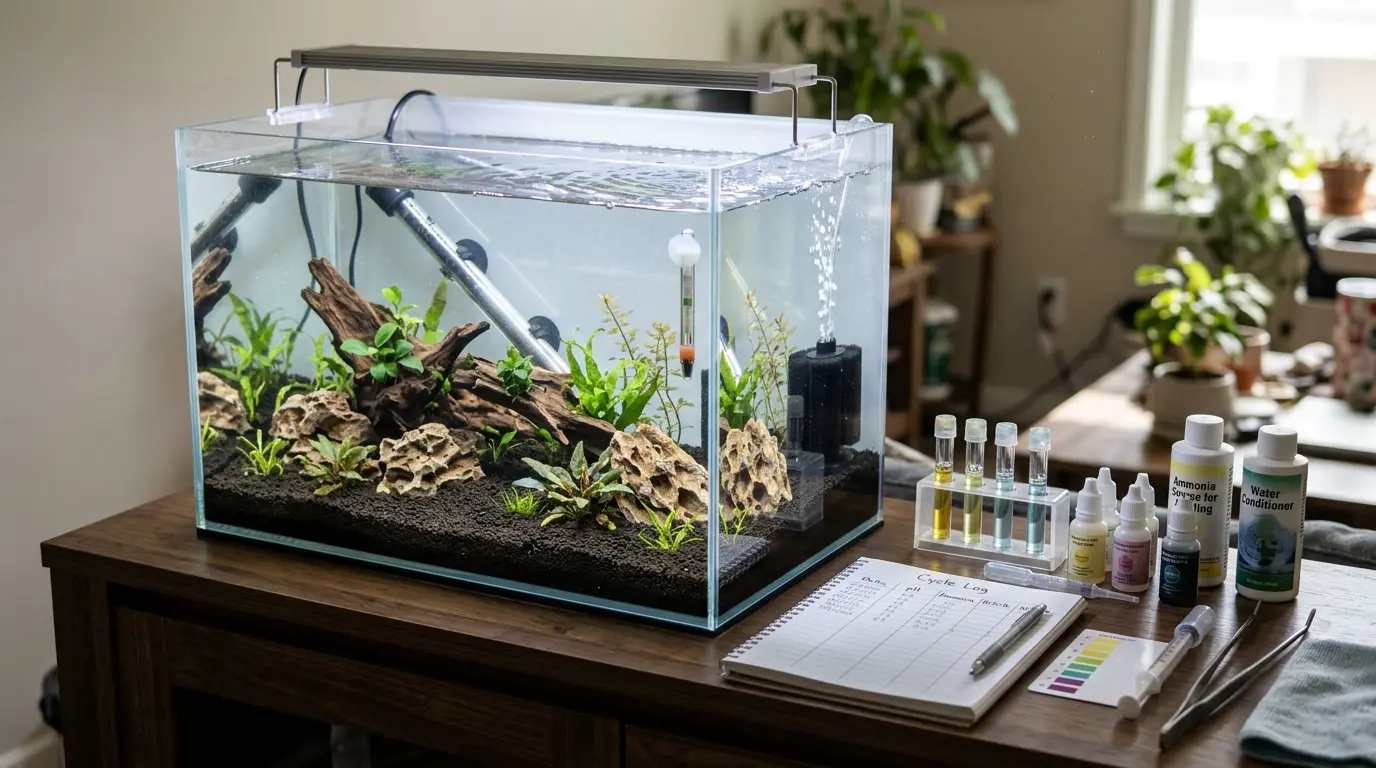
Fishless cycling uses an ammonia source without exposing live fish to toxic ammonia or nitrite. It is the best choice for most new freshwater aquariums.
Before you begin
Prepare:
- A working aquarium filter
- A water conditioner that removes chlorine and chloramine
- A reliable ammonia and nitrite test kit
- A nitrate test kit
- An ammonia source made for fishless cycling
- A thermometer
- A written record of test results
Many U.S. water utilities use chlorine or chloramine to disinfect tap water. Use a suitable water conditioner every time you add tap water to the aquarium.
Step-by-step fishless cycle
- Set up the tank.
Add the substrate, decorations, heater, filter, and water. Use water conditioner before starting the filter. - Set stable conditions.
Keep the temperature and pH in a range suitable for the intended fish. Beneficial bacteria need oxygen, so keep the filter running and maintain good surface movement. - Add an ammonia source.
Use a measured aquarium ammonia product or another method intended for fishless cycling. Do not guess with household cleaners, scented products, or products containing extra chemicals. - Test regularly.
Check ammonia and nitrite every day or two once the cycle is active. Record the results so you can see the trend. - Wait for nitrite to rise and fall.
Ammonia may fall while nitrite rises. This is normal during the middle of the cycle. Do not add fish during this stage. - Confirm the end point.
The tank is ready when the planned ammonia dose is processed and both ammonia and nitrite test at 0 ppm within the target time. - Perform a partial water change.
Reduce nitrate and remove leftover dissolved waste. Use conditioned water with a similar temperature. - Add a small first group of fish.
Add only a portion of the final stocking plan. Test ammonia and nitrite again over the next several days.
A fishless cycle is like building a small waste-treatment team before opening the doors. The fish should arrive after the team is ready, not while it is still training.
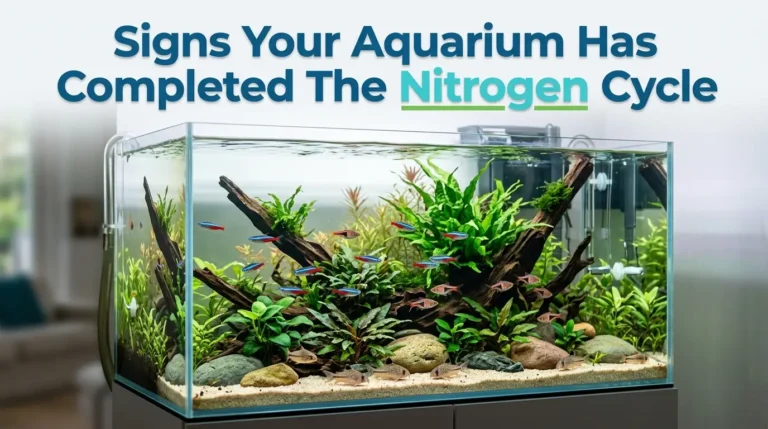
How to Know When Your Tank Is Ready for Fish
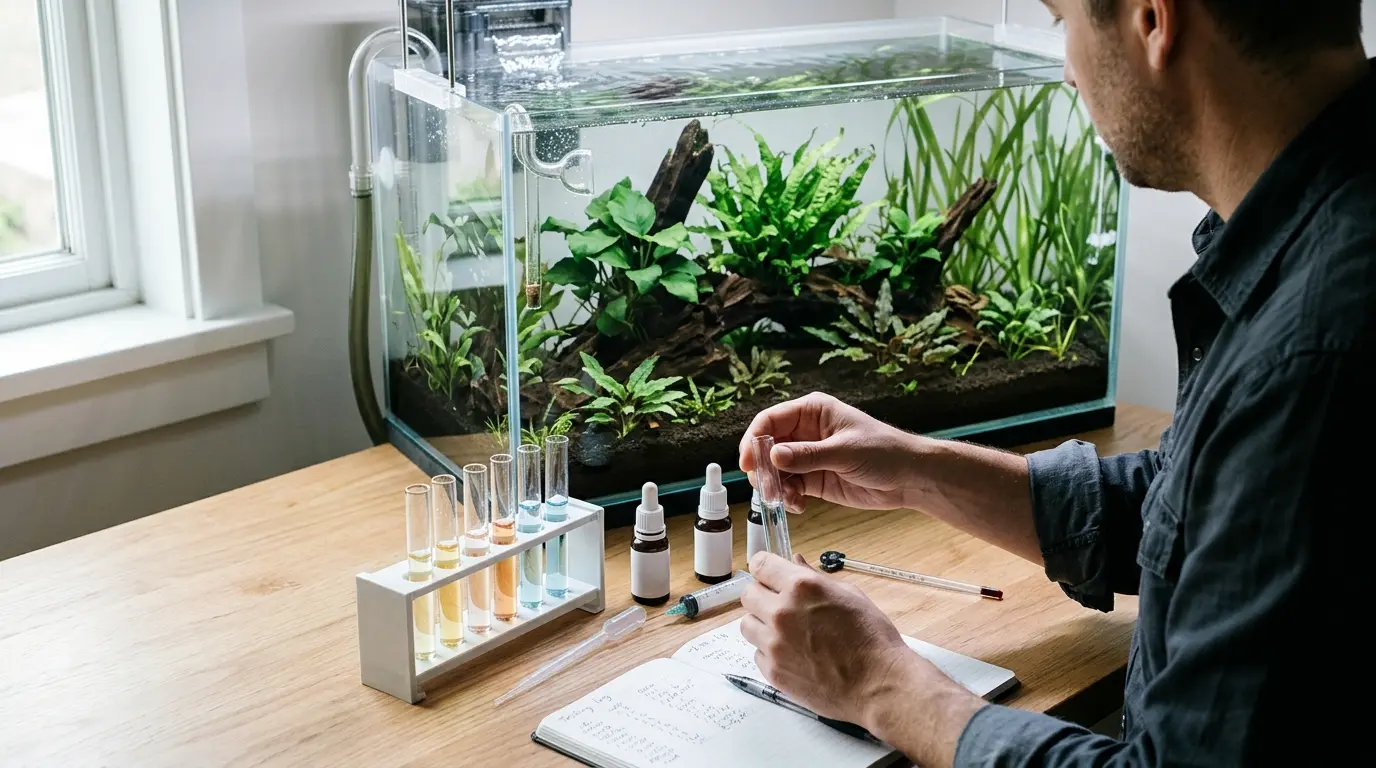
Do not rely on clear water, a running filter, or a store employee’s assurance alone. Use test results and stable conditions.
Your aquarium is usually ready when:
- Ammonia is 0 ppm
- Nitrite is 0 ppm
- The tank processes the planned ammonia dose within the target time
- The water temperature remains stable
- The pH does not swing sharply
- The filter has run continuously
- The water has been treated for chlorine and chloramine
- The first fish are suitable for the tank’s size and water conditions
Nitrate may be present after cycling, but a low nitrate reading does not always mean the tank is not cycled. Live plants, frequent water changes, and some filtration methods can keep nitrate low.
A simple readiness checklist
Test the water shortly before buying fish. If ammonia or nitrite is above 0 ppm, wait and find the cause.
Also check:
- Is the heater working?
- Is the filter producing flow?
- Is the tank covered if the fish may jump?
- Is the water level safe for the filter?
- Are decorations stable and free of sharp edges?
- Do you have food, a net, and a quarantine plan?
- Do the fish have enough space as adults?
A tank can be cycled but still be unsuitable for a particular species. Cycling controls waste. It does not solve problems with tank size, temperature, aggression, or incompatible water chemistry.
How Many Fish Can You Add First?
Add fish gradually, even after the tank completes its cycle. A sudden increase in waste can exceed the capacity of the new bacterial colony.
A cautious plan is to:
- Add a small group of compatible fish.
- Feed lightly for the first several days.
- Test ammonia and nitrite daily.
- Wait at least one to two weeks before adding more fish.
- Add the next group only if ammonia and nitrite remain at 0 ppm.
The right number depends on the adult size, activity, waste production, tank volume, filtration, plants, and maintenance routine. “One inch of fish per gallon” is an unreliable rule because fish species differ greatly in body shape, behavior, oxygen needs, and waste output.
Example
Suppose a 20-gallon aquarium is fully cycled for a small community of peaceful fish. Adding a few small fish first gives the bacteria time to adjust to the new waste load.
If ammonia or nitrite appears after stocking, stop adding fish. Test daily, reduce feeding, and perform a partial water change with conditioned water as needed.
What If You Already Added Fish to a New Tank?
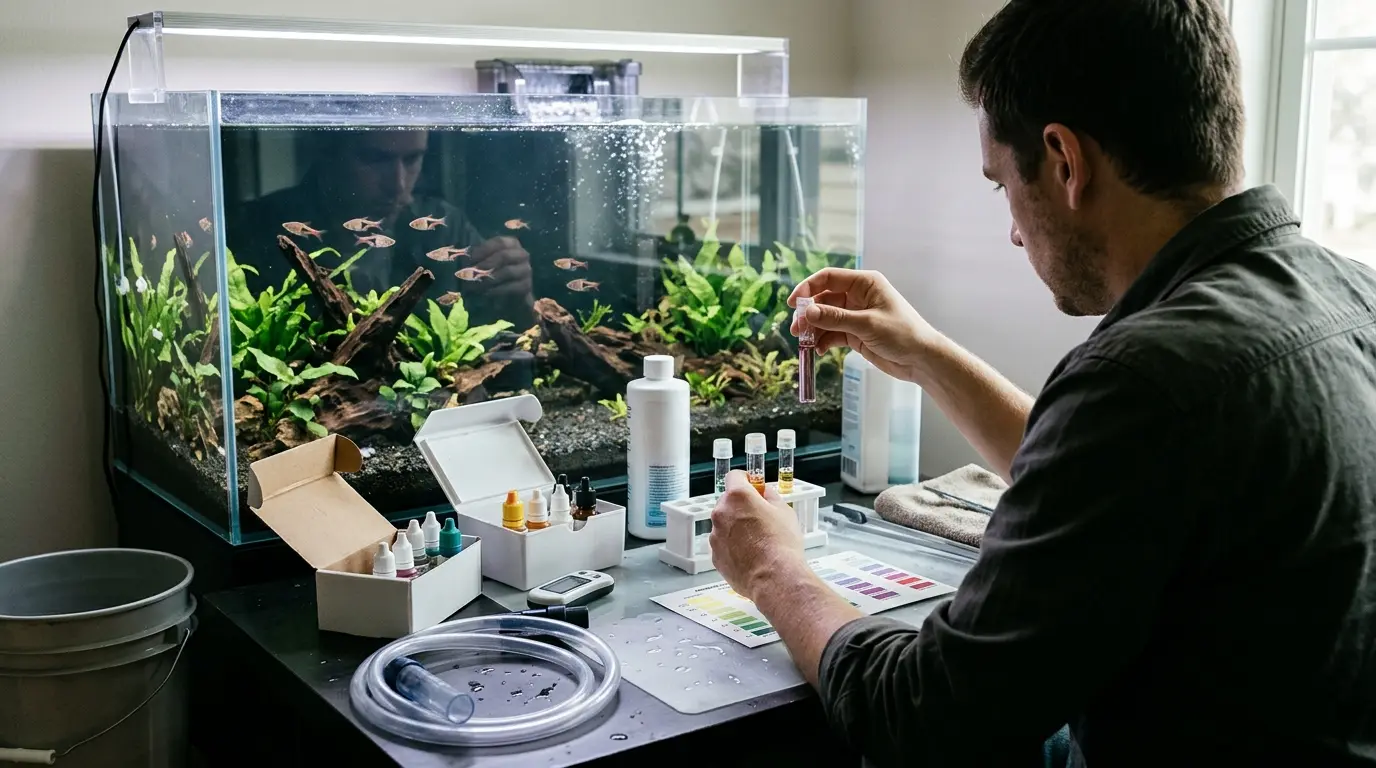
If fish are already in the aquarium, begin a fish-in cycle. Do not remove fish automatically unless a qualified aquatic professional or veterinarian advises it, but act quickly to protect them.
Follow these steps:
- Test ammonia and nitrite immediately.
- If either is above 0 ppm, perform a partial water change with temperature-matched, conditioned water.
- Keep the filter running continuously.
- Feed very lightly, or pause feeding briefly if advised for the species and situation.
- Test at least daily while ammonia or nitrite is unstable.
- Repeat water changes when toxic compounds rise.
- Never rinse biological filter media under untreated tap water.
- Do not add more fish until the tank remains stable.
If fish gasp at the surface, act weak, lose balance, show red or inflamed gills, or suddenly die, treat it as urgent. Check temperature, ammonia, nitrite, chlorine, and filter operation. An aquarium veterinarian or qualified aquatic specialist can help with severe cases.
A water conditioner can neutralize chlorine and chloramine, but it does not replace testing or remove the need for water changes. Follow the conditioner’s label for dosage and limits.
Why the Cycle May Be Taking Too Long
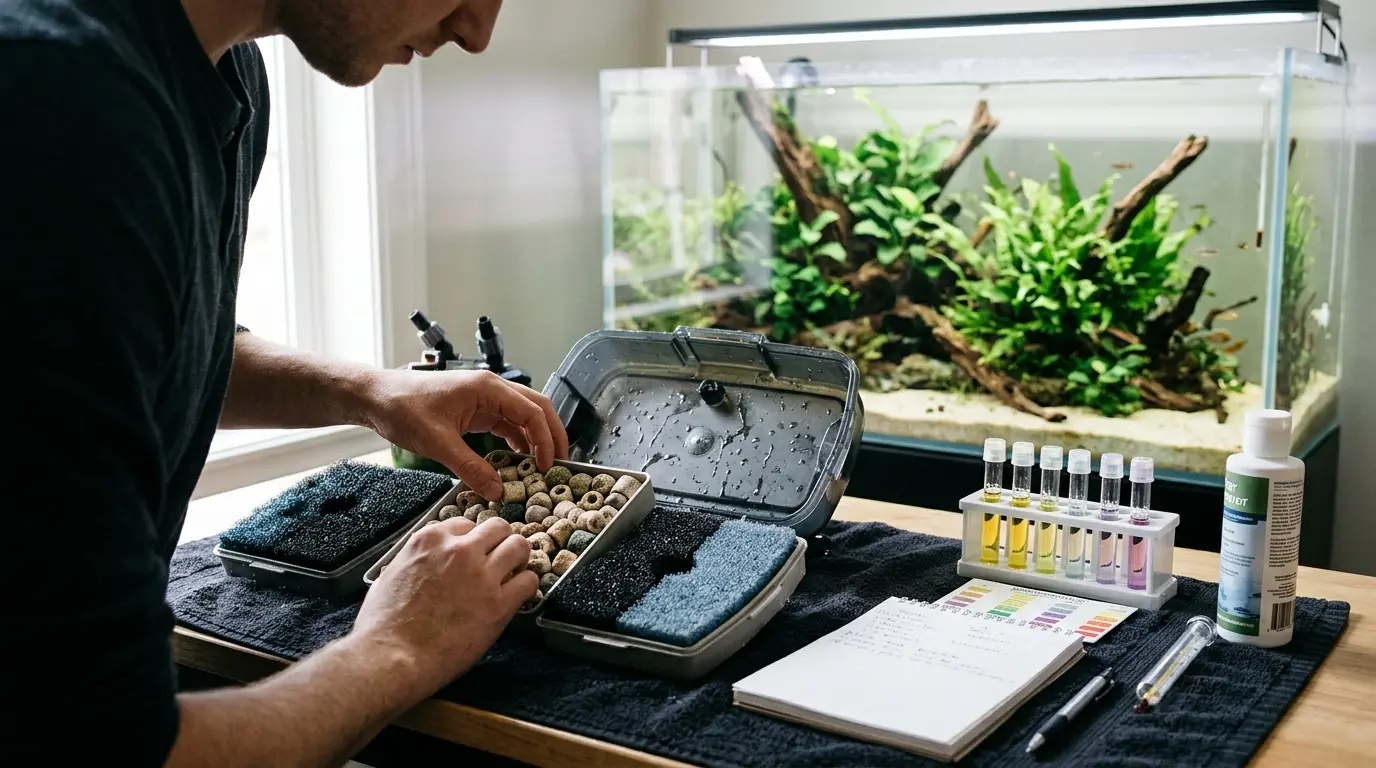
A slow cycle usually has a specific cause. Check these factors first:
No ammonia source
Beneficial bacteria need a steady food source. If no ammonia enters the tank, the bacterial colony may not develop enough to process fish waste.
Filter media was replaced
Replacing all filter media at once can remove much of the biological colony. If the old media is safe and not falling apart, keep some established media in the filter.
Chlorine or chloramine was not treated
Untreated tap water can damage beneficial bacteria and harm fish. Use a conditioner designed for the disinfectants used by your local U.S. water utility.
Low oxygen or weak flow
The bacteria involved in nitrification need oxygen. Make sure the filter is not clogged and that the water surface has enough movement.
Extreme pH
Very low pH can slow or stop the nitrogen cycle. Do not make large pH changes without understanding the cause. Sudden changes can stress fish and may be more dangerous than a stable, moderately unusual pH.
Over-cleaning the filter
Do not scrub biological media with chlorinated tap water. Rinse it gently in removed aquarium water during a water change.
Test kit problems
Expired reagents, poor storage, incorrect shaking, or a bad test method can produce misleading results. Check the kit instructions and compare questionable readings with a fresh test kit or a local fish store’s test.
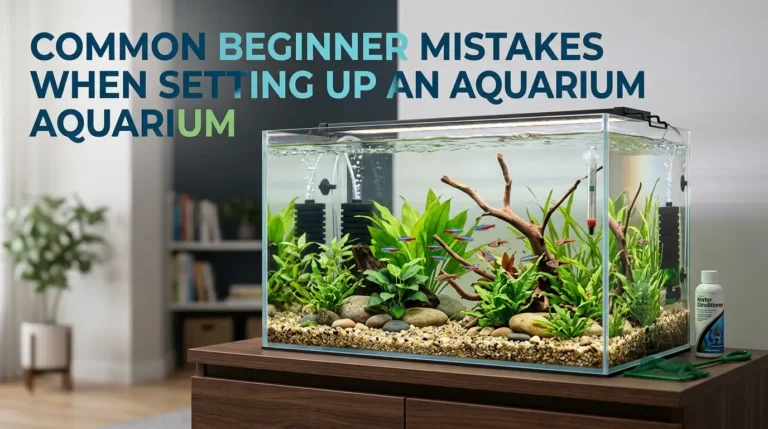
Common Mistakes to Avoid
Adding fish after 24 hours
A filter that has run for one day is not usually biologically mature. Wait for test results, not just operating time.
Trusting clear water
Clear water can still contain dangerous ammonia or nitrite. Always test.
Adding too many fish at once
A new bacterial colony may handle a small first group but fail under a large sudden waste load.
Replacing filter cartridges too often
Many cartridges contain useful biological media. Replacing them on a fixed schedule can remove bacteria. Follow the filter maker’s instructions, but avoid discarding all biological media at once when possible.
Using untreated tap water
Chlorine and chloramine can harm fish and bacteria. Condition all tap water used in the aquarium.
Cleaning everything at the same time
Deep-cleaning the gravel, replacing filter media, and performing a large water change together can reduce the biological support of the tank.
Assuming plants solve cycling
Live plants can absorb some ammonia compounds and nitrate, but a planted tank still needs testing. Plant growth, species, lighting, and plant mass vary widely.
Freshwater, Saltwater, and Quarantine Differences
The same basic rule applies to freshwater and saltwater tanks: test ammonia and nitrite before adding animals.
Saltwater aquariums often need extra time because the setup may include live rock, sand, protein skimming, and invertebrates with different sensitivities. A reef tank also needs stable salinity and other conditions beyond the nitrogen cycle.
A quarantine tank has a different purpose. It may be small and simple, but it still needs safe water. A bare quarantine tank can be managed with frequent testing and water changes, or it can be cycled before use. Do not assume a new quarantine tank is safe just because it holds only one fish.
Some fish are more sensitive than others. Invertebrates, fry, wild-caught fish, and species with narrow water requirements may need more careful preparation than hardy community fish.
Frequently Asked Questions
Can I add fish after 48 hours?
Usually, no. Forty-eight hours may be enough to confirm that the equipment runs, but it is rarely enough to establish a mature biological filter in a completely new tank. Test ammonia and nitrite instead of using a fixed two-day rule.
Do I need to wait for nitrate before adding fish?
Not always. Nitrate often appears as the cycle develops, but plants and water changes can keep it low. The key requirements are 0 ppm ammonia, 0 ppm nitrite, and a demonstrated ability to process an ammonia source.
Can I cycle a tank with fish?
You can, but it is harder and riskier. Fish-in cycling requires frequent testing, careful feeding, and prompt water changes. Fishless cycling avoids exposing animals to ammonia and nitrite.
Should I add water conditioner during cycling?
Yes. Use a conditioner whenever you add tap water. This is especially important in the United States, where local utilities may use chlorine or chloramine. Check your water utility’s annual water quality report if you want to know which disinfectant is used locally.
What should I do if ammonia is 0 ppm but nitrite is high?
Do not add fish. Continue the cycle, test regularly, and perform a partial water change if nitrite is elevated. Check that the filter has good flow and that the test kit is working correctly.
Final Answer: Wait for the Test Results, Not the Calendar
For most new fish tanks, plan to wait 2 to 6 weeks before adding fish. A mature filter can shorten that time, while poor water conditions or weak biological growth can make it longer.
The safest decision is simple: add fish only after ammonia and nitrite reach 0 ppm and the tank proves it can process waste. Start with a small number of fish, monitor the water closely, and increase stocking slowly.
Your next step is to test ammonia, nitrite, nitrate, pH, and temperature. If ammonia or nitrite is not zero, keep cycling and do not add fish yet.