
Mollies thrive with warm, clean water, stable hardness, light salt, and varied food.
If you want bright, active fish that are easy to keep and fun to breed, this molly fish care guide is for you. I have kept mollies for years across community, planted, and brackish tanks. In this molly fish care guide, I will show you the setup, feeding, health tips, and proven routines that keep mollies healthy and bold.
What Are Molly Fish?
Mollies are livebearing fish in the genus Poecilia. Common species include Poecilia sphenops, Poecilia latipinna, and Poecilia velifera. They reach 3 to 5 inches, live 3 to 5 years, and like groups.
They enjoy hard, alkaline water and can handle mild brackish conditions. They are social, curious, and very active swimmers. This molly fish care guide covers their needs from setup to breeding.
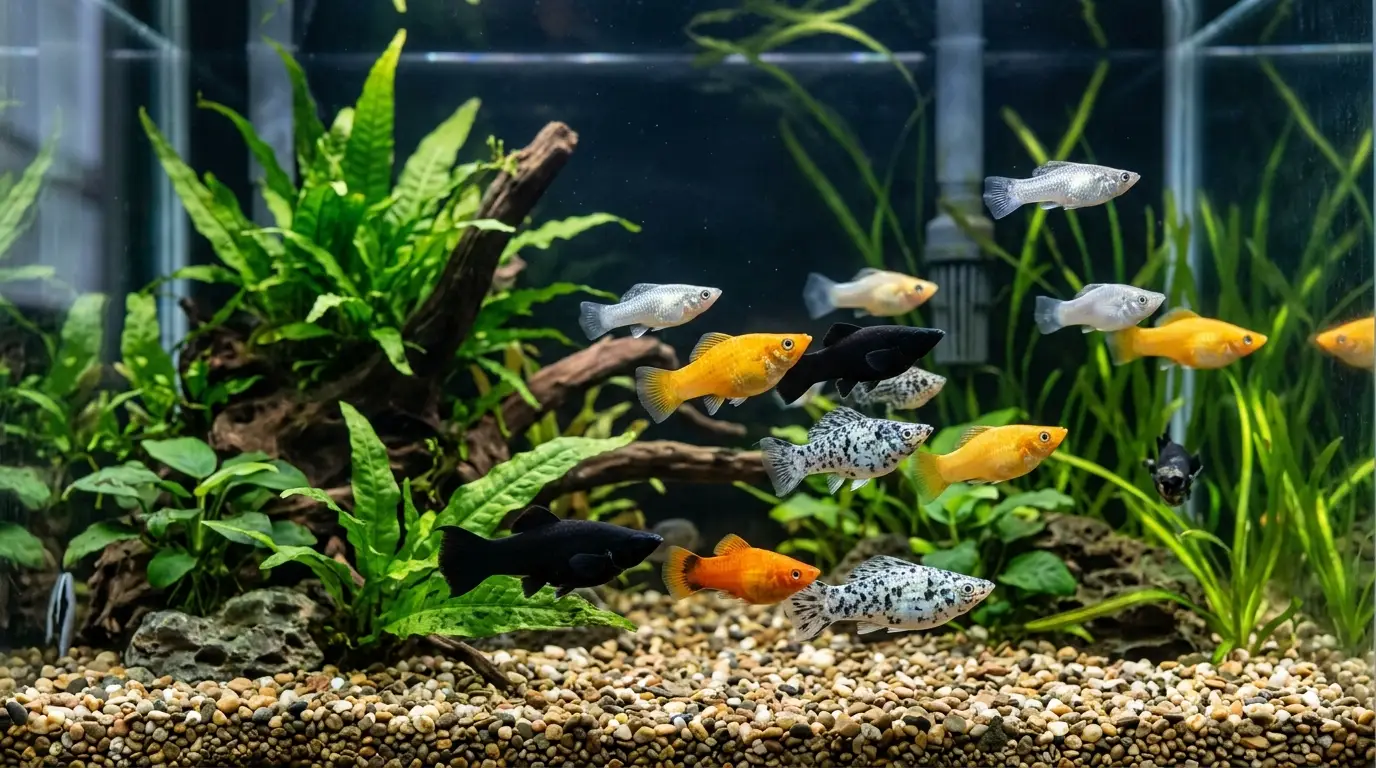
Tank Setup and Water Parameters
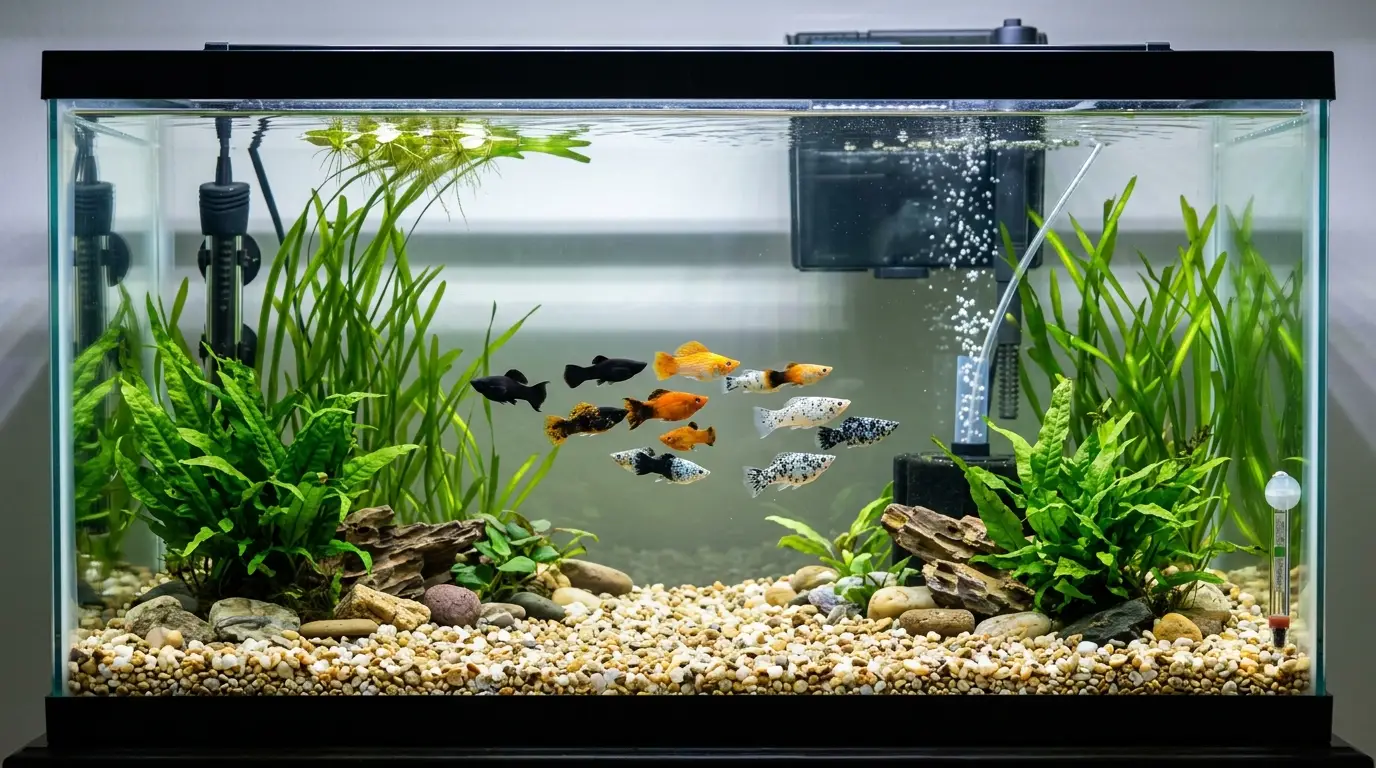
Aim for space. A 20-gallon tank suits a small group. For sailfin mollies or mixed communities, start at 30 gallons or more.
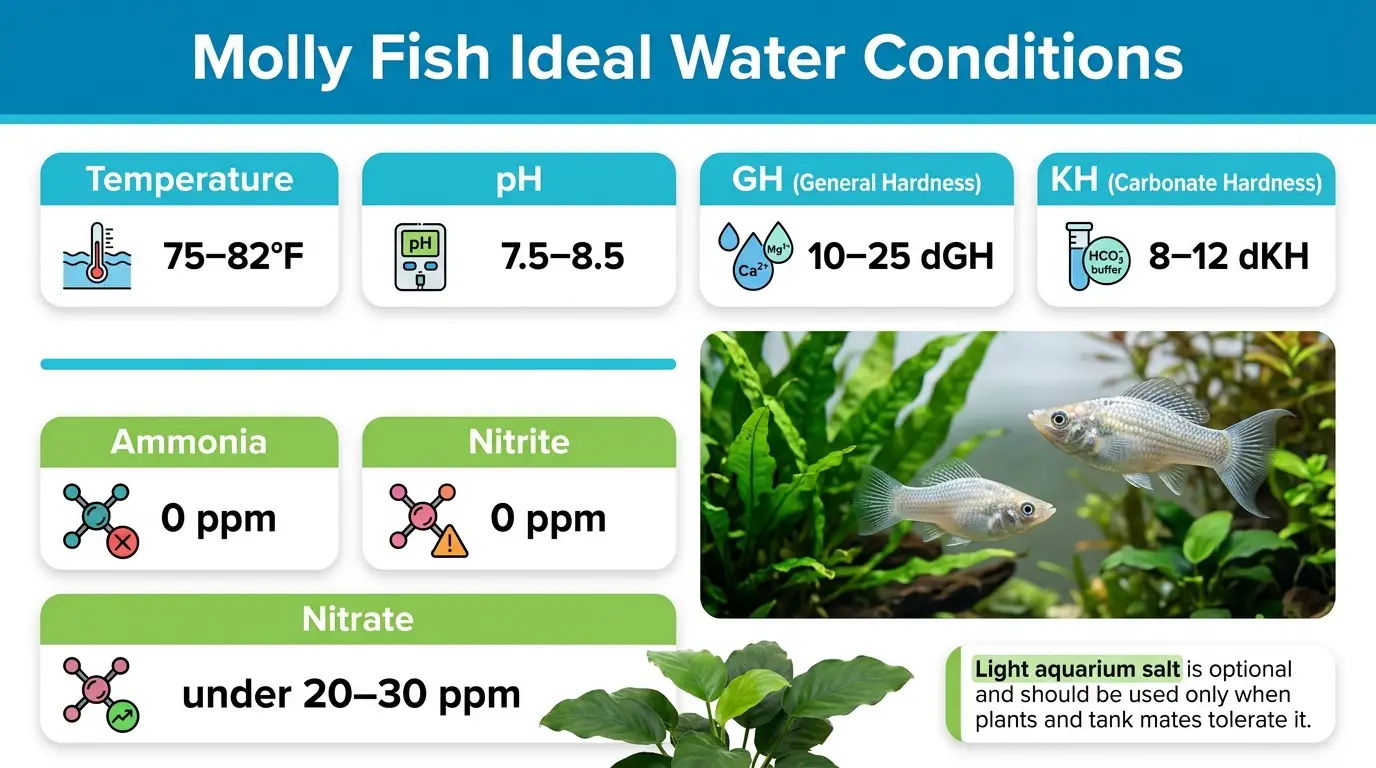
Key water targets:
- Temperature: 75 to 82°F
- pH: 7.5 to 8.5
- GH: 10 to 25 dGH (hard water)
- KH: 8 to 12 dKH (stable buffer)
- Ammonia and nitrite: 0 ppm
- Nitrate: under 20 to 30 ppm
Light salt is optional but helpful. Use 1 tablespoon of aquarium salt per 5 gallons to start. Increase only if plants and tank mates tolerate it. Always dissolve salt in a cup of tank water first. The molly fish care guide works in fresh water too, if hardness and pH stay stable.
Personal tip: I once kept mollies in soft, acidic water. They “shimmied,” stopped eating, and got fin rot. Hard water and a touch of salt fixed it fast.
Filtration, Heating, and Lighting
Mollies love clean, oxygen-rich water. Use strong, steady filtration that turns the tank volume 5 to 10 times per hour.
Good choices:
- Sponge filter for biofiltration and fry safety
- Hang-on-back or canister for flow and polish
- Air stone for extra oxygen, useful in warm water
Use a reliable heater and a separate thermometer. Keep a stable temperature to avoid stress. Provide 8 to 10 hours of light per day. Too much light fuels algae. A timer helps a lot. A molly fish care guide always starts with strong filtration and stable heat.
Aquascaping and Tank Mates
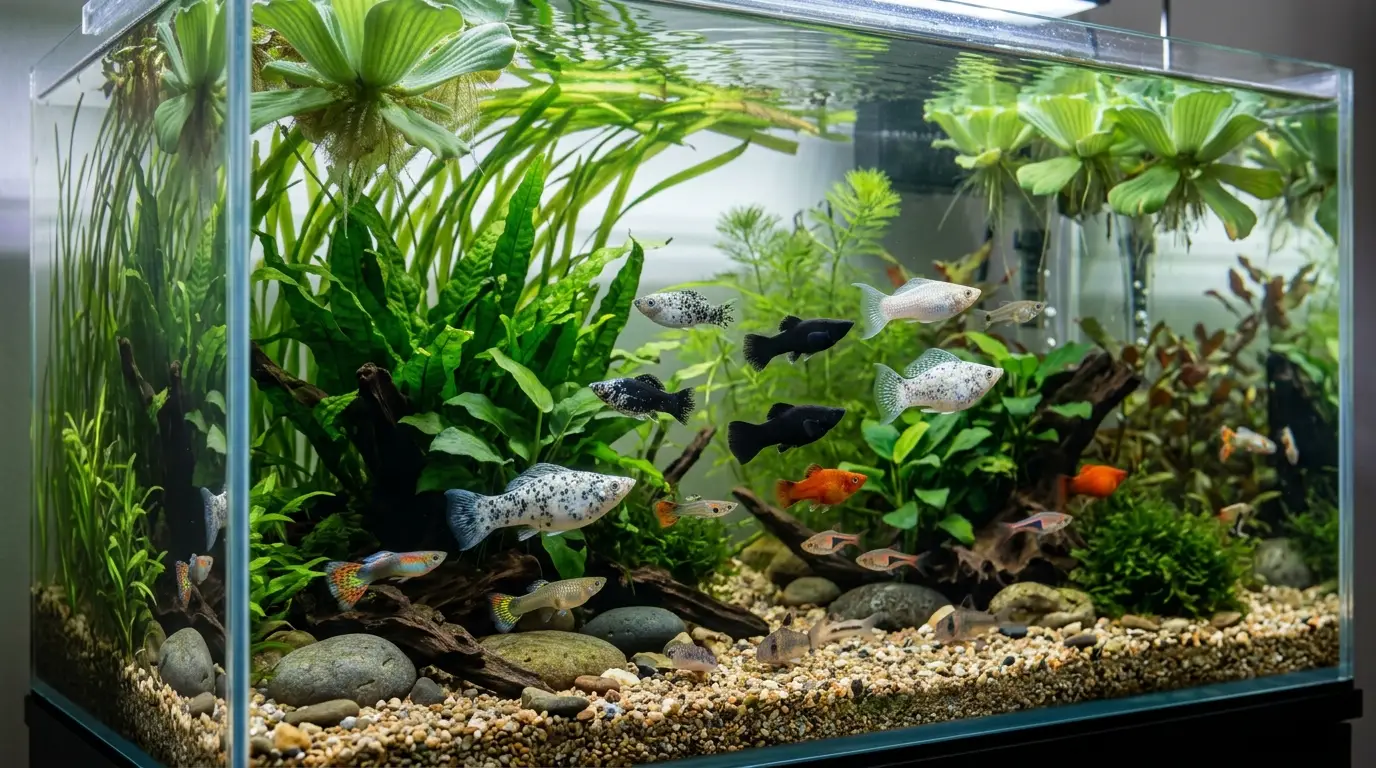
Mollies need open water to swim and some cover to rest. They graze all day, so give them surfaces to pick at.
Easy plants that handle harder water:
- Java fern, Anubias, and Vallisneria
- Hornwort and floating plants for shade and fry refuge
Tank mates that work well:
- Guppies, platies, and swordtails
- Peaceful tetras that like harder water
- Corydoras if you avoid salt
- Bristlenose pleco for algae control
Avoid fin nippers and large predators. Use a ratio of one male to two or three females to cut chasing. In my tanks, extra plants and a clear sight line break reduced stress at once. Smart layout is a quiet star in any molly fish care guide.
Diet and Feeding Schedule
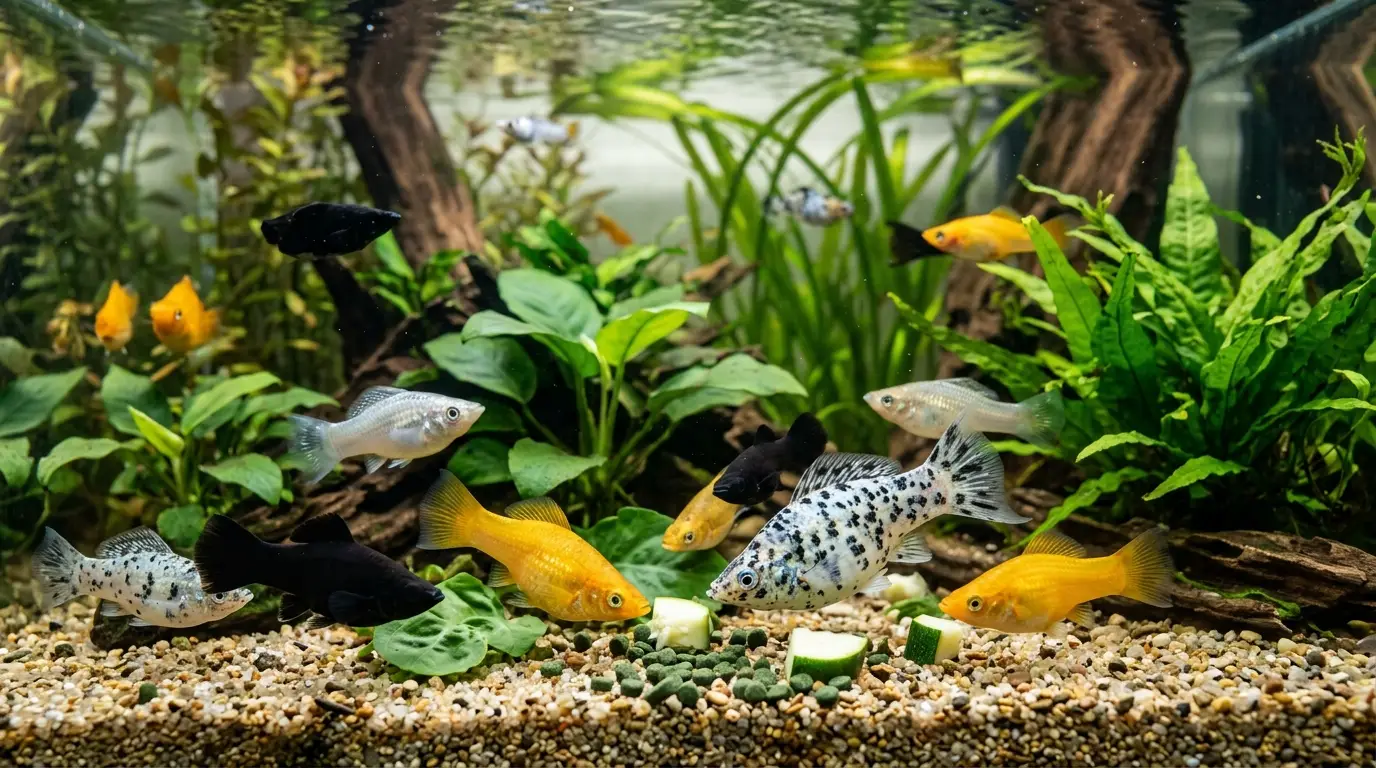
Mollies are omnivores with a strong need for plant fiber. A green-rich diet keeps colors bright and bellies happy.
Feed a mix:
- Quality flakes or small pellets with spirulina
* Blanched spinach, zucchini, or peas (skins off) - Frozen or live foods like daphnia and baby brine shrimp
Offer small meals twice a day. Feed only what they eat in 30 to 60 seconds. A light fasting day once a week helps prevent bloat. This is a core tip in every molly fish care guide.
Personal tip: When I swapped to spirulina pellets and added blanched veggies, fin health improved, and waste dropped.
Health, Diseases, and Prevention
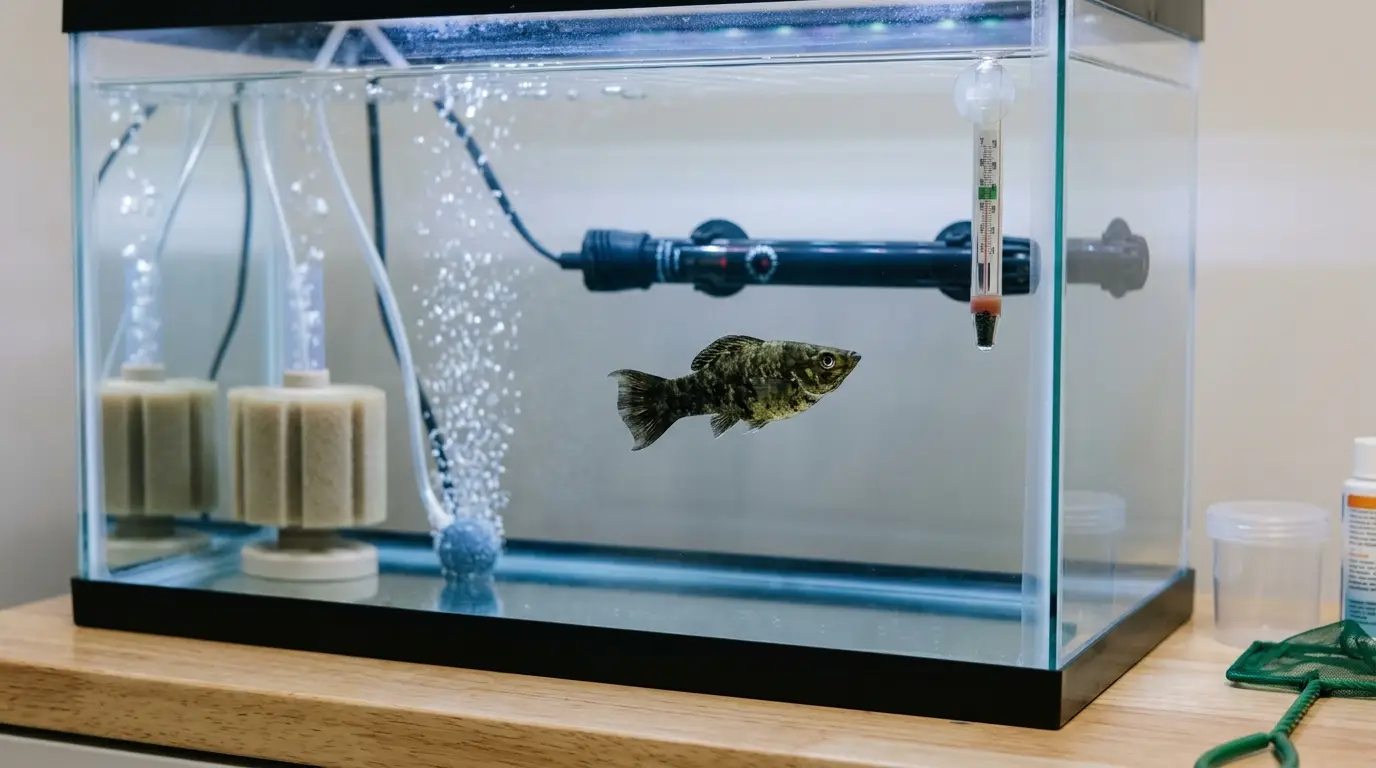
Healthy mollies are active, hungry, and alert. Common issues often trace back to stress or water quality.
Watch for:
- Ich: white spots and flashing
- Fin rot: frayed fins, red edges
- Velvet: gold dust look, clamped fins
- Columnaris: cotton-like patches around mouth or body
- Internal parasites: stringy white poop, weight loss
- Livebearer shimmy: trembling from low electrolytes or unstable water
Prevention steps:
- Quarantine new fish for 2 to 4 weeks
- Keep water hard and pH stable
- Do weekly water changes and gravel vacs
- Use salt and meds only as needed and as labeled
I keep a small hospital tub, an air stone, aquarium salt, and a broad-spectrum med on hand. Fast action saves fish. This molly fish care guide leans on prevention first.
Breeding and Fry Care
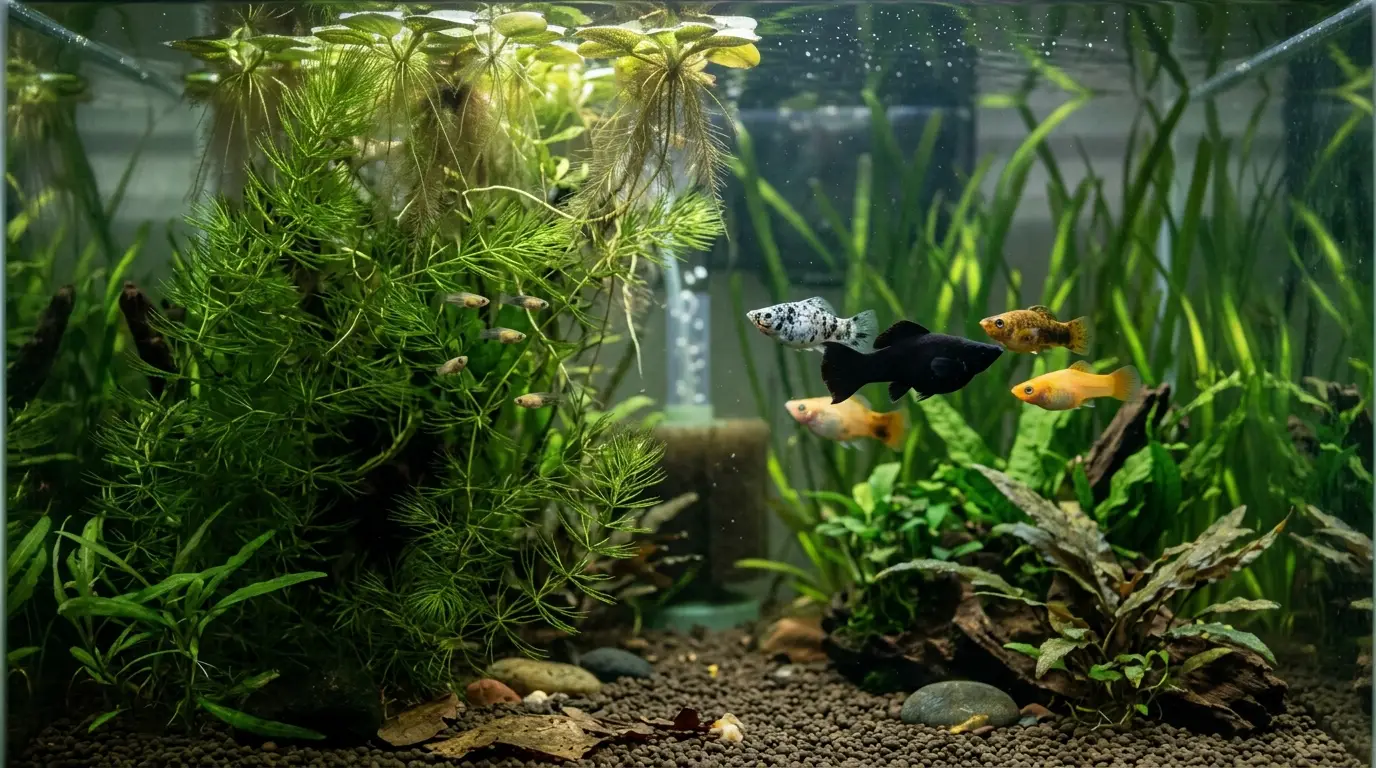
Mollies are livebearers. Females drop 20 to 80 fry about every 4 weeks once mature.
Breeding pointers:
- Keep more females than males to reduce stress
- Provide dense plants or spawning mops as cover
- Move very pregnant females only if needed, and very gently
Fry care:
- Leave them in a plant-heavy tank or use a separate grow-out
- Feed infusoria, crushed flake, and baby brine shrimp
- Keep water very clean and oxygen high
I avoid breeder boxes unless needed for a short time. A lush, planted corner saves more fry with less stress. Smart planning keeps this part of the molly fish care guide fun and easy.
Weekly Care Routine and Maintenance
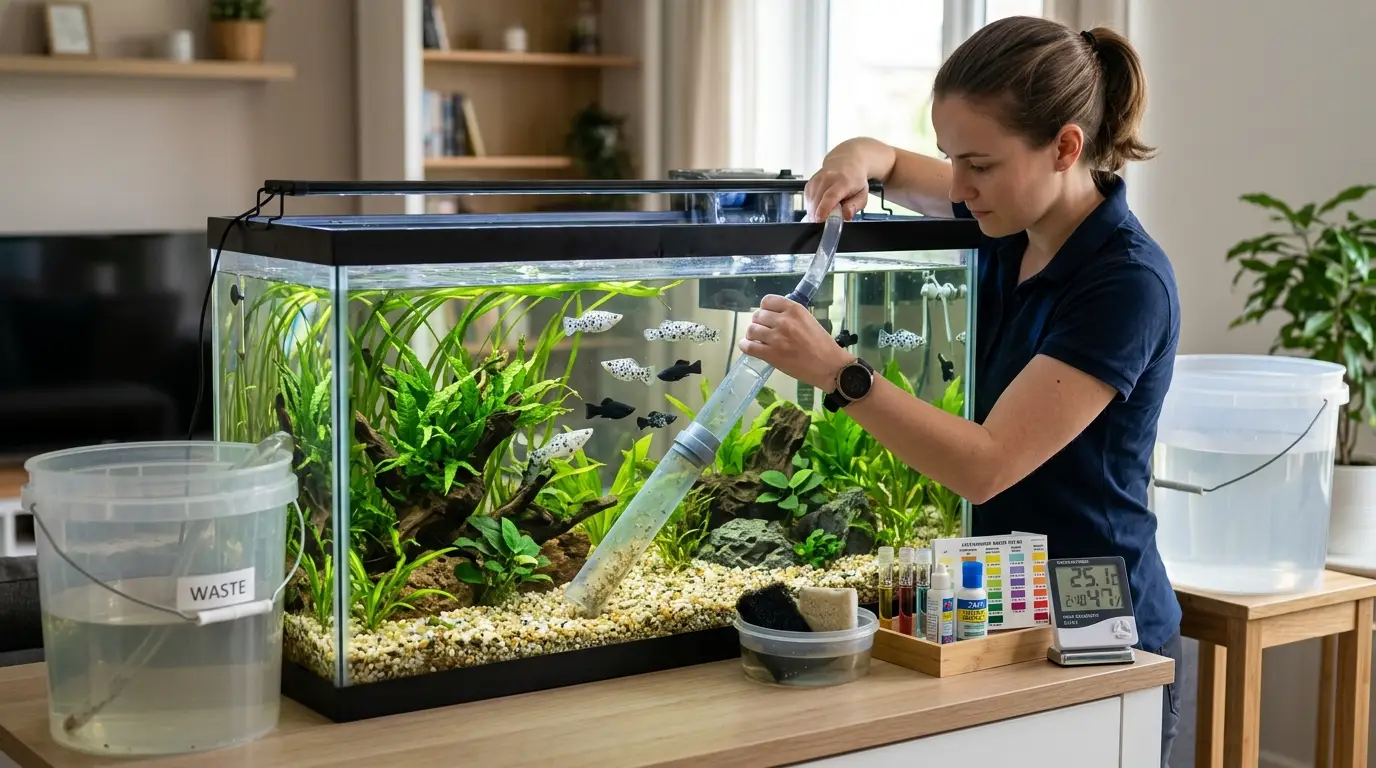
A steady routine is your best tool. Keep it simple and repeatable.
Do this every week:
- Test water for pH, KH, GH, ammonia, nitrite, and nitrate
- Change 25 to 40 percent of water and match temperature
- Vacuum debris and clean algae from glass
- Rinse filter media in old tank water
- Check heater, filter flow, and air stone bubbles
I track all results in a small notebook. That habit helped me spot a slow KH drop before a pH crash. Routine care is the heart of any molly fish care guide.
Troubleshooting Common Problems
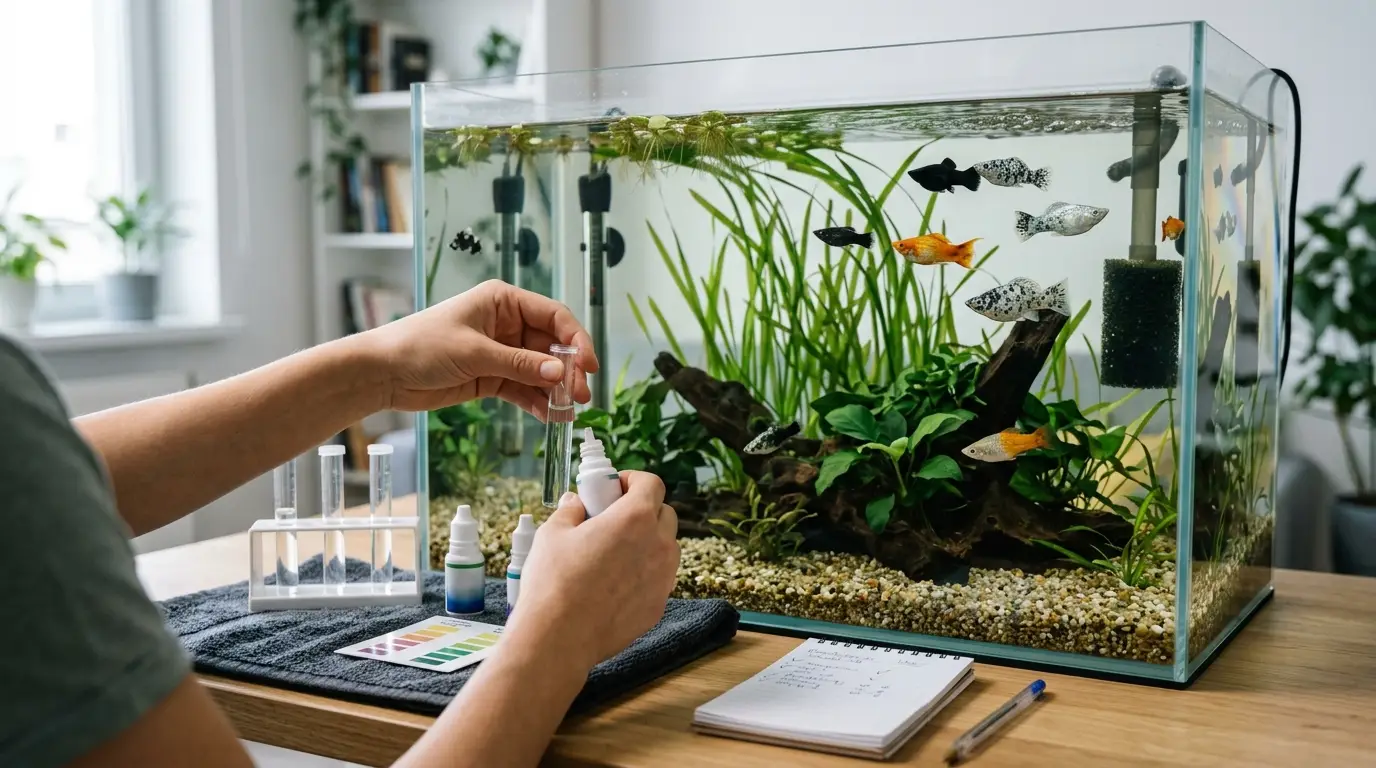
Small problems grow fast in closed systems. Act early and stay calm.
Quick fixes:
- Cloudy water: cut feeding, boost filtration, and do a water change
- Algae bloom: reduce light hours, add floating plants, and clean glass
- Shimmying fish: raise KH and GH with minerals and add a light salt dose
- Ammonia spike: big water change, add mature media, and reduce feeding
- Aggression: add plants, adjust male-to-female ratio, and grow the group
If you hit a wall, test all parameters first. Most issues link back to a value out of range. This molly fish care guide always points to testing before guessing.
Frequently Asked Questions
Do mollies need salt?
No, but light salt often helps with stress and disease resistance. Keep plants and tank mates in mind before adding any salt.
How many mollies can I keep in a 20-gallon tank?
Start with one male and two or three females. Add more only if filtration is strong and water quality stays stable.
What temperature is best for mollies?
Aim for 75 to 82°F. Pick a target in the middle and keep it steady.
How long do mollies live?
Most live 3 to 5 years with good care. Clean water and a green-rich diet help them reach the high end.
Do mollies eat algae?
Yes, they graze on soft algae. Still feed a balanced diet to meet all their needs.
Can I keep mollies with shrimp?
Sometimes, but adult mollies may eat small shrimp and baby shrimp. Heavy plant cover raises your odds.
Why is my molly shimmying?
It is often low electrolytes, soft water, or stress. Raise hardness and improve stability to fix it.
Conclusion
Mollies reward steady care with bright colors, bold behavior, and easy breeding. Give them hard, stable water, strong filtration, plant fiber in their diet, and a calm community. Keep a simple weekly routine, and most problems fade before they start.
Set up your plan today. Test your water, tune your filters, and try one tip from this guide right now. If this molly fish care guide helped, subscribe for new care guides, share your tank story, or leave a question so I can help you fine-tune your setup.