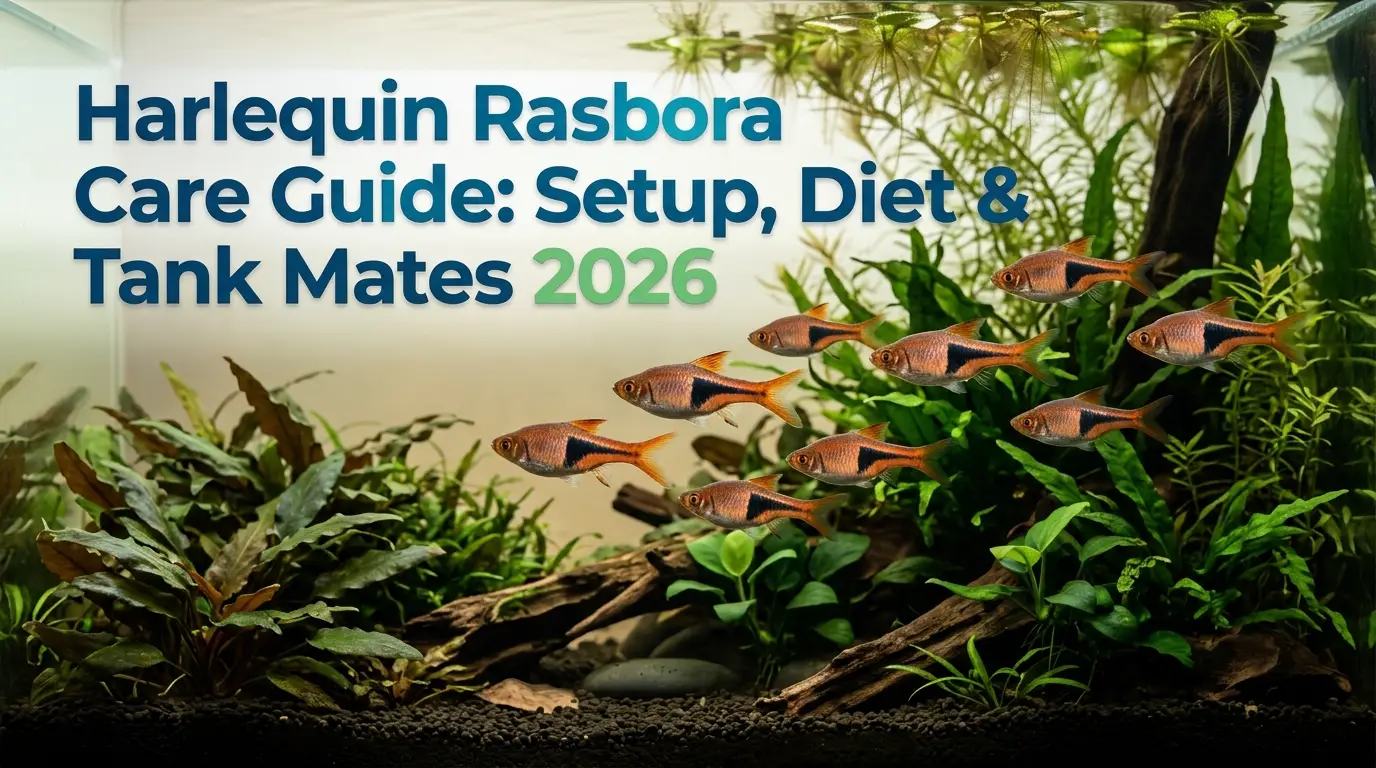
Harlequin rasboras thrive in planted, soft-water tanks with stable warmth and big schools.
If you want a peaceful, glowing nano fish that is easy to care for, you are in the right place. In this harlequin rasbora care guide, I share what actually works from years of keeping and breeding these gems. You will learn simple tank setups, exact water targets, feeding plans, and pro tips that keep them bold, healthy, and bright.
Harlequin Rasbora At A Glance
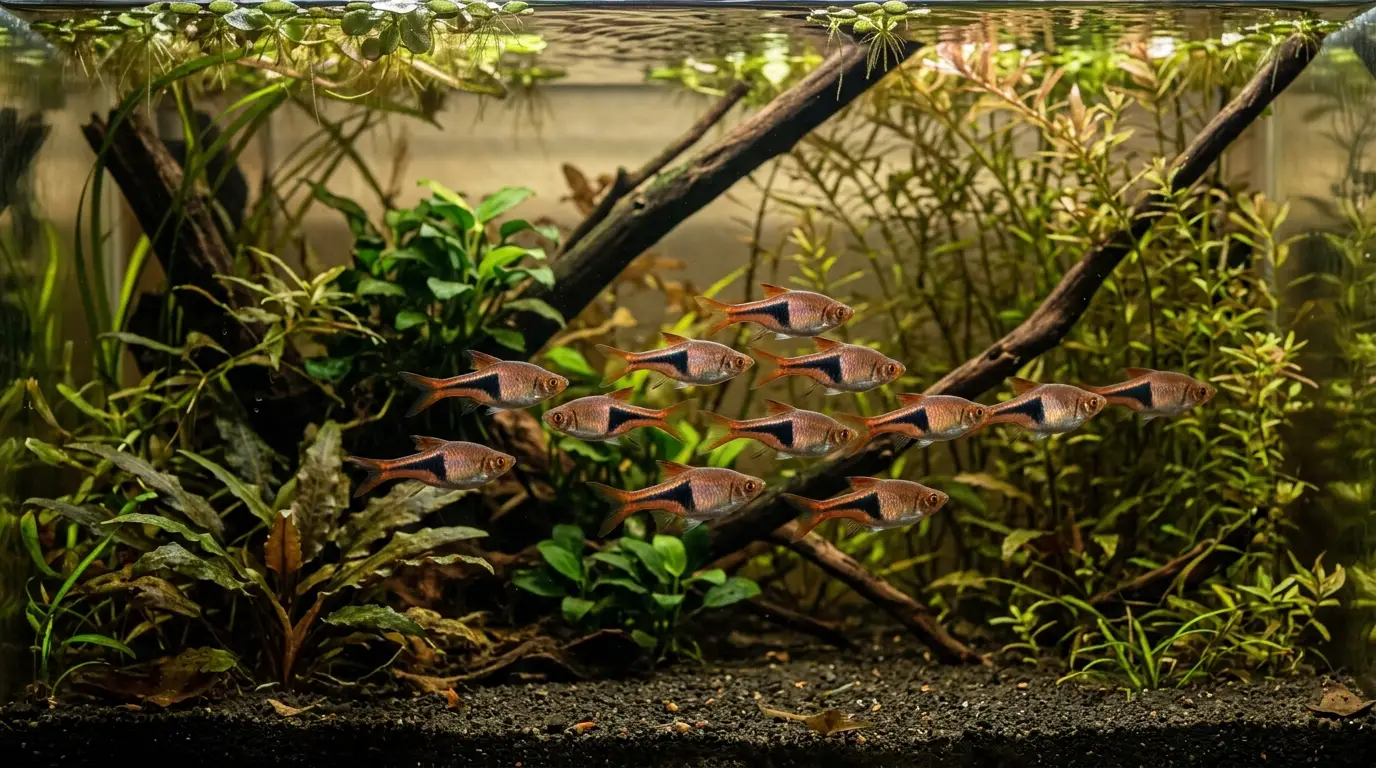
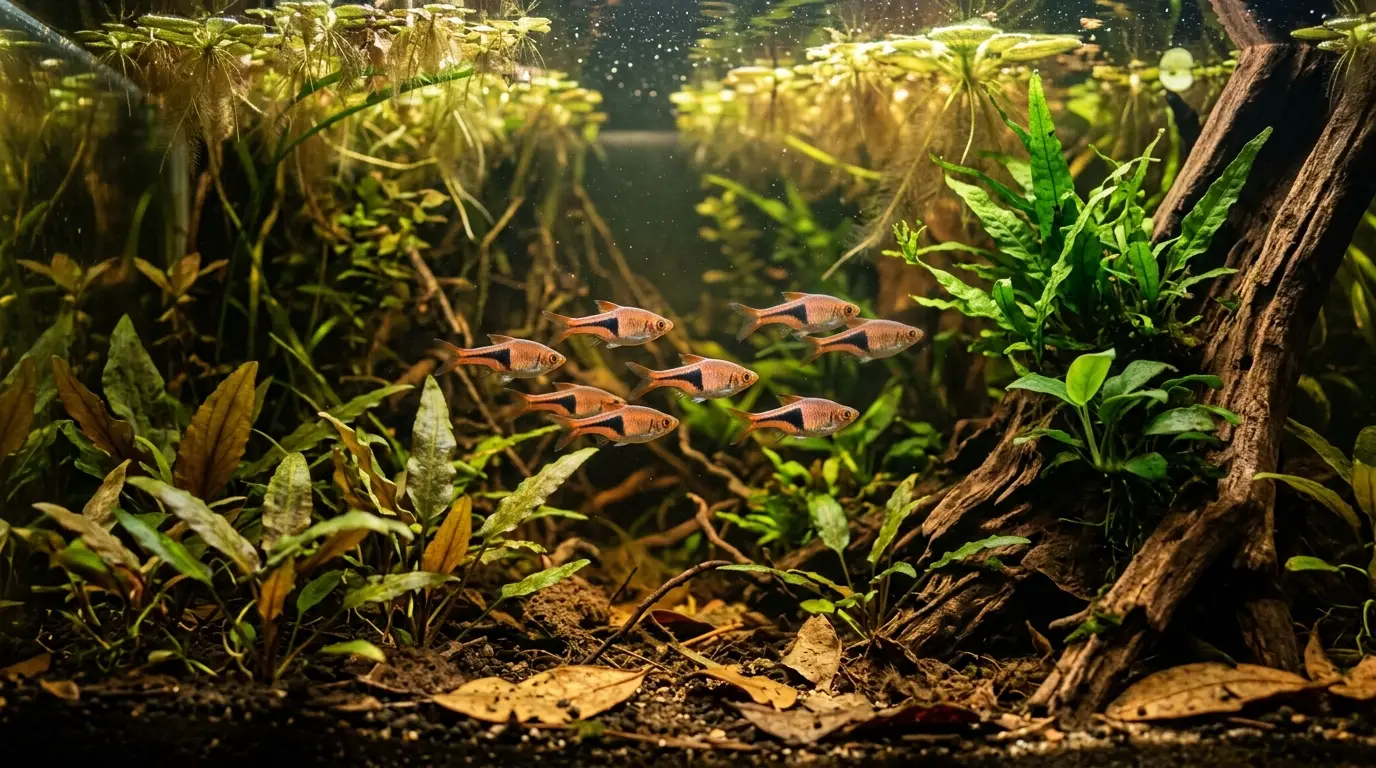
In this harlequin rasbora care guide, let’s start with a quick profile. The harlequin rasbora (Trigonostigma heteromorpha) is a small schooling fish from Southeast Asia. Adults reach about 2 inches. Their copper body and black wedge make them stand out in any planted tank.
They are peaceful, mid-water swimmers. Keep them in groups of 8 or more so they feel safe. With good care, they live 5 to 8 years. Mine show the best color in dim light and dark substrate.
Ideal Tank Size and Setup
A core rule in any harlequin rasbora care guide is space for a proper school. Ten gallons works for a small group, but 20 gallons or more is better. A long tank gives them room to cruise and display.
Use a tight lid. They can jump if startled. Choose a dark, fine substrate to bring out their color. Add driftwood and plants for shade. Keep the flow gentle.
Setup checklist:
- Tank size: 20-gallon long is ideal for 10 to 14 fish
- Substrate: fine sand or smooth gravel
- Hardscape: driftwood, rocks, and leaf litter
- Plants: tall stems, crypts, ferns, and floaters
- Lid: tight fitting, with cable gaps sealed
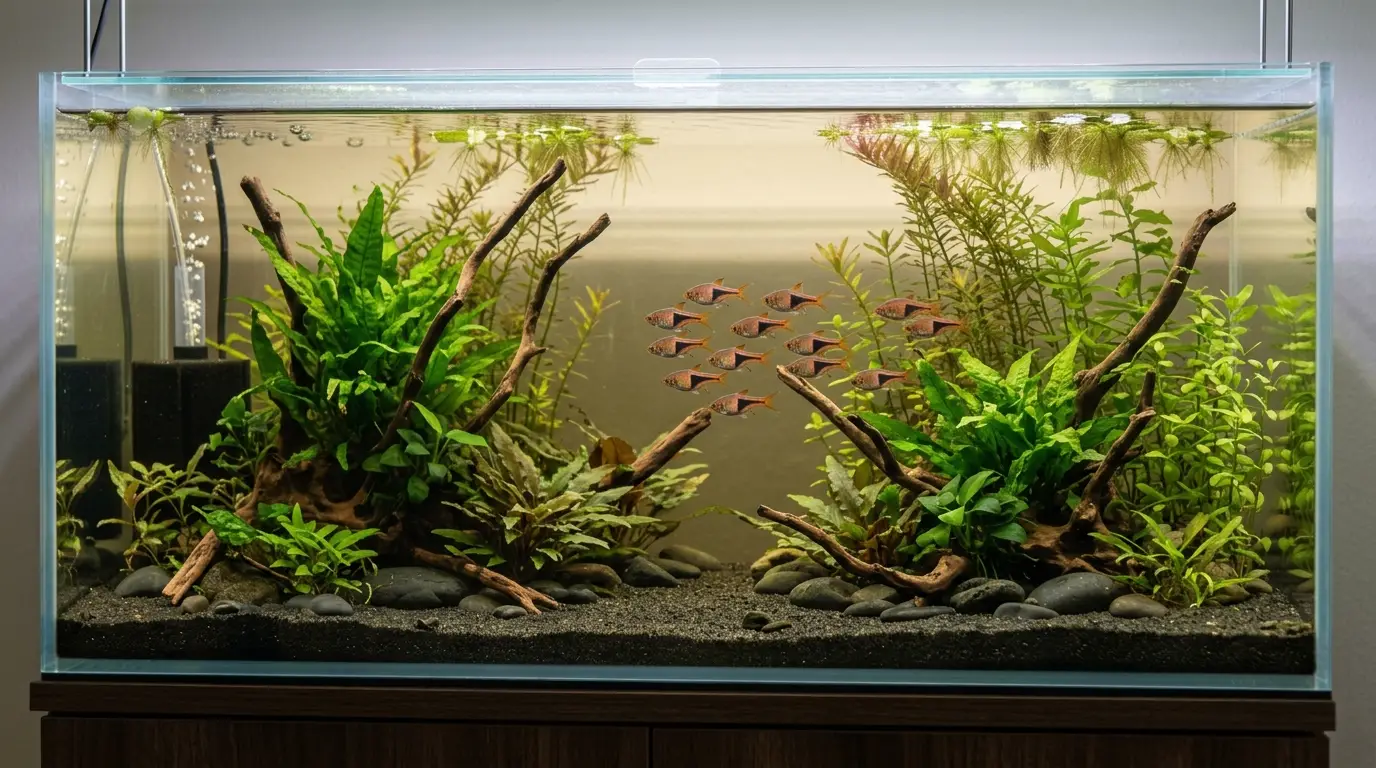
A calm, planted tank helps them relax. It also cuts stress during maintenance.
Water Parameters and Cycling Made Simple
Stable water beats perfect water. That theme runs through any solid harlequin rasbora care guide. Aim for soft, slightly acidic water with steady warmth.
Targets that work well:
- Temperature: 75 to 80°F
- pH: 6.0 to 7.2
- GH: 1 to 8 dGH
- KH: 1 to 4 dKH
- Ammonia and nitrite: 0 ppm
- Nitrate: under 20 ppm
Cycle the tank before adding the school. Use a quality test kit. If your tap is hard, cut it with RO or distilled water. A few Indian almond leaves or peat in a filter bag can add tannins. That softens the look and may lower pH a bit. Avoid big swings. Make changes slow.
Filtration, Flow, and Lighting
This harlequin rasbora care guide keeps gear simple. Use a gentle filter so they can school without fighting current. A sponge filter is great. A hang-on-back with a baffle also works well.
Light should be low to medium. Floaters help diffuse it. Keep a steady schedule of 7 to 8 hours daily. If you use CO2 for plants, keep levels stable. Good oxygenation supports color and energy.
Aquascaping and Plants They Love
In the wild, they come from shaded, tea-colored streams. A good harlequin rasbora care guide copies that feel. Think soft light, leaves, and plants that sway in the flow.
Plant picks that shine:
- Java fern and Anubias on wood
- Cryptocoryne species for broad leaves
- Rotala and Hygrophila for tall stems
- Floating plants like frogbit or Salvinia
A few pieces of leaf litter add a natural look. They also offer tannins. Broad leaves serve a second role later: breeding sites.
Diet and Feeding Schedule
Feeding is easy if you know what they need. In this harlequin rasbora care guide, I keep it varied. Offer a quality micro pellet or fine flake as a base. Add live or frozen foods to build color and condition.
Good options:
- Micro pellets and fine flakes
- Frozen or live baby brine shrimp
- Daphnia and cyclops
- Microworms and mosquito larvae
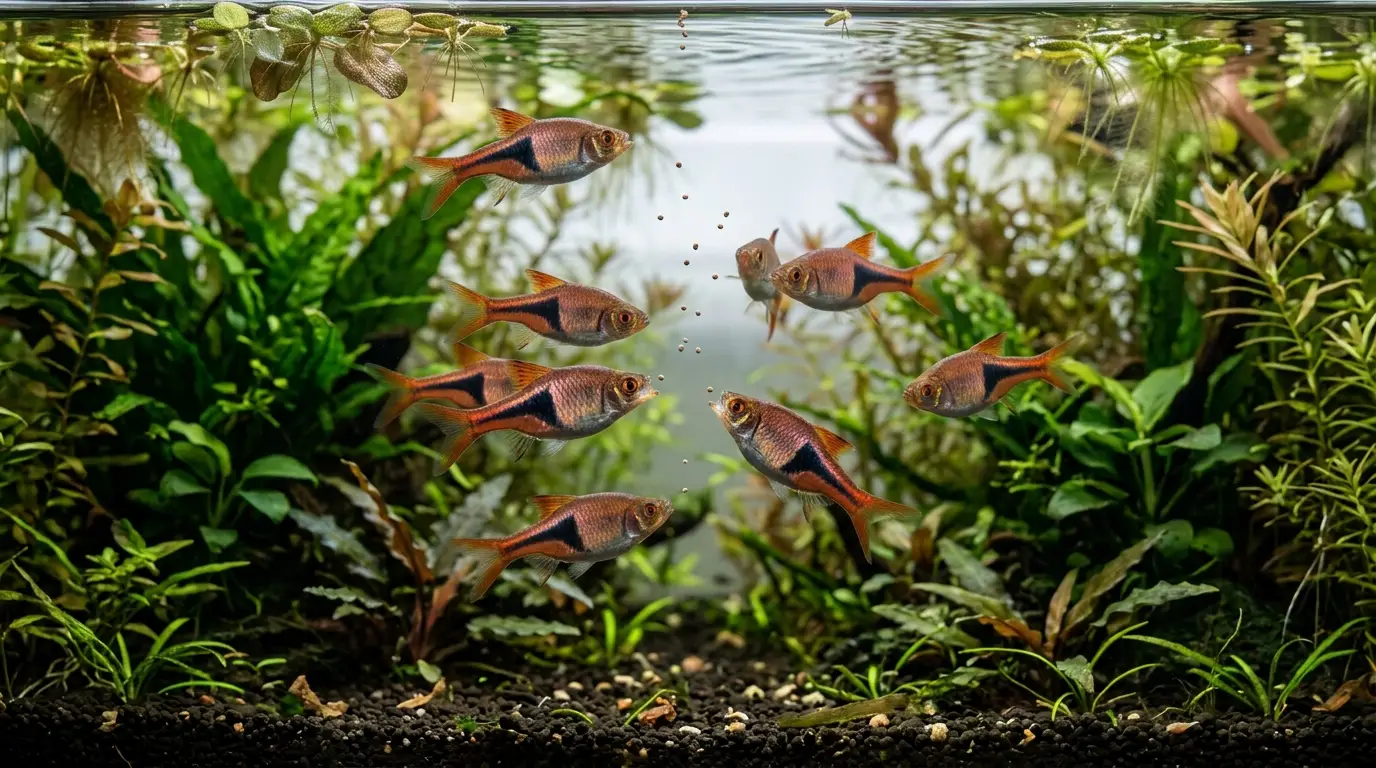
Feed small amounts two times a day. They should finish food in 1 to 2 minutes. Add one light fasting day per week. This keeps bellies trim and water clean.
Social Behavior and Tank Mates
A harlequin rasbora care guide must stress numbers. Keep at least 8, but 10 to 14 is better. More fish means tighter schooling and bolder behavior.
Peaceful tank mates:
- Corydoras and otocinclus
- Small tetras and other rasboras
- Dwarf gouramis and honey gouramis
- Peaceful snails and larger shrimp
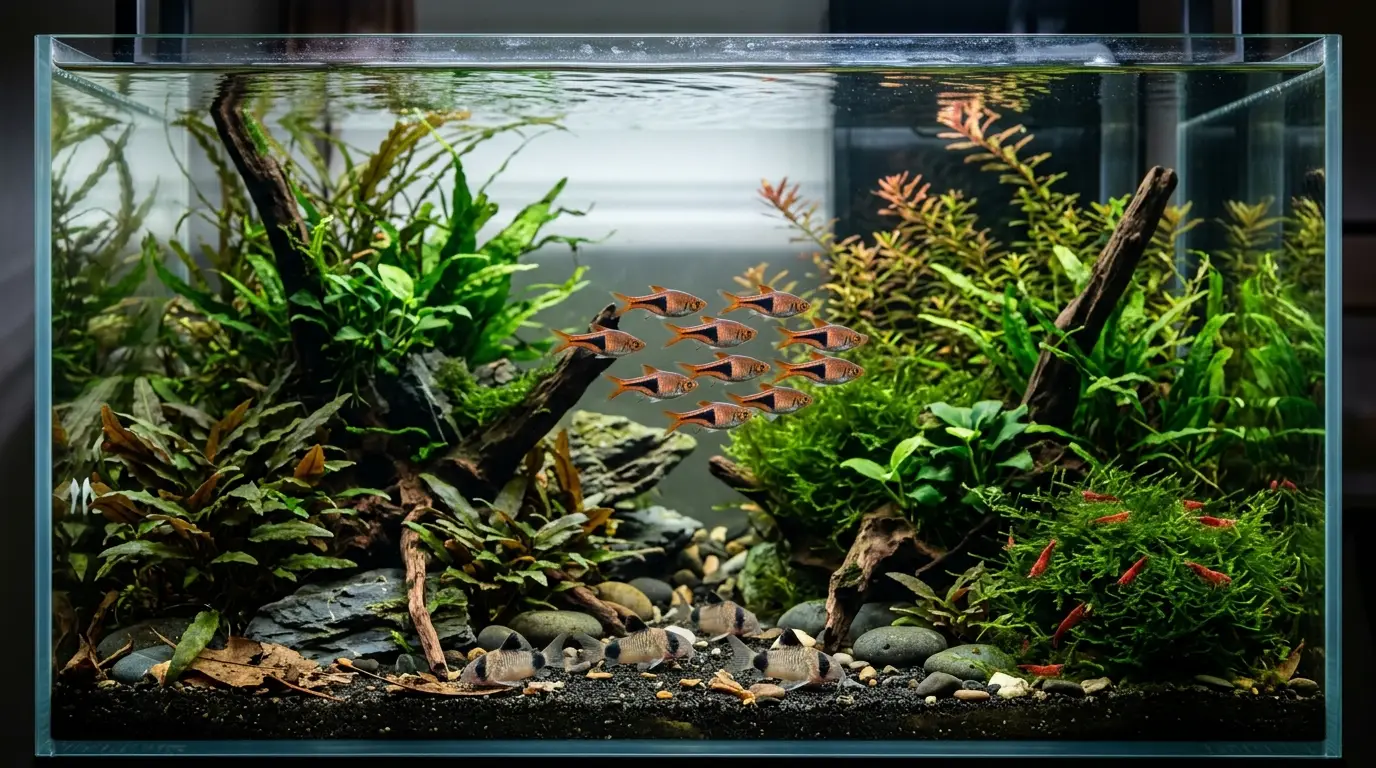
Be cautious with bettas. Many work, some do not. Skip fin nippers and large predators. Provide cover. A calm scape brings out their best display.
Breeding Harlequin Rasboras
Breeding is possible at home. This harlequin rasbora care guide uses a simple approach. Condition a group with rich frozen foods for two weeks. Pick the plumpest female and the most active male. Set up a small breeding tank with soft, acidic water and broad leaves.
Key steps:
- Water: pH 5.5 to 6.5, GH under 4 dGH, 78 to 80°F
- Decor: crypt leaves or plastic leaf sheets placed under light
- Lighting: very low
- Filtration: air-driven sponge
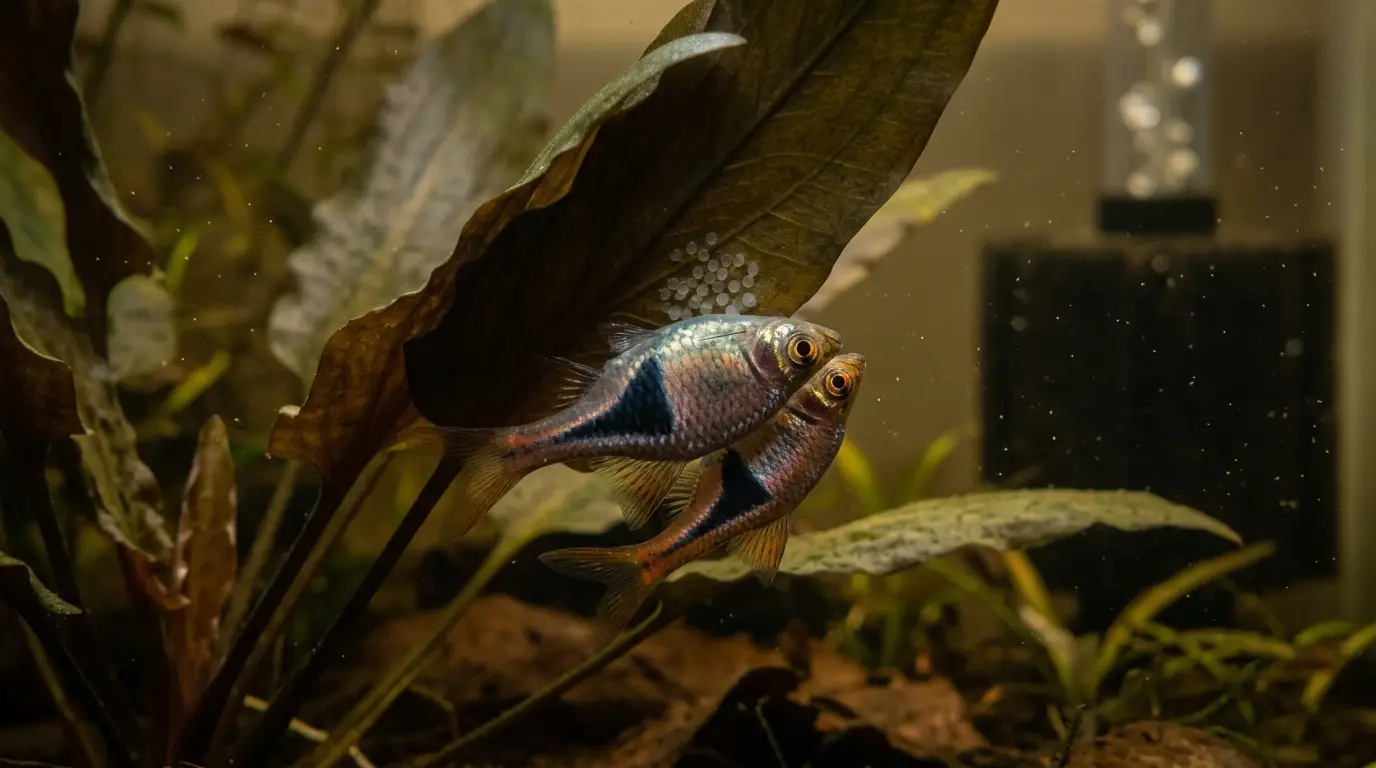
They spawn under leaves. The pair flips and sticks eggs to the leaf’s underside. Remove adults after spawning. Eggs hatch in about 24 to 36 hours. Fry become free swimming in 4 to 6 days. Start with infusoria or a liquid fry food. Move to microworms and baby brine shrimp once they grow.
Health, Disease Prevention, and Quarantine
A clean, stable tank is your best medicine. In this harlequin rasbora care guide, prevention is the theme. Quarantine all new fish for 2 to 4 weeks. Watch for white spots, clamped fins, or flashing.
Tips that protect health:
- Keep ammonia and nitrite at zero always
- Avoid sudden temp or pH swings
- Do not overfeed
- Add extra air when using meds
At the first sign of ich, raise heat slowly to 80°F and treat as directed. Follow full dosing rules. Remove carbon when treating. Record what you do in a log.
Simple Weekly Maintenance Plan
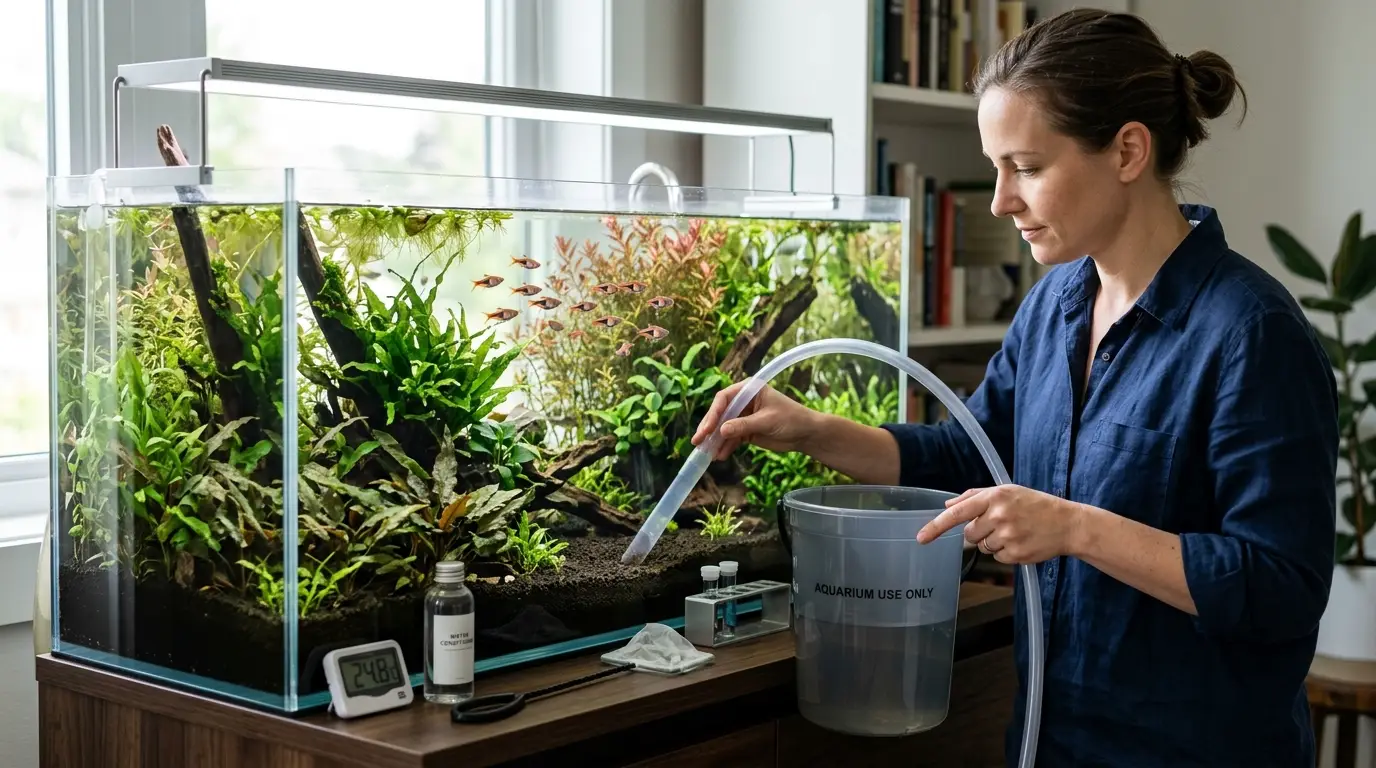
Maintenance keeps the system steady. This harlequin rasbora care guide favors short, repeatable steps. I use a weekly 30 to 40 percent water change on my 20-gallon. I vacuum lightly to spare plant roots.
Weekly plan:
- Test pH, GH, KH, and nitrate
- Change water with matched temp
- Clean glass and trim plants
- Squeeze sponge filter in old tank water
- Top off and check lid and gear
Make changes slow. Log results. A steady hand beats a heavy hand.
Common Mistakes and How to Fix Them
Even a strong harlequin rasbora care guide cannot stop all slips. Here are the big ones I see and how to fix them.
- Too few fish: keep 8 to 14 so they school well and feel safe
Fix: increase the group size. - Bright, bare tanks: stress and color loss
Fix: add plants, floaters, and darker substrate. - Hard, alkaline water: poor color and tricky breeding
Fix: blend in RO water and add tannins. - Strong flow: ragged fins and hiding
Fix: baffle the filter or switch to a sponge. - Overfeeding: cloudy water and sick fish
Fix: feed tiny portions, add a weekly fast. - Skipping quarantine: disease spread
Fix: hold new fish 2 to 4 weeks in a small QT tank.
Small tweaks bring fast gains. Your fish will tell you when the vibe is right.
Budget, Sourcing, and Ethical Buying
A clear harlequin rasbora care guide also covers where and how to buy. These fish are often captive bred. That reduces pressure on wild streams.
What to expect:
- Price per fish: usually 2 to 4 dollars
- School cost: 10 fish runs 20 to 40 dollars
- Gear: sponge filter, heater, test kit, plants
Pick alert, full-bodied fish with even color. Avoid torn fins and clamped tails. Ask your store about their source and holding practices. Support sellers who quarantine and handle fish with care.
Frequently Asked Questions
How many harlequin rasboras should I keep together?
Keep at least 8. A group of 10 to 14 looks amazing and keeps them calm and active.
Can harlequin rasboras live in a 10-gallon tank?
Yes, but keep the school small and the tank well planted. A 20-gallon long lets them thrive and show stronger color.
Do harlequin rasboras need a heater?
Yes, they prefer 75 to 80°F. A reliable heater with a thermometer keeps the temperature steady.
Are harlequin rasboras good with shrimp?
They are peaceful, but may eat very small baby shrimp. Keep plenty of moss and cover if breeding shrimp.
What is the best food for color?
A quality micro pellet plus frozen baby brine shrimp and daphnia works well. Variety boosts color and health.
How long do harlequin rasboras live?
They often live 5 to 8 years with stable water and a good diet. Good schools and plants help reduce stress.
Do they need live plants?
Plants are not a must, but they help a lot. Plants offer cover, cut stress, and make their color pop.
Conclusion
You now have a full harlequin rasbora care guide that is simple to follow and easy to apply. Focus on a calm, planted tank, a big friendly school, soft stable water, and a varied diet. These steps bring bold color, steady health, and years of joyful schooling.
Set up your plan this week. Test your water, add a few floaters, and grow the school. If you found this helpful, subscribe for more guides, share your tank photos, or drop a question in the comments.