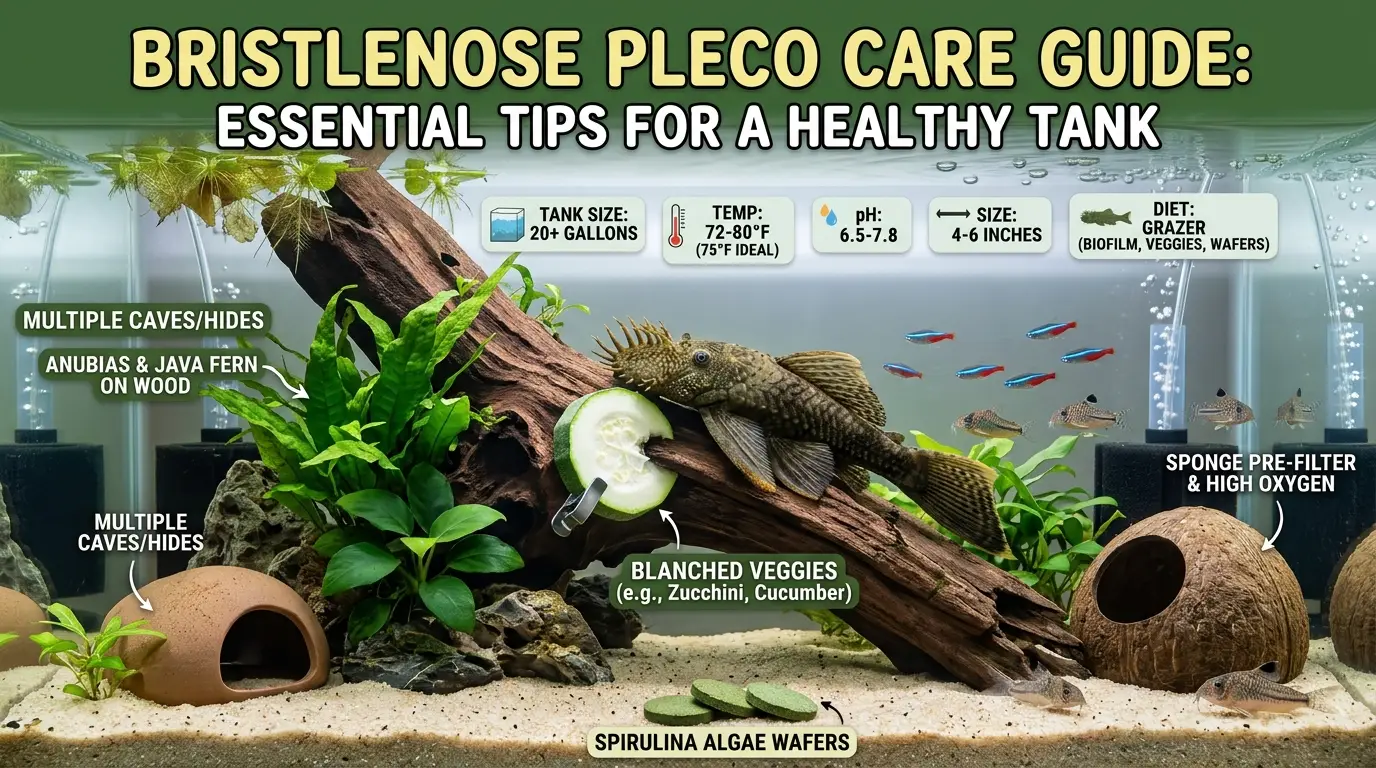
Keep water clean, offer driftwood and veggies, and give caves for calm, hardy plecos.
You came for a clear bristlenose pleco care guide, and you’re in the right spot. I’ve kept and bred Ancistrus for years, from hardy commons to fancy longfins and super reds. In this bristlenose pleco care guide, I’ll share simple steps, pro tips, and mistakes to avoid so you can raise healthy, happy algae eaters with confidence. Read on to set up a stable tank, dial in diet, and even try breeding at home.
Bristlenose pleco at a glance
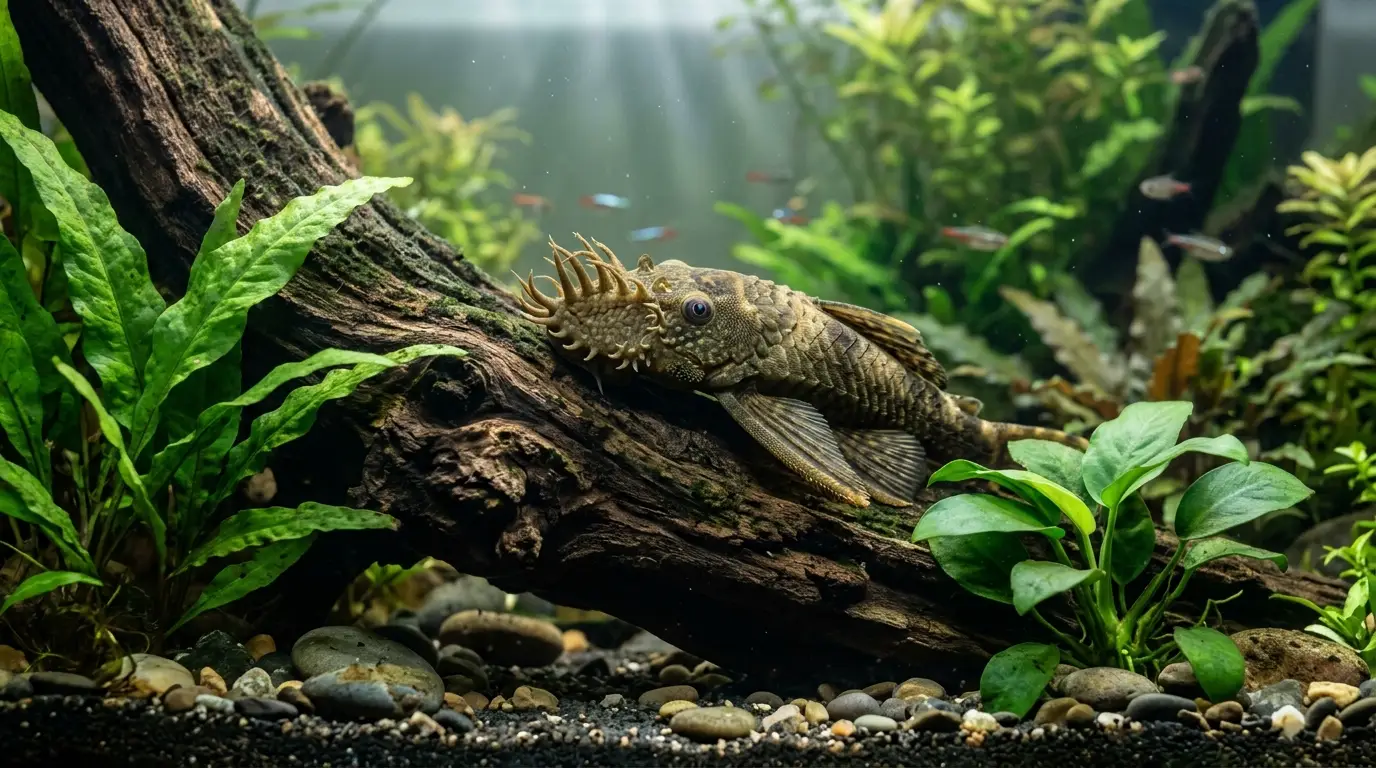
This bristlenose pleco care guide starts with basics. The bristlenose pleco (Ancistrus sp.) is a small, peaceful, freshwater catfish. It grows to about 4 to 6 inches. It is also one of the best algae grazers for community tanks.
Key facts
- Scientific name: Ancistrus sp.
- Adult size: 4 to 6 inches
- Lifespan: 5 to 8 years with good care
- Diet: Algae, biofilm, veggies, and wafers
- Temperament: Peaceful, but males can be territorial over caves
- Activity: Most active at night or in dim light
Why choose them
- Great for planted tanks
- Hardy and forgiving of small swings
- Breed in home aquariums with ease
- Many color forms: common, albino, super red, longfin, and more
Tank setup and water parameters
This bristlenose pleco care guide favors simple, stable setups. Start with space, clean water, and good flow. Then add cover and wood.
Minimum tank size
- One adult: 20 gallons
- Pair or community: 30 gallons or more
Water parameters
- Temperature: 72 to 80°F (22 to 27°C). Sweet spot near 75°F.
- pH: 6.5 to 7.8
- GH: 4 to 12 dGH
- KH: 3 to 8 dKH
- Ammonia and nitrite: 0 ppm
- Nitrate: Under 20 ppm
Filtration and flow
- Use a filter with strong bio media.
- Add a sponge pre-filter on the intake to protect fry.
- Keep flow gentle to moderate with high oxygen. An airstone helps.
Substrate and decor
- Sand or smooth gravel both work.
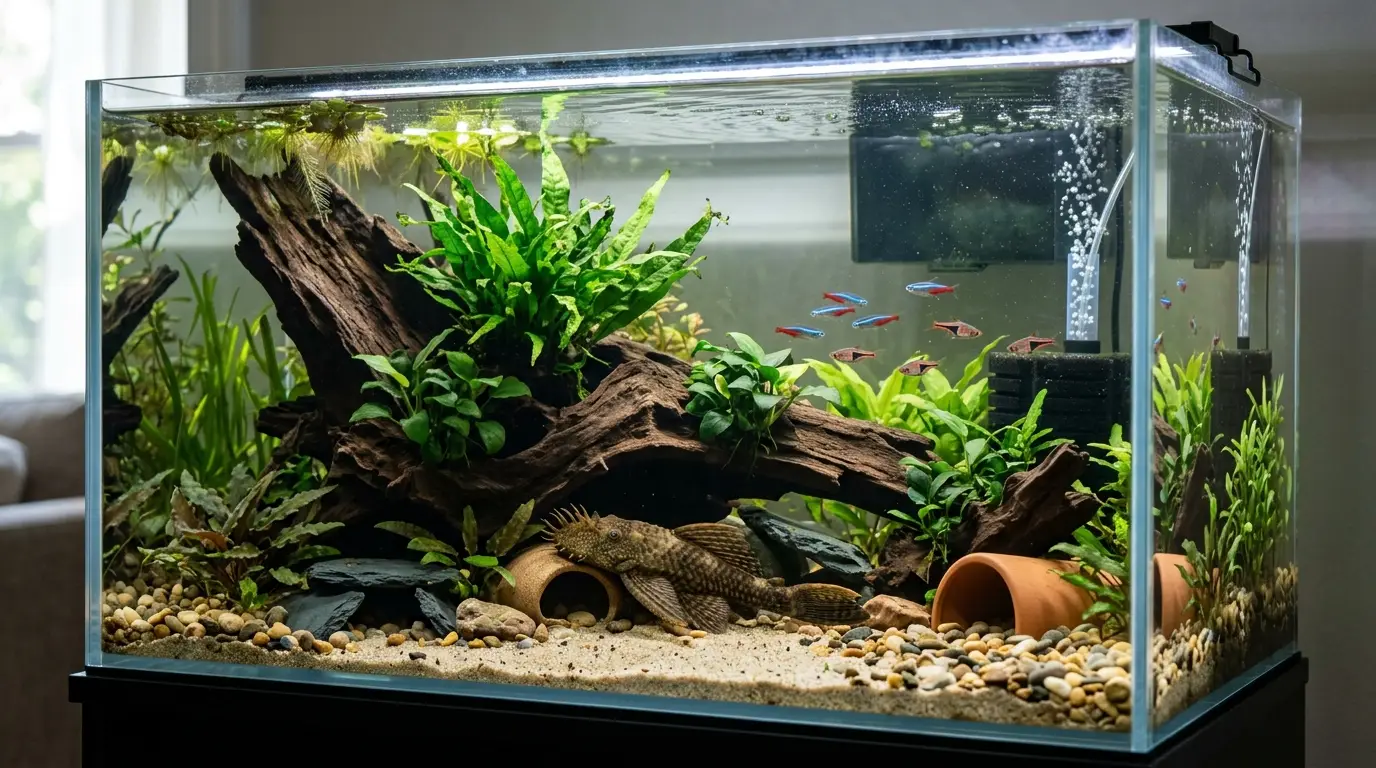
- Add real driftwood. It holds biofilm and offers fiber to rasp.
- Provide at least two caves per male. Use pleco caves, PVC, or coconuts.
- Add plants for shade. Java fern or Anubias on wood is great.
Lighting
- Keep it soft or use floaters for shade.
- Dim light helps reduce stress and boosts algae growth on surfaces.
Acclimation
- Drip acclimate new fish for 30 to 45 minutes.
- Quarantine for 2 to 4 weeks when possible.
Diet and feeding schedule
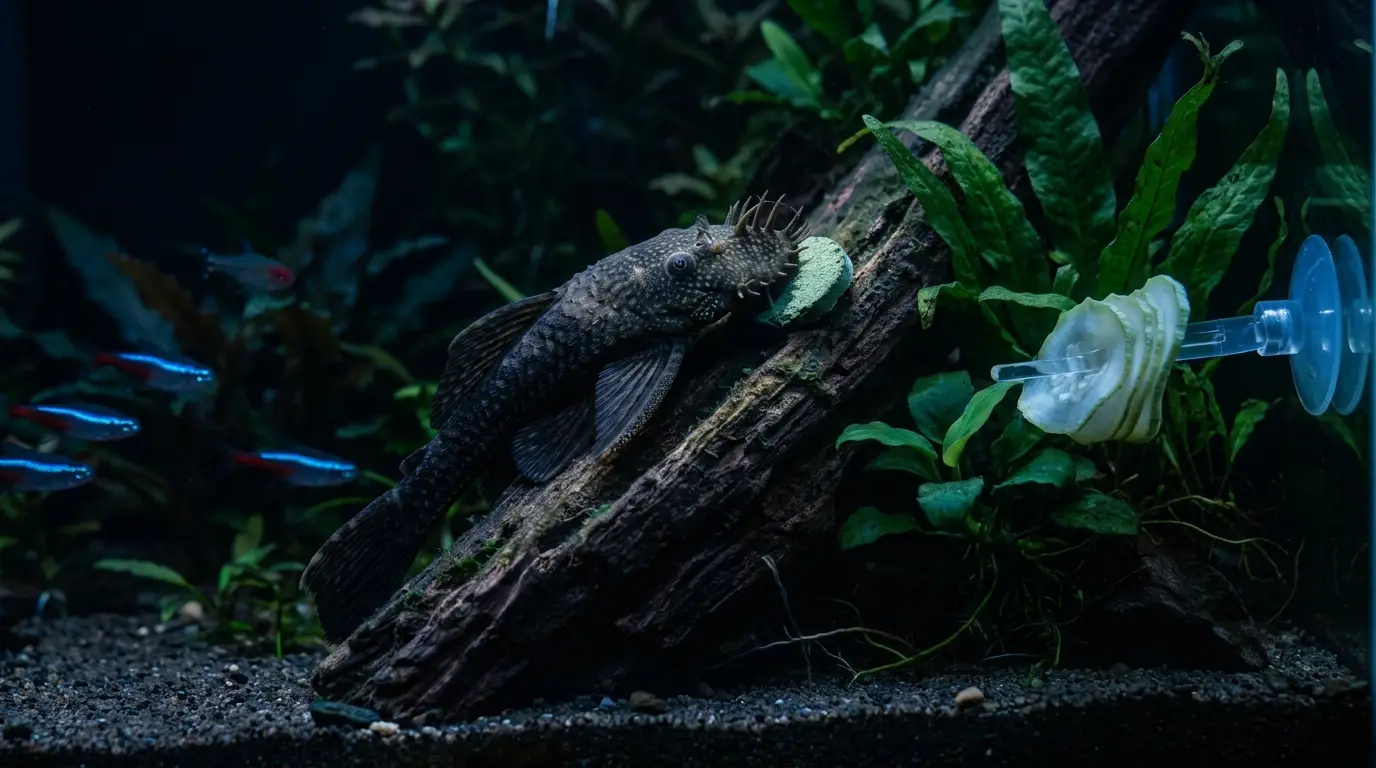
A strong bristlenose pleco care guide starts with food. They need fiber and greens, plus some protein. Algae alone is not enough in most tanks.
Core foods
- Algae wafers with spirulina
- Blanched zucchini, cucumber, green beans, and squash
- Occasional protein: frozen bloodworms or brine shrimp once a week
- Repashy or gel foods made for grazers
My simple feeding plan
- Nightly: One quality algae wafer per adult
- Three nights a week: Add a few slices of blanched veggie
- Once a week: Small protein treat
- One fast day per week helps prevent bloat
Tips from experience
- Weight tells the truth. A healthy fish has a full belly and firm head.
- Do not overdo protein. It can lead to bloat.
- Leave driftwood in the tank. They rasp on it for hours.
- Remove uneaten veggies in 12 to 18 hours to avoid water issues.
Behavior and tank mates
A calm tank is key in any bristlenose pleco care guide. These fish are gentle, but they defend their home base.
Temperament
- Peaceful with most small fish
- Males guard caves and may push rivals away
- Active at night, but often out at dusk
Good tank mates
- Tetras, rasboras, livebearers, and danios
- Corydoras and small rainbowfish
- Peaceful dwarf cichlids like Bolivian rams or Apistogramma
- Shrimp and snails, though eggs or tiny shrimp may be at risk
Avoid
- Large or aggressive cichlids
- Fin nippers
- Other plecos that compete for the same caves
Personal note
- My male in a 40 breeder picked a single clay cave. He ignored everything else but kept all other males off that spot. Add more caves than you think you need.
Breeding bristlenose plecos step-by-step
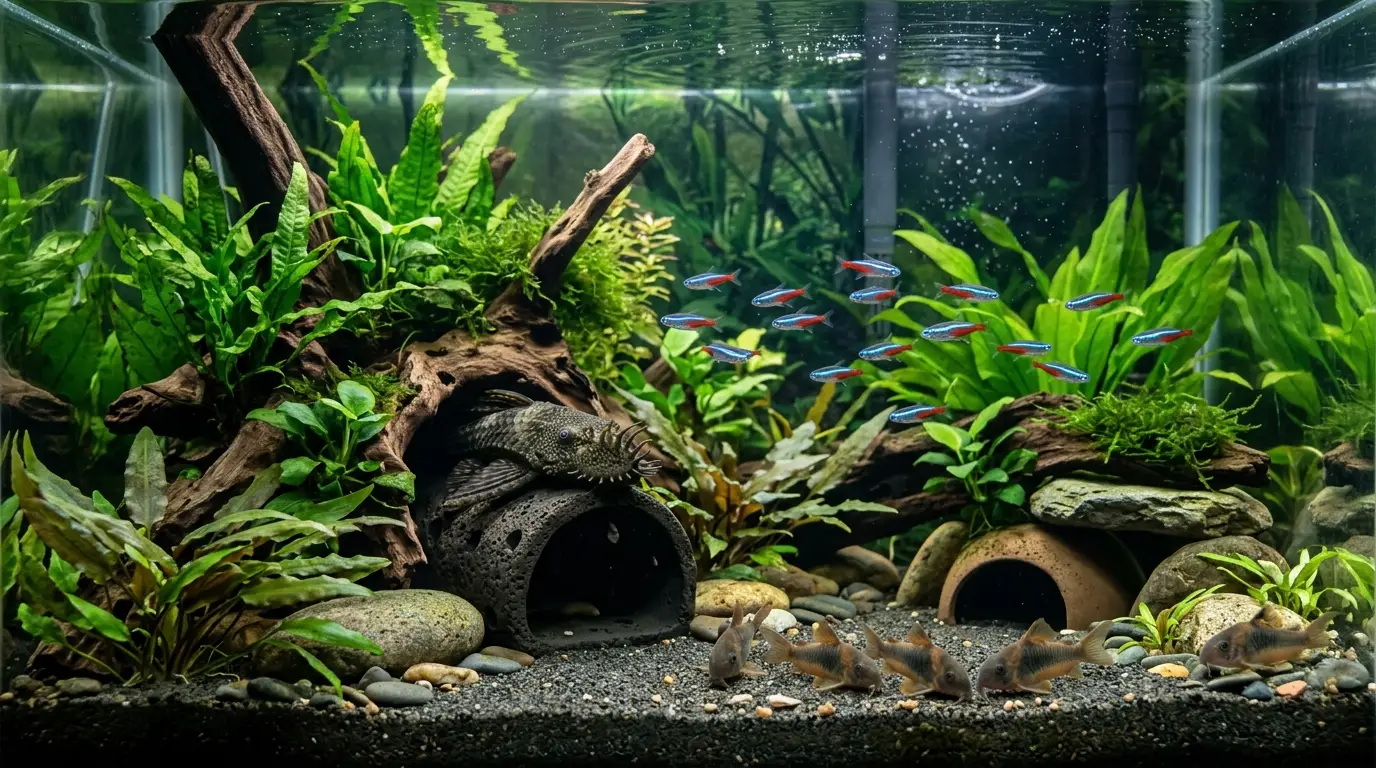
A full bristlenose pleco care guide should help you breed them. It is not hard with the right cave and clean water.
Sexing
- Males have longer, bristly tentacles on the snout and head.
- Females have shorter bristles and a rounder face.
Trigger breeding
- Keep temp near 76°F.
- Offer two or more caves. Openings just wide enough for the male.
- Feed heavy greens and a little extra protein.
- A 20 to 30 percent cool water change can act like a rain signal.
Spawning and eggs
- Female lays eggs in the cave.
- Male guards, cleans, and fans the eggs.
- Eggs hatch in about 4 to 6 days at 76 to 78°F.
Raising fry
- Let the male guard the cave until fry emerge.
- Offer soft foods: crushed wafers, baby brine shrimp, or gel food.
- Keep a sponge filter to protect fry from the intake.
- Maintain top water quality. Test often.
Note on genetics
- Color lines like super red or longfin need selective pairing.
- Do not mix lines if you want true offspring.
Health, diseases, and prevention
Health is the heart of a good bristlenose pleco care guide. Prevention beats cure.
Common issues
- Bloat from rich foods or poor water
- Fin rot from stress or high organics
- Ich after new fish are added
- Oxygen stress in hot tanks with low flow
Prevention steps
- Keep the tank clean and well oxygenated.
- Feed high fiber and avoid heavy meat diets.
- Quarantine new fish.
- Test water weekly. Keep nitrate low.
Medication notes
- Plecos are sensitive to some meds and salt.
- Use half doses if a product warns for scaleless fish.
- Increase air during any treatment.
Maintenance routine and troubleshooting
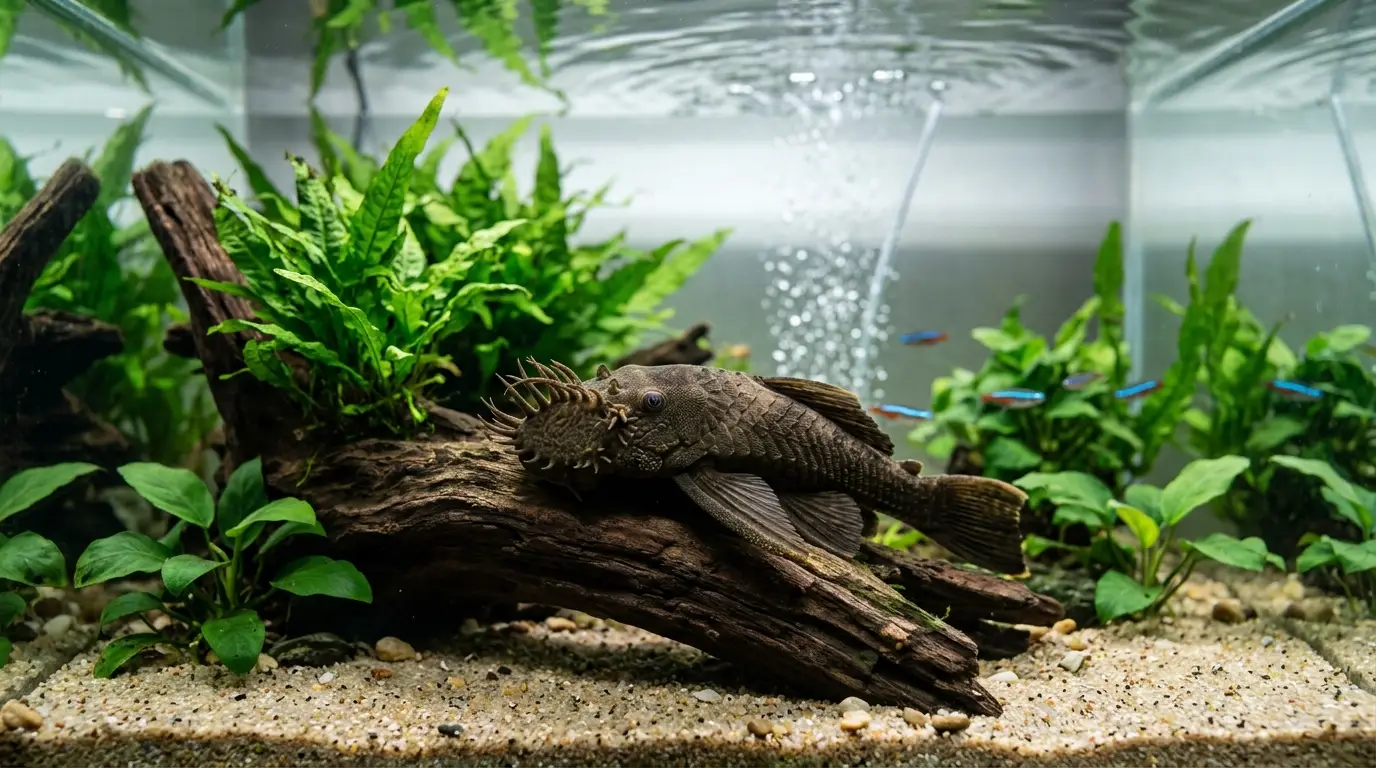
This bristlenose pleco care guide favors easy, steady habits. Small, steady steps keep fish safe.
Weekly tasks
- Test ammonia, nitrite, and nitrate
- Change 30 to 50 percent of the water
- Vacuum light waste, but do not strip all biofilm
- Wipe glass and rinse pre-filters in tank water
Monthly tasks
- Deep clean the canister or HOB media in tank water
- Trim plants and reset caves if needed
- Check airstones and flow
If things go wrong
- Fish breathing fast: add air and check temp and ammonia.
- Algae bloom: cut light time and ease up on food.
- Thin fish: increase veggie variety and feed after lights out.
Common mistakes and pro tips
I wrote this bristlenose pleco care guide after years of trial and error. Here are the big wins and fails.
Mistakes to avoid
- Relying on algae only. Tank algae is not enough.
- Skipping wood. Driftwood is a food surface and stress shield.
- Too few caves. Males get cranky with no choice.
- Overfeeding protein. It leads to bloat and foul water.
- Fast, big pH swings. These fish prefer slow, steady change.
Pro tips
- Feed at lights out. That is when they eat the most.
- Use broad, stable caves. My best spawns came in snug clay tubes.
- Float a veggie clip near a cave. The male will not leave eggs for long.
- Mix foods. Rotate wafers, gel, and fresh greens for gut health.
- Aim for calm water with high oxygen. Think forest stream, not rapids.
Frequently Asked Questions
How big do bristlenose plecos get?
Most reach 4 to 6 inches. Males can get a bit larger and bulkier.
Do bristlenose plecos clean the whole tank?
They eat soft algae and biofilm, but not all algae types. You still need water changes and glass cleaning.
What is the ideal tank size for one bristlenose pleco?
Start at 20 gallons for one adult. Go larger if you add more fish or plan to breed.
Can I keep more than one bristlenose pleco together?
Yes, in larger tanks with many caves. Keep one male per 20 to 30 gallons to limit fights.
What should I feed daily?
Offer a quality algae wafer each night. Add blanched veggies a few times per week.
What temperature is best?
Aim for 74 to 76°F. They handle 72 to 80°F, but stable and mild is best.
How do I tell males from females?
Males grow long bristles on the snout and head. Females have short, sparse bristles.
Will they harm plants?
They do not eat healthy leaves. They may rasp on dying leaves or surface algae.
Are they okay with shrimp?
Yes, but they may eat tiny shrimplets or shrimp eggs. Add moss and hides for shrimp.
How long do bristlenose plecos live?
They often live 5 to 8 years. Good diet and clean water can push that higher.
Conclusion
You now have a full bristlenose pleco care guide you can trust. Give them space, steady water, real wood, and a green-heavy diet, and they will thrive. Add caves for comfort, test often, and keep oxygen high for long, healthy lives.
Set up your tank this week. Try a simple menu and a better cave layout, then watch your plecos bloom with color and calm. Want more tips like this? Subscribe, share your setup, or drop your questions in the comments.